Description
Stock-backed dispatch — every QT10-15 unit in our yard ships with a factory test record and a wear-parts box sealed inside the container before the doors close.
Technical Specifications
| Parameter | Value |
|---|---|
| Model | QT10-15 |
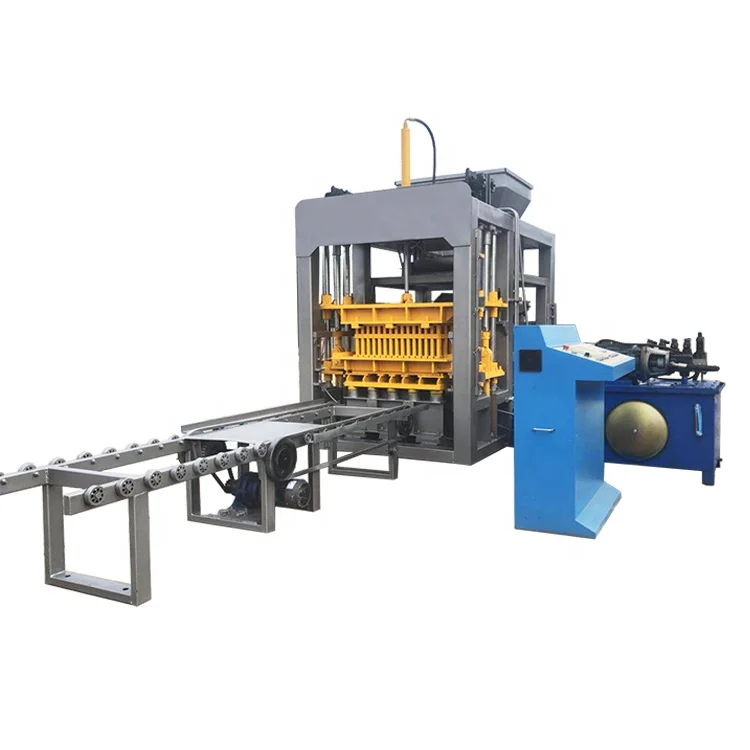
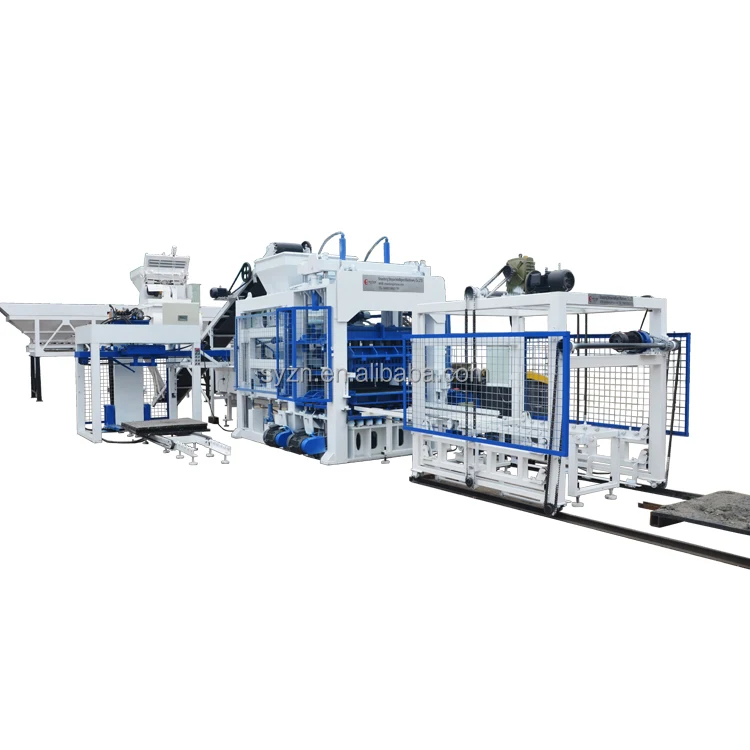
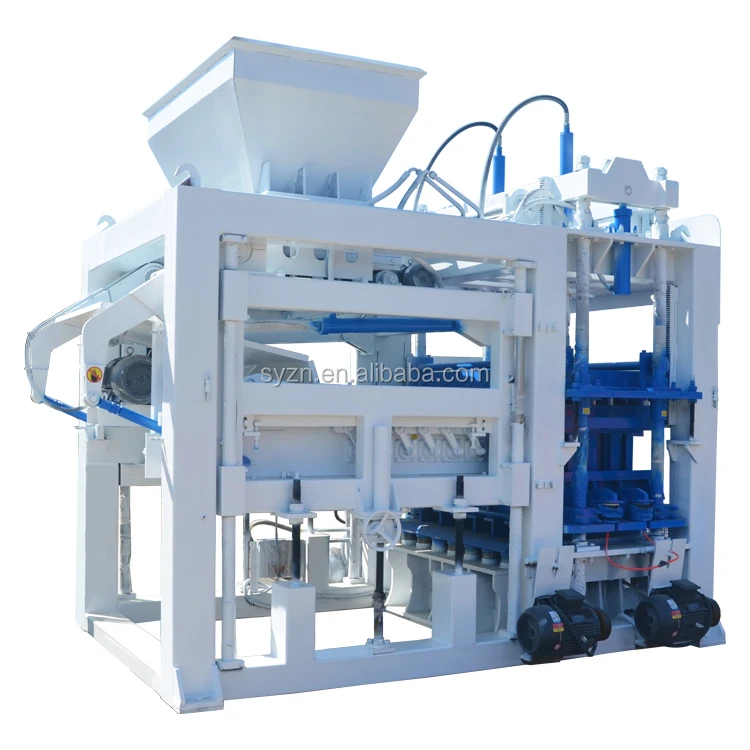
| Product Type | Stationary Fully Automatic Hydraulic Concrete Block Making Machine |
| Control System | PLC control cabinet |
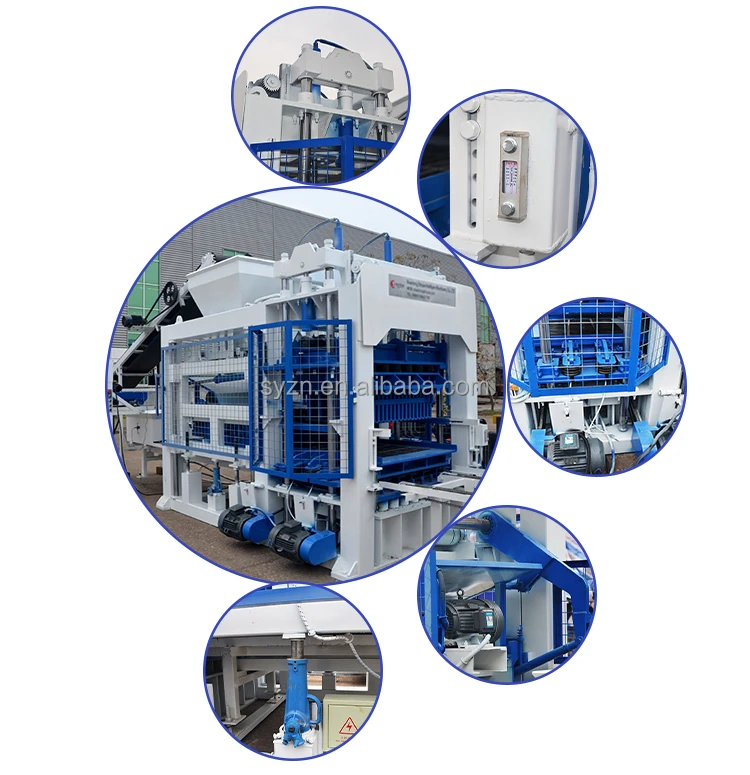
| Hydraulic System | Independent integrated hydraulic station |
| Mould Change System | Quick replacement for multi-format production |
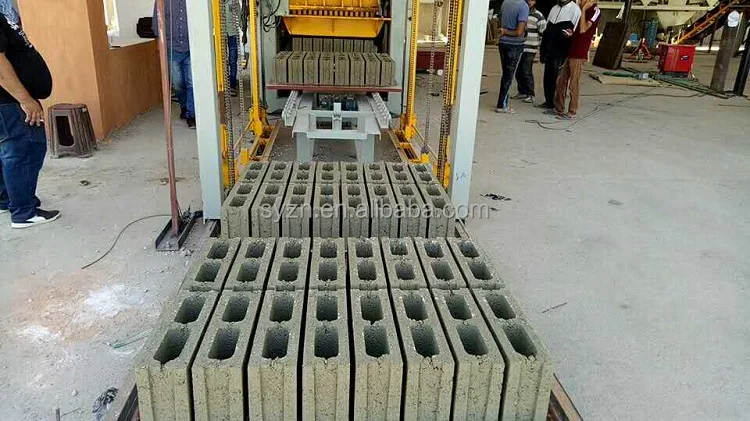
| Output Capacity (400×200×200mm hollow block) | 1,800–2,400 pcs/h (basis: 10 pcs/mould, 15–20s cycle) |
| Output Capacity (400×150×200mm hollow block) | 2,160–2,880 pcs/h (basis: 12 pcs/mould, 15–20s cycle) |
| Output Capacity (240×115×53mm standard brick) | 8,928–11,160 pcs/h (basis: 62 pcs/mould, 15–20s cycle) |
| Output Capacity (200×100×60mm paving block) | 5,184–6,480 pcs/h (basis: 27 pcs/mould, 20–25s cycle) |
| Output Capacity (225×112.5×60mm paving block) | 4,032–5,040 pcs/h (basis: 24 pcs/mould, 20–25s cycle) |
| Cycle Time (hollow block) | 15–20s |
| Cycle Time (paving block) | 20–25s |
| Automation Level | Fully automatic |
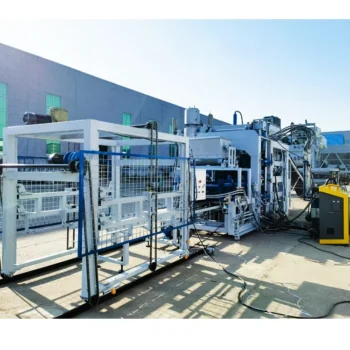
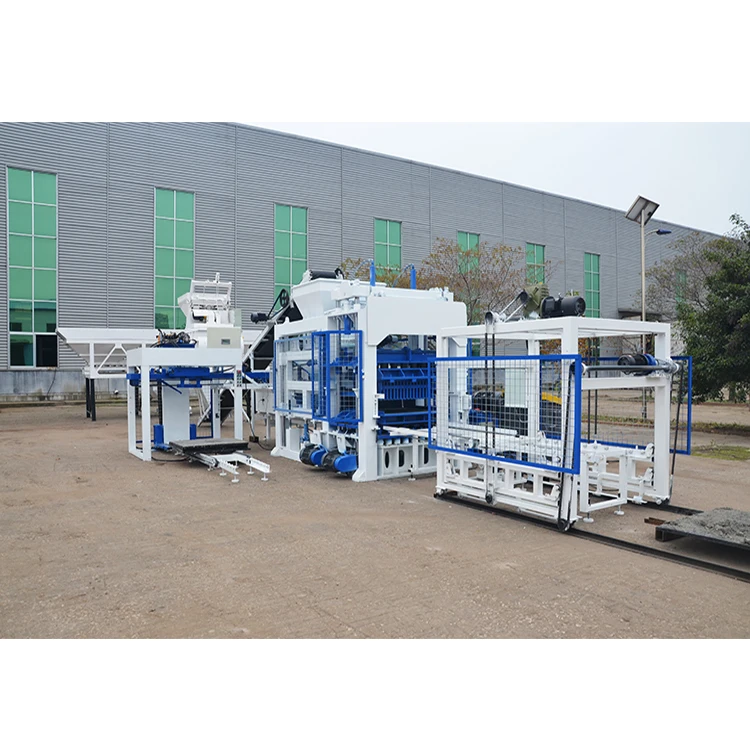
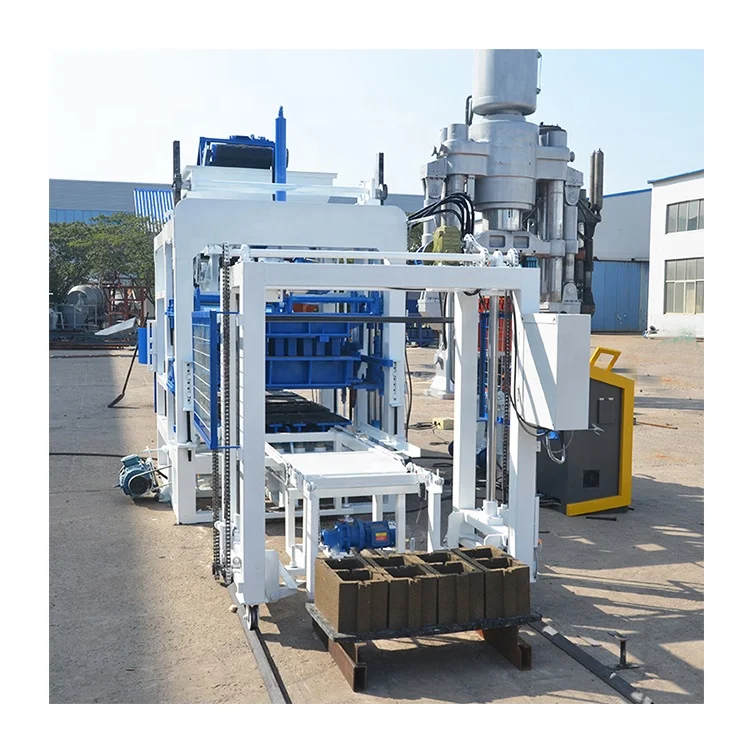
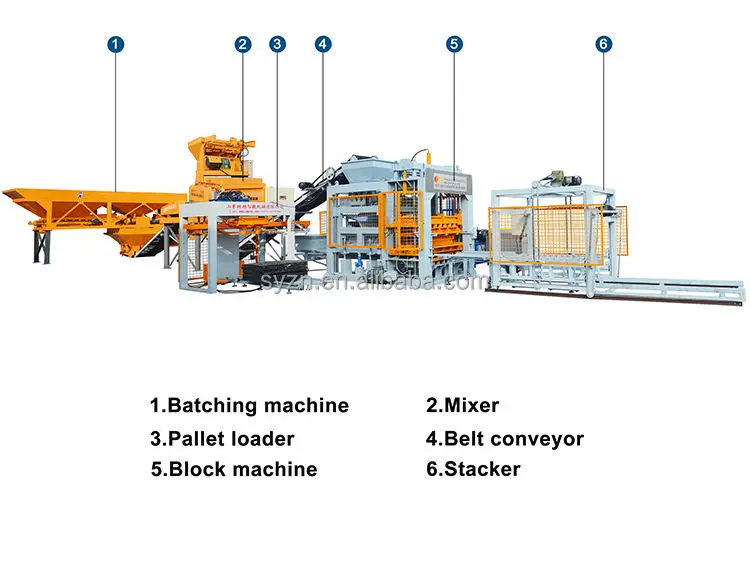
| Line Components | Pallet feed machine, block making machine, storage hopper, conveyor, hydraulic unit, PLC control cabinet |
| Vibration System | Vertical station mode resonance with automatic FM-AM |
| Warranty | 1 year (excluding spare parts) |
Application Suitability
| Application | Material or Output |
|---|---|
| Hollow block production | 400×200×200mm and 400×150×200mm formats from cement, crushed stone and sand |
| Standard solid brick production | 240×115×53mm clay-format bricks from local aggregate and cement |
| Paving block production | 200×100×60mm and 225×112.5×60mm interlocking pavers from high-strength concrete mix |
| Multi-cellular brick production | Lightweight and aerated concrete formats compatible with the vibration and hydraulic range |
| Fixed-plant concrete product manufacturing | Continuous shift production in a permanent block plant with pallet circulation |
What "Ready to Ship" Actually Means for a QT10-15 Stationary Block Machine in Stock
A machine sitting in a yard is only half the story — the other half is what sits in the crate beside it.
I flew to Ecuador years ago to restart a stationary hydraulic block machine that went silent on its first mould change. The reason was a missing set of hydraulic seals that nobody had packed before the container doors closed. The site sat idle while a parcel cleared customs. That failure reshaped how I think about dispatch. When buyers search for a QT10-15 stationary block machine in stock, the lead time question should always include the wear-parts list, the factory test documentation, and the exact dismantling plan for loading. A machine without these is not ready — it is just standing in a warehouse [NEED_CITE: typical port clearance delays for industrial machinery imports].
Dispatch Readiness Beyond the Machine Frame
Stock availability for a QT10-15 stationary block machine in stock means the press is assembled, the hydraulic station has been pressure-tested, and the PLC cabinet has run through its full cycle sequence. The vibration table, pallet feeder, and storage hopper are also matched to the same build batch, so nothing arrives mismatched. Before any unit leaves, we run it through a production test with a standard mould and record the cycle times, block density, and hydraulic response under load.
Container Loading and Dismantling Sequence
A stationary press of this output class does not ship in one piece. The main frame, hydraulic station, PLC cabinet, and pallet feed system are dismantled into separate assemblies and secured against container walls with steel bracing. The mould — if shipped together — goes on its own pallet with corner protection. Loading plans are confirmed before dispatch so the receiving site knows which crate to open first. Without this sequence, commissioning stretches from days into weeks [NEED_CITE: container loading standards for heavy industrial machinery].
Reading the Specification Sheet Honestly
The cycle time figures determine real daily throughput, and they vary by format. Hollow blocks at 15–20 seconds per cycle produce one batch every few seconds, but pavers need 20–25 seconds because the surface finish demands a longer vibration hold. The independent integrated hydraulic station sits away from the vibration table so dust and shock do not degrade valve response over time. Vertical station mode resonance with automatic FM-AM tuning adjusts vibration frequency and amplitude to match the mix, keeping block density consistent across a long shift without operator intervention.
The Cost of Skipping Pre-Shipment Verification
Buyers who confirm only the machine model — and not the voltage, PLC language, or pallet size — discover these mismatches after the container arrives. A 50 Hz machine on a 60 Hz grid runs the motors out of spec from the first day. A PLC set to a language the operators cannot read turns every alarm into a guessing game. Pallets sized for a curing rack the buyer does not have mean the entire output stacks on the floor by hand [NEED_CITE: common import clearance issues for industrial plant equipment].
Why Buyers Come Back for a Second Machine
We keep block machinery as a single focus, so the press, mould, pallet, and handling equipment are specified as one matched system rather than assembled from unrelated suppliers. Configuration is set against the buyer’s actual mix design and local aggregate, not a catalogue default. Standard moulds for the formats that sell in the buyer’s market are available from stock alongside the machine. The automation level is selectable, so a buyer can start with the standard line and add stacking or cubing later. Installation support and operator training are included so the first production shift is not a learning exercise.
Documentation & Verification
- Factory test record showing cycle times on your chosen block format before dispatch
- Machine specification sheet with confirmed voltage, frequency, and PLC display language
- Mould drawing and format list matching the pallets and curing racks at your site
- Packing photographs taken after container loading and before door closure
- Customs documentation package aligned with your destination country import requirements
Installation, Commissioning & Support
- Foundation pad must be level and cured before the QT10-15 main frame is bolted down
- PLC control cabinet requires a dedicated circuit matching the confirmed voltage and frequency
- Hydraulic station reconnects to the press via quick-fit hoses, reducing assembly time on site
- First production run supervised to verify cycle times and block density against the test record
- Operator training covers mould change procedure, PLC navigation, and daily maintenance checks
- Wear parts and hydraulic seals ship inside the container so the first replacement is on hand
Before You Request a Quote
Tell us which block formats your market actually sells, the daily volume your site needs to sustain, and the curing area and forklift you already have. Confirm your local voltage and frequency so the electrical system is built to match. Let us know whether you need standard moulds shipped in the same container or already have moulds from a previous line.
Frequently Asked Questions
Q: Which QT10-15 configurations are currently in stock and ready for immediate dispatch?
A: Standard fully automatic configurations with PLC control and independent hydraulic station are available from stock. Each unit is factory-tested before allocation. Confirm the block format and pallet size you need so we match the correct mould and line components before the container is booked.
Q: What is the estimated arrival time from order confirmation to port of destination?
A: Once the unit is allocated and the container is loaded, transit time depends on the destination port and shipping route. We provide the vessel schedule and estimated arrival date at the time of order confirmation so you can plan site preparation around a known timeline.
Q: How is the machine dismantled and loaded for container shipment?
A: The main frame, hydraulic station, PLC cabinet, and pallet feeder are separated into individual assemblies. Each is braced and secured inside the container. A loading plan with crate numbering is shared before dispatch so your team knows the unloading sequence on arrival.
Q: Can standard moulds be shipped together with the machine in the same container?
A: Yes. Standard moulds for hollow blocks, solid bricks, and paving blocks fit inside the same container as the dismantled machine. We confirm mould dimensions against the container loading plan so nothing is left behind or forced into a separate shipment.
Q: What customs documentation is provided to support import clearance at destination?
A: We supply the commercial invoice, packing list, bill of lading, and certificate of origin. Where applicable, a CE declaration is included. Documentation is prepared in advance and reviewed against your destination country requirements before the vessel departs.