
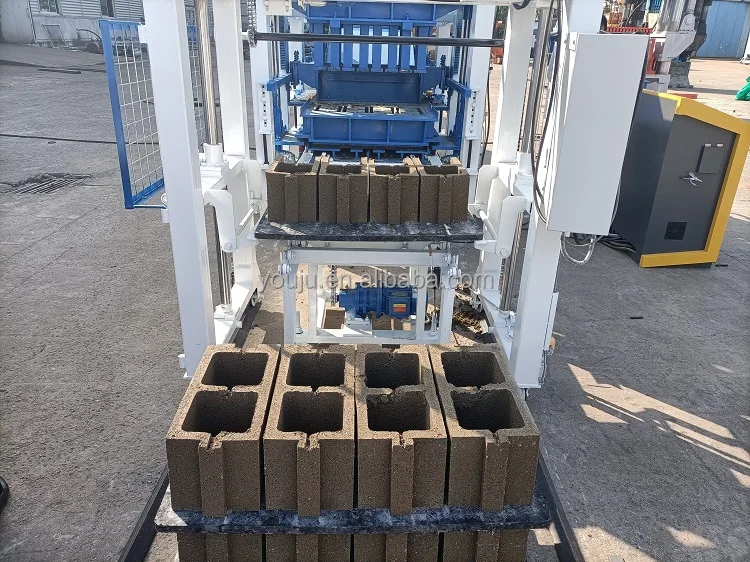
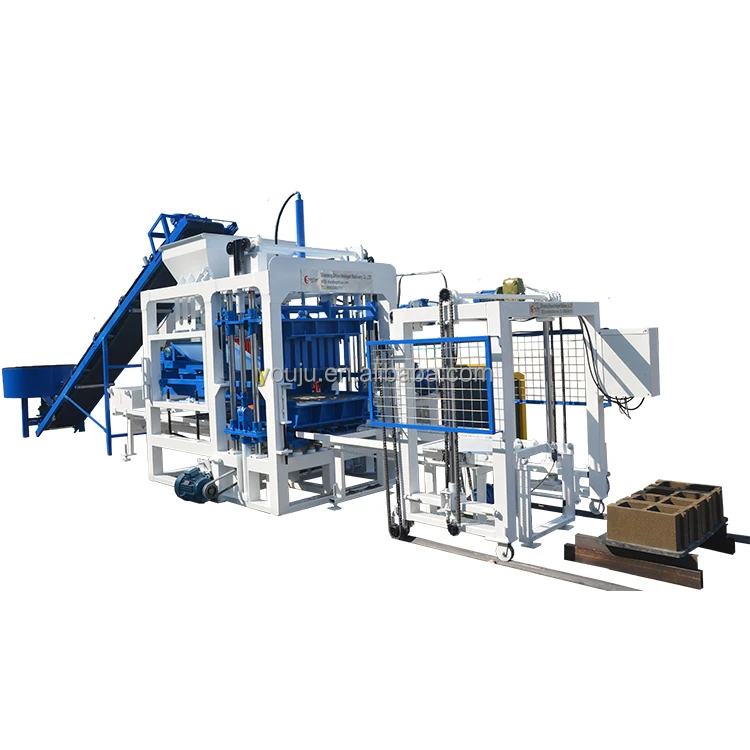
Description
Stocked Machine, Single Focus — QT4-18 units held in ready-to-ship inventory so your block plant starts producing on a construction schedule, not a manufacturing lead time.
Technical Specifications
| Parameter | Value |
|---|---|
| Model | QT4-18 |
| Product Type | Automatic Concrete Block Making Machine |
| Overall Dimensions | 2500×1750×2200 mm |
| Rated Pressure | 16 MPa |
| Vibration Form | Platform Vibration |
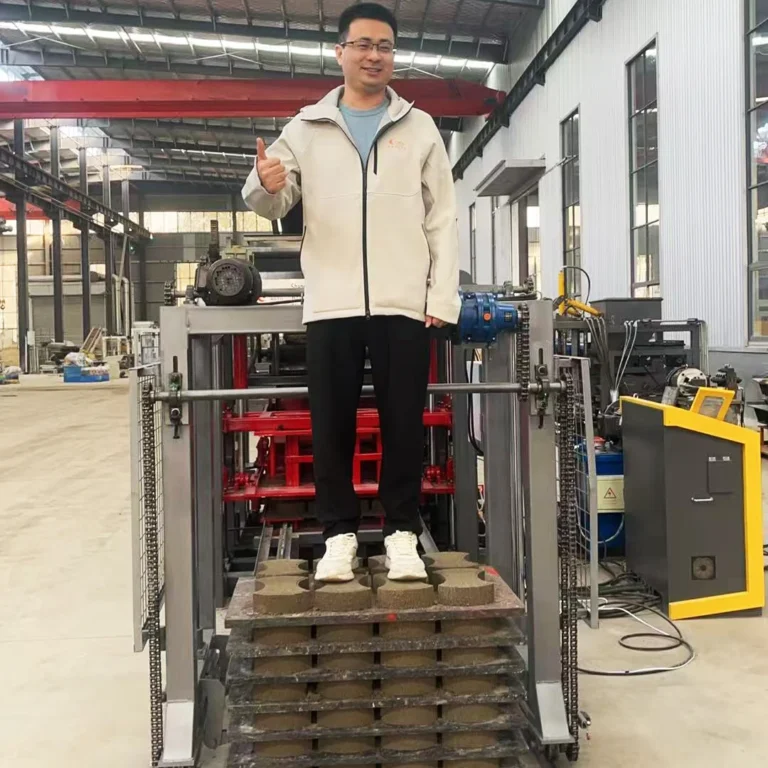
| Pallet Size | 950×550 mm |
| Molding Cycle | 18–25 s (basis to be confirmed by block format and mix) |
| Overall Power | 27.5 kW |
| Control System | PLC with frequency converter, machine-to-person interface |
| Electrical Components | Schneider brand |
| Mould Lifting Mechanism | Double-sided synchronous gears |
| Material Feeder | Distribution belt hopper |
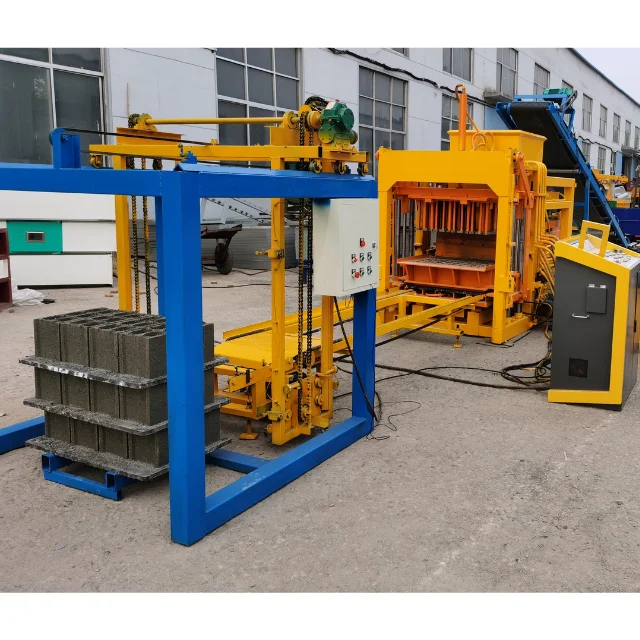
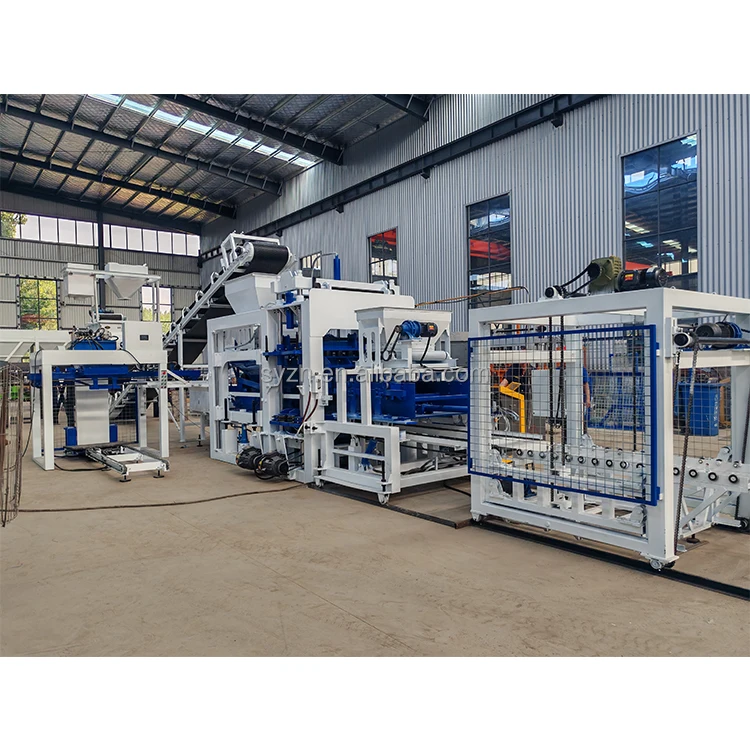
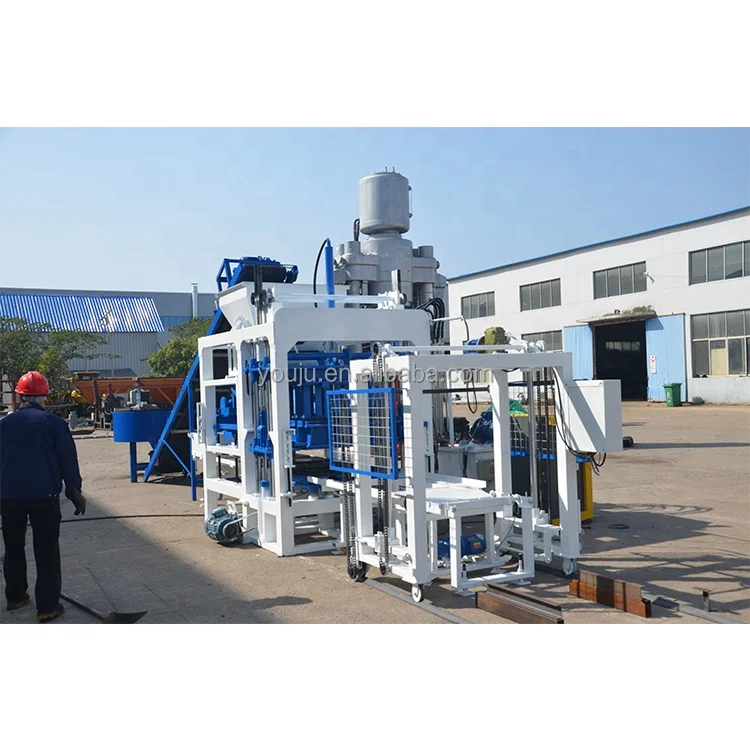
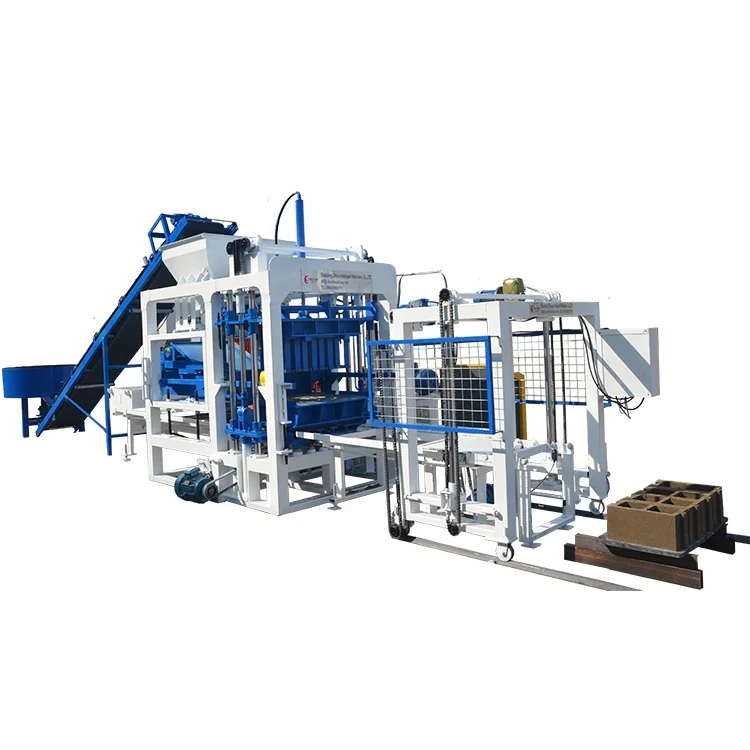
| Assembly State | Mixer, pallet conveyor, molding machine, block conveyor, hydraulic station, electronic console |
| Automation Level | Automatic (pallet feeding, molding, block conveying) |
| Stacking Method | Manual or machinery conveying to curing yard (stacker available as supporting equipment) |
| Voltage & Frequency | Configurable to destination market (confirm before dispatch) |
Application Suitability
| Application | Material or Output |
|---|---|
| Hollow block production | Crushed stone, cement, sand, and local aggregate blends |
| Solid block production | Dense concrete mixes for load-bearing masonry |
| Paving block production | High-strength concrete with fine aggregate for interlocking pavers |
| On-site contractor production | Local aggregate and cement for immediate construction use |
| Regional distributor stock | Standard block formats for building material supply networks |
What "Ready for Dispatch" Actually Means When You Need a QT4-18 Automatic Block Machine in Stock
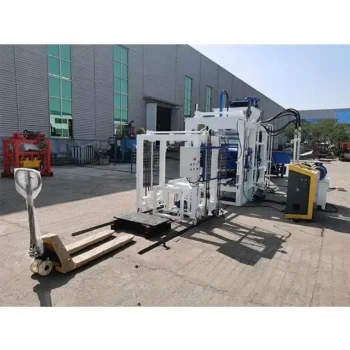
A stocked QT4-18 automatic block machine in stock means the press, hydraulic station, and control console are assembled, tested, and crated — not waiting on a production slot.
Buyers working against a project milestone often discover that a quoted lead time covers only the manufacturing window, leaving voltage adaptation, PLC language configuration, and container loading as unresolved variables after the machine leaves the factory floor. I once had a West African contractor fly in for commissioning only to find the PLC display still in Chinese and the motor wired for 380V when the site transformer delivered 415V — the machine sat idle while we sorted it out remotely [NEED_CITE: voltage and frequency standards by export market]. When you are sourcing a QT4-18 automatic block machine in stock, the dispatch conversation must cover electrical configuration, control language, and dismantling arrangement before the crate is sealed, not after it arrives at port.
Dispatch Readiness Beyond the Factory Gate
Having a QT4-18 automatic block machine in stock is only the first layer of readiness. The machine must be dismantled to fit a standard container, with the hydraulic station, electronic console, and molding frame secured separately to prevent transit damage. Buyers who skip confirming the container loading plan upfront often face unexpected delays at the port of loading when oversized components require flat-rack arrangements instead of standard enclosed containers.
Arrival Timing and On-Site Readiness
Once the QT4-18 automatic block machine in stock clears the factory gate, arrival timing depends on shipping lane, destination port congestion, and customs clearance speed. What you control before dispatch is the documentation package — packing photographs, commercial invoice, bill of lading, and any CE declaration required by the importing country [NEED_CITE: CE machinery directive requirements for industrial equipment]. I have seen machines clear customs in days when the paperwork was pre-verified, and sit in bonded warehouses for weeks when a single certificate was missing.
How the 16 MPa Pressure and Platform Vibration Shape Block Density
The QT4-18 pairs 16 MPa rated hydraulic pressure with platform vibration to compact concrete into the mould cavity. Hydraulic pressure alone compresses the mix, but without synchronized vibration the aggregate particles do not settle into a dense arrangement — resulting in blocks that meet dimensional tolerance but fail compressive strength tests. The platform vibration form means the entire mould table oscillates, transmitting force through the pallet and into the mix from below. For coarse local aggregate, vibration amplitude and duration must be tuned so that larger particles rearrange rather than fracture, a setting adjusted through the PLC frequency converter. The 950×550 mm pallet size determines the curing yard footprint; if your existing forklift and rack spacing were designed for a different pallet dimension, the mismatch creates handling bottlenecks that no amount of press speed can overcome [NEED_CITE: pallet handling compatibility with curing yard infrastructure].
The Hidden Cost of Skipping Voltage Confirmation Before Dispatch
When voltage and frequency are assumed rather than confirmed, the consequences arrive at commissioning. A motor wound for one voltage range will overheat or underperform on another, and a frequency converter cannot compensate for a fundamental mismatch between the site transformer output and the machine’s electrical design. PLC display language is a smaller issue but a visible one — operators who cannot read the interface make configuration errors that show up as inconsistent cycle times or incomplete mould filling. Both issues are resolved at zero cost before dispatch and at significant cost after arrival.
Why Source This Machine From a Stock-Oriented Supplier
Block machinery is the single product focus here, meaning the QT4-18 is specified alongside its moulds, pallets, and handling equipment as one matched system rather than assembled from separate vendors. Standard mould formats currently held in stock ship with the machine, reducing the wait for custom tooling. Container loading plans are prepared per machine, with dismantling arrangements documented so your local rigging crew knows what to expect. Dispatch lead time is quoted from order confirmation to gate-out, and arrival estimates are provided based on your destination port so project scheduling can proceed with a known variable rather than an assumption.
Documentation & Verification
- Factory test record showing cycle times on your specified block format before dispatch
- Machine specification sheet with confirmed voltage, frequency, and PLC display language
- Mould drawing and format list matching stocked moulds included with the QT4-18
- Packing photographs documenting crate condition and component placement before container loading
- Customs documentation support package with commercial invoice and certificate of origin
Installation, Commissioning & Support
- Foundation must support the 2500×1750 mm footprint with level tolerance for platform vibration alignment
- Electrical supply must match confirmed voltage and frequency with a dedicated circuit for the 27.5 kW overall power draw
- Machine ships dismantled; hydraulic station, molding frame, and electronic console require on-site reassembly
- PLC frequency converter settings calibrated during commissioning to match your local aggregate and mix design
- Operator training covers mould change procedure using the double-sided synchronous gear lifting mechanism
- Wear parts list and mould maintenance schedule provided at handover for ongoing production continuity
What We Need to Confirm Before Your QT4-18 Ships
To move from stock inquiry to confirmed dispatch, provide your target block format and daily output requirement so we can verify which stocked moulds match your market. Share your site voltage, frequency, and preferred PLC display language to lock in the electrical configuration. Let us know your destination port so we can quote an arrival estimate and prepare the container loading plan around your project timeline.
Frequently Asked Questions
Q: Which QT4-18 configurations and mould formats are currently in stock?
A: Stocked units carry the standard QT4-18 configuration with PLC control, 16 MPa hydraulic pressure, and 950×550 mm pallets. Mould formats held in inventory typically cover hollow block, solid block, and paving block profiles. Custom mould designs require a separate lead time. Confirm your target block dimensions and we will match available stock to your production requirement.
Q: What is the dispatch lead time from order confirmation to container loading?
A: Once voltage, frequency, PLC language, and mould format are confirmed against stock, the machine moves to dismantling and crating. Dispatch lead time from confirmation to gate-out depends on current stock position and container availability at the port of loading. We quote this timeline at the inquiry stage so you can plan your project schedule with a known date rather than an estimate.
Q: How is the machine dismantled and packed for container shipment?
A: The QT4-18 is dismantled into its major assemblies — molding frame, hydraulic station, electronic console, pallet conveyor, and block conveyor — to fit within standard container dimensions. Each component is secured to prevent transit movement. A container loading plan is prepared and packing photographs are taken before sealing, giving you visibility into crate condition and component placement.
Q: What arrival timeline can I expect for my destination port?
A: Arrival timing depends on the shipping lane from the port of loading, carrier schedule, and destination port congestion. We provide an arrival estimate based on your named port at the inquiry stage. Customs clearance speed is a separate variable; having the full documentation package prepared before dispatch avoids bonded warehouse delays once the container arrives.
Q: Are voltage and PLC language confirmed before dispatch or adjusted after arrival?
A: Both are confirmed and set before dispatch. The motor winding, frequency converter range, and PLC display language are configured to match your site electrical supply and operator requirements. Adjusting these after arrival introduces commissioning delays and additional cost. We request your voltage, frequency, and language preference during the inquiry stage and verify them again before crating.