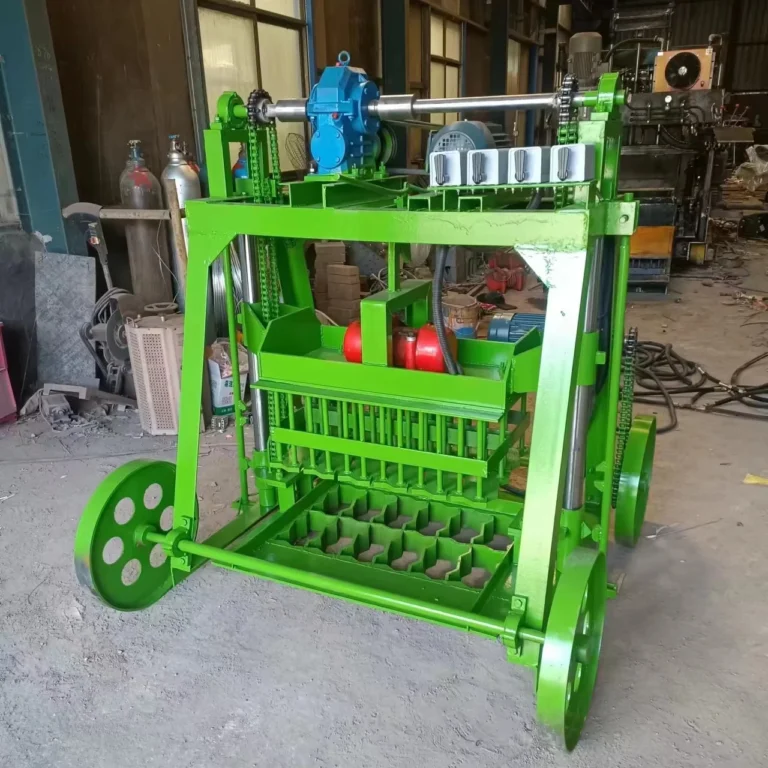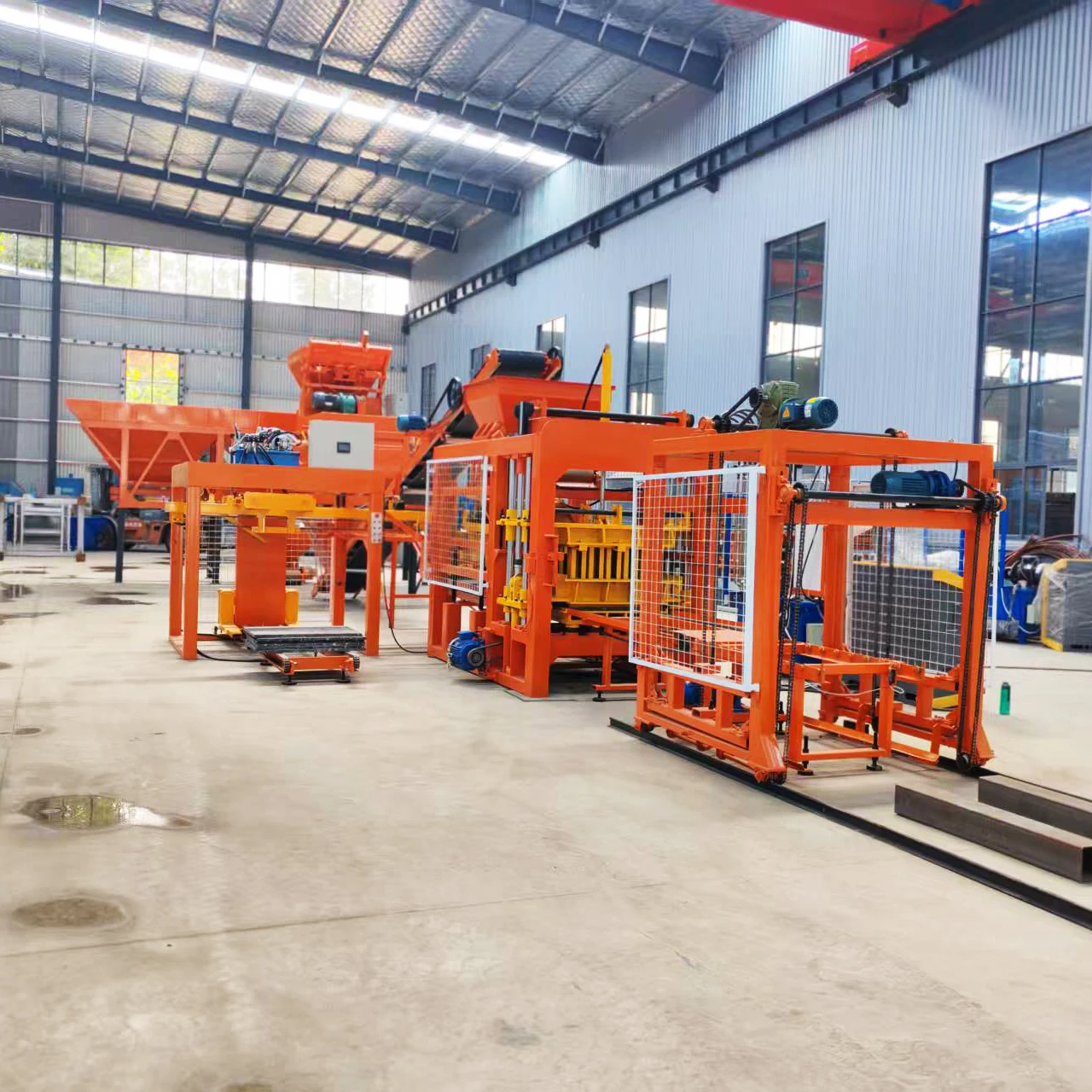
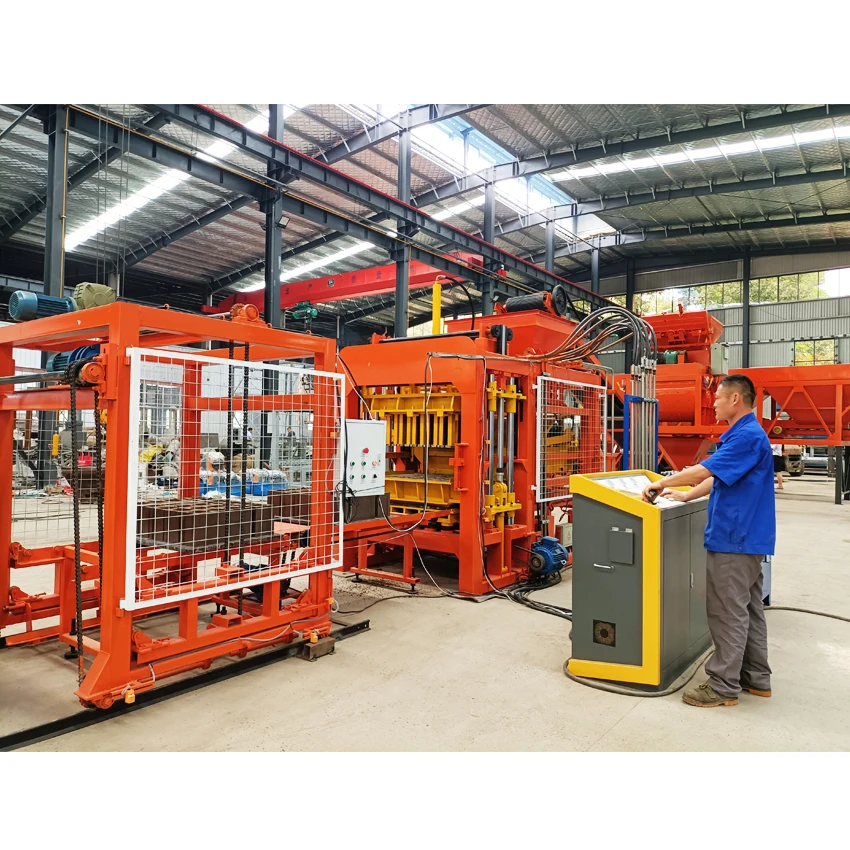
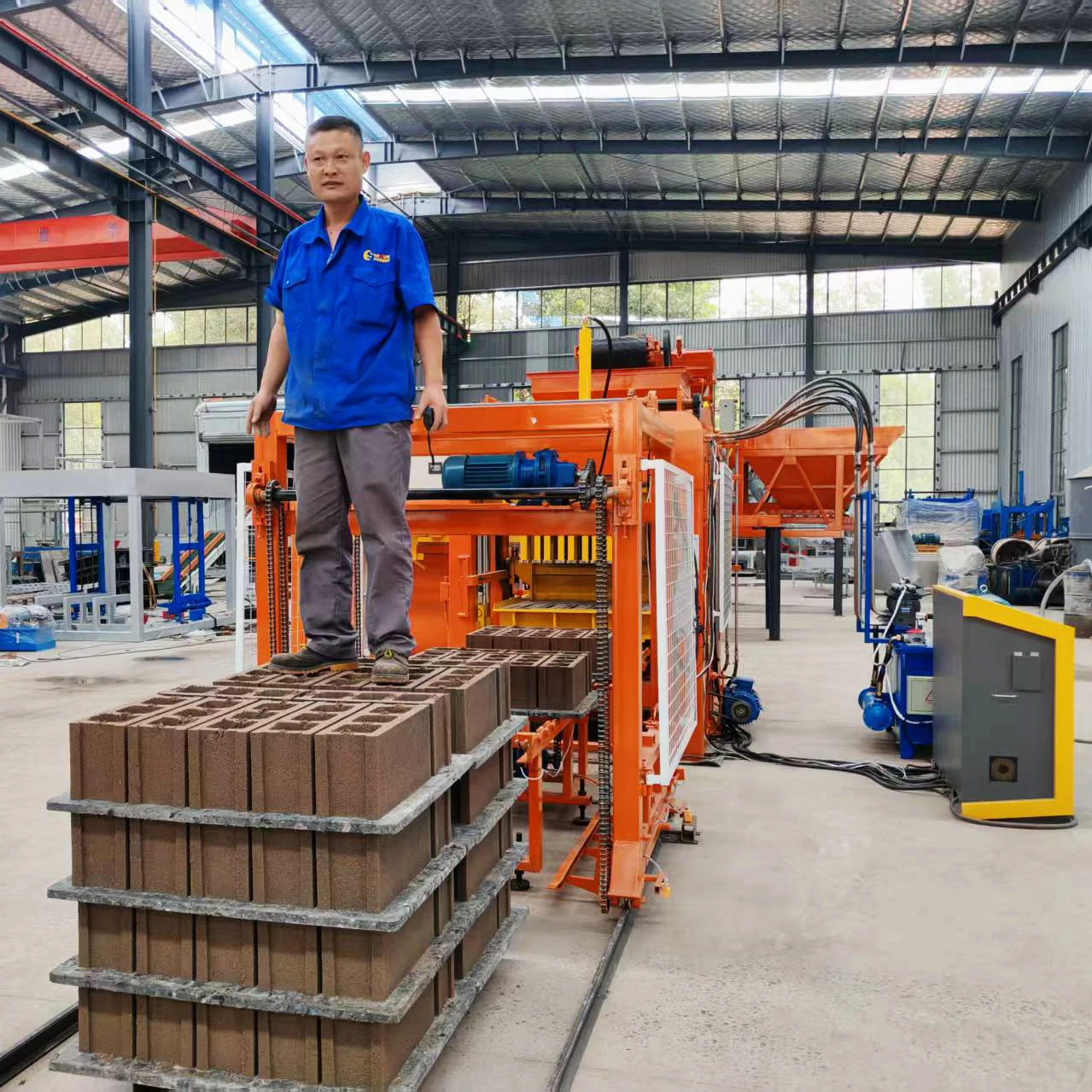
Description
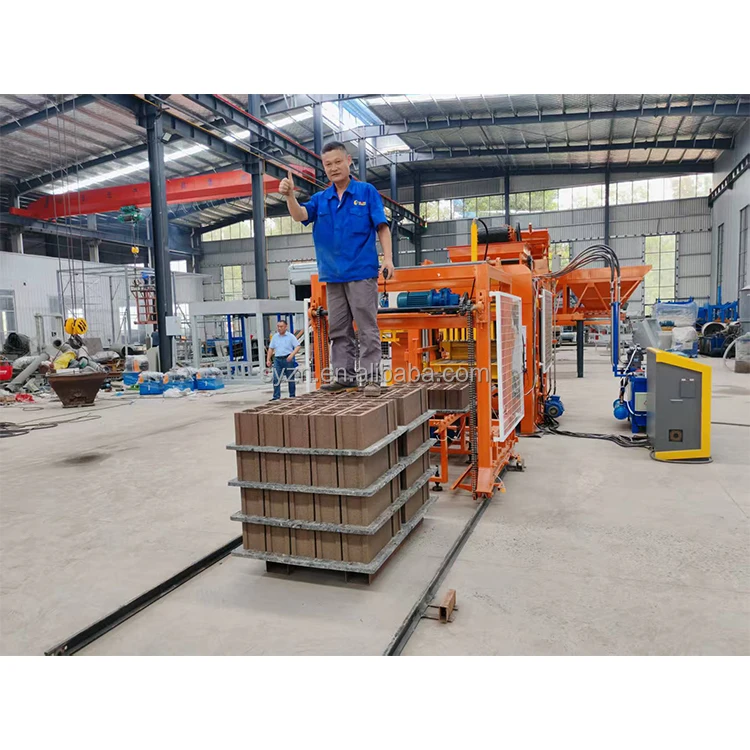
Stock readiness matched to your site — every QT6-15 automatic block machine is factory-tested on pallets sized to your curing area before crating, so what ships is what runs.
Technical Specifications
| Parameter | Value |
|---|---|
| Model | QT6-15 |
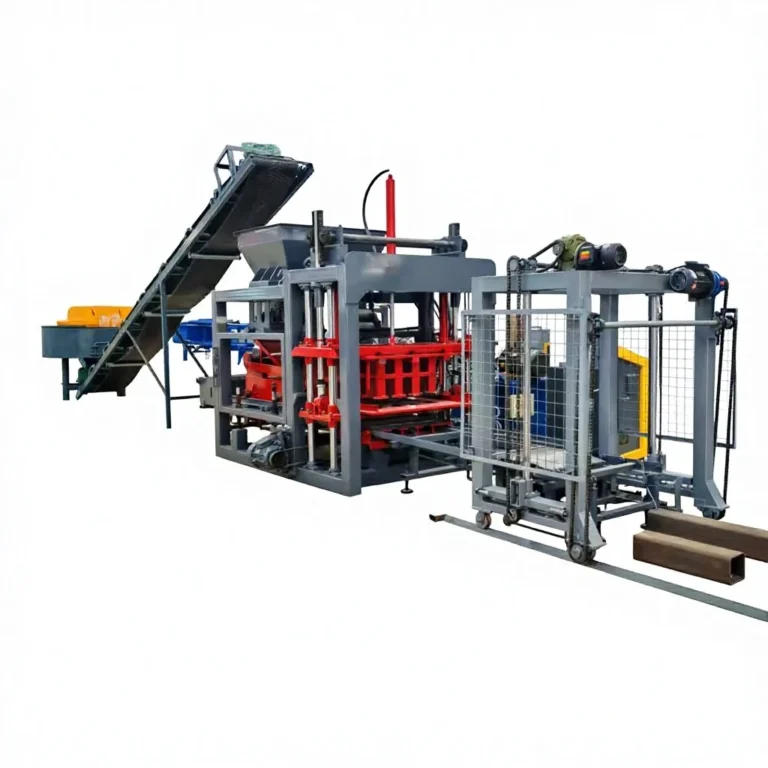
| Product Type | Automatic Cement Block Making Machine |
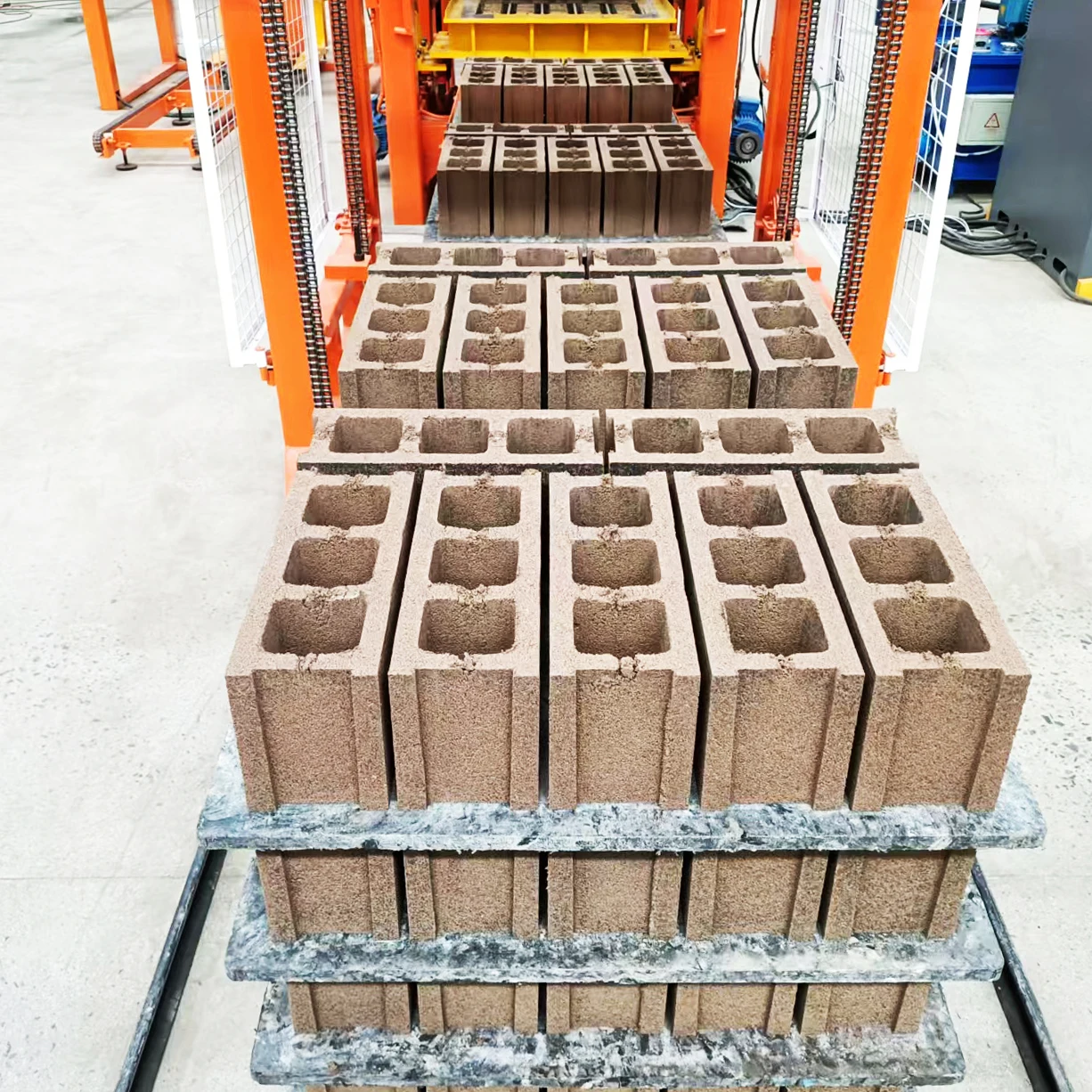
| Productivity per Mold (Standard Hollow Block 390×190×190mm) | 6 pcs/mold |
| Productivity per Mold (Solid Block 240×115×53mm) | 30 pcs/mold |
| Productivity per Mold ("S" Shape Interlock Paver 225×112.5×60mm) | 15 pcs/mold |
| Overall Dimensions | 7100×1500×3000 mm |
| Weight | 10t (for simple production line) |
| Pallet Size | 850×680 mm |
| Motor Power | 31.25 kW |
| Rated Pressure | 21 MPa |
| Vibration Force | 60 kN |
| Control System | PLC (Siemens electronics) |
| Motor Brand | Siemens |
| Mould Manufacturing | Wire cutting, carburizing heat treatment |
| Auxiliary Equipment | Stacker (automatic pallet lifting) |
| Automation Level | Automatic |
| Voltage & Frequency | Configurable to destination (basis to be confirmed) |
| Warranty | 1 year for the whole machine (excluding spare parts) |
Application Suitability
| Application | Material or Output |
|---|---|
| Hollow block production | Crushed stone, cement, sand for structural walling |
| Solid block production | Dense aggregate and cement mix for load-bearing masonry |
| Interlock paver production | Fine sand, cement, and pigment for "S" shape paving |
| On-site contractor block production | Local aggregate matched to project site conditions |
| First block plant setup | Semi-processed materials suited for entry-level automatic lines |
What "In Stock" Should Actually Mean for Your Deadline
A stocked QT6-15 automatic block machine in stock only matters if the pallet size, voltage, and mould match what is waiting at your port.
Many buyers assume that seeing a machine listed as available means it can ship immediately without further questions. I have watched containers arrive at ports with pallets that do not fit the buyer’s existing forklift tines, or control panels displaying a language the operators cannot read. The machine is physically there, but it cannot run. A QT6-15 automatic block machine in stock should mean that the 850×680 mm pallet has already been checked against your curing racks, and the Siemens PLC language has been set to your workshop’s requirement before the crate is sealed. [NEED_CITE: common dispatch errors in block machinery exports]
Dispatch Readiness Versus Catalogue Availability
When a buyer asks whether a QT6-15 automatic block machine in stock is ready to go, the honest answer depends on the mould and the electrical configuration. Standard hollow block moulds for 390×190×190 mm and solid block moulds for 240×115×53 mm are typically held alongside the press, so a stocked unit can be matched to those formats quickly. Custom moulds or non-standard pallet materials require separate lead times, and that timing must be stated before the container is booked.
Container Loading and Machine Dismantling
The QT6-15 measures 7100×1500×3000 mm and weighs around 10 tonnes as a simple production line. That means the press, the stacker, and the pallets must be dismantled into a loading plan that fits standard container dimensions. I check the dismantling sequence against the container door clearance myself, because a stacker frame that is two centimeters too tall to pass the door means repacking at the loading bay. Loading photographs are taken at every stage so the buyer can plan the unloading equipment at their end before the vessel sails.
Matching Electrical Supply Before the Crate Is Closed
The 31.25 kW motor package and Siemens PLC electronics on the QT6-15 need voltage and frequency confirmed for the destination grid before dispatch. A machine wired for a supply that does not match the buyer’s transformer is not a stocked machine — it is a delayed one. Voltage, frequency, and PLC display language are all confirmed in writing before the machine leaves the factory floor, and that confirmation travels with the customs documentation. [NEED_CITE: voltage and frequency standards by export market]
How Pressure, Vibration, and Pallet Size Shape Your Output
The 21 MPa rated pressure and 60 kN vibration force on the QT6-15 work together to compact the mix into the mould cavity. If the vibration is too low for a dry mix with coarse local aggregate, the block density drops and edges crumble out of the mould. The 850×680 mm pallet size determines how many blocks are formed per cycle — 6 hollow blocks at 390×190×190 mm, 30 solid blocks at 240×115×53 mm, or 15 "S" shape pavers at 225×112.5×60 mm. That pallet must also match the curing racks and forklift already at the buyer’s site, which is why pallet size is confirmed against the buyer’s equipment before dispatch rather than assumed from a catalogue default.
The Cost of Skipping the Site Conditions Check
A pallet size chosen without checking the buyer’s forklift means blocks are unloaded by hand off the container, adding days of labour before production even starts. A voltage mismatch discovered after arrival means a transformer rental or a rewind, and the machine sits idle while that is arranged. Moulds that do not match the local aggregate or the block format the buyer’s market actually buys sit on a shelf while a replacement is ordered. These are not machine failures — they are configuration failures, and they happen when the dispatch conversation stops at the price line. [NEED_CITE: typical delays from unmatched block plant configurations]
Why Dispatch Coordination Matters Here
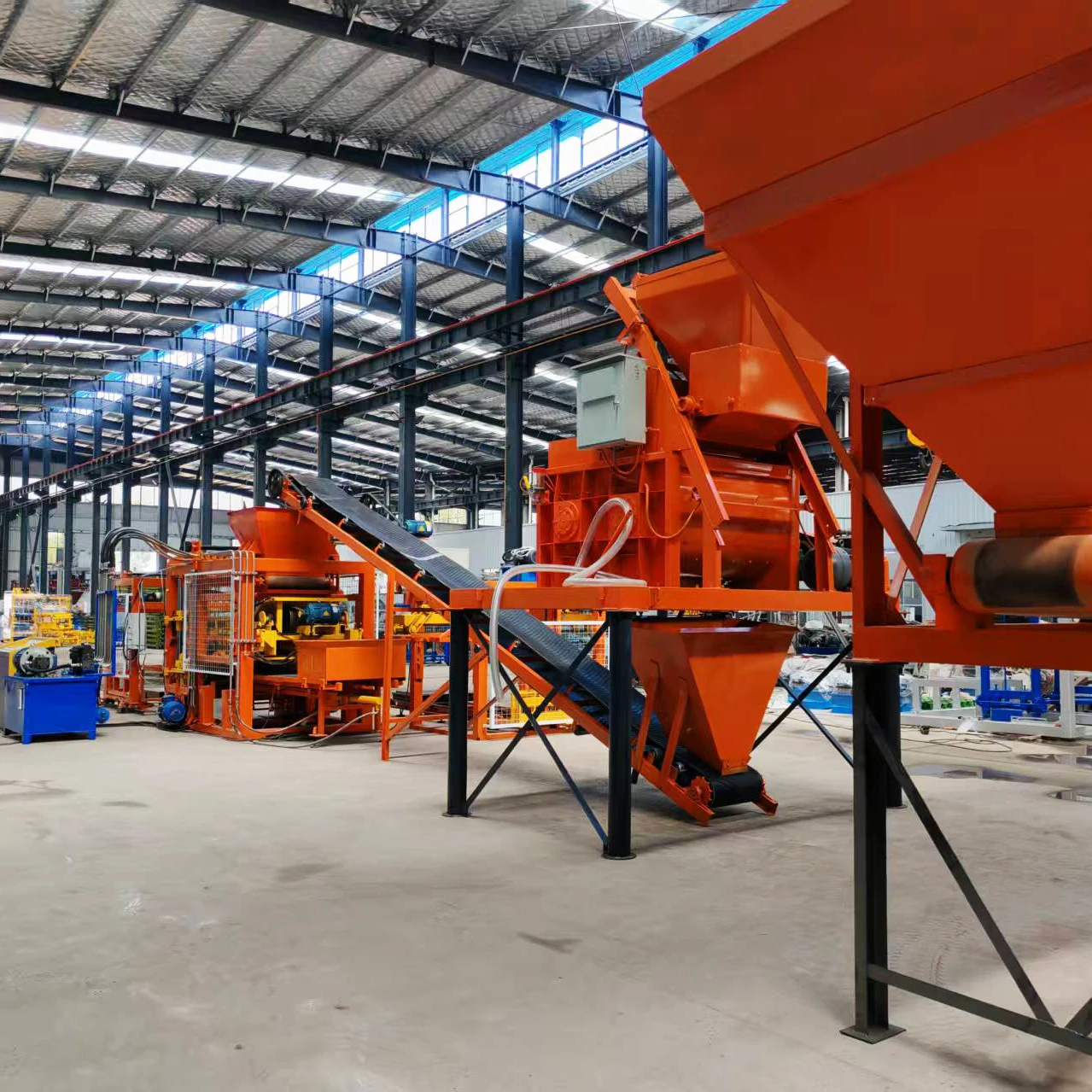
Block machinery is the only thing this operation focuses on, so the press, mould, pallet, and stacker are specified as one matched set rather than assembled from separate invoices. The QT6-15 configuration is set against the buyer’s actual mix design and target block format, not pulled from a catalogue default. Standard moulds are drawn from stock where available, and custom mould lead times are quoted separately so the buyer can plan around them. The electrical confirmation, packing photographs, and customs documentation travel together so there is nothing left to chase after the container sails.
Documentation & Verification
- Factory test record run on your target block format before crating
- Voltage, frequency, and PLC language confirmation sheet signed before dispatch
- Pallet specification matched to your curing rack and forklift dimensions
- Container loading plan with dismantling photographs at each stage
- Customs documentation package ready for your clearing agent
Installation, Commissioning & Support
- Foundation pad leveled for the 7100×1500 mm footprint with anchor bolt template
- Dedicated circuit sized for the 31.25 kW motor package and startup surge
- Stack reassembly and pallet feed alignment checked before first dry cycle
- Siemens PLC parameters set to local mix and target block density
- Operator training on mould change sequence and daily wear-part inspection
- Wear parts and mould replenishment list provided with the shipment
What to Prepare Before Requesting a Dispatch Quote
Send the block format your market actually sells, the curing rack dimensions at your site, and the forklift tine spacing so the pallet size can be confirmed. Include your local voltage and frequency, the language your operators read, and the aggregate type you plan to use so the mould and vibration setting can be matched before the machine is pulled from the floor.
Frequently Asked Questions
Q: Which QT6-15 configurations and standard moulds are currently available for dispatch?
A: The QT6-15 press is stocked with standard moulds for 390×190×190 mm hollow blocks, 240×115×53 mm solid blocks, and 225×112.5×60 mm "S" shape interlock pavers. Pallet size is 850×680 mm. Custom moulds are quoted separately with their own lead time. Current stock status is confirmed in writing at inquiry.
Q: What is the dispatch lead time for stocked versus made-to-order configurations?
A: Stocked QT6-15 units with standard moulds and confirmed electrical specifications can be prepared for container loading on a short lead time. Made-to-order configurations involving custom moulds, non-standard pallet materials, or specific automation add-ons require a longer preparation window quoted at inquiry.
Q: How is the QT6-15 dismantled for container loading, and what is the arrival estimate?
A: The press, stacker, and pallets are dismantled according to a loading plan that accounts for container door clearance. Dismantling and loading photographs are provided before the container is sealed. Arrival estimates depend on the destination port and shipping route and are quoted at booking.
Q: Can voltage, frequency, and PLC language be adjusted on a stocked machine?
A: Electrical configuration and PLC display language must be confirmed before the machine is wired and tested. If a stocked unit has already been configured for a different market, adjustment may require additional preparation time. This is confirmed before dispatch so there are no surprises at arrival.
Q: What customs and shipping documents come with the shipment?
A: Every QT6-15 shipment includes packing photographs, commercial invoice, packing list, bill of lading, and CE declaration where applicable. The documentation package is prepared to support customs clearance at the destination port and is shared with the buyer before the vessel sails.