

Description
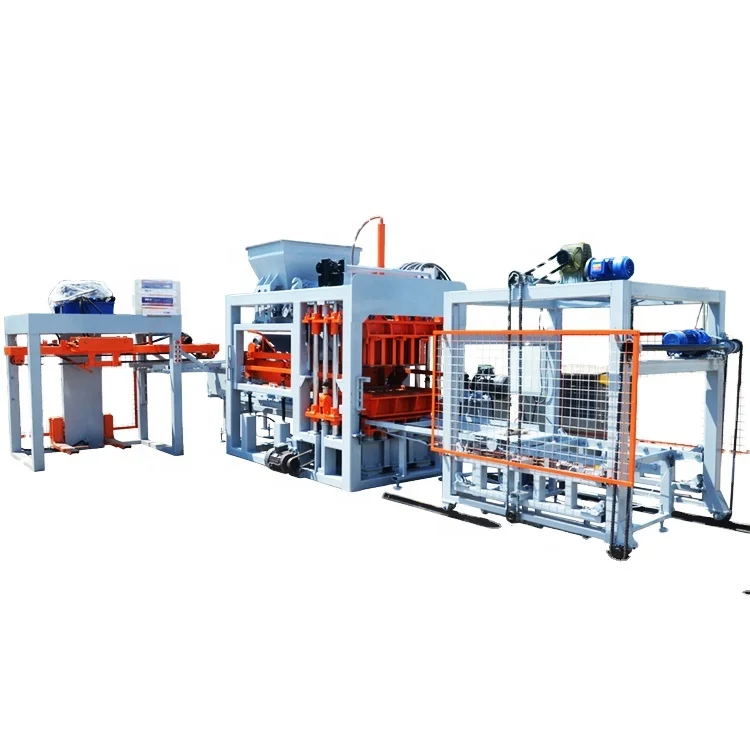
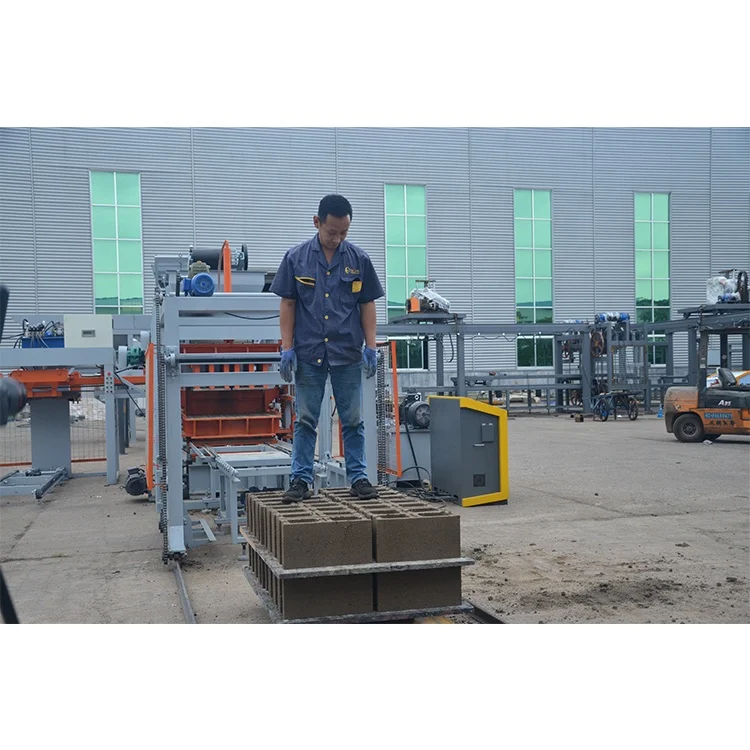
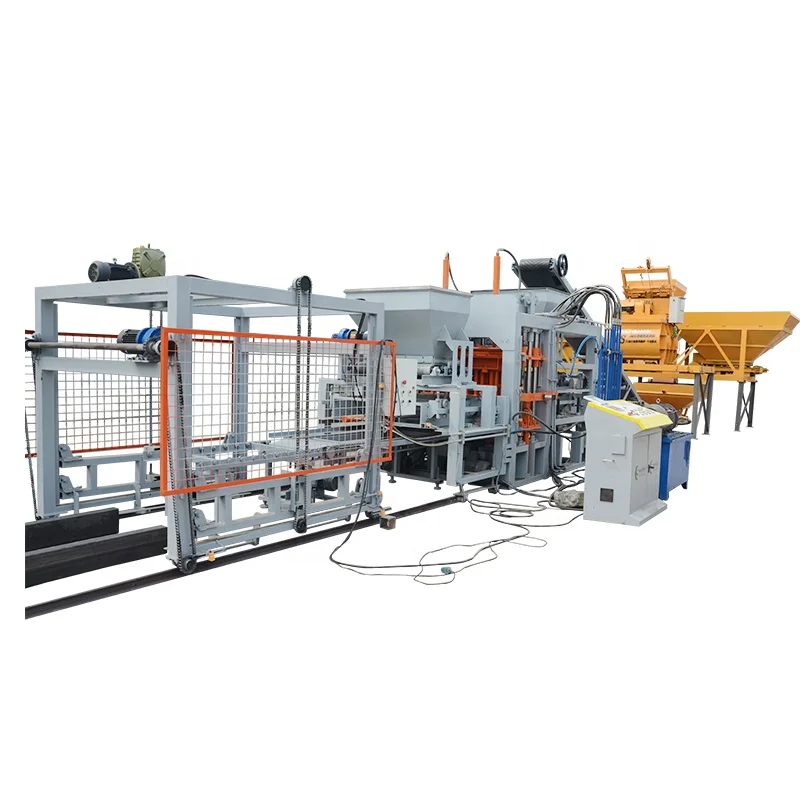
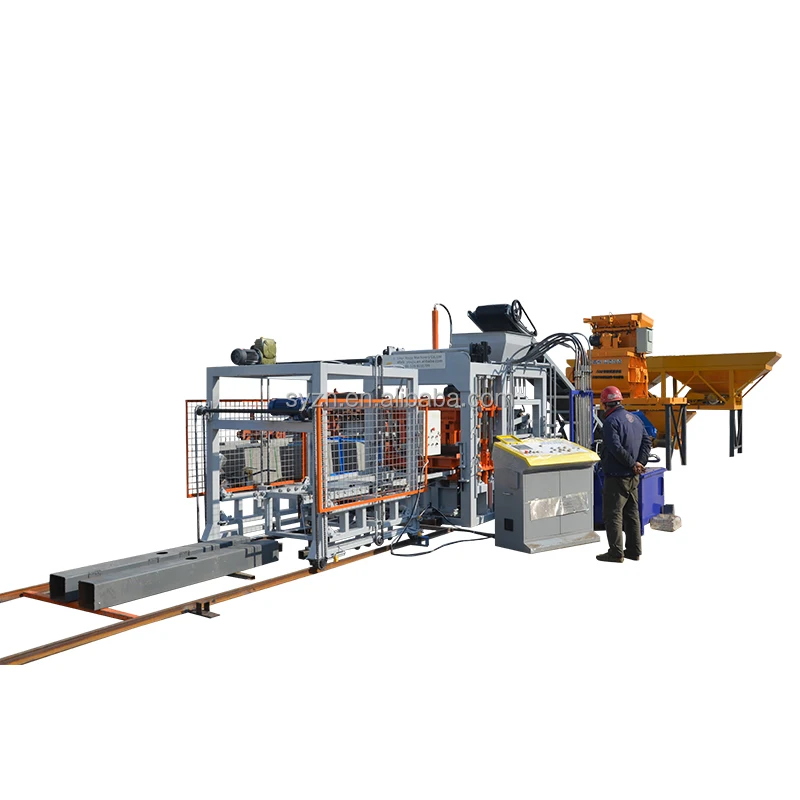
Dispatch-ready configuration — the QT7-15 block machine ships as a grouped line with batching, mixing, stacking, and hydraulic handling included, so a project-deadline buyer receives a complete working plant instead of a bare press waiting for unmatched components.
Technical Specifications
| Parameter | Value |
|---|---|
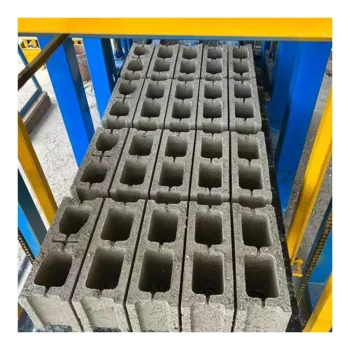
| Product Type | Automatic Hydraulic Hollow Block Making Machine |
| Model | QT7-15 |
| Host Machine Dimension | 3200 × 2300 × 2750 mm |
| Host Machine Weight | 6 Tons |
| Molding Area | 1150 × 700 mm |
| Workshop Area Required | 200 m² |
| Host Machine Power | 45 kW |
| Vibration Force | 100 kN |
| Vibration Method | Hydraulic + Platform Vibration |
| Vibration Frequency | 2800–4500 Times/Minute |
| Molding Period | 15 Seconds |
| Pallet Size | 1150 × 700 × 25 mm |
| Voltage | 220 / 380 / 415 / 440V (Customized) |
| Control System | Siemens PLC with independently developed program |
| Travel Switch | France Schneider / Japan Omron |
| Motor | Germany SIEMENS or CE standard brand |
| Mould Heat Treatment | Carburizing, 54–58 HRC, lifespan >100,000 cycles |
| Welding Method | Carbon dioxide protection welding |
| PLD1200 Batching Hopper Capacity | 1200 L |
| PLD1200 Storage Hopper | 4 × 2.5 m³ |
| PLD1200 Ingredient Precision | ±2% |
| PLD1200 Weight | 4500 kg |
| JS500 Mixer Charging Volume | 800 L |
| JS500 Mixer Discharging Volume | 500 L |
| JS500 Mixer Motor Power | 18.5 kW |
| JS500 Maximum Aggregate Size | 60 mm |
| Stacking Method | SY-4 mobile pallet stacker (3 kW) |
| Automation Level | Automatic with pallet feeder, brick receiver, and stacker |
| Grouped Equipment Included | QT7-15 host, pallet feeder, brick receiver, hydraulic station, PLD1200 batching machine, JS500 mixer, conveyor belt, hydraulic trolley, SY-4 stacker |
Application Suitability
| Application | Material or Output |
|---|---|
| Hollow block production | Crushed stone, river sand, cement, fly ash |
| Solid block production | Quarry dust, gravel, cement blend |
| Paving block production | Fine aggregate with cement and pigment |
| Color paver production | Face mix with color feeding system (optional) |
| On-site contractor production | Local aggregate sourced near project location |
| Plant-scale block manufacturing | Continuous output with automatic pallet handling and stacking |
Why the Voltage Question Must Come Before the Dispatch Date
Confirming target-market voltage and PLC language before production prevents the single most costly delay a project-deadline buyer faces after arrival.
I once watched a QT7-15 block machine in stock sit idle on a Dubai site for weeks because the control panel was wired for 380V 50Hz while the local grid ran 415V 60Hz. The developer was already chasing liquidated damages from the main contractor. The transformer fix alone consumed what should have been the commissioning window. Every week of standing time on a housing project costs real money in penalties and crew idle pay [NEED_CITE: liquidated damages common in Middle East construction contracts]. The QT7-15 automatic hydraulic block machine supports 220/380/415/440V configurations, but the right option must be locked in before the wiring harness goes into the cabinet.
Grouped Equipment Shipped as One Matched Set
The QT7-15 block machine in stock dispatches with its full grouped equipment list — PLD1200 batching machine, JS500 mixer, conveyor belt, hydraulic trolley, SY-4 stacker, pallet feeder, and brick receiver — rather than as a bare host press. This matters for a buyer on a project deadline because coordinating separate shipments from different suppliers introduces gaps that only become visible once the line is supposed to be running. One container load, one packing list, one arrival estimate.
Container Loading and Dispatch Timing
Stocked models move faster through the dispatch pipeline because the host machine, hydraulic station, and supporting equipment are already assembled and factory-tested before an order is confirmed. The QT7-15 block machine is dismantled into container-load sections — host frame, hydraulic station, batching and mixing units stacked and braced — with packing photographs provided before the container doors close. Dispatch lead time and an arrival estimate are quoted upfront so the buyer can align site readiness with the ship’s schedule rather than guessing at a port-to-port window [NEED_CITE: typical ocean freight transit times by route].
What the Specification Sheet Actually Means on Site
The 100 kN vibration force combined with hydraulic pressure determines how densely the QT7-15 compacts concrete into the mould cavity — this is what sets block strength, not cycle speed alone. A 15-second molding period looks competitive on paper, but the real daily output depends on which block format fills the 1150 × 700 mm molding area and how many cavities the chosen mould produces per cycle. The pallet size of 1150 × 700 × 25 mm is fixed, which means the buyer’s curing area and forklift must accept that dimension; discovering a mismatch after arrival forces a pallet re-order that stalls the line. The Siemens PLC with an independently developed control program manages batching accuracy through the PLD1200’s ±2% ingredient precision, keeping mix consistency from one batch to the next so that block strength does not drift across a production shift.
The Cost of Overlooking Pallet and Stacking Details
A quotation that covers the press but leaves pallet handling, stacking, and curing as the buyer’s problem creates hidden costs that surface only on day one of production. Hand-stacking hollow blocks off a moving line is not a sustainable plan — it slows the press, breaks blocks, and burns labor. The QT7-15 line includes the SY-4 mobile pallet stacker rated at 3 kW, which takes loaded pallets from the brick receiver and stacks them for the curing area. If the buyer’s existing forklift cannot handle 1150 × 700 mm pallets or the curing rack spacing does not match, the stacker sits unused and the line bottlenecks at the receiver end [NEED_CITE: block plant layout planning for pallet flow and curing area].
What Stock Availability Actually Delivers
The grouped equipment list is built and tested as one system before it leaves the factory, so the PLD1200 batching machine has already been paired with the JS500 mixer and the conveyor belt length is matched to the line layout. Mould carburizing treatment at 54–58 HRC gives a lifespan exceeding 100,000 cycles on standard abrasive aggregate, which means the first mould replacement is not an immediate concern for a buyer starting production. The host machine’s 45 kW power draw and the JS500 mixer’s 18.5 kW motor define the electrical supply the site must prepare — a single figure the buyer can hand to the local electrician before the container arrives. Travel switches from Schneider or Omron are components that any industrial supplier in the destination market can source, reducing downtime if a switch fails mid-shift.
Documentation & Verification
- Factory test record on your block format before container loading
- Line layout drawing showing PLD1200, JS500, and stacker positions
- Voltage, frequency, and PLC display language confirmation sheet
- Packing photographs and container loading plan before dispatch
- Customs documentation support for destination country clearance
- Hydraulic and electrical schematic for on-site commissioning team
Installation, Commissioning & Support
- 200 m² workshop area required for QT7-15 host plus curing space
- 45 kW host plus 18.5 kW mixer demand a dedicated power circuit
- Machine arrives dismantled; on-site assembly follows the hydraulic schematic
- PLC language and travel switch calibration set during first commissioning run
- SY-4 stacker positioning tuned to the buyer’s pallet rack spacing
- Mould change procedure trained on-site with buyer’s production crew
What to Include in Your Inquiry
Share your target block format and daily volume so the mould cavity count and cycle calculation match your actual product. State the local voltage and frequency at the site, along with your preferred PLC display language, so the control cabinet is wired and programmed before dispatch. Provide the dimensions of your existing curing area and forklift capacity to confirm that the 1150 × 700 mm pallet size fits your site without modification.
Frequently Asked Questions
Q: What is the dispatch lead time for the QT7-15 and its grouped equipment?
A: Stocked units ship within a short window after voltage and PLC language confirmation. The full grouped equipment list — batching machine, mixer, stacker, conveyor, hydraulic trolley — dispatches together as one matched set. Lead time and arrival estimate are quoted in writing before the payment milestone so you can plan site readiness.
Q: How is the machine dismantled and loaded into containers?
A: The host machine, hydraulic station, and supporting equipment are broken down into container-load sections with bracing and lashing. Packing photographs and a container loading plan are provided before dispatch so the buyer can verify the shipping arrangement matches the site’s unloading capability.
Q: Which voltage and frequency options are confirmed before dispatch?
A: The QT7-15 supports 220, 380, 415, or 440V configurations. The exact voltage, frequency, and PLC display language must be confirmed before the wiring harness is built into the cabinet. This prevents commissioning delays that occur when the control panel does not match the local grid at the destination.
Q: What customs documentation is provided for destination clearance?
A: Customs documentation support is included with the shipment. The file set covers the commercial invoice, packing list, and any declarations required by the destination country. CE declaration status for applicable components is confirmed during the order process so clearance is not delayed at the port.
Q: Are moulds and hydraulic wear parts shipped with the first order?
A: The first mould set matched to your block format is included with the QT7-15 line. Hydraulic wear parts and a spare parts list are provided so the buyer can plan the first replacement order before the original mould reaches its carburized lifespan limit.