

Description
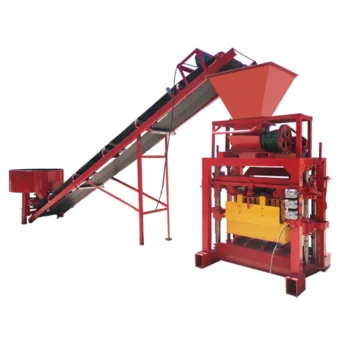
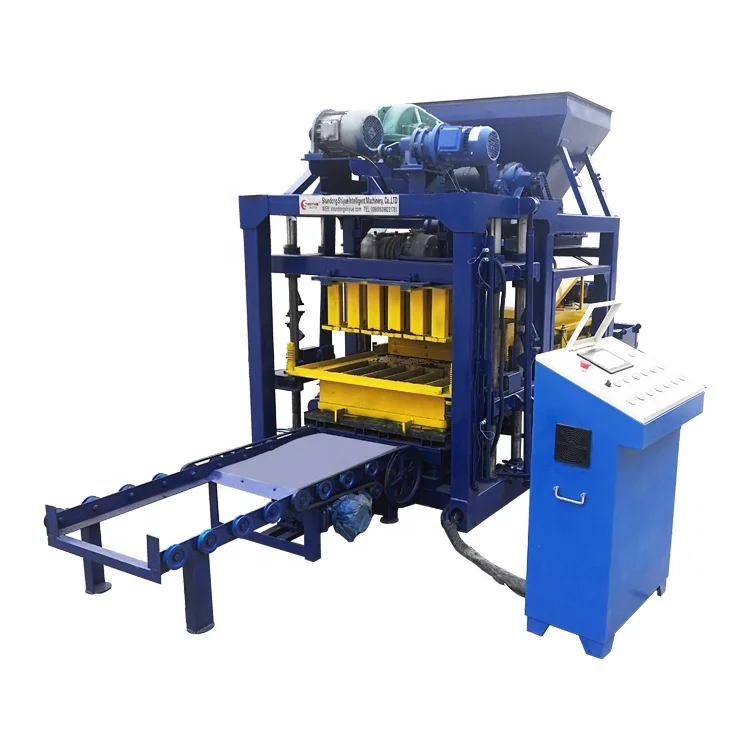
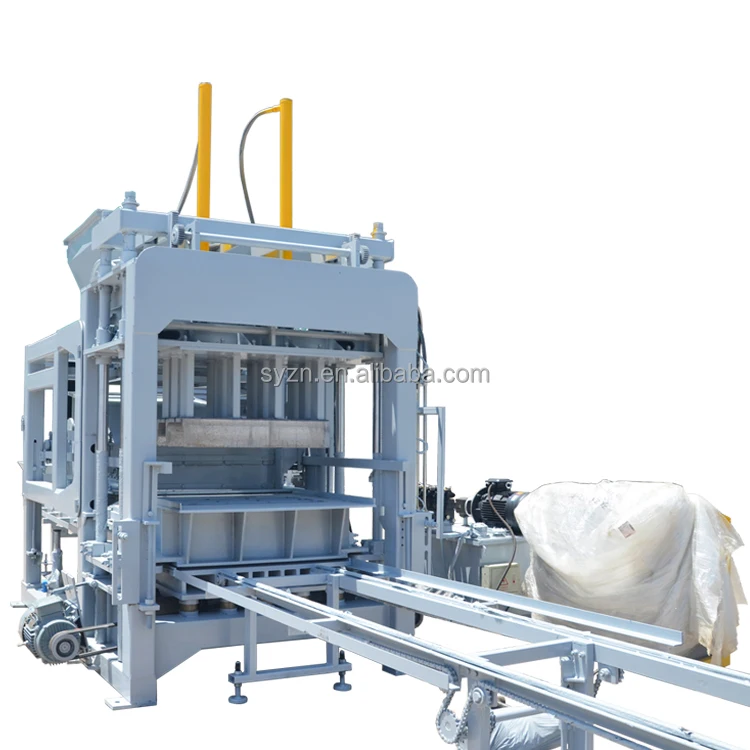
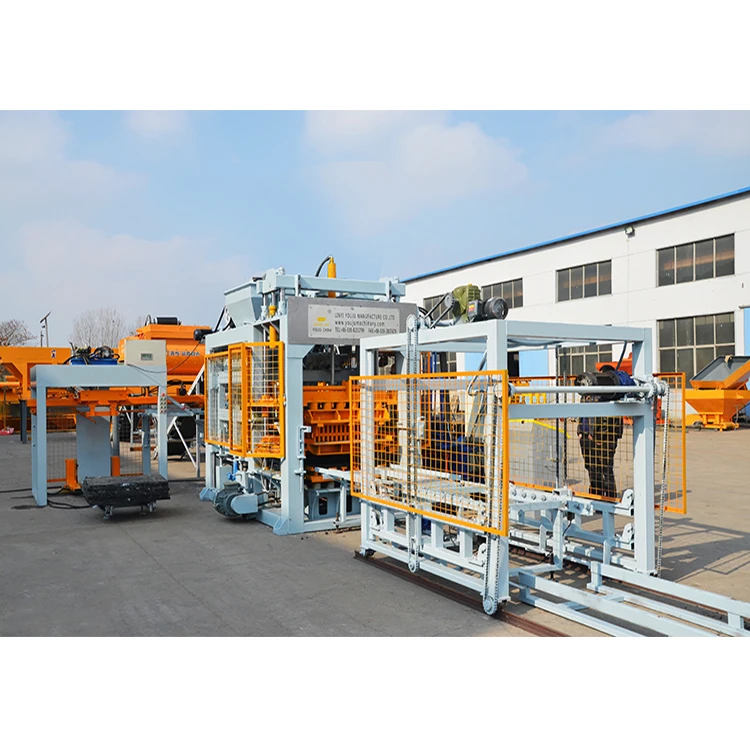
Stock-ready hydraulic block press — the QT8-15 is held in finished inventory with standard moulds so that dispatch lead times are confirmed before your order is placed.
Technical Specifications
| Parameter | Value |
|---|---|
| Model | QT8-15 |
| Product Type | Fully Automatic Hydraulic Concrete Block Making Machine |
| Overall Dimensions (L×W×H) | 8300 × 1860 × 3000 mm |
| Molding Cycle | 15–20 s (basis to be confirmed) |
| Vibration Force | 55 KN |
| Total Power | 37.2 kW |
| Mixer | JS750 |
| Pallet Size | 1020 × 900 mm |
| Total Weight | 8 T |
| Control System | PLC control system |
| Output Capacity | 1920 pcs/hour (basis not stated in source — confirm block format / material / thickness) |
| Hydraulic Station | Included |
| Pallet Feeder | Included |
| Brick Conveyor | Included |
| Block Sweeper | Included |
| Material Feeder | Included |
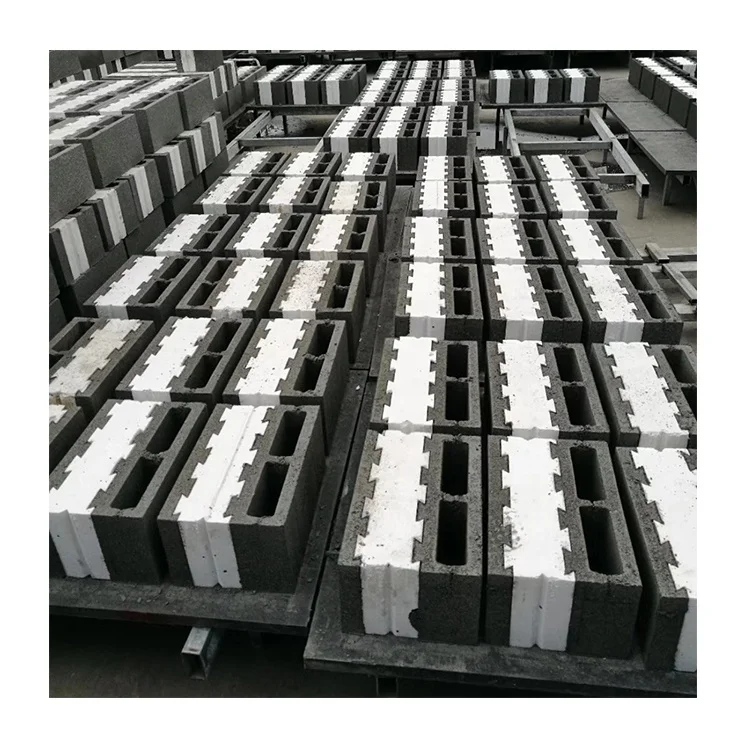
| Applied Products | Paver, solid block, hollow block, curbstone |
| Raw Materials | Crushed stones, sand, cement, dust, fly ash |
Application Suitability
| Application | Material or Output |
|---|---|
| Interlocking and standard concrete pavers for municipal walkways | Crushed stone, sand, cement with pigments for surface colour |
| Load-bearing hollow blocks for residential and commercial walls | Sand, fly ash, cement blended with coarse aggregate |
| Solid concrete blocks for boundary walls and foundations | Dense aggregate mix with cement binder |
| Precast kerbstones and curb units for road edging | High-density mix using crushed stone and cement |
Stock Availability Eliminates the Commissioning Delay Most Buyers Never Budget For
A stocked QT8-15 block machine in stock means your production line can be shipping before the contract ink is dry, not waiting through a full build cycle.
I have stood on sites in West Africa where the concrete foundation was already cured, the curing racks were welded, and the crew was hired — but the block press was still on a drawing board six weeks away. Project deadlines do not pause for factory lead times. A fast delivery concrete block making machine is only fast if the unit is physically built, tested, and crated before the purchase order is signed. That gap between quoted delivery and actual arrival is where most first-time plant owners lose their margin [NEED_CITE: common causes of project delay in concrete block plant setup].
Dispatch Timeline You Can Build a Schedule Around
When we confirm a QT8-15 block machine in stock, the dispatch lead time is written into the quotation — not estimated in ranges. Standard mould sets for hollow blocks and pavers that are already on the shelf ship with the press. Moulds that require a production run are flagged immediately so the buyer decides whether to wait or substitute a stocked format. Container loading plans, including how the main frame, hydraulic station, and pallets are dismantled and secured, are reviewed before payment so there are no surprises at the port of loading.
Pallet and Peripheral Compatibility Before the Crate Is Sealed
The 1020 × 900 mm pallet size on the QT8-15 must match the curing racks and forklifts already at your destination site. A fast delivery concrete block making machine is not truly fast if the buyer spends the first two weeks sourcing pallets or modifying rack spacing after arrival. We confirm pallet material — wood, bamboo, or composite — against your curing conditions and existing handling equipment before the machine leaves the yard. This step alone prevents more on-site delays than any shipping speed can recover [NEED_CITE: pallet sizing standards for concrete block curing yards].
Why Molding Cycle and Output Figures Require Format Context
The QT8-15 molding cycle of 15–20 seconds varies depending on the block format, mix consistency, and target density. A hollow block with thin walls requires a different vibration profile than a dense paving stone. Stating "1920 pieces per hour" without naming the reference block format gives a number that may not reflect your actual daily throughput. Before the machine ships, request a per-format capacity calculation that states the assumed block dimensions, mix design, and curing schedule so the output figure aligns with what your site will actually produce.
Selecting the Wrong Automation Level or Voltage After Arrival
I have watched operators in Lagos stare at a PLC screen displaying English text they could not read, shutting down a fully automatic line on day one because the alarm codes meant nothing to them. The QT8-15 ships with a PLC control system, and the display language must be confirmed before the electrical cabinet is sealed. Voltage and frequency — whether your site runs on 380 V / 50 Hz or 440 V / 60 Hz — must also be locked in. A QT8-15 block machine in stock sitting in your yard with the wrong voltage configuration is not a production asset; it is a very expensive problem [NEED_CITE: voltage and frequency standards by export market].
The Hidden Cost of Skipping Pre-Shipment Configuration Checks
When a buyer accepts a catalogue default configuration without verifying the mix design against locally available aggregate, the machine arrives optimized for materials that do not exist in their region. Sourcing the specified sand grade or fly ash type can add weeks and cost premiums that erase any advantage of buying a fast delivery concrete block making machine in the first place. Equally, if the quotation covers only the press and omits pallet handling, stacking, or curing rack systems, output piles up on the ground waiting for manual labour to catch up — negating the automation level the buyer paid for [NEED_CITE: CE machinery directive requirements for industrial equipment].
Why Buyers Source This Press Through Our Stock Programme
The QT8-15 is treated as a matched system: press, hydraulic station, JS750 mixer, pallet feeder, brick conveyor, and block sweeper are specified together so cycle times align across every station. Configuration is set against the buyer’s actual aggregate and target block format, not a generic default. Standard moulds for pavers, hollow blocks, solid blocks, and curbstones are held in inventory alongside the press, and custom mould drawings can be produced when the buyer’s market requires a format outside the stocked range. Dispatch and arrival timing are confirmed in writing before the order is placed, and installation support with operator training follows the machine to site.
Documentation & Verification
- Line layout drawing showing QT8-15 station spacing and pallet flow path
- Capacity calculation sheet stating the specific block format assumed
- Factory test record on the buyer’s target block dimensions before dispatch
- Voltage, frequency, and PLC display language confirmation document
- Hydraulic and electrical schematic with confirmed motor ratings
- Packing photographs and container loading plan before shipment
Installation, Commissioning & Support
- Foundation plan accounts for the 8300 × 1860 mm footprint and 8-tonne operating weight
- Electrical supply sized for 37.2 kW total draw with dedicated circuit breaker
- Main frame dismantled for container loading and reassembled on cured foundation
- Hydraulic station pressure set against the buyer’s mix design during commissioning
- PLC language and alarm codes verified with local operators before full production
- Wear parts list and mould maintenance schedule provided at handover
Start the Specification Conversation
To match the right QT8-15 configuration to your project, share the block format you intend to produce, the daily output your schedule demands, and the aggregate materials available locally. Confirm your site voltage, frequency, and preferred PLC display language. If you already have curing racks and forklifts, provide the pallet dimensions currently in use so the 1020 × 900 mm standard can be verified or adjusted before the machine is crated.
Frequently Asked Questions
Q: Which QT8-15 configurations and moulds are currently in stock versus built to order?
A: Standard QT8-15 units with hollow block and paver moulds are held in finished stock. Custom moulds for specific interlocking profiles or non-standard kerbstone dimensions require a production run. We confirm which items ship from inventory and which are built to order before you commit, so the delivery timeline is transparent.
Q: What is the realistic dispatch lead time and how is arrival estimated for my port?
A: Stocked QT8-15 machines are crated and dispatched within days of order confirmation. Arrival estimates factor in ocean transit to your destination port and customs clearance windows. We quote the estimated arrival date in writing before payment so your construction schedule can be planned around a known delivery window.
Q: How is the machine dismantled and loaded into containers for shipment?
A: The QT8-15 main frame, hydraulic station, JS750 mixer, and pallets are separated and secured in standard containers. A detailed loading plan showing weight distribution and bracing method is shared before the container is sealed. This prevents damage in transit and simplifies reassembly on your foundation.
Q: What voltage, frequency, and PLC language options can be confirmed before dispatch?
A: The QT8-15 electrical system is configured to match your site voltage and frequency before the machine leaves the factory. The PLC display language is confirmed with your operations team so that alarm codes and menu navigation are readable from day one. These details are documented in the pre-shipment confirmation file.