Description
Fast Dispatch Block Lines — Stocked QTJ4-25 machines and standard moulds ready for container loading, with arrival timing confirmed before you commit.
Technical Specifications
| Parameter | Value |
|---|---|
| Model | QTJ4-25 |
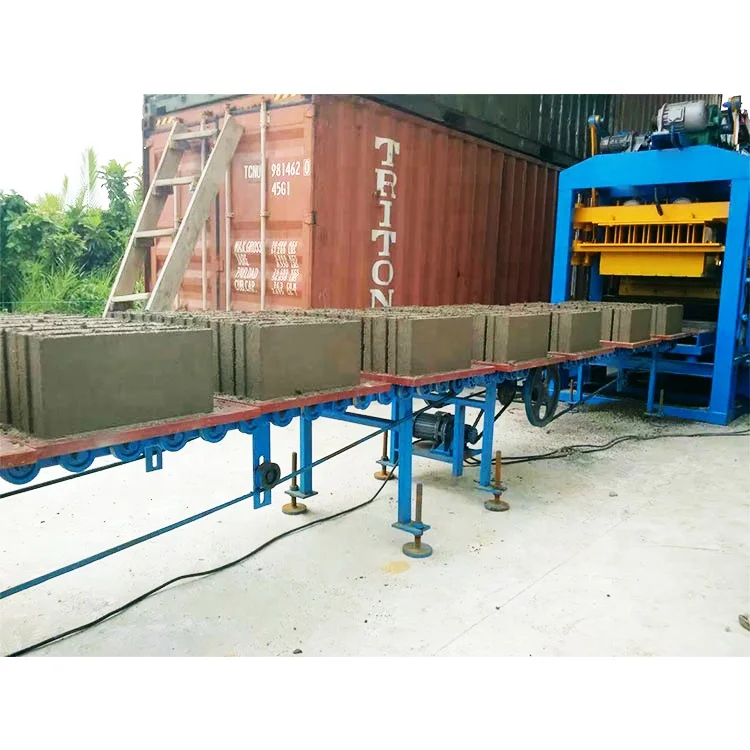
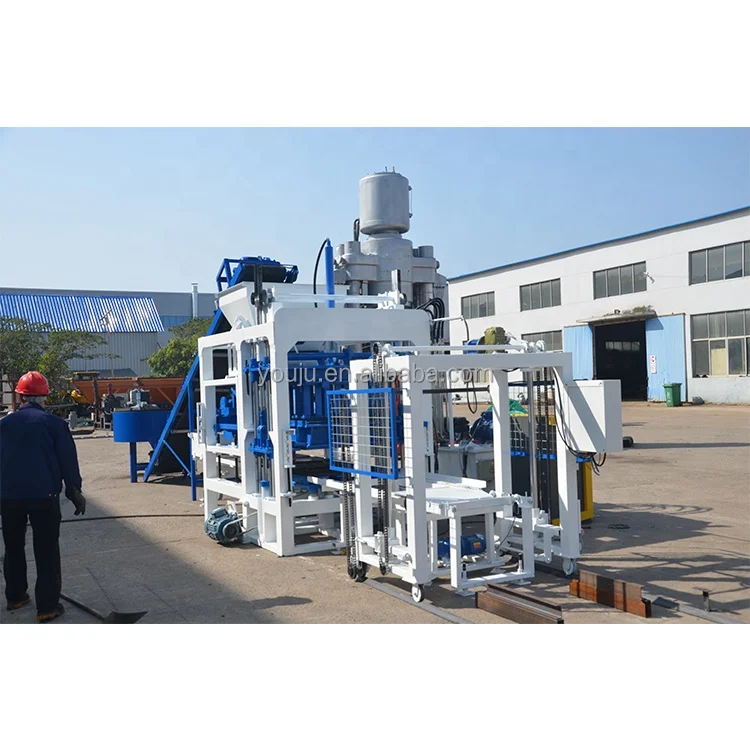
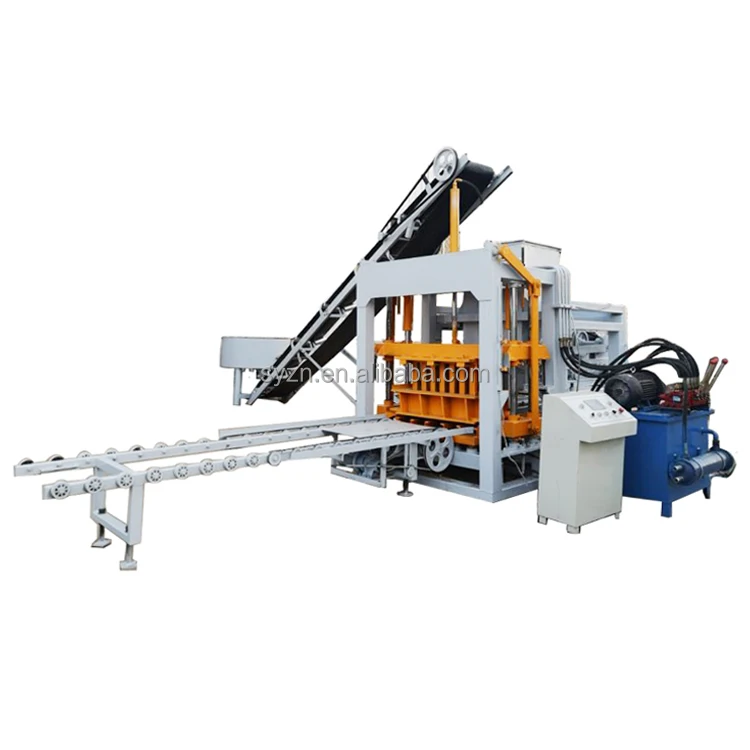
| Product Type | Semi-Automatic Concrete Block Making Machine |
| Overall Dimensions (L×W×H) | 6400×1500×2700 mm |
| Molding Cycle | 25 s |
| Vibration Frequency | 2800–5100 r/min |
| Exciting Force | 60 kN |
| Vibration Type | Bed mould vertical vibration + upper mould compression vibration |
| Total Power | 17.9 kW |
| Mixer Model | JQ350 |
| Pallet Size | 850×550×20 mm |
| Net Weight | 2500 kg |
| Hydraulic Station | Equipped (high-pressure hydraulic system) |
| Automation Level | Semi-automatic |
| Output Capacity (390×190×190 mm Hollow Block) | 4 pcs/mould, 480 pcs/h, 3800 pcs/8 hr |
| Output Capacity (400×150×200 mm Hollow Block) | 5 pcs/mould, 600 pcs/h, 4800 pcs/8 hr |
| Output Capacity (240×115×53 mm Solid Brick) | 18 pcs/mould, 2100 pcs/h, 17000 pcs/8 hr |
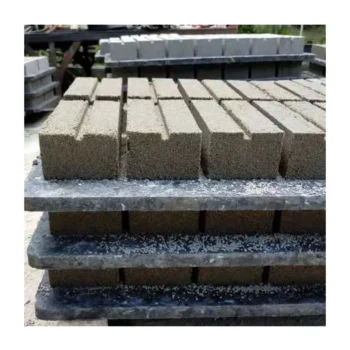
| Applied Products | Hollow block (8 inch, 6 inch), solid brick, paver, curbstone |
| Raw Materials | Crushed stones, sand, cement, dust, fly ash |
Application Suitability
| Application | Material or Output |
|---|---|
| On-site block production for construction contractors | Hollow blocks and solid bricks from local crushed stone and cement |
| Small to medium concrete block plants | Standard 6-inch and 8-inch hollow blocks for regional building supply |
| Paver and kerbstone manufacturing | Interlocking pavers and curbstones with mould change |
| First block plant for entrepreneurs | Semi-automatic line with JQ350 mixer for lower initial investment |
What "480 Pieces per Hour" Leaves Out When the Machine Arrives Late
A stocked QTJ4-25 block machine in stock fast delivery gets you producing while others are still waiting for production slots.
The cycle time printed on a brochure assumes a controlled factory test with clean aggregate and a seasoned operator. On an actual job site in sub-Saharan Africa or Southeast Asia, the local sand carries clay, the crusher dust varies by batch, and the crew is learning the machine for the first time. I have watched contractors lose an entire project phase because the block machine they ordered was built to a 60-day production schedule that nobody factored into the construction timeline [NEED_CITE: typical construction project milestone penalties for material delays]. When the QTJ4-25 block machine in stock fast delivery is what you need, the question is not just whether it can produce 480 hollow blocks per hour based on a 390×190×190 mm format — it is whether it ships this week or six weeks from now.
Stock Configuration Means Predictable Departure
When a QTJ4-25 block machine in stock fast delivery is available, the machine has already passed its factory test and the standard mould set is matched to the press. There is no waiting for a custom mould to be machined or a hydraulic station to be sourced from a third party. The JQ350 mixer and the 850×550×20 mm pallets are allocated as part of the same shipment. This matters because a missing pallet batch or an unmatched mixer can hold up an entire container while the rest of the line sits ready on the warehouse floor.
Container Loading and Dismantling for Shipment
The QTJ4-25 is dismantled into its main frame, vibration table, and hydraulic station for loading into a standard container. Roughly 500 pallets of 850×550×20 mm fit alongside the press and mixer. The exact dismantling arrangement and the pallet count per container depend on the destination port’s handling equipment — a port with a forklift rated under 3 tonnes requires a different loading plan than one with heavy-lift capacity. Confirming this before dispatch prevents surcharges at arrival [NEED_CITE: container loading best practices for heavy industrial machinery].
Arrival Timeline Quoted at the Point of Order
The value of a QTJ4-25 block machine in stock fast delivery is not just that it leaves the factory quickly. The transit estimate from dispatch to your destination port is provided before you sign the order, so the construction schedule or the first production run can be planned against a real date. Standard moulds ship with the press; additional custom moulds follow a separate production lead time that is stated upfront so it does not surprise you after the container has sailed.
Why Vibration Force and Hydraulic Pressure Both Matter for Block Density
The QTJ4-25 delivers 60 kN of exciting force through a dual vibration system — the bed mould vibrates vertically while the upper mould compresses downward. This combination compacts the concrete mix from both directions during the 25-second molding cycle, which is what gives a hollow block its structural density. The equipped high-pressure hydraulic station holds the upper mould pressure steady throughout each cycle. If vibration force is high but hydraulic pressure is insufficient, the block surface cracks on ejection. If hydraulic pressure is high but vibration is weak, the block comes out dense on the outside but honeycombed inside. Both systems must be matched to the specific aggregate gradation you are feeding into the JQ350 mixer.
The Hidden Cost of Skipping Electrical Confirmation Before Shipment
One of the most common reasons a block machine sits idle after arrival is an unconfirmed voltage and frequency specification. The destination country may run on 415V/50Hz three-phase while the machine was wired for 380V/60Hz based on a catalogue default. I have seen machines wait weeks for a step-down transformer that could have been specified at the order stage. The QTJ4-25 total power draw of 17.9 kW including the mixer means the electrical supply must be sized correctly, and the control language on the panel must match what the local operator reads [NEED_CITE: voltage and frequency standards by export market].
Why Buying Here Reduces Dispatch Risk
Block machinery is the single focus of this operation, which means the QTJ4-25 press, its moulds, pallets, and the JQ350 mixer are specified and stocked as one matched system rather than assembled from separate suppliers on the day you order. Standard moulds for 6-inch hollow blocks, 8-inch hollow blocks, solid bricks, and pavers are kept in inventory alongside the machines. Voltage and control language are confirmed before the machine leaves the factory, not discovered as a problem at commissioning. The factory test record for your specific machine travels with the shipment so you can verify performance against the stated cycle time.
Documentation & Verification
- Factory test record stating molding cycle and block format tested
- Machine specification sheet with confirmed voltage and frequency
- Mould drawing and format list for each standard mould shipped
- Pallet specification matching 850×550×20 mm dimensions and material grade
- Hydraulic and electrical schematic for on-site troubleshooting
- Packing photographs taken before container sealing
Installation, Commissioning & Support
- Foundation must accommodate 6400×1500 mm footprint with vibration isolation
- Dedicated power circuit sized for 17.9 kW total draw including JQ350 mixer
- Machine reassembled from dismantled shipment state with hydraulic station reconnection
- First-run cycle time verification against 25-second baseline with local aggregate
- Operator training on mould change procedure for hollow block to paver transitions
- Wear parts list covering hydraulic seals and vibration table bearings
What to Prepare Before Requesting a Dispatch Quote
To confirm which QTJ4-25 block machine in stock fast delivery configurations are available for your timeline, share the destination port and the local voltage and frequency so the electrical package can be matched before the container is booked. If you already have a curing area and forklift on site, confirm the pallet size and the forklift load rating so the 850×550×20 mm pallet shipment is compatible with your handling equipment. State the block formats you will produce first so the correct standard moulds are allocated from stock.
Frequently Asked Questions
Q: Which QTJ4-25 configurations and standard moulds are in stock right now?
A: Stocked units include the QTJ4-25 semi-automatic press with the JQ350 mixer and high-pressure hydraulic station. Standard moulds for 390×190×190 mm and 400×150×200 mm hollow blocks, plus 240×115×53 mm solid bricks, are typically available from inventory. Custom moulds require a separate production lead time that is quoted at the point of order.
Q: How is the machine packed and loaded into a container?
A: The QTJ4-25 is dismantled into its main frame, vibration table, and hydraulic station for loading. Approximately 500 pallets of 850×550×20 mm ship in the same container alongside the press and mixer. The exact loading plan is confirmed based on the destination port’s forklift and handling capacity.
Q: What is the estimated arrival timeline from dispatch to my port?
A: The transit estimate is provided at the point of order once the destination port is confirmed. Stocked machines depart within a short lead time after electrical specifications are verified. The arrival estimate accounts for standard shipping routes and does not include customs clearance duration at your end.
Q: Are voltage and frequency confirmed before shipment?
A: Yes. The QTJ4-25 draws 17.9 kW total, and the electrical package must match your local supply before the machine is wired. Voltage, frequency, and control panel language are confirmed during the order process to prevent commissioning delays after the machine arrives at your site.
Q: How quickly can additional custom moulds be produced if not in stock?
A: Custom moulds are built to buyer drawings and follow a separate production schedule from the stocked press. The lead time is stated at the time of order so you can plan production phases accordingly. Standard moulds already in inventory ship with the machine and do not add to the dispatch timeline.