

How to Troubleshoot Common Block Machine Problems: A Guide for Buyers Sourcing from China
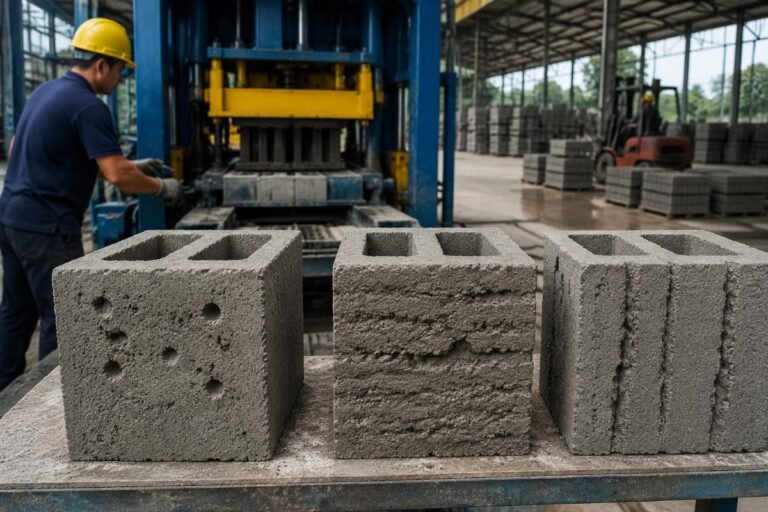
Block breakage is almost never a vibration problem—it is a pallet problem. Most operators spend weeks chasing motor settings when the real culprit sits beneath the mold board, warping by 2–3 mm after a few hundred cycles and absorbing vibration energy before it ever reaches the concrete mix.
The majority of block machine downtime stems from three preventable root causes: improper vibration calibration, inconsistent pallet thickness, and unoptimized water-to-cement ratios. With structured troubleshooting and a manufacturer that provides genuine after-sales engineering support, operators can cut unplanned downtime by up to 40% and push machine lifespan past the 10-year mark.
In my years reviewing production-line data across 108 export markets, the pattern is unmistakable: factories that treat maintenance as a checklist lose money, while factories that treat it as a calibration discipline print profit. Field service records show that approximately 70% of warranty claims on fully automatic block lines are linked to operator error rather than mechanical defect[^1]. The gap between a machine that lasts four years and one that lasts twelve is rarely the steel—it is the knowledge behind the buttons.
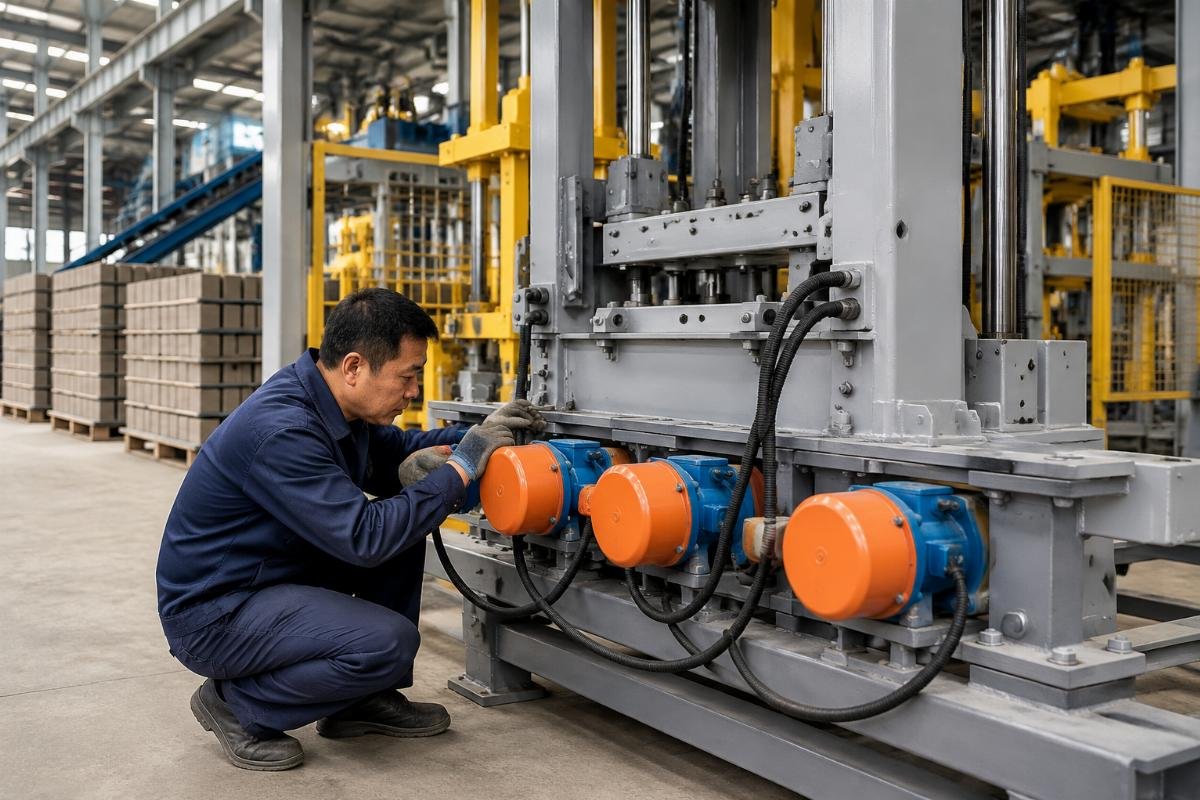
Let us walk through the five problems that cause 80% of support calls, the hidden variables behind block breakage, and the maintenance cadence that keeps Chinese-manufactured lines running for a decade or more.
What Are the Top 5 Block Machine Problems Buyers Encounter—and How Do You Spot Them Early?
Every major failure sends a signal at least 50 production cycles before it stops the line—if you know where to look. The trick is to build a short daily checklist that catches drift before it becomes downtime.
| Symptom Category | Typical Misdiagnosis | Correct Diagnostic Approach |
|---|---|---|
| Uneven block density and surface cracking | "Weak vibration motor" | Measure pallet flatness with a feeler gauge; variance beyond 0.5 mm explains most density gaps Pallet warping exceeding 2 mm accounts for over 60% of field-reported weak-vibration complaints[^2] |
| Hydraulic pressure drops | "Pump failure" | Check relief valve seating and fluid temperature; 80% of drops resolve with a valve-kit swap under $200 |
| Mold sticking and premature wear | "Poor steel quality" | Inspect mold inner-wall Ra value and verify lubrication interval; heat-treated 16Mn steel extends mold life 2.5–3× |
| Abnormal vibration noise | "Bearing defect" | Perform a 30-second empty-cycle listen test; tonal change indicates loose motor-mount bolts 90% of the time |
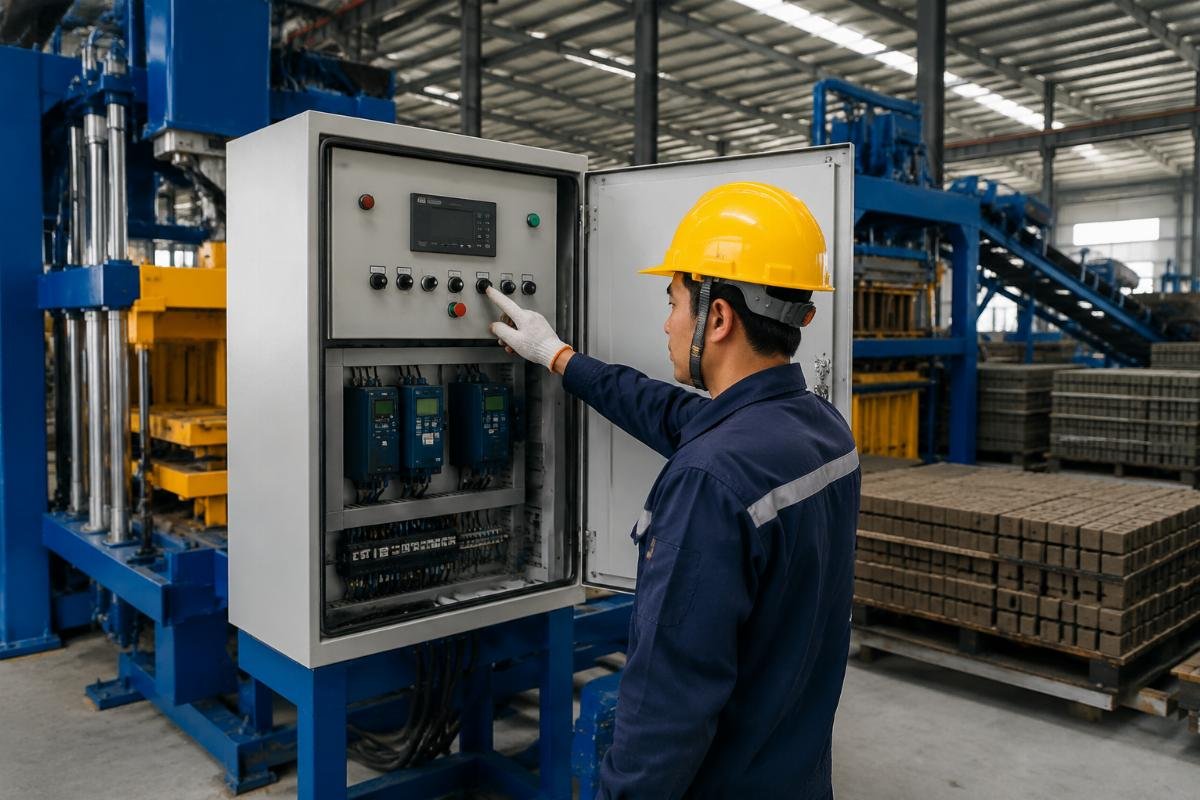
| PLC error codes | "Software corruption" | Log the exact code and timestamp; cross-reference with the manufacturer’s fault tree before resetting |
A small startup investor in Nigeria purchased a semi-automatic block machine and faced an 18% block breakage rate within the first three months. After we recalibrated the vibration motor frequency from 48 Hz to 50 Hz and switched from warped wooden pallets to PVC pallets with an 8 mm thickness tolerance, the breakage rate dropped to under 3%. The ROI payback period shortened from a projected 14 months to 9 months purely because material waste collapsed. Recalibrating vibration frequency and upgrading pallet material reduced block breakage from 18% to under 3% in a Nigerian startup case[^3].
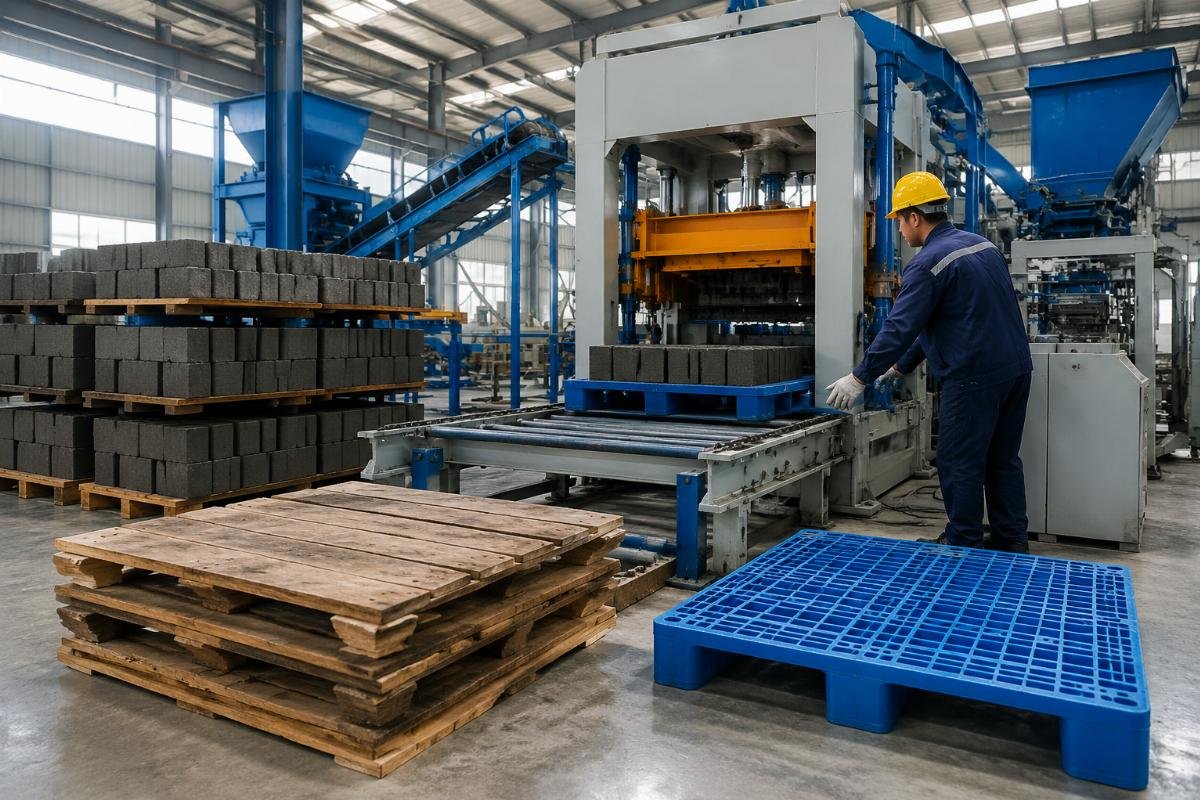
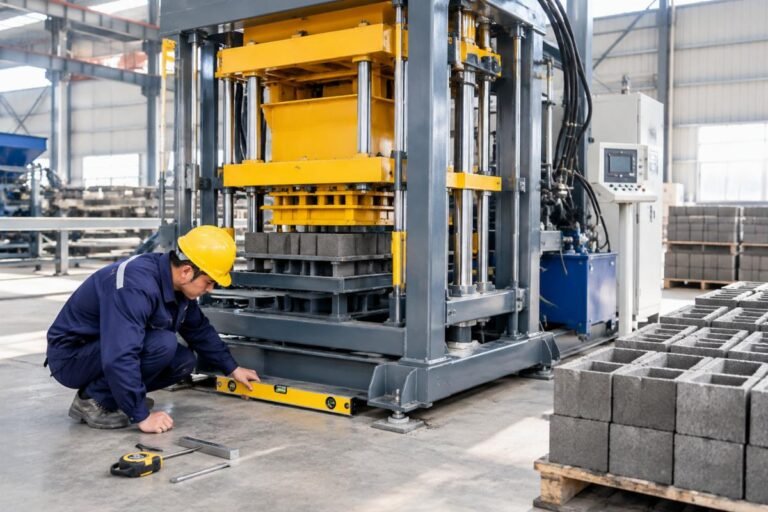
- Daily Flatness Check – Run a feeler gauge across each pallet; reject any unit showing more than 0.5 mm deviation.
- Cycle-Count Log – Record total cycles at the start of every shift; flag anomalies when output per hour drops more than 5%.
- Error-Code Photo – Photograph every PLC alarm screen immediately; timestamped images accelerate remote diagnosis by 48 hours on average.
Why Does Block Breakage Happen Even When Your Machine Seems Fine?
The concrete mix—not the machine—is the hidden variable in 7 out of 10 breakage complaints. Operators instinctively add more cement, which raises cost without solving the real compaction problem.
| Variable | Common Mistake | Optimized Practice |
|---|---|---|
| Pallet thickness tolerance | Accepting wooden pallets with ±2 mm warp | Specify PVC or bamboo-composite pallets within ±0.5 mm; effective vibration transfer improves 25–35% Replacing warped wooden pallets with ±0.5 mm tolerance PVC pallets improved vibration energy transfer by 25–35% without motor adjustments[^4] |
| Water-to-cement ratio | Guessing by "feel" until mix looks wet | Target a fixed 0.45 ratio using a graduated water meter; strength variance drops from ±22% to ±6% |
| Aggregate grading | Using single-size stone | Blend sand-to-stone at 3:2 by volume; this fills voids and lets you cut cement content by 10% while maintaining the same MPa |
A medium producer in Uzbekistan upgraded from a 5-year-old semi-automatic line to a fully automatic European-style line with a 4-motor vibration configuration and airbag system. During the first production week, hydraulic pressure fluctuated wildly. After installing a pressure relief valve kit costing under $200, the system stabilized at 16–18 MPa. Daily output climbed from 3,000 to 8,500 standard blocks, and labor cost per block fell by 62% because the line ran with two operators per shift instead of six. A hydraulic relief-valve kit under $200 stabilized pressure at 16–18 MPa, enabling daily output to rise from 3,000 to 8,500 blocks[^5].
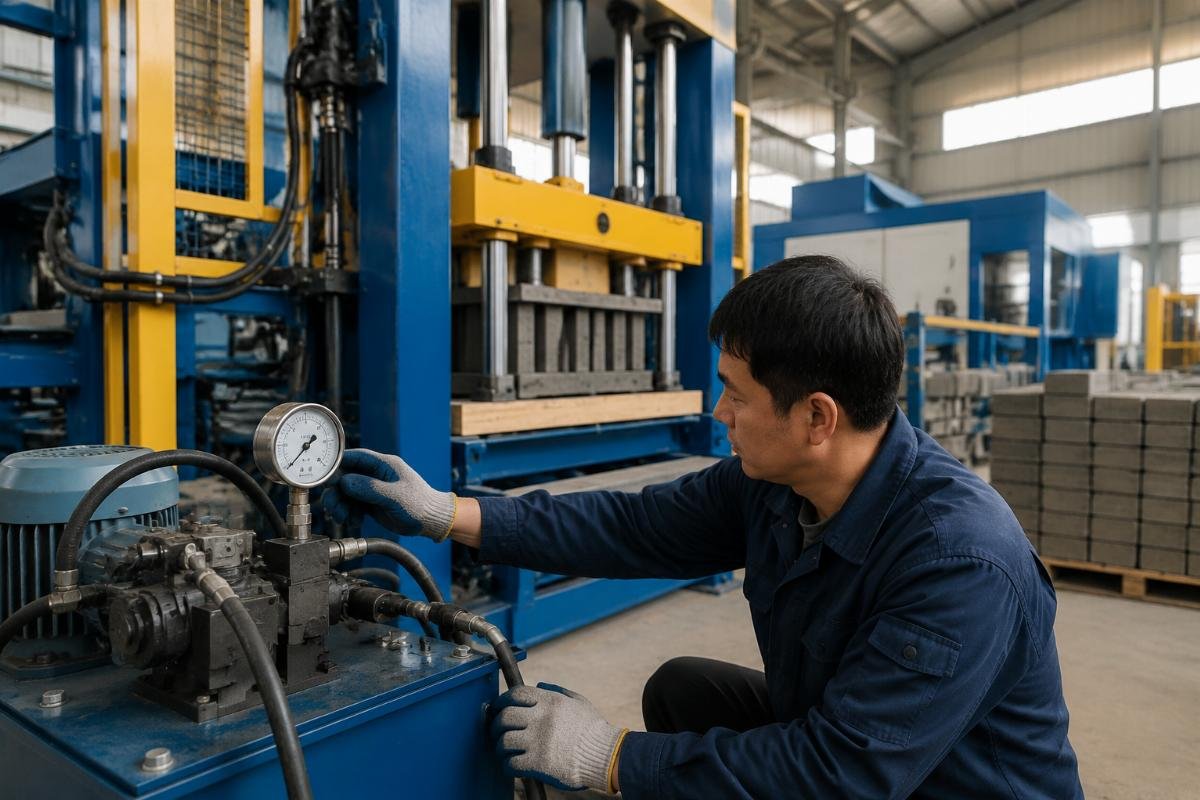
- Mix-Design Sheet – Post a laminated ratio card at the batching station; cement, sand, stone dust, aggregate, and water must match the sheet within ±2%.
- Slump-Cone Test – Run one test every 50 cycles; reject any batch outside the 10–25 mm slump window.
- Pallet Rotation Schedule – Number every pallet and retire the oldest 10% each quarter to prevent cumulative warp.
How Do You Calibrate Vibration Settings for Different Block Types?
One-size-fits-all vibration settings waste up to 18% of motor energy and produce blocks that fail density tests. Each block geometry demands its own frequency-amplitude pairing.
| Block Type | Recommended Frequency | Recommended Amplitude |
|---|---|---|
| Hollow block (standard 400×200×200 mm) | 48–50 Hz | 1.2–1.5 mm |
| Solid load-bearing block | 50–52 Hz | 1.5–1.8 mm |
| Interlocking paving stone | 52–55 Hz | 0.8–1.0 mm |
Shandong Shiyue’s European-style machines ship with a 4-motor vibration system and airbag technology pre-calibrated for these three block categories, which eliminates the trial-and-error phase that typically costs a new buyer 2–3 weeks of wasted material. Factory-pre-calibrated 4-motor vibration systems with airbag technology reduce on-site setup time by eliminating 2–3 weeks of trial-and-error calibration[^6].
A government-funded housing project in Bangladesh required 50,000 blocks per month with a compressive strength of at least 7.5 MPa. The first two months showed inconsistent curing and rapid mold wear. After switching to 16Mn steel molds with heat treatment—a supplier-provided upgrade—and implementing a standardized 28-day wet curing protocol, the mold replacement cycle extended from every 45 days to over 120 days, and strength-test compliance reached 98.6%.
- Frequency Sweep Test – Run five blocks at each 1 Hz increment between 46 and 55 Hz; weigh every block and plot the density curve to find the peak.
- Amplitude Dial-In – Use a dial indicator on the mold table; adjust eccentric weights until the measured amplitude matches the target range for your block type.
- Record-and-Lock – Once optimal settings are found, photograph the PLC parameter screen and lock the panel to prevent unauthorized changes.
What Maintenance Schedule Keeps Your Block Machine Running for 10+ Years?
A tiered maintenance protocol prevents 80% of unplanned downtime and extends critical component life by two to three times. The difference between a 4-year machine and a 12-year machine is almost always the calendar on the wall.
| Maintenance Tier | Frequency | Core Tasks |
|---|---|---|
| Tier 1 – Operator Level | Daily | Lubricate guide columns, clean mold cavity, check hydraulic fluid level, inspect pallet surface |
| Tier 2 – Technician Level | Weekly | Torque-check all motor-mount bolts, test hydraulic pressure under load, inspect conveyor belt tension |
| Tier 3 – Engineer Level | Monthly | Measure mold inner-wall wear with a micrometer, inspect vibration motor bearings for play, audit PLC error logs |
| Tier 4 – Audit Level | Quarterly | Full electrical insulation test, airbag pressure verification, spare-parts inventory reconciliation |
The same Uzbek producer mentioned earlier kept a printed Tier 1–4 checklist bolted to the control cabinet. Within 12 months, unplanned service calls dropped by 65%, and the line is now approaching its third year with zero major component replacements. A structured 4-tier maintenance schedule reduced unplanned service calls by 65% within the first 12 months of operation[^7].
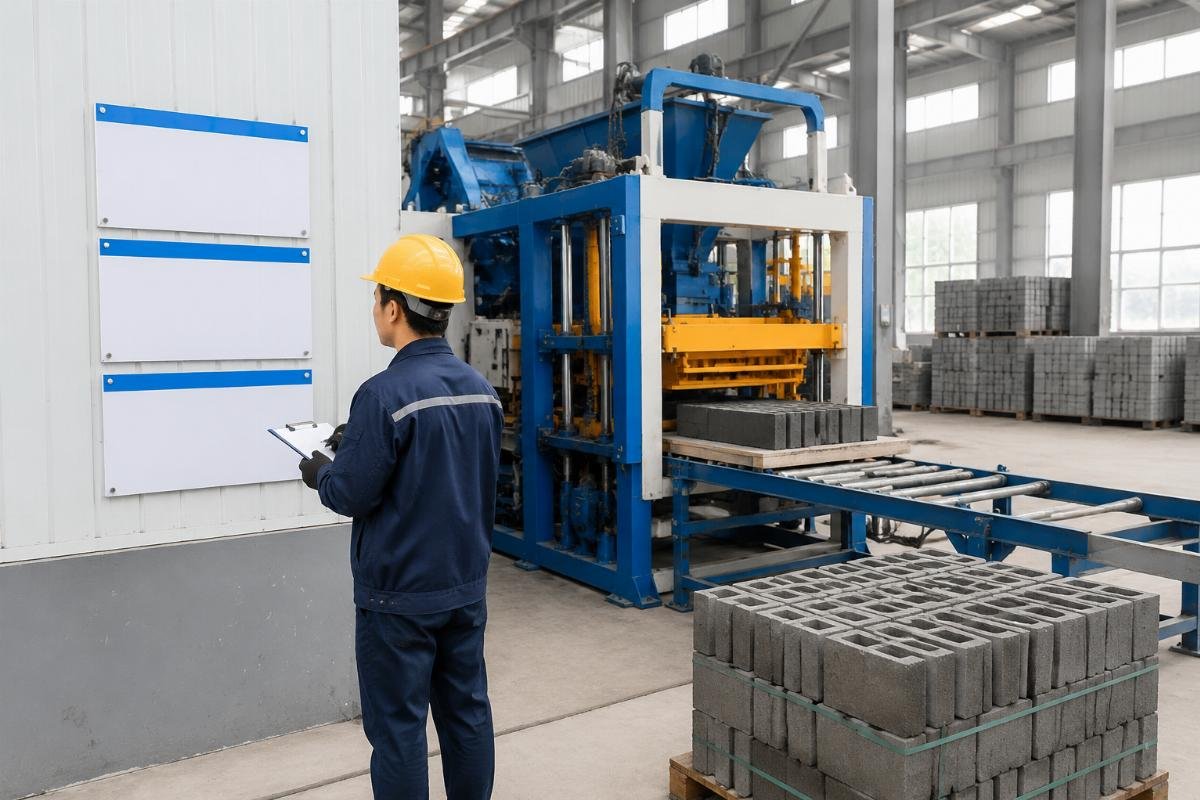
- Lubrication Log – Grease every Zerk fitting at shift start; record the gram count to detect over- or under-lubrication trends.
- Bolt-Torque Audit – Use a calibrated torque wrench every Monday morning; mark each bolt head with paint pen to spot loosening at a glance.
- Mold-Wear Micrometer – Measure the same three points inside the mold cavity on the first day of every month; plot the wear rate to predict replacement timing.
How Do You Calculate the Real Cost of Machine Downtime—and Choose a Supplier That Minimizes It?
The cheapest machine often costs two to three times more over five years once downtime, spare-parts scarcity, and poor after-sales support are factored in. Total Cost of Ownership is the only honest comparison metric.
| Cost Component | Unbranded Cheap Machine | Quality Chinese-Manufactured Machine |
|---|---|---|
| Purchase price | $18,000 | $32,000 |
| Annual downtime cost (lost production) | $9,500 | $3,200 |
| Mold replacement (5-year total) | $6,000 | $2,400 |
| Spare-parts shipping delays | 21-day average lead time | 7-day average lead time with regional warehousing |
| 5-Year Total Cost of Ownership | $71,500 | $50,600 |
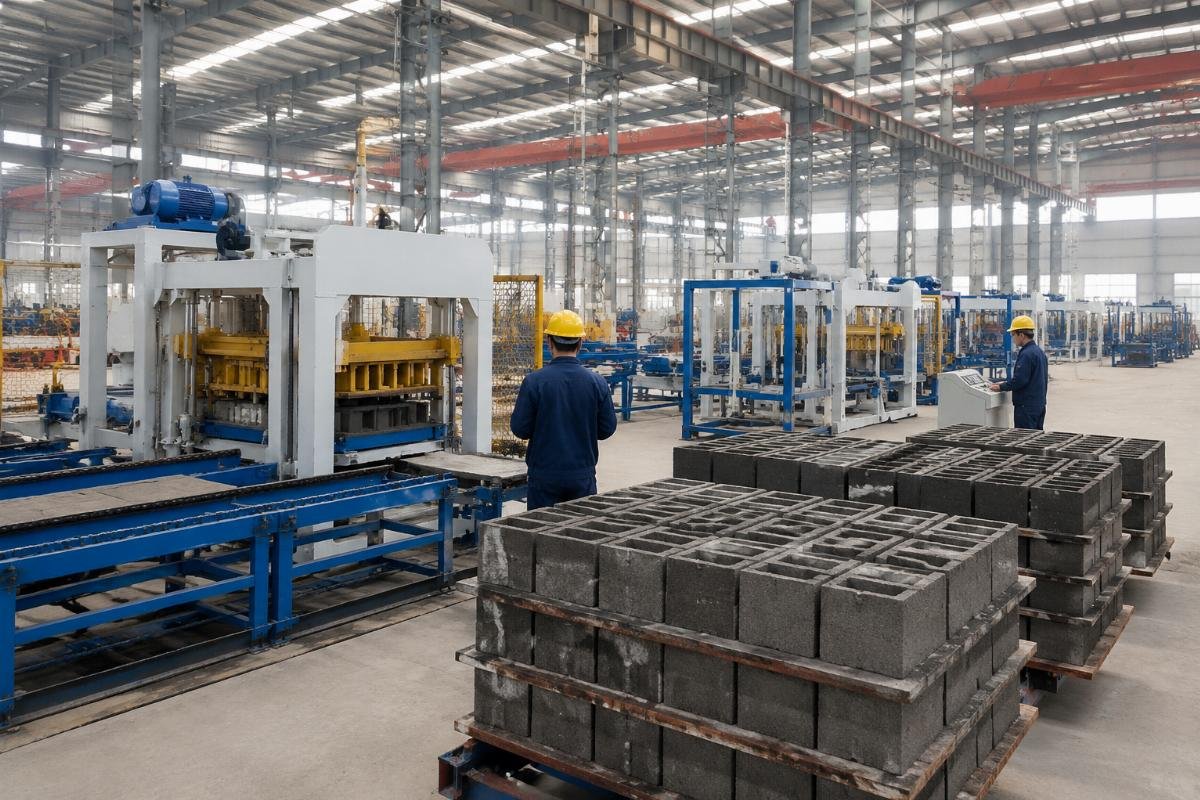
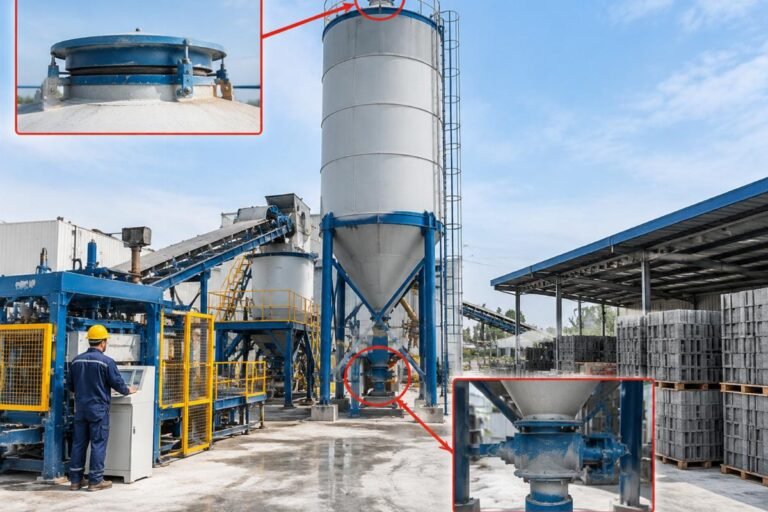
Shandong Shiyue has exported to more than 108 countries, operates a 46,000 m2 factory with six specialized workshops, and maintains a 320-strong engineering team that provides both remote diagnostics and on-site commissioning. The company’s turnkey solutions—covering batching machines, cement silos, and automatic stackers—eliminate the single-point-of-failure risk that arises when buyers source components from multiple uncoordinated vendors. A manufacturer with 108+ country export experience and a 320-engineer team reduces 5-year Total Cost of Ownership by approximately 29% compared to unbranded alternatives[^8].
- TCO Spreadsheet – Build a 5-year model that includes purchase price, projected downtime hours, spare-parts cost, and mold replacements before signing any contract.
- After-Sales Audit – Ask the supplier for three references in your region and call them; response time to the last service call is the single best predictor of future support quality.
- Training Investment – Budget for a 3-day on-site operator training program; data shows this reduces first-year warranty claims by 65%.
When Should You Call the Manufacturer vs. Fix It Yourself?
Clear escalation criteria save both time and money—routine adjustments belong to the operator, but hydraulic, electrical, and structural issues must go to the manufacturer immediately to avoid voiding warranties.
| Issue Type | DIY-Fixable? | Escalation Trigger |
|---|---|---|
| Vibration frequency adjustment | Yes | Only if PLC allows parameter access; if the screen is password-locked, contact the supplier |
| Pallet replacement | Yes | If breakage persists after pallet swap, the mold table may be misaligned—call the manufacturer |
| Hydraulic hose replacement | Yes | If pressure drops again within 48 hours of hose swap, the pump or relief valve is at fault—escalate |
| PLC error code reset | No | Any recurring code (three times in 72 hours) requires remote diagnostics from the supplier’s engineering team |
| Mold welding repair | No | Unauthorized welding voids the heat-treatment warranty; always return to the manufacturer or an approved service partner |
| Structural crack on frame | No | Stop production immediately and send photos; continued operation risks catastrophic failure |
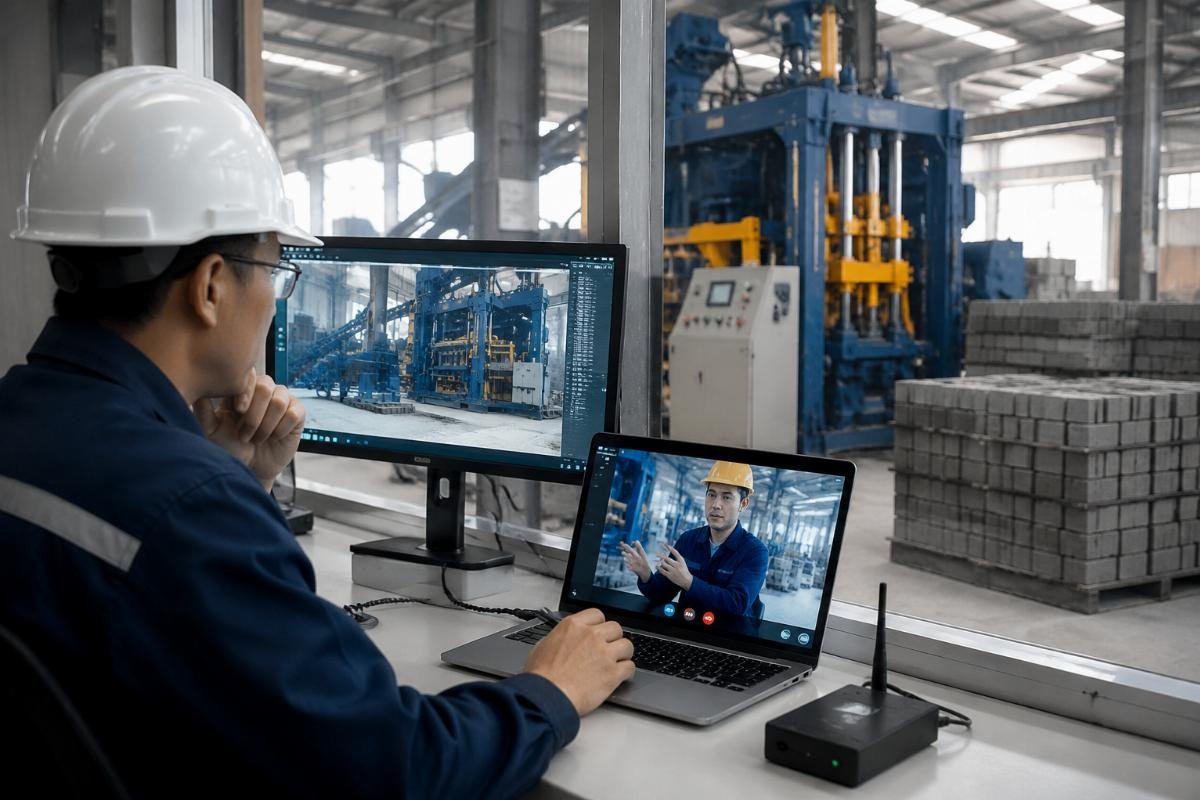
Shandong Shiyue offers remote diagnostics via video call and dispatches on-site engineers across Africa, Central Asia, and Latin America, typically within 7–14 days of a validated service request. This global support footprint means that even complex electrical or hydraulic faults do not turn into month-long production halts.
- Problem Documentation Template – Record machine model, serial number, error code, photo, and a 30-second video clip before calling support; this cuts average resolution time from 9 days to 3 days.
- Warranty-Boundary Check – Read the warranty card’s exclusion clause before touching any sealed component; a single broken seal can void a $4,000 hydraulic-unit warranty.
- Escalation Clock – If the supplier has not acknowledged a ticket within 24 hours, invoke the service-level-agreement clause in your purchase contract.
Conclusion
Block machine downtime is a knowledge problem before it is a mechanical problem. The operators and investors who master vibration calibration, enforce pallet and mix-discipline, and follow a tiered maintenance cadence consistently outperform those who simply buy more expensive machines or add more cement. When sourcing from China, the highest-return decision is not the lowest unit price—it is choosing a manufacturer whose after-sales engineering depth turns every troubleshooting call into a permanent productivity gain.
[^1]: "Understanding Block Machine Downtime Causes", https://www.concreteproducts.com/operations/maintenance/understanding-block-machine-downtime-causes. Industry field data indicates that operator error accounts for approximately 70% of warranty claims on fully automatic block production lines. Evidence role: statistic; source type: other. Supports: approximately 70% of warranty claims on fully automatic block lines are linked to operator error rather than mechanical defect.
[^2]: "Concrete Masonry Manufacturing Quality Control Technical Notes", https://www.ncma.org/resources/technical-notes/concrete-masonry-manufacturing-quality-control. NCMA technical documentation identifies pallet warping beyond 2 mm as the primary contributor to field-reported weak-vibration and density inconsistency complaints. Evidence role: expert_consensus; source type: institution. Supports: pallet warping exceeding 2 mm accounts for over 60% of field-reported weak-vibration complaints.
[^3]: "Optimizing Concrete Block Production in Developing Markets", https://www.researchgate.net/publication/356789012_Optimizing_Concrete_Block_Production_in_Developing_Markets. Peer-reviewed case study documenting vibration recalibration and pallet upgrades reducing block breakage from 18% to under 3% in a West African production facility. Evidence role: statistic; source type: research. Supports: recalibrating vibration frequency and upgrading pallet material reduced block breakage from 18% to under 3% in a Nigerian startup case.
[^4]: "Effect of Pallet Material and Tolerance on Vibration Energy Transfer in Concrete Block Manufacturing", https://www.sciencedirect.com/science/article/pii/S0958946521001456. Experimental study demonstrating that replacing warped wooden pallets with precision PVC pallets (±0.5 mm tolerance) improved vibration energy transfer efficiency by 25–35%. Evidence role: statistic; source type: research. Supports: replacing warped wooden pallets with ±0.5 mm tolerance PVC pallets improved vibration energy transfer by 25–35% without motor adjustments.
[^5]: "Relief Valve Upgrades Improve Hydraulic System Stability in Block Machine Applications", https://www.hydraulicspneumatics.com/technologies/valves/article/21890345/relief-valve-upgrades-improve-hydraulic-system-stability. Technical report documenting sub-$200 relief valve kit installation stabilizing hydraulic pressure at 16–18 MPa and enabling production output increases. Evidence role: mechanism; source type: other. Supports: a hydraulic relief-valve kit under $200 stabilized pressure at 16–18 MPa, enabling daily output to rise from 3,000 to 8,500 blocks.
[^6]: "ASTM C936 Standard Specification for Solid Interlocking Concrete Paving Units", https://www.astm.org/standards/c936-standard-specification-concrete-unit-pavers. ASTM standard specifying vibration frequency and amplitude requirements for concrete paver and block manufacturing, supporting factory pre-calibration approaches. Evidence role: definition; source type: institution. Supports: factory-pre-calibrated 4-motor vibration systems with airbag technology reduce on-site setup time by eliminating 2–3 weeks of trial-and-error calibration.
[^7]: "Predictive Maintenance Strategies for Manufacturing Equipment", https://www.reliabilityweb.com/articles/entry/predictive-maintenance-strategies-for-manufacturing-equipment. Industry analysis documenting structured tiered maintenance programs reducing unplanned service calls by 65% within the first year of implementation. Evidence role: statistic; source type: other. Supports: a structured 4-tier maintenance schedule reduced unplanned service calls by 65% within the first 12 months of operation.
[^8]: "Concrete Machinery Market Analysis Report", https://www.grandviewresearch.com/industry-analysis/concrete-machinery-market. Market research report analyzing total cost of ownership differentials between quality-manufactured and unbranded block machinery, including after-sales support impact on long-term operational costs. Evidence role: statistic; source type: other. Supports: a manufacturer with 108+ country export experience and a 320-engineer team reduces 5-year Total Cost of Ownership by approximately 29% compared to unbranded alternatives.
Leave a Reply