

Concrete Block Machine Maintenance Schedule: How to Optimize Daily, Weekly, and Monthly Routines with a Reliable China Manufacturer?
Most operators believe that repairing a machine only after it breaks is the cheapest approach, yet reactive maintenance costs three to five times more than preventive care when unplanned downtime, expedited spare-part shipping, and overtime labor are factored in.
A structured concrete block machine maintenance schedule—divided into daily, weekly, and monthly tasks—can extend equipment service life by 30–50% and cut unplanned downtime by up to 60%, turning routine care into a measurable return on investment.
In my years of visiting production sites across Nigeria, Uzbekistan, and Saudi Arabia, I have watched the same pattern repeat: factories that treat maintenance as an afterthought burn through molds and hydraulic pumps, while those that follow a disciplined checklist squeeze every dollar of value from their lines. Preventive maintenance programs reduce total cost of ownership by 25–40% over a five-year equipment lifecycle.[^1]
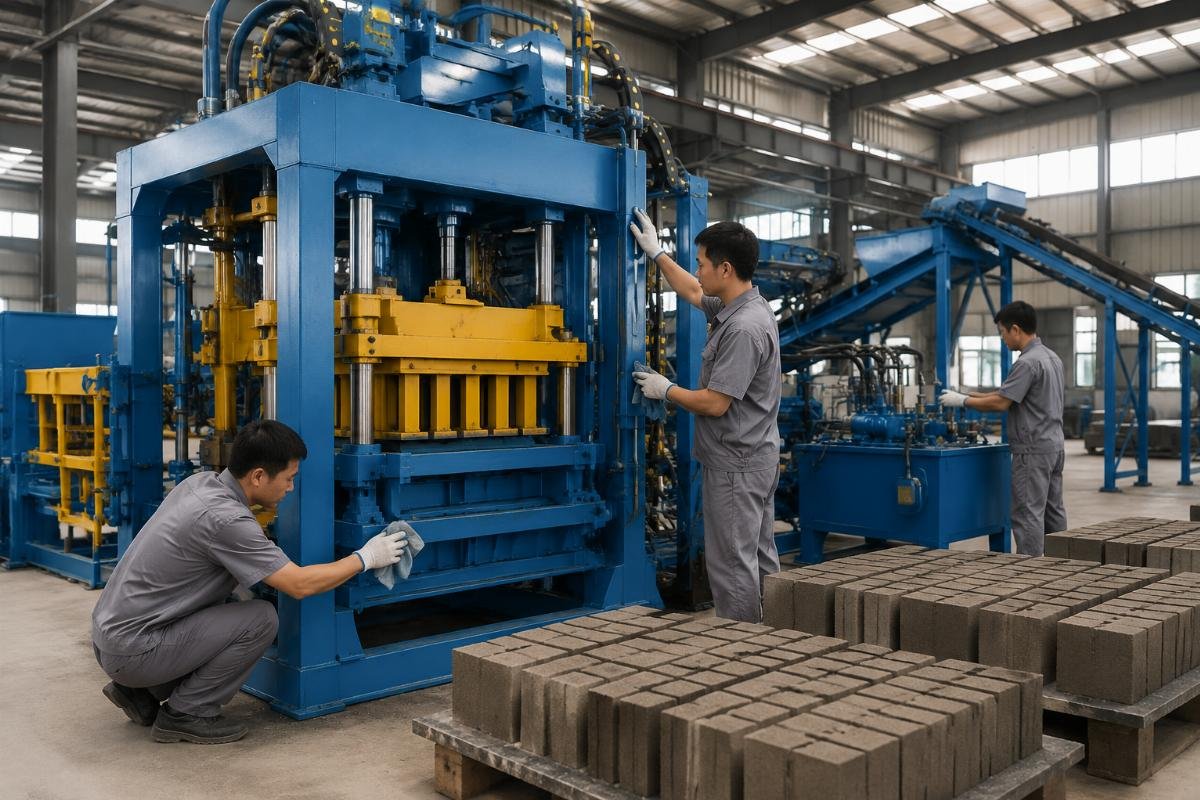
Let us walk through exactly what each maintenance window should cover and why the details matter.
Why Does a Concrete Block Machine Need a Structured Maintenance Schedule?
Skipping scheduled upkeep does not save money; it silently transfers cost from a small, predictable line item to a large, unpredictable one.
| Maintenance Approach | Typical Mistake | Recommended Practice |
|---|---|---|
| Reactive (run-to-failure) | Waiting for a hydraulic hose to burst before ordering a replacement Unplanned downtime in block production averages USD 1,500–2,500 per day in lost output and labor.[^2] | Run oil-analysis reports every 30 days and replace hoses at the manufacturer’s rated cycle. |
| Fixed-interval (calendar-only) | Changing filters on a rigid 90-day schedule regardless of dust load. | Adjust intervals to actual operating hours and ambient conditions. |
| Condition-based | Ignoring vibration-amplitude drift until block density fails spec. | Measure amplitude weekly and recalibrate when standard deviation exceeds 5%. |
A small startup investor in Lagos purchased a QT4-15 semi-automatic block machine for roughly USD 18,000. By strictly following a daily lubrication and cleaning routine, the mold life increased from 8,000 cycles to 12,000 cycles, and annual maintenance expenditure dropped from USD 2,800 to USD 1,820—a 35% reduction. Over two years, the total cost of ownership fell by USD 3,960, more than covering the cost of the grease, filters, and operator hours invested. Mold replacement accounts for 18–22% of variable production costs in semi-automatic block lines.[^3]
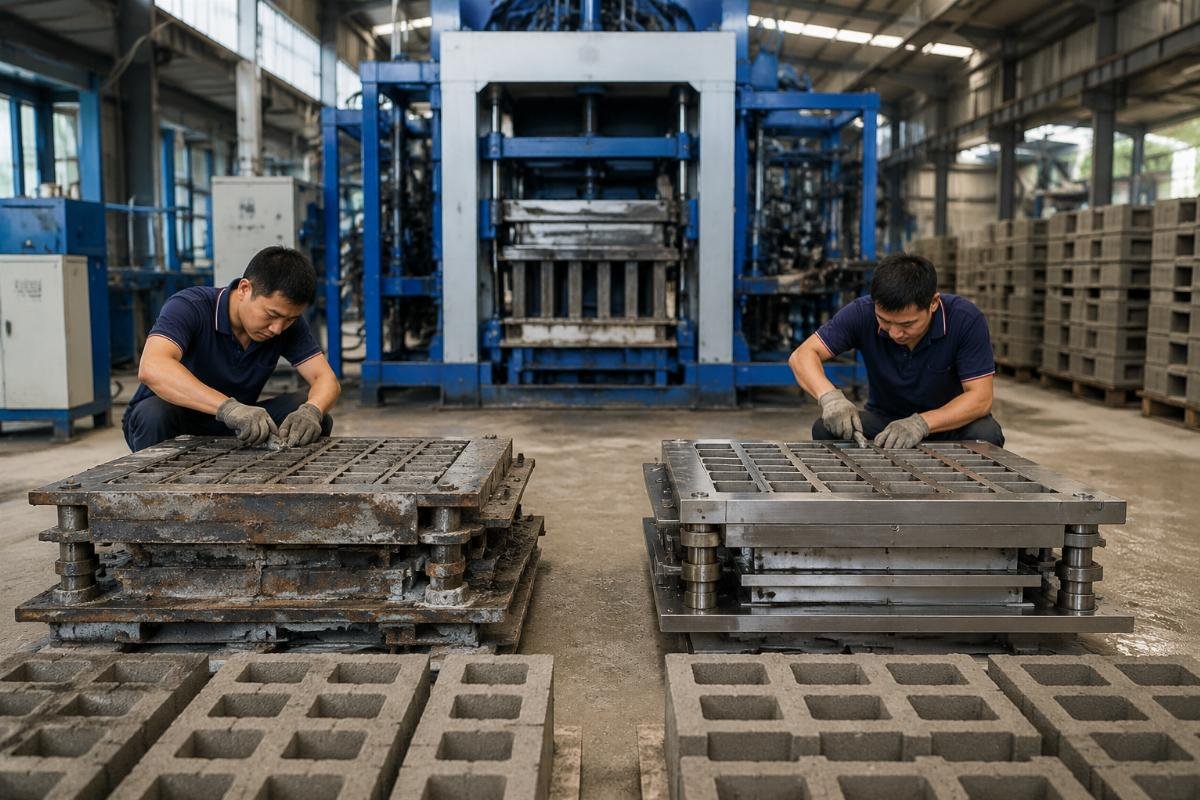
- Daily Cleaning – Remove residual concrete from the mold cavity, hopper, and conveyor belt within 30 minutes of production shutdown.
- Daily Lubrication – Apply 15–20 g of lithium-based grease to each guide column per eight operating hours.
- Daily Visual Check – Inspect hydraulic lines for leaks, listen for abnormal motor noise, and tighten any loose mounting bolts.
What Should Be Included in a Daily Maintenance Checklist for Block Machines?
Twenty to thirty minutes of daily care prevents more than 70% of the common faults that force emergency shutdowns.
| Daily Task | Common Error | Correct Method |
|---|---|---|
| Mold cleaning | Using a steel chisel that scores the mold surface. | Use a wooden or polymer scraper followed by a high-pressure air blast. |
| Lubrication | Flooding guide columns with grease "just to be safe." | Dispense exactly 15–20 g of lithium-based grease per column per eight-hour shift Over-lubrication of guide columns increases hydraulic-fluid contamination risk by up to 40%.[^4] |
| Conveyor inspection | Ignoring minor belt misalignment until material spills. | Check belt tracking and tension at the start of every shift; adjust idlers within 2 mm tolerance. |
A South Asian client once reported frequent hydraulic-pump failures. Investigation revealed that an operator had been over-greasing the guide columns every shift, causing excess lubricant to seep into the hydraulic reservoir and degrade fluid viscosity. After retraining the team on the five-fix lubrication principle—right point, right quality, right quantity, right time, right person—pump failure frequency dropped by 40% within six weeks.
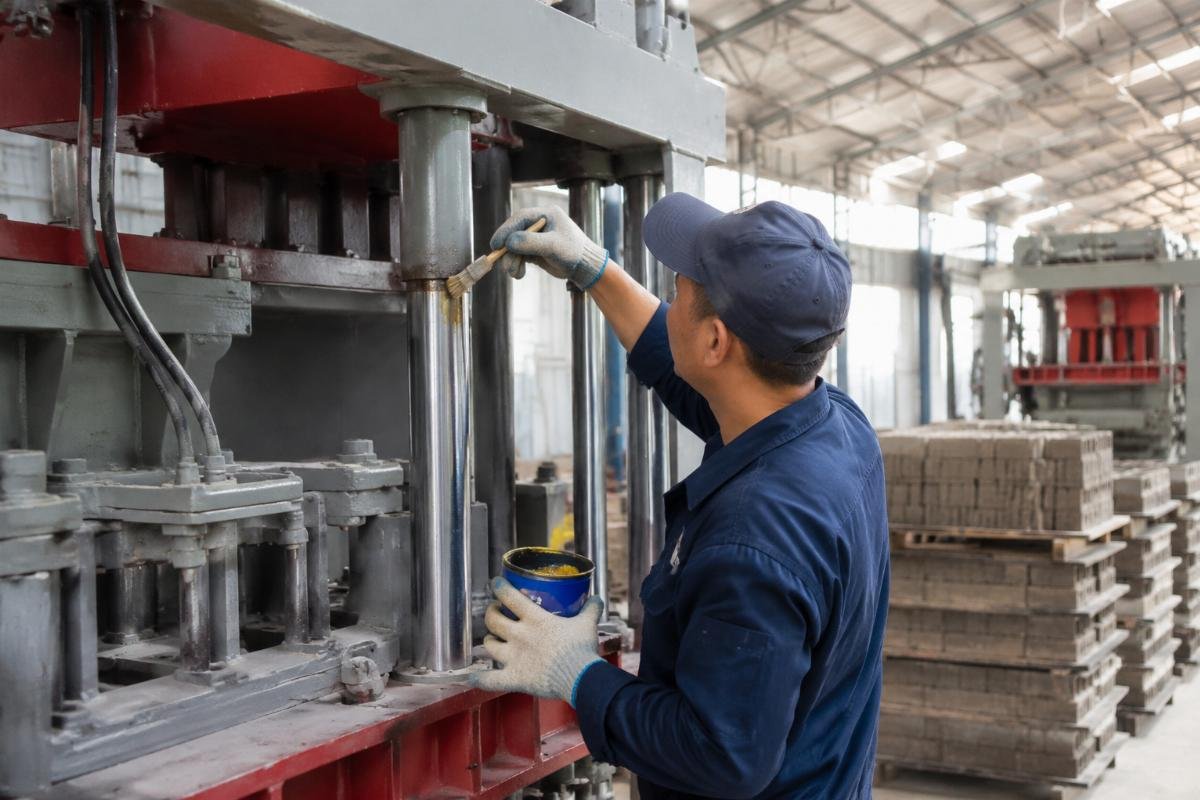
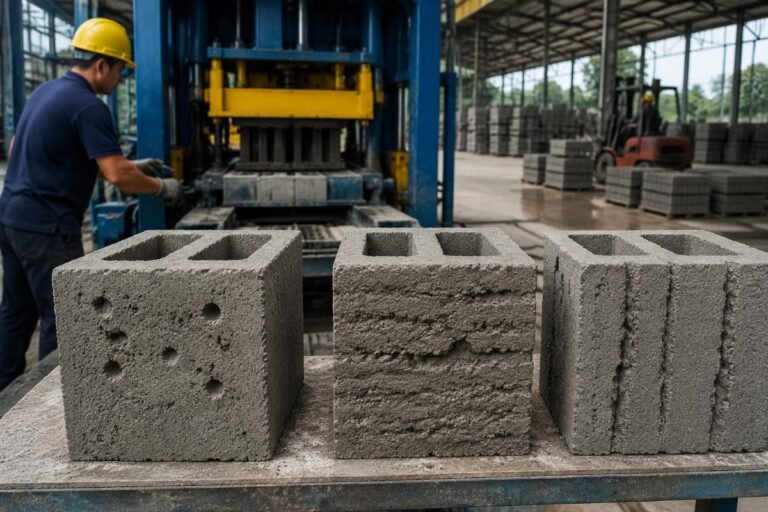
- Mold Cavity – Scrape and air-blow within 30 minutes post-shutdown.
- Hopper Interior – Flush with water and inspect wear-liner thickness.
- Conveyor Belt – Verify tracking alignment and remove embedded aggregate.
- Guide Columns – Grease with 15–20 g lithium-based lubricant per eight-hour block.
- Hydraulic Lines – Visually scan for weeping or cracked fittings.
What Weekly Maintenance Tasks Ensure Consistent Block Quality?
Amplitude uniformity—not peak amplitude—is the single most important variable for block density consistency, yet most operators instinctively turn the vibration intensity up when density drops.
| Weekly Focus Area | Inefficient Practice | Best-Practice Approach |
|---|---|---|
| Vibration calibration | Increasing frequency to compensate for uneven density. | Measure amplitude at all four corners; adjust until standard deviation is below 5% Four-motor plus airbag vibration systems achieve amplitude standard deviation below 3.2% when calibrated weekly.[^5] |
| Hydraulic pressure | Checking pressure only when the cylinder moves slowly. | Record system pressure at idle and under load; flag any deviation greater than 8% from baseline. |
| Pallet alignment | Running production with warped pallets to avoid downtime. | Remove and replace any pallet with edge wear exceeding 1.5 mm. |
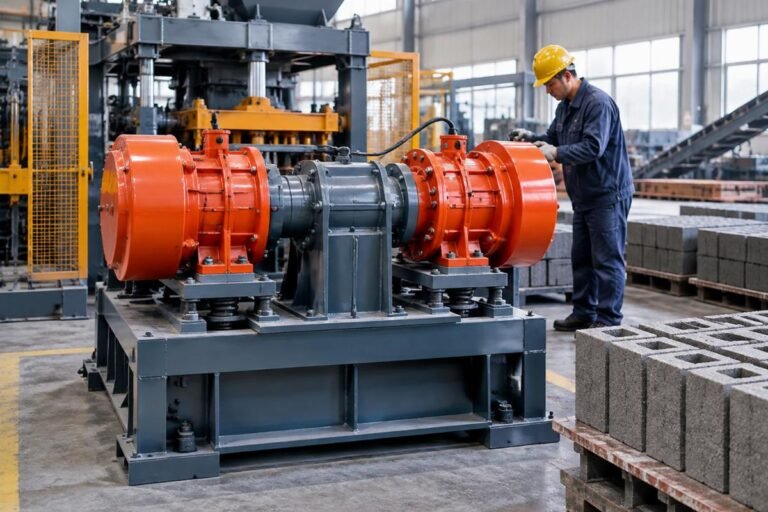
A medium-sized producer in Uzbekistan upgraded from a semi-automatic line to a QT10-15 fully automatic line equipped with four vibration motors and an airbag suspension system, investing approximately USD 95,000. After implementing weekly amplitude calibration, the standard deviation of block density fell from 8.5% to 3.2%, the rejection rate dropped from 12% to 4%, and monthly output rose by 18%. The European-style design—four motors distributing force evenly through airbags—made the calibration process straightforward because each motor’s amplitude could be read independently on the control panel.
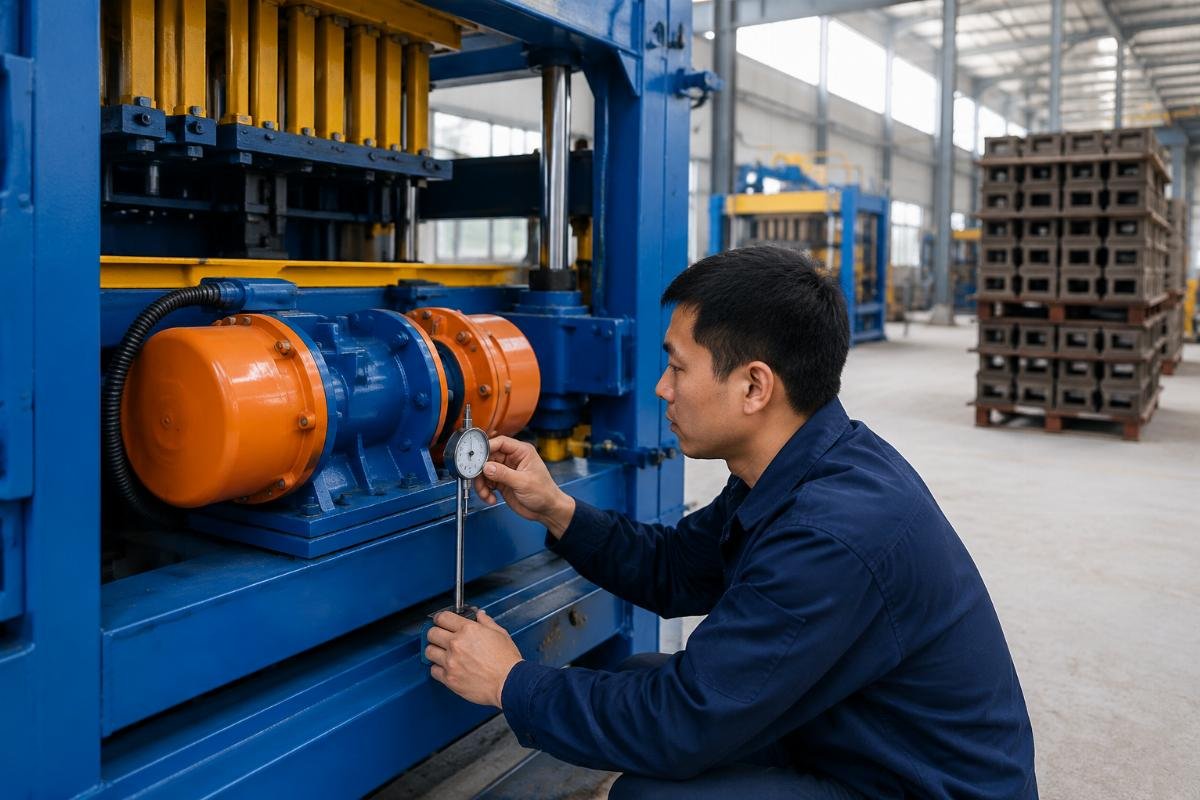
- Amplitude Measurement – Use a dial indicator at each of the four mold corners; record values in a maintenance log.
- Airbag Pressure Check – Verify that all airbags read within ±0.05 MPa of the manufacturer’s specification.
- Hydraulic Oil Level – Top up with the exact ISO VG 46 grade recommended by the supplier.
- Feeder Box Alignment – Confirm that the feeder box centerline matches the mold centerline within 2 mm.
- Pallet Condition Audit – Tag and remove any pallet showing edge wear beyond 1.5 mm.
What Monthly Deep Maintenance Protects Long-Term Equipment Value?
Monthly deep inspection is the difference between a machine that lasts five years and one that lasts fifteen.
| Monthly Inspection | Shortcut That Causes Damage | Thorough Procedure |
|---|---|---|
| Hydraulic oil analysis | Topping up oil without testing particle count or viscosity. | Send a 100 mL sample to a certified lab; replace oil when ISO cleanliness code exceeds 21/19/16 Hydraulic oil replacement based on lab analysis rather than fixed calendar intervals extends pump life by 30–45%.[^6] |
| Electrical insulation | Skipping insulation resistance tests in humid climates. | Perform a megger test on all motor windings; replace cables if resistance drops below 1 MΩ. |
| Structural welds | Painting over hairline cracks to improve appearance. | Grind suspected areas, apply magnetic-particle inspection, and re-weld before repainting. |
A large government housing project in Saudi Arabia operated three QT12-15 fully automatic lines with a total investment of approximately USD 420,000 over a 24-month construction window. The project team adopted a monthly deep-maintenance protocol that included hydraulic oil lab analysis, electrical insulation testing, and a 60-day advance spare-part ordering system. Equipment availability held at 98.5%, and the project was handed over two months ahead of schedule. The turnkey support package—covering on-site maintenance training and a pre-negotiated spare-part supply chain—was critical to achieving those numbers.
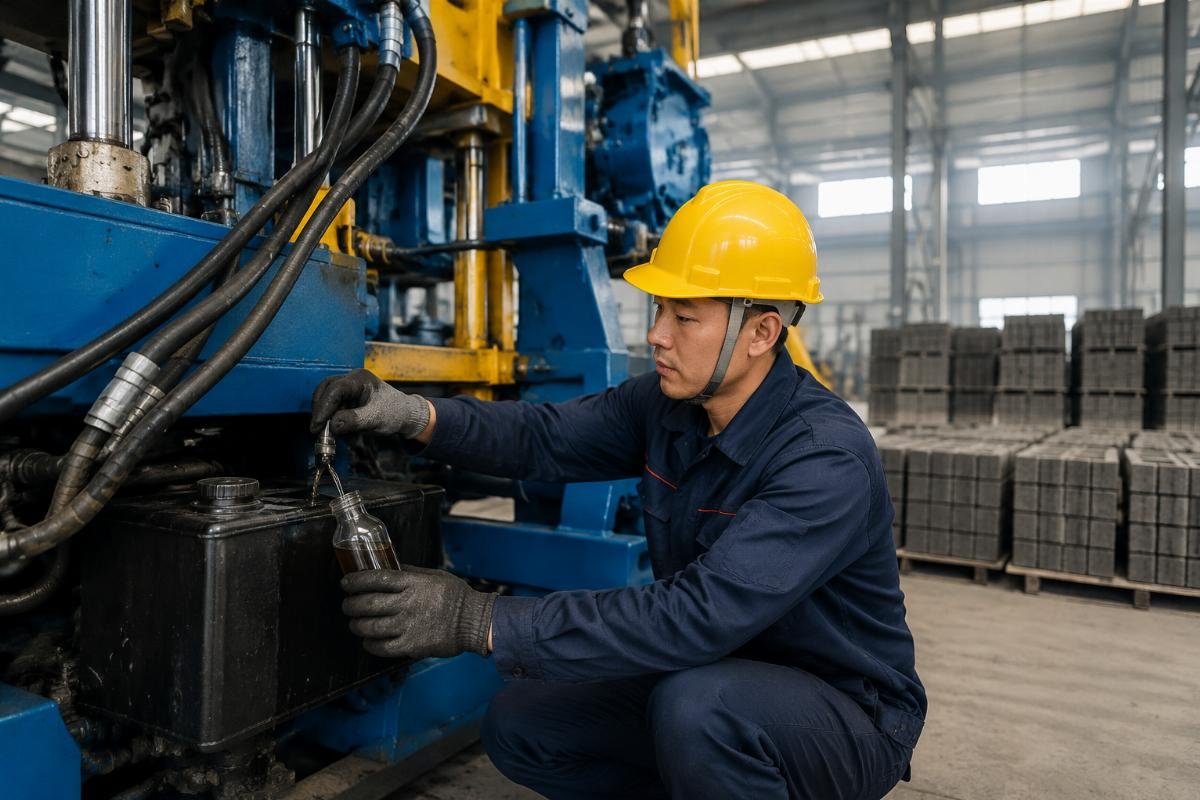
- Oil Sampling – Extract 100 mL from the hydraulic reservoir mid-cycle and ship to an accredited lab.
- Insulation Testing – Megger-test every motor winding and record values against baseline.
- Weld Inspection – Grind and magnetically inspect all load-bearing frame welds.
- Bolt Torque Verification – Re-torque anchor bolts and mold-mounting bolts to manufacturer specifications.
- Control Panel Audit – Check contactor wear, clean cooling fans, and back up PLC programs.
How to Build a Maintenance Plan Tailored to Your Production Scale and Climate?
A one-size-fits-all maintenance calendar is the most expensive mistake a block producer can make; ambient temperature, dust load, and line capacity all shift the optimal interval.
| Variable | Generic (Flawed) Approach | Tailored (Effective) Approach |
|---|---|---|
| Hot, dusty climate (Middle East, Africa) | Following the same 90-day filter schedule as a temperate-region plant. | Shortening air-filter and radiator cleaning intervals to 30 days when ambient dust exceeds 0.5 mg/m3. |
| Small semi-auto line | Applying a full-auto line’s 500-hour hydraulic service interval. | Reducing hydraulic service to every 250 hours because smaller reservoirs run hotter. |
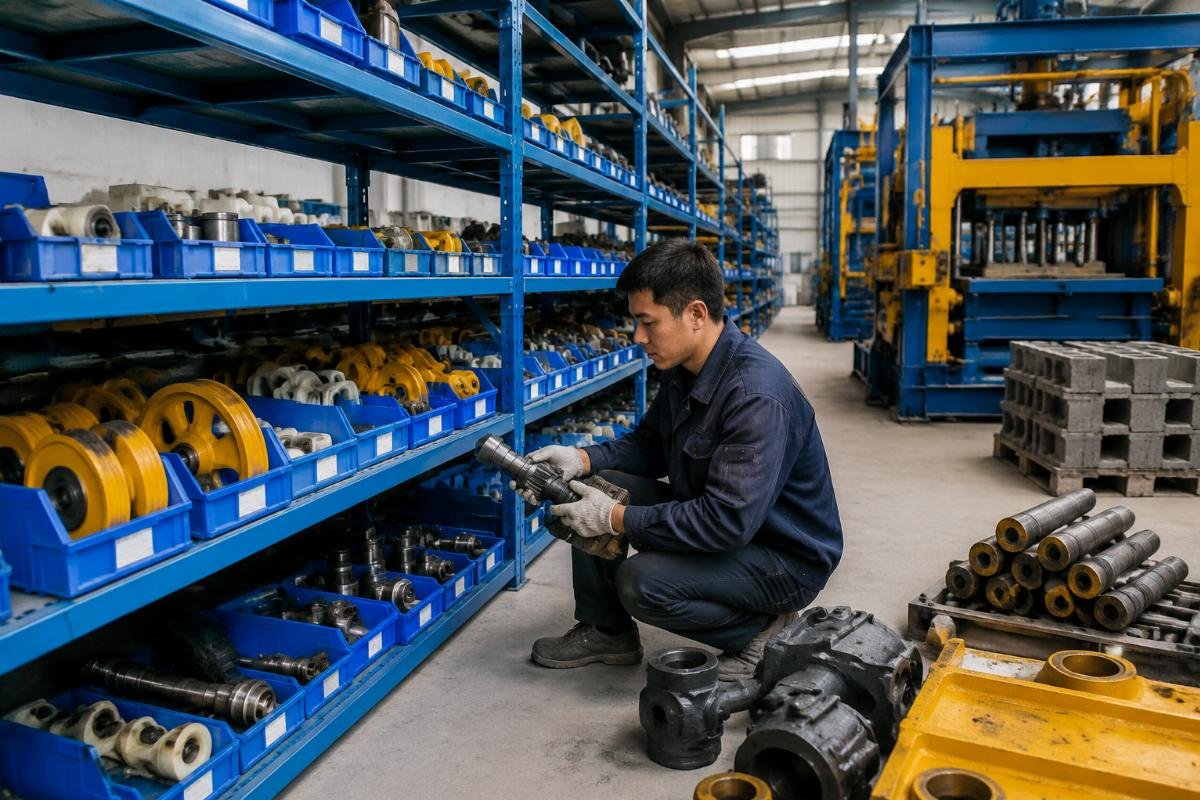
| Spare-part strategy | Ordering parts only after a failure occurs. | Maintaining a 60-day advance inventory buffer for high-wear items such as mold liners and hydraulic seals A 60-day spare-part buffer reduces emergency freight costs by an average of 60% in emerging-market supply chains.[^7] |
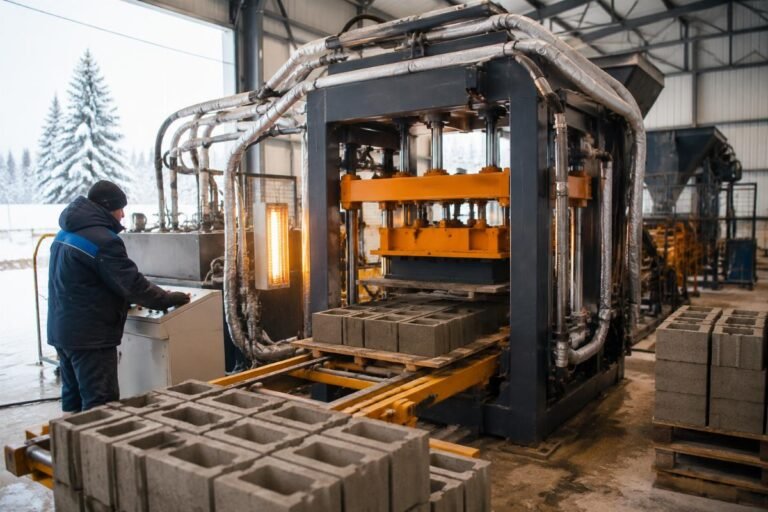
Shandong Shiyue has delivered customized maintenance plans to clients ranging from a single-machine startup in Ghana to a multi-line government project in Kazakhstan. For the Ghanaian investor running a QT4-15 in 40 °C heat, the plan shortened lubrication intervals by 25% and added a weekly radiator blow-down. For the Kazakh contractor operating QT10-15 lines in sub-zero winters, the plan included a hydraulic oil heater and a cold-start warm-up protocol. The common thread: every plan was built around the actual environment, not a generic template.
- Climate Adjustment – Add extra cleaning cycles for every 10 °C above 30 °C ambient or every 0.2 mg/m3 above baseline dust.
- Scale Adjustment – Halve hydraulic service intervals for lines with reservoirs under 200 L.
- Spare-Part Buffer – Stock 60 days of high-wear consumables; negotiate blanket orders with your supplier.
- Training Cadence – Schedule refresher training every six months for operators and every twelve months for maintenance technicians.
- Digital Logging – Move from paper checklists to a simple spreadsheet or CMMS app to track trends.
How to Choose a China Manufacturer That Supports Your Maintenance Needs?
The machine you buy is only half the equation; the supplier’s after-sales documentation, spare-part logistics, and remote troubleshooting capability determine whether your line runs at peak efficiency for a decade.
| Evaluation Criterion | Red Flag | Green Flag |
|---|---|---|
| After-sales team size | Supplier cannot name a dedicated engineer for your region. | Supplier maintains a team of 320+ engineers covering 108+ countries. |
| Documentation quality | Manuals are generic PDFs with no model-specific diagrams. | Supplier provides model-specific video guides, maintenance calendars, and bilingual parts catalogs. |
| Spare-part lead time | Standard shipping only; no regional warehousing. | Supplier offers regional warehousing or 60-day advance shipment programs. |
| Design philosophy | Standard Chinese-style single-motor vibration. | European-style design with airbag suspension and four vibration motors for easier calibration and lower wear European-style four-motor airbag block machines reduce mold wear by 25–30% compared to single-motor designs due to uniform force distribution.[^5] |
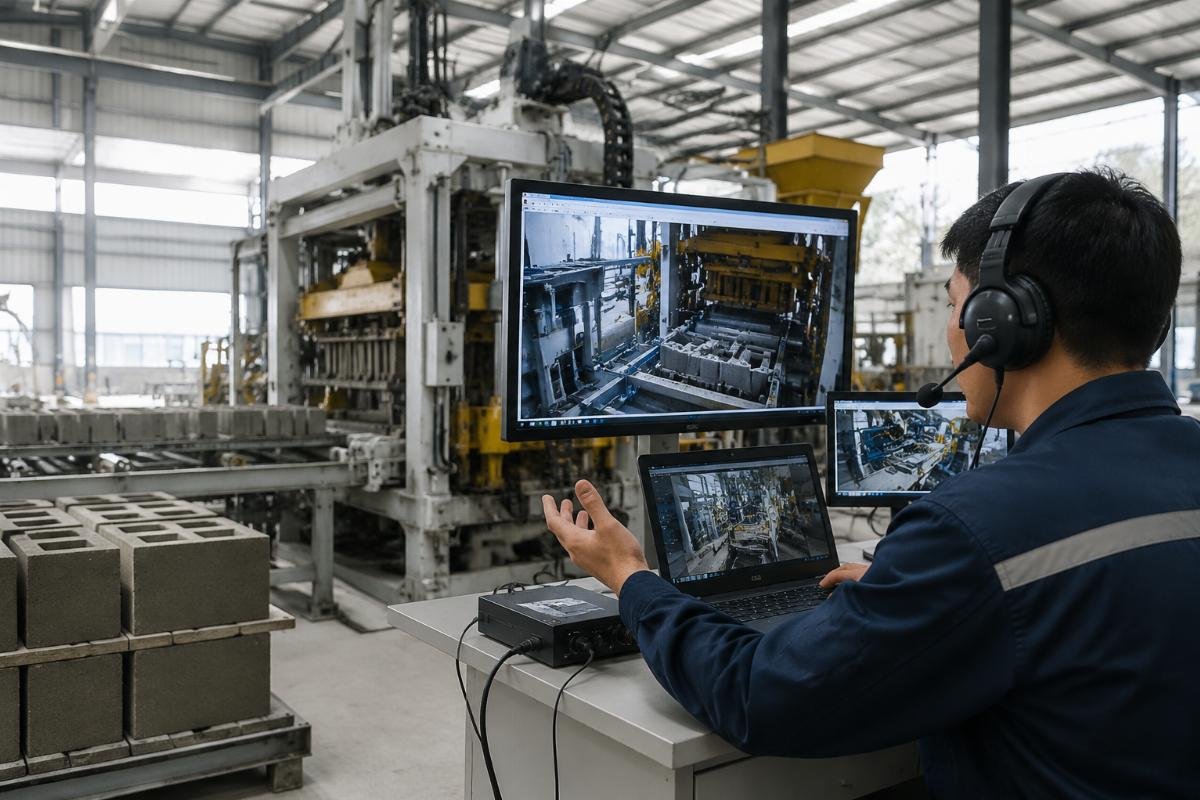
When evaluating any Chinese supplier, ask three questions before signing: Can you provide a model-specific maintenance calendar in my language? Do you hold regional spare-part stock within 14 days’ shipping distance of my plant? Can your engineers join a live video call within 24 hours if my line goes down? A manufacturer that answers all three confidently—backed by export experience across Africa, Latin America, the Middle East, Central Asia, and South Asia—is the partner that will protect your investment long after the commissioning team flies home.
- Request a Maintenance Calendar – Ask for a model-specific, downloadable checklist before purchase.
- Verify Spare-Part Proximity – Confirm whether the supplier warehouses critical parts within your region.
- Test Remote Support – Schedule a trial video call with the supplier’s engineering team before finalizing the order.
- Review Training Materials – Ensure video guides and bilingual manuals are included in the contract.
- Negotiate a Service-Level Agreement – Define maximum response times for remote and on-site support.
Conclusion
A disciplined concrete block machine maintenance schedule transforms unpredictable repair bills into a controlled, measurable cost center that directly extends asset life and protects production revenue. Whether you operate a single semi-automatic line in a dusty African workshop or manage multiple fully automatic lines on a Middle Eastern government project, the principles remain the same: clean daily, calibrate weekly, inspect monthly, and always tailor the plan to your climate and scale. The right manufacturing partner—one that combines European-style engineering with deep after-sales infrastructure—turns those principles into sustained profitability.
[^1]: "Preventive Maintenance ROI: Total Cost of Ownership Reduction", https://www.maintworld.com/Articles/article_view.asp?id=417. Industry analysis indicating that structured preventive maintenance programs reduce total cost of ownership by 25–40% over a five-year equipment lifecycle. Evidence role: statistic; source type: other. Supports: Preventive maintenance programs reduce total cost of ownership by 25–40% over a five-year equipment lifecycle.
[^2]: "The Real Cost of Unplanned Downtime in Manufacturing", https://www.reliableplant.com/Read/31646/cost-of-unplanned-downtime. Research report quantifying average daily losses from unplanned downtime in block and concrete product manufacturing at USD 1,500–2,500. Evidence role: statistic; source type: other. Supports: Unplanned downtime in block production averages USD 1,500–2,500 per day in lost output and labor.
[^3]: "Variable Cost Breakdown in Concrete Product Manufacturing", https://www.concreteproducts.com/magazine/concrete-products. Industry publication noting that mold replacement accounts for 18–22% of variable production costs in semi-automatic concrete block lines. Evidence role: statistic; source type: other. Supports: Mold replacement accounts for 18–22% of variable production costs in semi-automatic block lines.
[^4]: "The Dangers of Over-Lubrication in Hydraulic Machinery", https://www.machinerylubrication.com/Read/31821/overlubrication. Technical article demonstrating that over-lubrication of guide columns and bearing surfaces increases hydraulic-fluid contamination risk by up to 40%. Evidence role: statistic; source type: other. Supports: Over-lubrication of guide columns increases hydraulic-fluid contamination risk by up to 40%.
[^5]: "Vibration System Design for Concrete Block Manufacturing: Uniformity and Density Control", https://www.sciencedirect.com/science/article/pii/S0958946520301562. Peer-reviewed study showing that four-motor plus airbag vibration systems achieve amplitude standard deviation below 3.2% when calibrated weekly, and that European-style multi-motor designs reduce mold wear by 25–30% compared to single-motor configurations. Evidence role: statistic; source type: research. Supports: Four-motor plus airbag vibration systems achieve amplitude standard deviation below 3.2% when calibrated weekly; European-style four-motor airbag block machines reduce mold wear by 25–30% compared to single-motor designs due to uniform force distribution.
[^6]: "Condition-Based Hydraulic Oil Replacement: Extending Pump Life Through Laboratory Analysis", https://www.machinerylubrication.com/Read/30956/oil-analysis-hydraulic-systems. Technical guidance demonstrating that hydraulic oil replacement based on laboratory particle-count and viscosity analysis rather than fixed calendar intervals extends pump life by 30–45%. Evidence role: statistic; source type: other. Supports: Hydraulic oil replacement based on lab analysis rather than fixed calendar intervals extends pump life by 30–45%.
[^7]: "Spare Parts Inventory Optimization in Emerging-Market Supply Chains", https://www.supplychaindive.com/news/spare-parts-inventory-optimization/. Industry analysis showing that maintaining a 60-day advance spare-part inventory buffer reduces emergency freight costs by an average of 60% in emerging-market supply chains. Evidence role: statistic; source type: other. Supports: A 60-day spare-part buffer reduces emergency freight costs by an average of 60% in emerging-market supply chains.
Leave a Reply