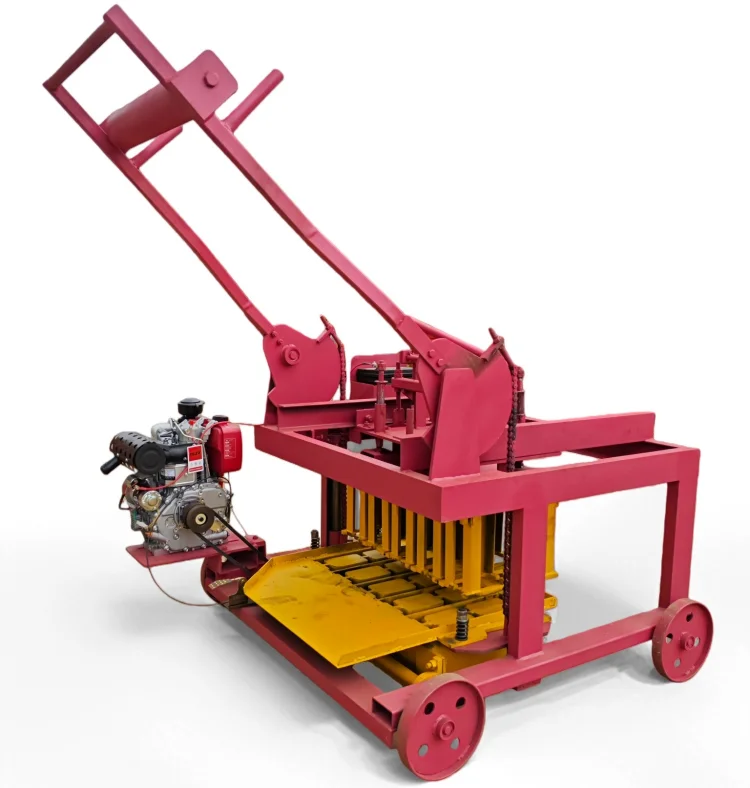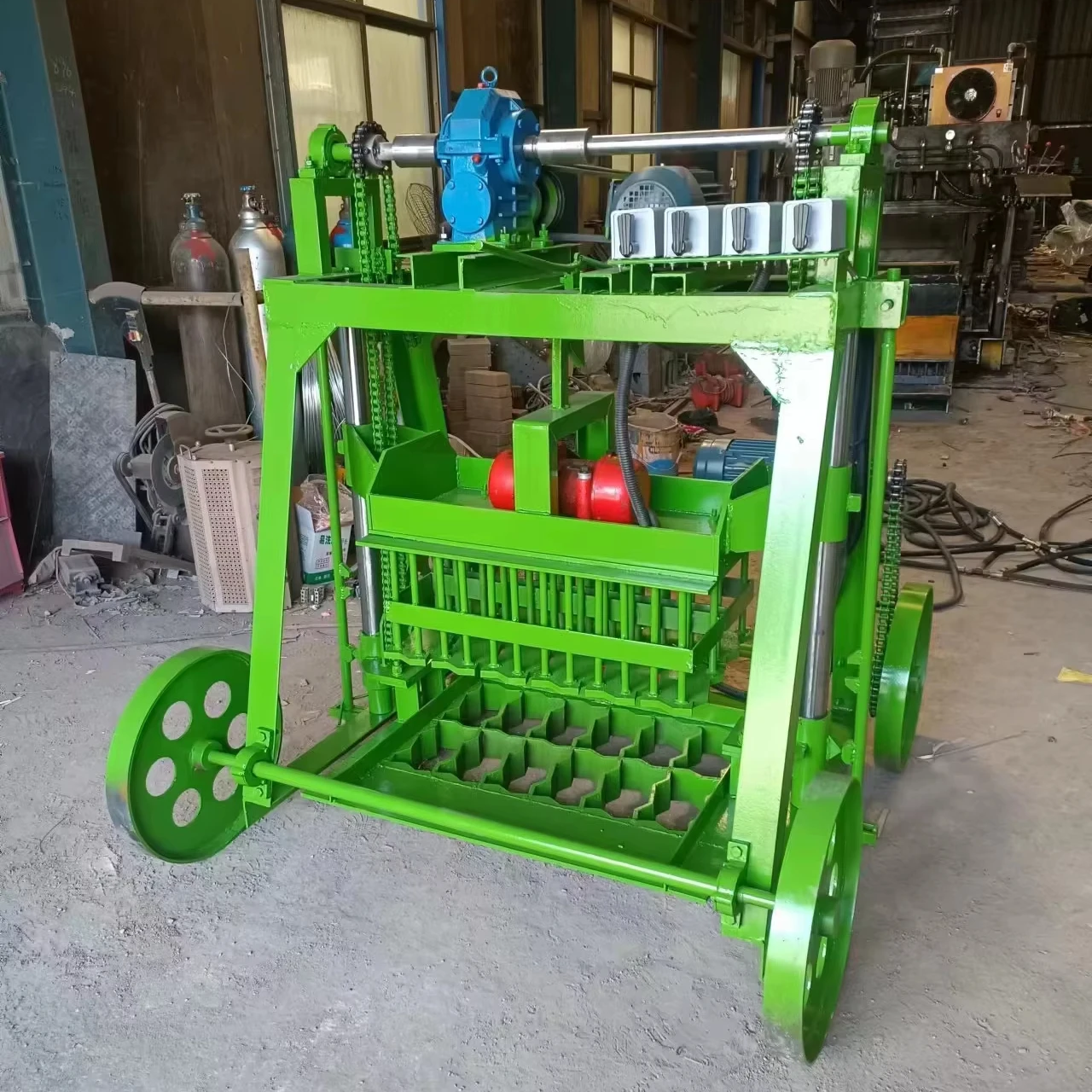
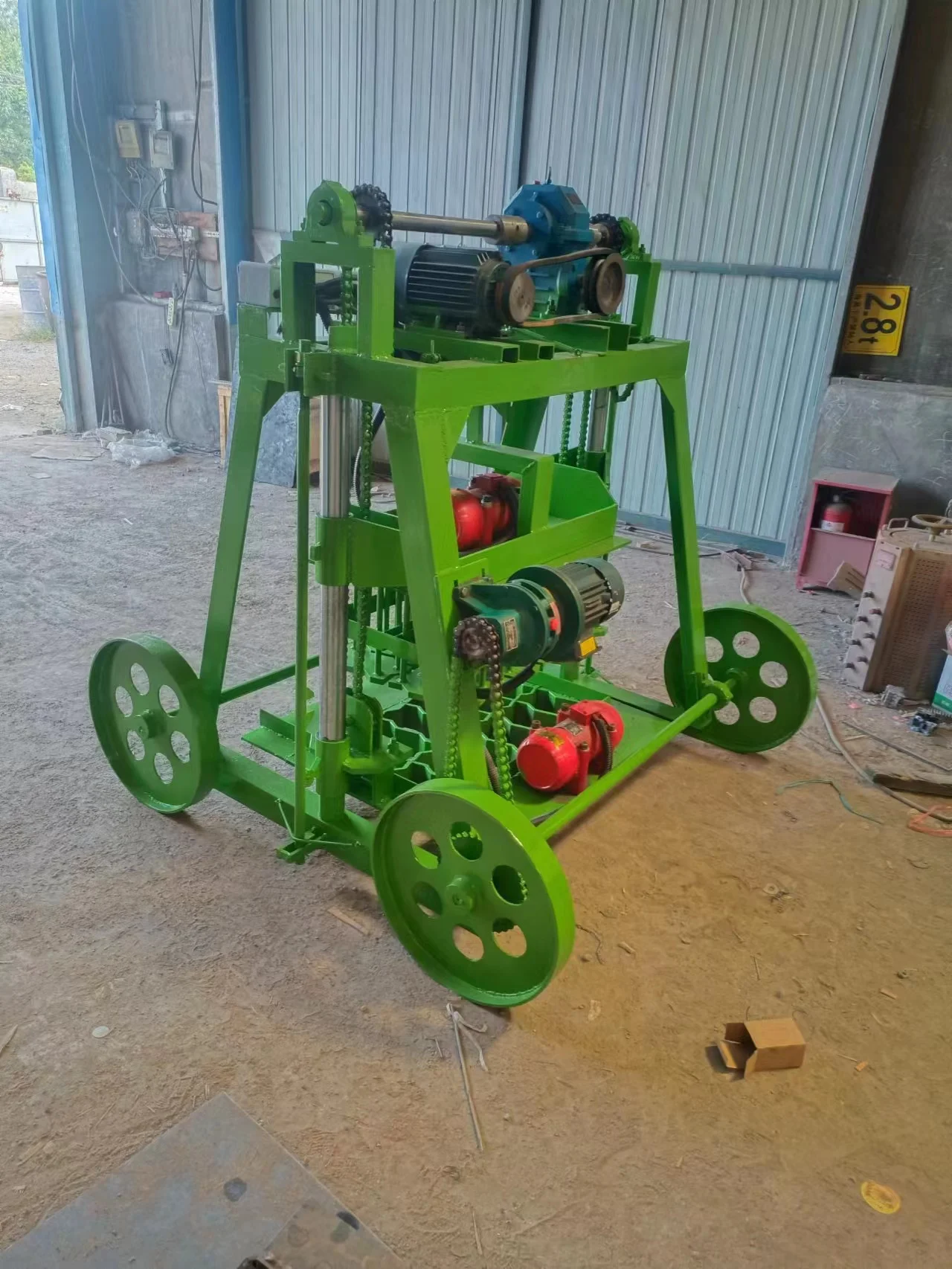

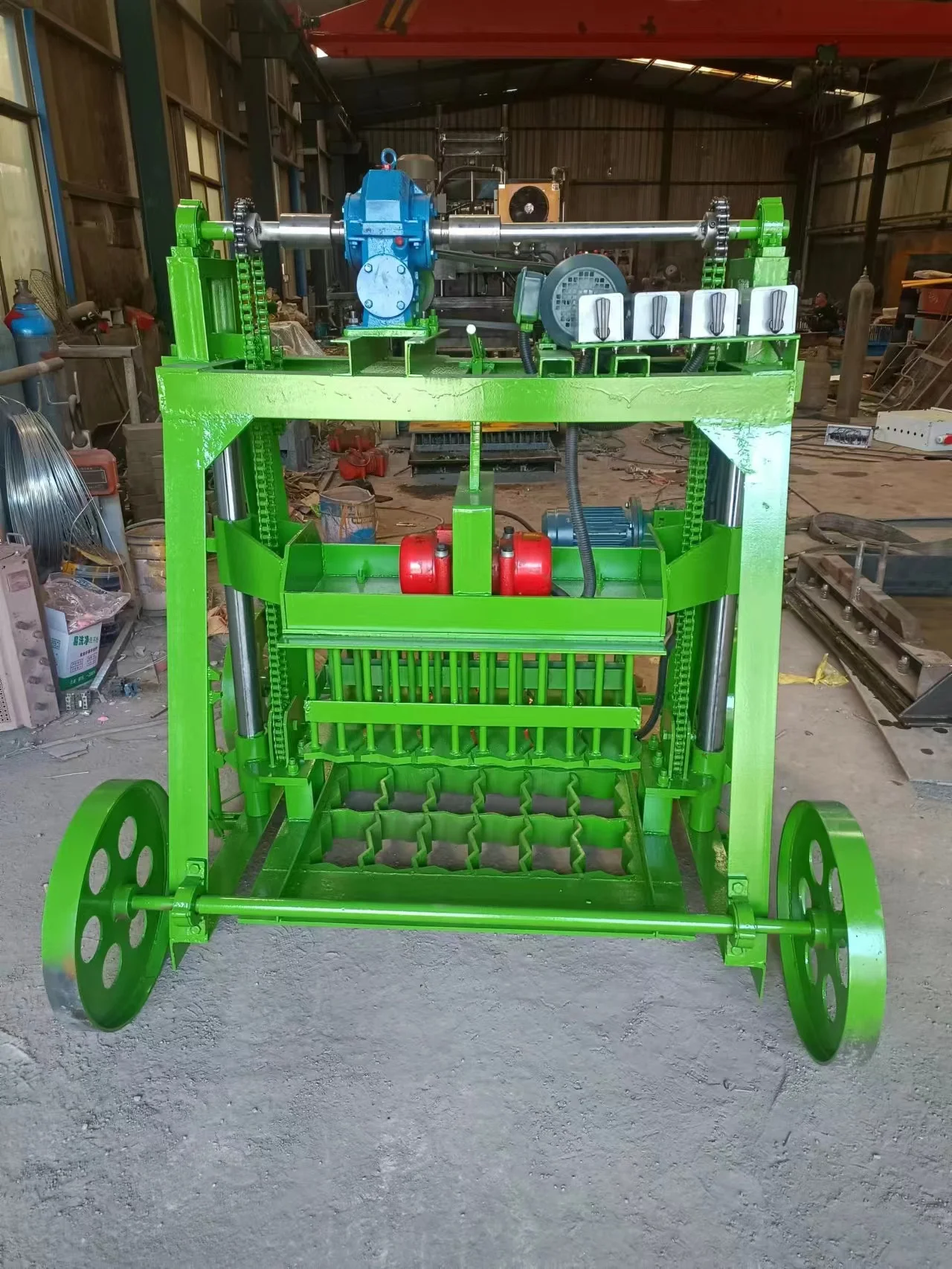
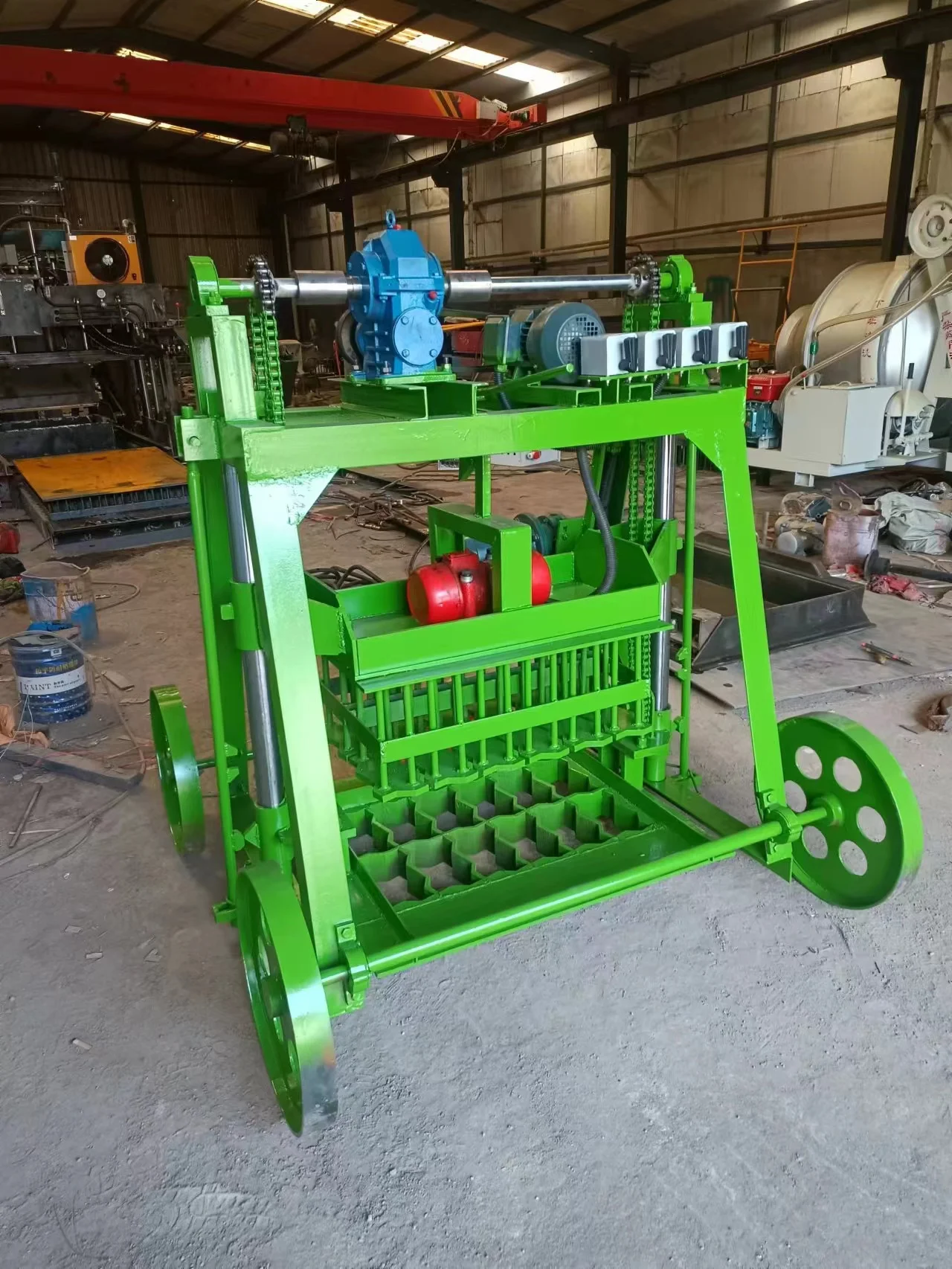
Description
Technical Specifications
| Parameter | Value |
|---|---|
| Model | QMJ4-45 |
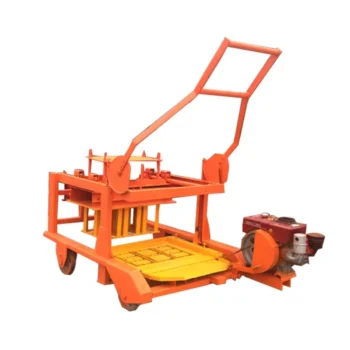
| Product Type | Mobile Egg Laying Block Making Machine |
| Molding Capacity | 4 pcs/mould (basis: 400×200×200mm hollow block) |
| Molding Cycle | 40–45 s |
| Productivity | 3000 pcs/day (basis: 400×200×200mm hollow block, 8-hour shift) |
| Productivity | 3500 pcs/day (basis: 400×150×200mm hollow block, 8-hour shift) |
| Productivity | 4500 pcs/day (basis: 400×120×200mm hollow block, 8-hour shift) |
| Vibration Frequency | 2400 r/min |
| Forming Method | Mold vibration (twice-vibration system) |
| Demold Method | Manual |
| Power Source | Diesel / Petrol engine |
| Total Power | 6 kW |
| Pallet Requirement | None (egg-laying type) |
| Automation Level | Manual operation |
| Voltage & Frequency | Not applicable (engine-driven) |
| Certification | CE |
| Warranty | One year (whole machine) |
Application Suitability
| Application | Material or Output |
|---|---|
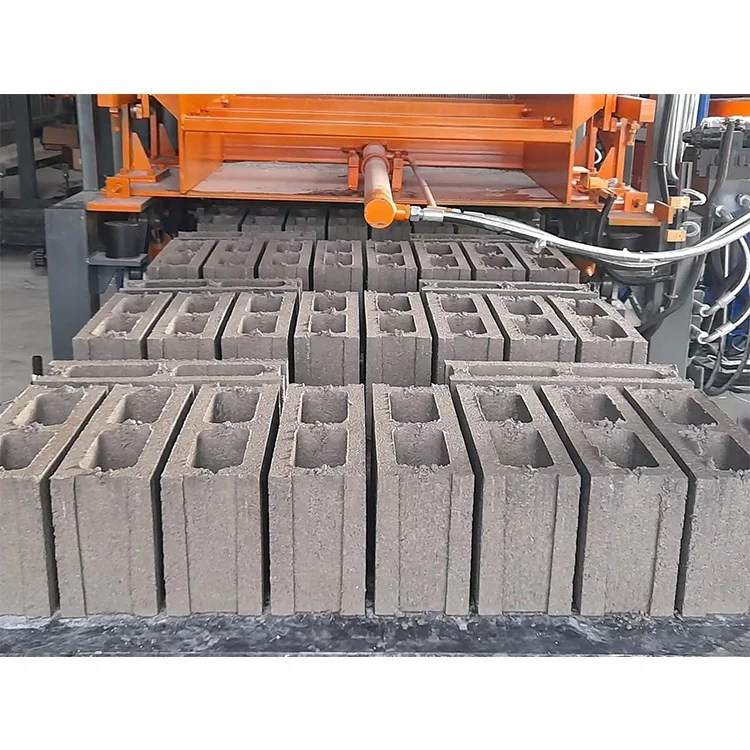
| On-site construction production | Hollow blocks directly on concrete floors |
| Small-scale cement block manufacturing | Standard concrete mixes without curing pallets |
| Remote project block supply | Diesel-powered operation independent of grid electricity |
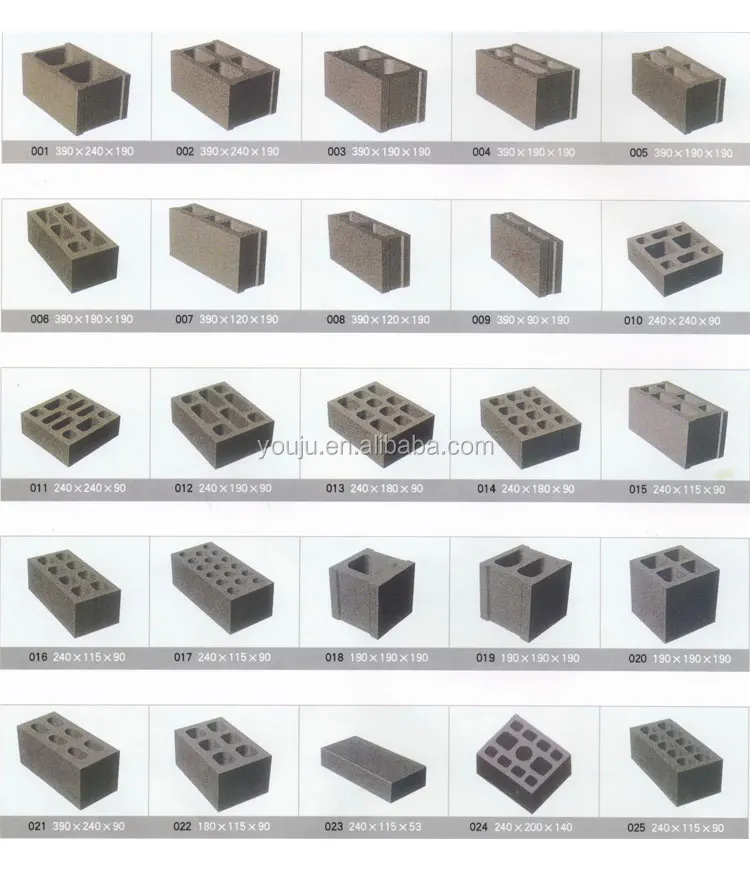
| Low-investment block plant startup | 400×200×200mm, 400×150×200mm, 400×120×200mm formats |
Why the Power Source Question Matters More Than Cycle Time
The QMJ4-45 eliminates electrical dependency entirely by running on a diesel or petrol engine, which removes the most common commissioning delay on remote sites.
I once shipped a hollow block machine to a Middle East job site only to discover the local grid ran at 60Hz while our motor was wound for 50Hz. The entire crew stood around for three weeks waiting for a replacement electrical cabinet. That kind of delay costs more than any price difference between machines. The mobile egg laying block machine in stock here sidesteps that problem because it never plugs in [NEED_CITE: voltage and frequency mismatches in exported machinery].
Engine-Driven Operation Removes Grid Dependency
A mobile egg laying block machine in stock with a diesel engine means production starts the day the machine arrives on a flat concrete slab. There is no electrical trenching, no transformer installation, and no waiting for a licensed electrician. Contractors running housing projects in areas with unstable or nonexistent grid power can position this QMJ4-45 wherever blocks are needed and begin molding immediately.
Pallet-Free Egg-Laying Design
The egg-laying method places each molded block directly on the ground and moves the machine forward, leaving the freshly pressed block behind to cure in place. This eliminates pallet purchasing, pallet storage racks, and pallet return logistics. For a first-time block producer, that removes an entire material handling loop that would otherwise require forklifts and curing shelving [NEED_CITE: pallet costs in small-scale block production].
Understanding the Twice-Vibration System and Cycle Time
The QMJ4-45 uses a mold vibration system operating at 2400 r/min with a twice-vibration sequence per molding cycle. The first vibration settles the concrete mix into the mold cavity; the second compacts it further before the manual demold. This two-stage approach yields higher block density compared to single-pass vibration, which directly influences compressive strength. The 40–45 second molding cycle is achievable because the operator manually lifts the mold and pushes the machine to the next position without waiting for a pallet return conveyor.
When Dispatch Lead Time Becomes the Real Bottleneck
A buyer working against a project deadline does not benefit from a machine with a shorter cycle time if that machine ships eight weeks later than promised. Stocked models like the QMJ4-45 shorten the gap between order placement and first block on site. The container loading plan, machine dismantling for shipment, and arrival estimate should all be confirmed in writing before payment is released [NEED_CITE: typical shipping delays for block machinery from origin port].
What Happens When Ground Preparation Is Overlooked
The egg-laying method requires a flat, cured concrete surface for the machine to travel across and for blocks to cure on. If the ground is uneven or still green concrete, blocks will crack during demolding or the machine will tilt during the vibration cycle, producing inconsistent wall thickness. Site preparation is the buyer’s responsibility, but it must be discussed before the machine leaves the factory.
Why This Machine Ships Quickly
Block machinery as a single focus means the QMJ4-45 press, mold, and engine are specified as one matched unit rather than assembled from separate suppliers. Configuration is set against the buyer’s local aggregate and target block format, not a catalogue default. Stocked models and standard molds are available for immediate dispatch. Container loading plans and machine dismantling details for shipment are quoted upfront so there are no surprises at the port. Packing photographs and customs documentation support are included with every shipment.
Documentation & Verification
- Factory test record on 400×200×200mm hollow block format before dispatch
- Mould drawing and format list confirming stocked cavity dimensions
- Voltage not applicable — engine specification sheet and fuel consumption data
- Packing photographs showing dismantled state inside container
- Operation manual covering engine start-up and mold change procedure
Installation, Commissioning & Support
- Flat concrete ground slab required; no foundation bolts or pit excavation needed
- Diesel or petrol engine — no electrical connection or dedicated circuit necessary
- Machine dismantled for container loading; reassembly on site with basic hand tools
- First production run supervised remotely or via on-site technician arrangement
- One-year warranty covering vibration motor, mold, and engine drivetrain components
- Spare mold cavities and vibration wear parts shipped with initial order on request
What to Confirm Before Requesting a Quote
Provide the hollow block dimensions your market sells, the daily volume your project requires, and the type of flat concrete surface available on site. Confirm which engine fuel is locally available and whether spare molds should be included in the initial shipment.
Frequently Asked Questions
Q: Which hollow block formats are stocked and which need a custom lead time?
A: The QMJ4-45 ships with molds for 400×200×200mm, 400×150×200mm, and 400×120×200mm hollow blocks as standard stock. Other formats require custom mold fabrication with an additional lead time quoted at inquiry.
Q: What is the realistic dispatch lead time from order to port?
A: Stocked QMJ4-45 units are prepared for container loading within a short period after order confirmation. Exact dispatch dates and arrival estimates are provided in writing before payment is required.
Q: Can the machine run on locally sourced diesel and what fuel consumption should I expect?
A: The diesel engine option is compatible with standard commercial diesel fuel available in most markets. Specific fuel consumption data is included in the engine specification sheet shipped with the machine.
Q: How are spare molds and vibration wear parts handled?
A: Spare mold cavities and wearable vibration components can be packed inside the same container as the QMJ4-45 at the time of initial shipment, reducing future downtime waiting for replacement parts.
Q: What ground preparation is needed before the machine arrives?
A: The site requires a flat, fully cured concrete surface for the machine to travel across and for blocks to cure on. Uneven or soft ground will cause tilting during vibration and cracking during demolding.