

Description
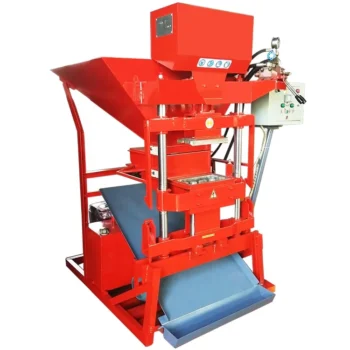
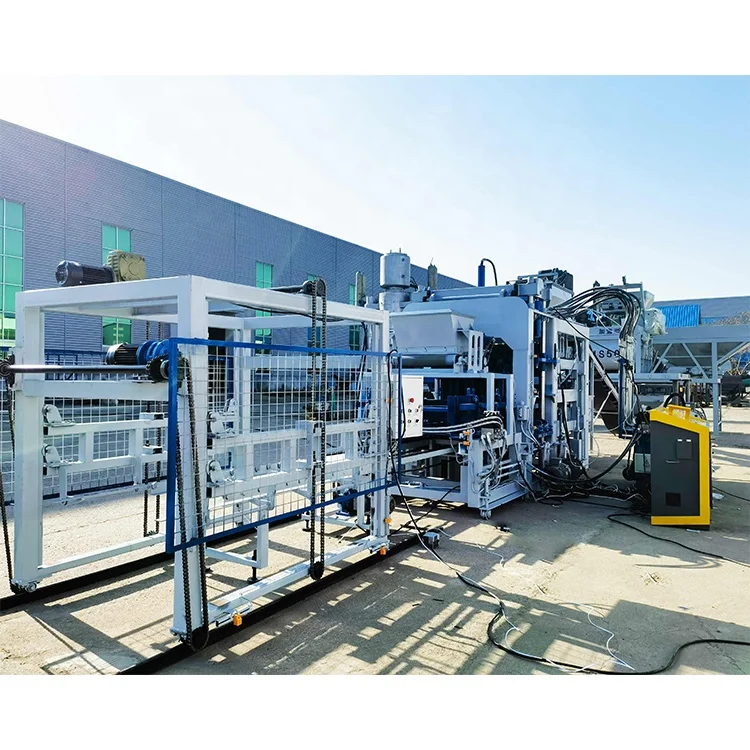
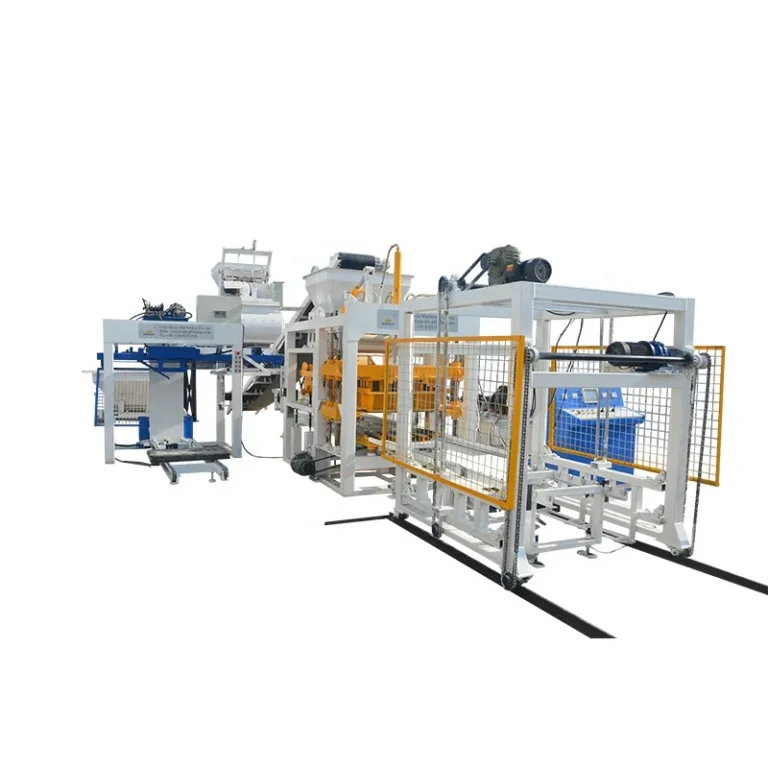
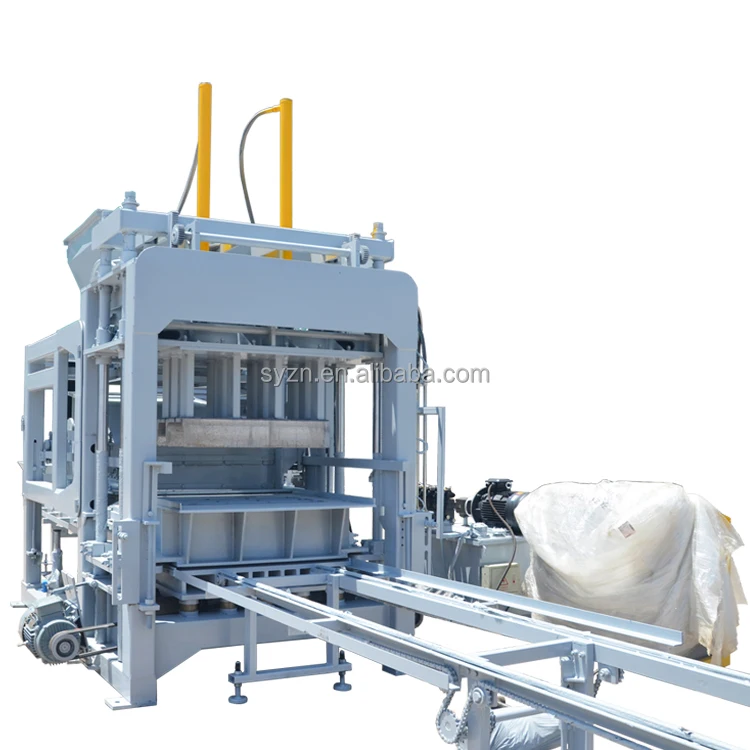
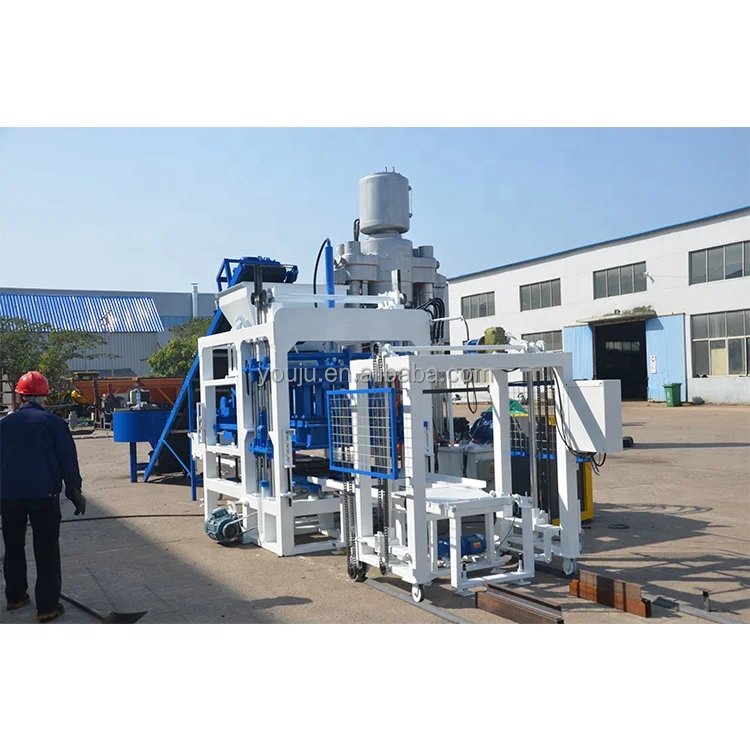
Block machinery as a single focus — the QT4-18 is specified as a matched system with pallet, mould, and handling equipment confirmed against your site conditions before dispatch, not assembled from separate catalogues.
Technical Specifications
| Parameter | Value |
|---|---|
| Model | QT4-18 |
| Product Type | Semi-Automatic Concrete Block Making Machine |
| Overall Dimensions | 2500×1750×2200mm |
| Rated Pressure | 16 MPa |
| Vibration Form | Platform Vibration |
| Pallet Size | 950×550mm |
| Molding Cycle | 18-25s (basis to be confirmed by block format and material) |
| Overall Power | 27.5 kW |
| Control System | PLC with frequency converter (Schneider electrical components) |
| Material Feeding | Distribution belt hopper |
| Mould Lifting | Double-sided synchronous gears |
| Automation Level | Semi-automatic (pallet conveyor, block conveyor, manual or machinery curing transfer) |
| Support Equipment Compatibility | JQ500 concrete pan mixer, 8m/6m belt conveyor, stacker, block clamper, cement silo, batching plant, trolley |
| Mould Configuration | One free hollow mould included; extra moulds customizable |
| Output Capacity | (basis not stated in source — confirm block format / material / thickness) |
Application Suitability
| Application | Material or Output |
|---|---|
| Hollow block production for building envelopes | Crushed stone, sand, cement, and water mixed to local aggregate grading |
| Solid block manufacturing for load-bearing walls | Dense aggregate mix requiring 16 MPa rated pressure for compaction |
| Paving block production for walkways and yards | Pigmented face mix over standard base mix, platform vibration for surface finish |
| On-site block production for construction contractors | Local quarry aggregate and cement, semi-automatic handling for flexible site layouts |
Why the Voltage Question Must Be Settled Before Container Loading
Confirming destination voltage and frequency before the QT4-18 block machine in stock is crated prevents a dead-on-arrival scenario at your project site.
A machine wired for the wrong grid standard sits idle while an electrician sources transformers or rewinds motors, and your project deadline slips regardless of how fast the dispatch lead time was. I have watched containers arrive in regions with non-standard industrial voltage only for the buyer to discover the PLC and frequency converter cannot be energised without a costly external transformer [NEED_CITE: voltage and frequency standards by export market]. The QT4-18 runs a 27.5 kW total load with Schneider electrical components, meaning the incoming supply must match exactly — a detail that belongs on the proforma invoice, not discovered at customs.
Stock Availability and Dispatch Sequencing
Buyers working against a construction deadline need to know which QT4-18 block machine in stock configurations can be crated immediately and which require a production slot. Standard hollow mould machines with the 950×550mm pallet format typically move through factory testing faster than custom mould sets, so confirming your block format early determines whether you draw from stocked inventory or enter the build queue. The dispatch lead time quoted at inquiry stage must account for mould fitting, dry-cycle testing, and container loading plan — not just the press itself.
Container Loading and Arrival Estimate Certainty
A QT4-18 semi-automatic line with its JQ500 mixer, belt conveyor, and pallet stack requires careful container stuffing to avoid damage to the PLC cabinet and hydraulic hoses during ocean transit. The 2500×1750×2200mm press frame dictates whether a 20-foot or 40-foot container is needed, and dismantling decisions — such as removing the distribution belt hopper — must be documented with reassembly photographs before crating [NEED_CITE: container loading best practices for industrial machinery]. An arrival estimate quoted before payment lets you align foundation curing, electrical rough-in, and operator availability so the machine is not sitting on the dock while your crew finishes the shed.
Matching Pressure and Vibration to Your Mix Design
The QT4-18 delivers 16 MPa rated pressure combined with platform vibration, and these two forces must be balanced against the specific aggregate you source locally. A mix with high clay content absorbs vibration energy differently than clean crushed granite, which means the 18-25s molding cycle can stretch considerably if the material does not flow freely through the distribution belt hopper. I once saw a semi-automatic line specified for a standard sand-cement ratio lose nearly half its expected daily output because the buyer’s local river sand carried excessive fines, and the vibration settings had never been adjusted to compensate [NEED_CITE: effect of aggregate grading on block compaction cycle time]. Getting a sample of your aggregate tested before shipment avoids discovering the problem during commissioning.
What Happens When Pallet Size Is Chosen Without Checking Your Curing Area
The 950×550mm pallet dimension on the QT4-18 determines not only how many blocks fit per cycle but also whether those pallets can be moved by the forklift you already own and stacked in the curing space you have allocated. A buyer who selects a pallet size without measuring the curing rack bay width ends up handling blocks twice — once off the press and again when re-stacking for curing — which cancels out the pallet conveyor advantage entirely. Mismatched pallets also cause jams at the block conveyor transfer point, forcing operators to intervene manually and slowing the cycle well beyond the rated range [NEED_CITE: pallet handling compatibility in semi-automatic block lines]. Confirming pallet dimensions against your existing equipment and floor plan is a step that costs nothing at inquiry stage and prevents weeks of frustration after startup.
Why Procurement Through a Block-Machinery-Focused Supplier Matters
Block machinery as a single focus means the QT4-18 is not sold as a standalone press with support equipment bolted on from unrelated vendors. The JQ500 pan mixer, belt conveyor, and stacker are specified as one matched set, so cycle times at each station align and the press is not left waiting for material or pallets. Configuration is set against your actual mix design and target block format rather than a catalogue default, and mould design covers the formats your local market actually buys. Automation level is selectable, allowing you to begin with manual curing transfer and add machinery handling later without replacing the press. Installation and commissioning support includes operator training on the specific PLC language and Schneider components installed in your machine.
Documentation & Verification
- Factory test record run on your specified block format and pallet size before crating
- Machine specification sheet listing confirmed voltage, frequency, and PLC display language
- Mould drawing and format list for the hollow mould included and any custom moulds ordered
- Packing photographs showing dismantling points and container loading sequence
- Customs documentation support with HS codes and CE declaration where applicable
Installation, Commissioning & Support
- Foundation pad must accommodate the 2500×1750mm footprint plus mixer and conveyor clearance
- Dedicated electrical circuit sized for 27.5 kW total load at confirmed voltage and frequency
- Press frame arrives bolted; distribution belt hopper and mould lifting gears reassembled on site
- PLC and frequency converter parameters set to your molding cycle during first-day commissioning
- Operator training covers mould change procedure using double-sided synchronous gears
- Wear parts list provided with first replacement intervals for hydraulic seals and vibration mounts
Preparing Your Inquiry for a Dispatch Timeline
To receive a realistic arrival estimate rather than a generic lead time, your inquiry should state the block format you intend to produce, the daily output target tied to that format, and the destination port. Include your local voltage and frequency standard so the PLC and motor wiring can be confirmed before production begins. If you already have curing racks or a forklift on site, share the pallet dimensions they accept so the 950×550mm pallet specification can be verified or adjusted.
Frequently Asked Questions
Q: Which QT4-18 models and moulds are currently in stock and ready to ship?
A: Standard configurations with the hollow mould and 950×550mm pallet are typically available for fast dispatch. Custom mould sets for paving blocks or kerbstones require additional fitting and testing time. We confirm exact stock status and the dispatch lead time at inquiry stage so you can plan your project timeline with certainty rather than assumption.
Q: What is the dispatch lead time and how is container loading arranged?
A: Once voltage, frequency, and mould configuration are confirmed, stocked machines move to container loading within a defined window. The 2500×1750×2200mm press frame may be partially dismantled for container fit, and packing photographs document every step. You receive the container loading plan before payment so you know exactly how the line is stowed.
Q: Will voltage, frequency, and control language be confirmed before shipment?
A: Yes. The PLC display language, motor wiring, and frequency converter settings are matched to your destination country’s grid standard and confirmed on the proforma invoice. This prevents the machine from sitting idle on arrival while electrical components are sourced or rewired locally, which is a common delay we actively help buyers avoid.
Q: What packing and customs documentation do you provide for import clearance?
A: Each shipment includes packing photographs, a machine specification sheet, factory test record, and customs documentation support with correct HS codes. Where applicable, a CE declaration is provided. These documents are prepared before the container leaves the factory so your customs broker has everything needed for clearance at the destination port.
Q: How do I confirm the machine arrives before my project deadline?
A: Share your project deadline and destination port at inquiry stage. We quote an arrival estimate that accounts for factory testing, container loading, and ocean transit time. This lets you align foundation work, electrical installation, and operator availability so the QT4-18 block machine in stock can begin production as soon as it is commissioned on your site.