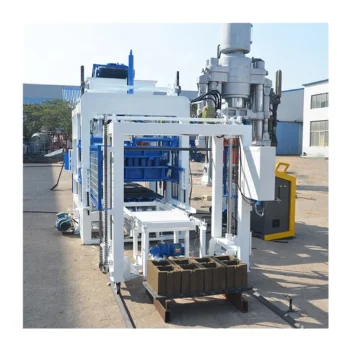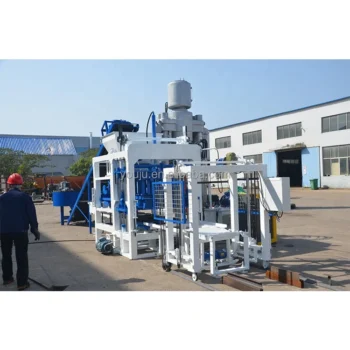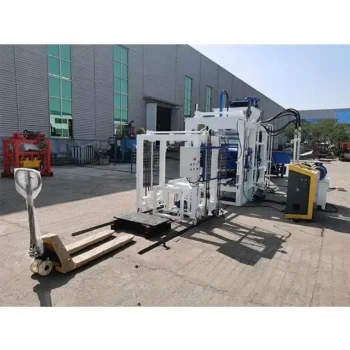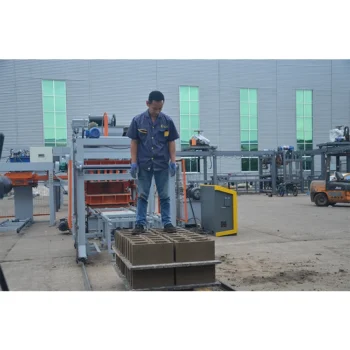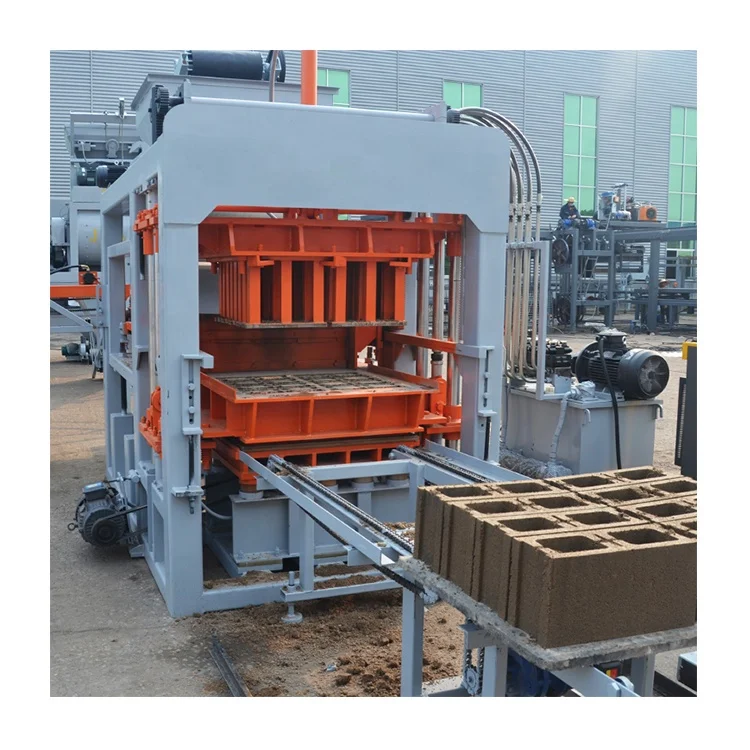



Description
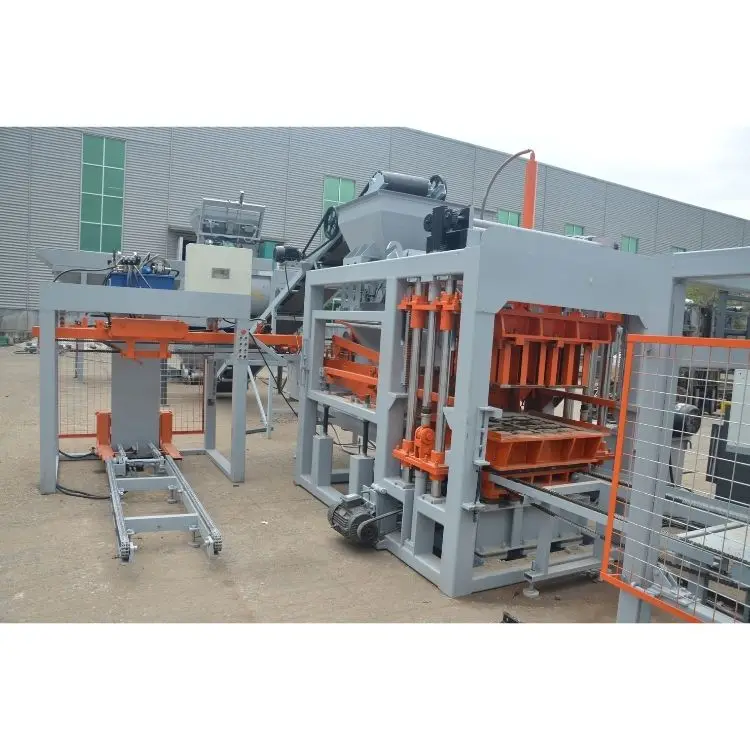
Dispatch-Ready Inventory — the QT6-15 automatic hydraulic block machine ships from stock with dismantled top cylinder for immediate container loading, eliminating typical production lead times.
Technical Specifications
| Parameter | Value |
|---|---|
| Model | QT6-15 |
| Product Type | Fully Automatic Hydraulic Concrete Block Making Machine |
| Molding Method | Vibration and hydraulic pressing |
| Rated Pressure | 21 MPa |
| Molding Cycle | 15 s – 20 s per pallet |
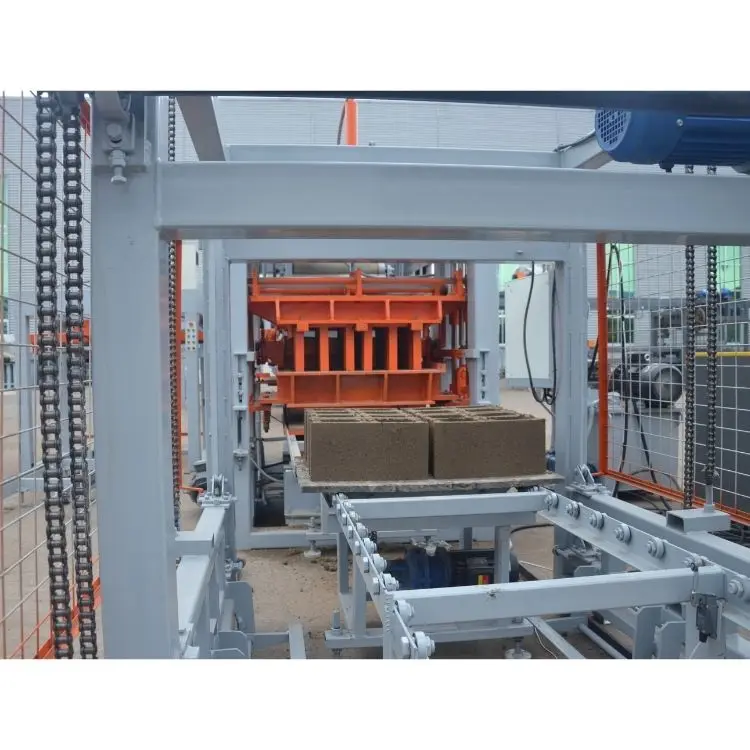
| Pallet Size | 900 × 700 mm |
| Main Machine Weight | 6,000 kg |
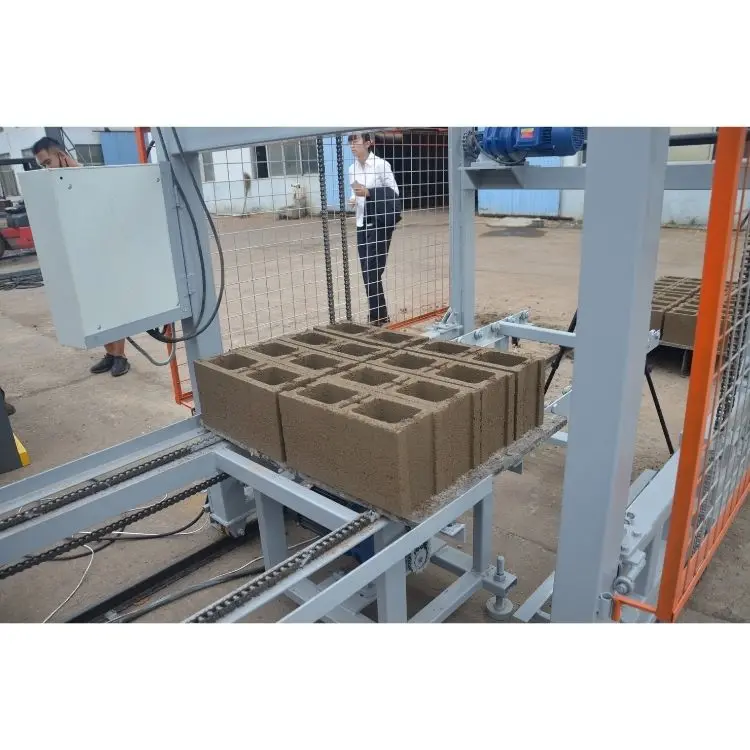
| Output – Hollow Block (400×200×200 mm) | 1,440 pcs/h, 11,520 pcs/8h shift (6 pcs/pallet) |
| Output – Paving Brick (200×100×60 mm) | 5,040 pcs/h, 40,320 pcs/8h shift (21 pcs/pallet) |
| Output – Solid Brick (240×115×53 mm) | 7,680 pcs/h, 61,440 pcs/8h shift (32 pcs/pallet) |
| Raw Materials | Cement, sand, fly ash, stone powder, slag |
| Production Line Options | Simple line (JS500 mixer, 8 m conveyor, automatic stacker) or fully automatic line (cement silo, screw conveyor, batching machine, pallet loader, separator) |
| Voltage & Frequency | Customizable to buyer’s local standard (basis to be confirmed) |
| Control System | Automatic PLC (model and HMI language to be confirmed) |
| Automation Level | Fully automatic with pallet feeding and stacking |
| Warranty | 1 year (excluding wearing parts) |
| Shipment State | Top cylinder removed for container loading |
Application Suitability
| Application | Material or Output |
|---|---|
| Hollow concrete block production | Crushed stone, cement and sand mix for 400×200×200 mm structural blocks |
| Color paving brick manufacturing | Fine aggregate and cement with pigment for 200×100×60 mm interlocking pavers |
| Solid brick and kerbstone pressing | Dense cement and stone powder blends for load-bearing units and roadside kerbs |
| On-site production for housing projects | Multiple block formats from a single press to match shifting site demands |
What "In Stock" Really Means for a QT6-15 Block Machine Order
A QT6-15 block machine in stock means the main press, pallets and first mould set are packed and cleared for dispatch, not waiting on a production slot.
Buyers working to a project deadline often find that a quoted lead time stretches once the deposit lands. The production queue quietly shifts, and a promised four-week dispatch becomes eight. On a housing project where the curing yard is already prepared, every delayed week is lost curing time and missed milestone payments. When sourcing a QT6-15 block machine in stock, the dispatch date should be fixed before balance payment, with packing photographs and a container loading plan provided as proof. [NEED_CITE: typical lead time discrepancies in machinery export orders]
Stock Configuration Versus Built-to-Order Reality
A stocked QT6-15 typically carries the standard 900×700 mm pallet frame and a set of common moulds such as 400×200×200 mm hollow block and 200×100×60 mm paving brick. If the buyer’s market demands a non-standard kerbstone or interlocking profile, that specific mould will require a production run even when the press itself is ready to ship. Clarifying which items are physically on the warehouse floor versus which need fabrication prevents the QT6-15 block machine in stock from turning into a partial stock situation.
Container Loading and Arrival Timing
The QT6-15 main machine ships with the top hydraulic cylinder removed to reduce overall height and fit standard container doors. This dismantling is planned at the factory, and the reassembly points are marked before crating. Because the loading sequence is pre-engineered, the freight forwarder can provide an arrival estimate at the quoting stage rather than after shipment. Buyers can then align foundation curing, electrical connection and operator availability to a known arrival window. [NEED_CITE: container loading procedures for heavy hydraulic machinery]
Pressure, Vibration and the Block You Actually Sell
The 21 MPa rated hydraulic pressure works together with the vibration system to compact the concrete mix into the mould. For hollow blocks using a drier mix with crushed stone, the full pressure range is needed to achieve consistent wall density. For paving bricks with a finer aggregate and higher cement content, the vibration force does more of the work. The 15–20 second moulding cycle applies across formats, but the actual block strength depends on whether the pressure and vibration settings match the buyer’s specific mix design and local aggregate gradation. A pallet size of 900×700 mm also determines how many blocks are pressed per cycle, so the daily output figures only hold when that pallet is used with the stated block format.
The Cost of Skipping Voltage and Language Confirmation
Last year on a site in Saudi Arabia, a fully automatic block press arrived with the PLC display locked in Chinese. The local technicians could not navigate a single menu, and commissioning stalled for two days until a remote language switch was arranged. That same machine had been wired for 380 V / 50 Hz while the site supply was 440 V / 60 Hz, requiring a transformer that added further delay. When a QT6-15 block machine in stock ships without a signed voltage and HMI language confirmation sheet, the arrival date becomes meaningless because the machine cannot run on day one. [NEED_CITE: electrical standards and voltage variations across Middle East markets]
Why Buyers Source This Press Through Our Stock Channel
Block machinery is the single focus here, so the press, mould, pallet and handling equipment are specified as one matched system rather than assembled from separate suppliers. Stock machines are configured with proven pallet and mould combinations, reducing the variable list at order time. Mould design and supply covers the formats the buyer’s local market actually sells, and custom drawings are supported when stock moulds do not cover a required profile. Automation level is selectable, meaning a buyer can take delivery of a semi-automatic setup now and add automatic stacking later. Installation support includes operator training so the first shift produces saleable blocks, not scrap. [NEED_CITE: importance of matched system specification in block production lines]
Documentation & Verification
- Factory test record on buyer’s target block format before dispatch
- Container loading photographs showing cylinder removal and crate securing
- Voltage and PLC display language confirmation sheet signed pre-shipment
- Hydraulic and electrical schematic matching the as-built configuration
- Customs documentation pack with HS code for destination country
Installation, Commissioning & Support
- Foundation must accommodate 6,000 kg main machine weight with level tolerance for 900×700 mm pallet track
- Dedicated electrical circuit matching confirmed voltage and frequency before the QT6-15 is energized
- Top hydraulic cylinder reinstalled and pressure set to 21 MPa on site during commissioning
- PLC menu language verified and mould change procedure demonstrated to local operators
- First set of moulds and wearing parts list handed over with maintenance schedule
What We Need to Confirm Your Dispatch Date
To hold a specific QT6-15 block machine in stock and provide a firm container departure date, share the target block formats and required mould profiles, the local supply voltage and frequency, and the preferred PLC display language. If the project has a fixed construction season deadline, state the latest acceptable arrival date so the loading plan can be matched to a sailing schedule.
Frequently Asked Questions
Q: Which QT6-15 configurations and moulds are currently in stock versus built-to-order?
A: The standard press with 900×700 mm pallet frame and common hollow block or paving brick moulds is typically available from stock. Custom kerbstone or interlocking profiles require a mould production run. Confirming the exact block formats needed allows a clear split between stock items and built-to-order components before the order is placed.
Q: What is the dispatch lead time from deposit to container departure?
A: For a fully stocked QT6-15 configuration with confirmed voltage and PLC language, container loading can begin shortly after deposit clearance. The exact date depends on the chosen sailing schedule and any additional line equipment ordered alongside the press. A written dispatch date is provided before balance payment is requested.
Q: How is the machine packed for container loading, and does dismantling affect reassembly?
A: The top hydraulic cylinder is removed to reduce machine height for standard container doors. All reconnection points are marked before crating. On-site reassembly involves bolting the cylinder back into position and reconnecting hydraulic lines, which is completed during the standard commissioning visit without requiring special tools.
Q: Can the arrival estimate be confirmed before the balance payment is released?
A: Yes. Once the container loading plan and sailing schedule are finalized, the freight forwarder provides an estimated arrival date at the destination port. This estimate is shared with the buyer alongside the packing photographs and loading plan, allowing the balance payment to be released against known shipping milestones.
Q: Are pallets and the first set of moulds shipped together with the press?
A: Pallets and the first mould set are loaded into the same container as the main machine when they are in stock. If a custom mould is being produced, it may ship in a separate consignment or a later container. The packing list provided before shipment clearly states which items are in the primary container.