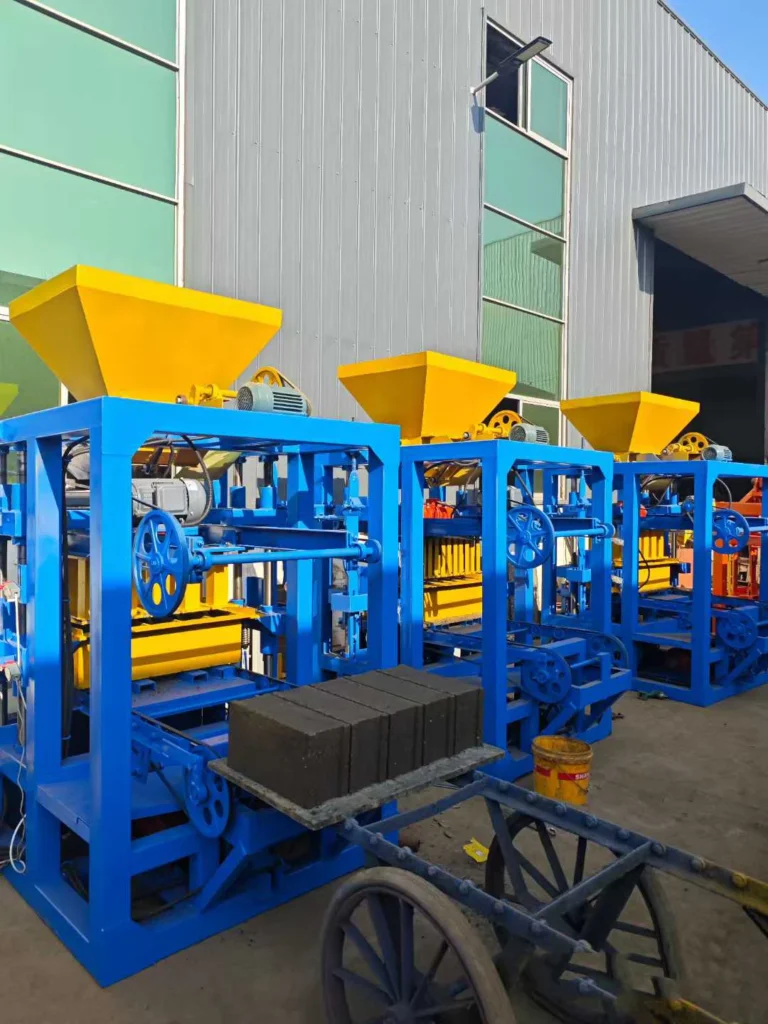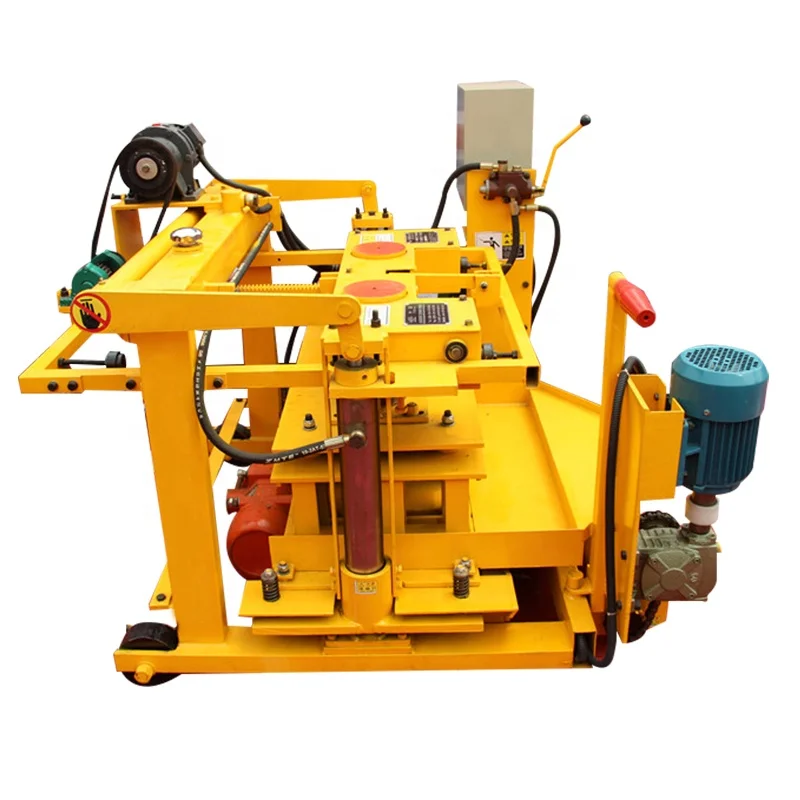
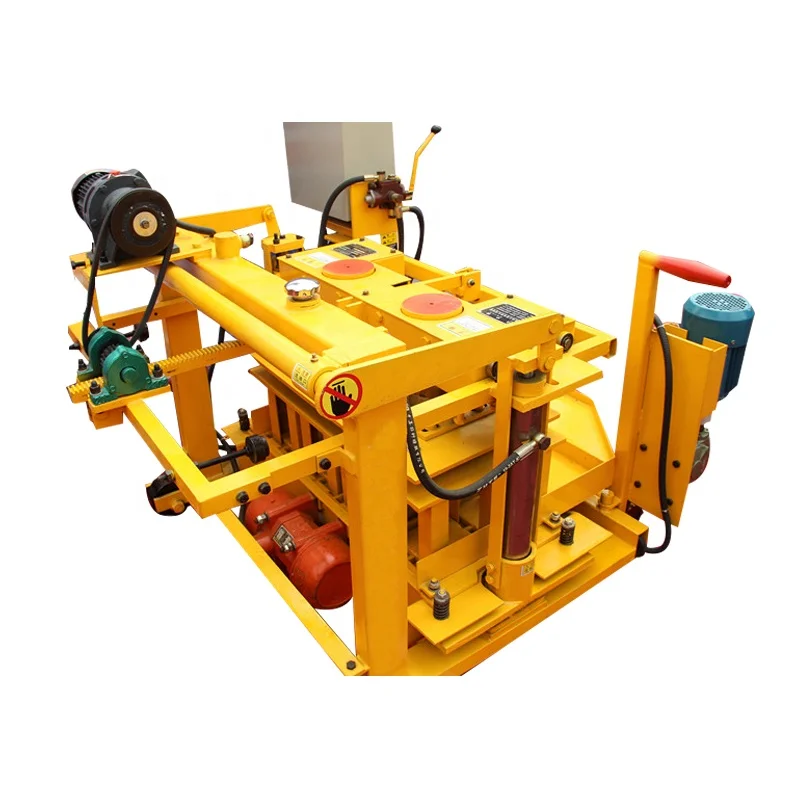
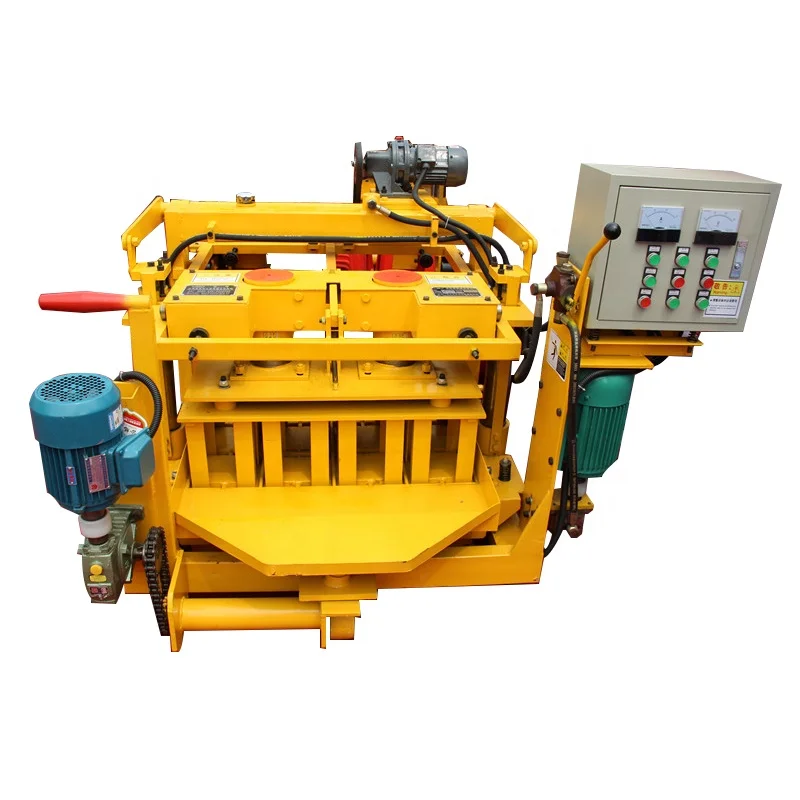
Description
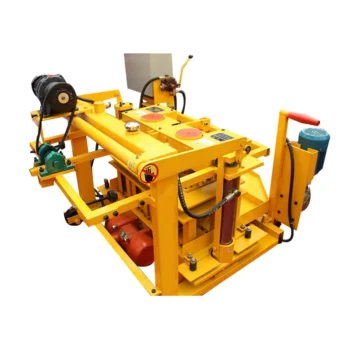
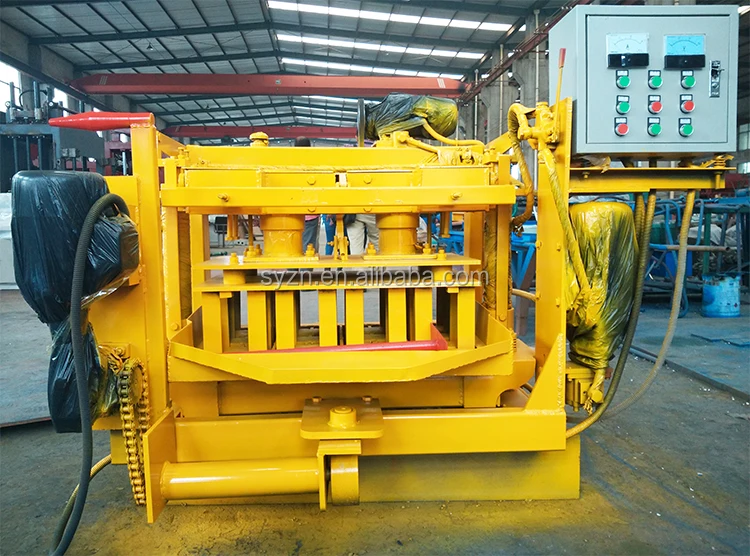
Stock-first supply chain — the QMY4-30 mobile block machine ships from our Linyi warehouse with standard moulds loaded, bypassing the typical multi-week production queue so your project site receives equipment while deadlines still matter.
Technical Specifications
| Parameter | Value |
|---|---|
| Model | QMY4-30 |
| Product Type | Mobile Hydraulic Block Making Machine |
| Overall Dimensions (L×W×H) | 1300 × 1500 × 1000 mm |
| Net Weight | 950 – 1000 kg |
| Total Installed Power | 5.95 kW |
| Vibration Force | 28.6 kN |
| Excitation Frequency | 4500 r/min |
| Molding Cycle | 30 s |
| Hydraulic Method | Mold vibration |
| Operation Mode | Manual handle operation with hydraulic transmission |
| Raw Materials | Concrete, sand, cement, fly ash, lime, gypsum, crushed aggregate |
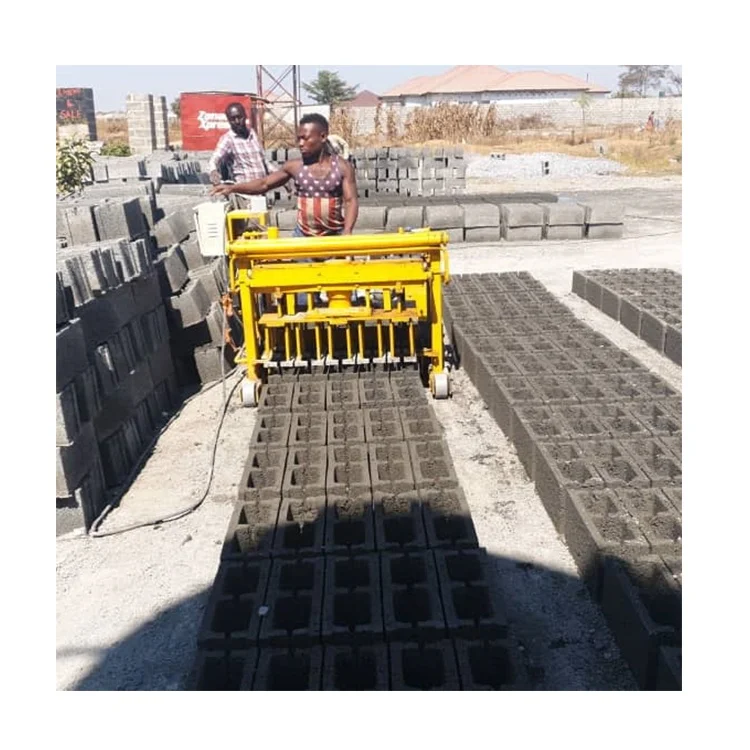
| Machine Type | Mobile egg-laying |
| Output Capacity | 3000 pcs/day over 8 hours (basis not stated in source — confirm block format and material) |
Application Suitability
| Application | Material or Output |
|---|---|
| On-site hollow block production for housing projects | Crushed stone, river sand, cement blends |
| Remote infrastructure camps without fixed plant access | Fly ash, lime, local sand and gravel |
| Entrepreneur-run yard producing for local sale | Stone dust, mine tailings, construction waste aggregate |
| Coastal and desert terrain block laying | Salt-resistant sand mixes with adjusted cement ratios |
| Mountainous or hilly area masonry supply | Locally quarried gravel and slag |
Why "In Stock" Matters More Than Quoted Output for Mobile Block Machine Buyers
A machine sitting in a Linyi warehouse today reaches your port weeks before one that is still on the production schedule.
When contractors commit to a project timeline, a mobile block machine in stock fast delivery becomes the deciding factor over theoretical output figures. I have watched crews stand idle on Tanzanian and Sri Lankan sites because the press was six weeks behind the promised ship date, while the concrete mixer and the masonry team were already on payroll. The QMY4-30 compact footprint and manual operation mean it does not require a curing rack system or automated pallet line to start producing, so the critical path from warehouse dispatch to first block on the ground stays short. [NEED_CITE: typical ocean freight transit times from Qingdao to East African ports]
Dispatch Timing and Container Loading for the QMY4-30
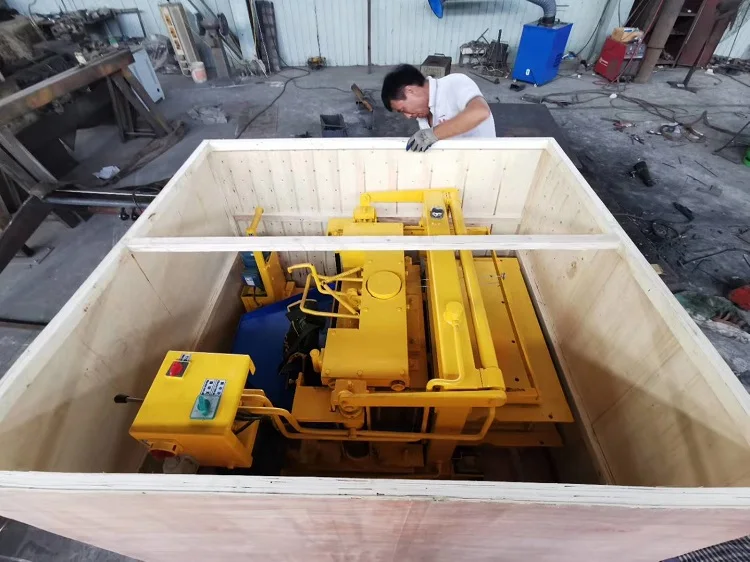
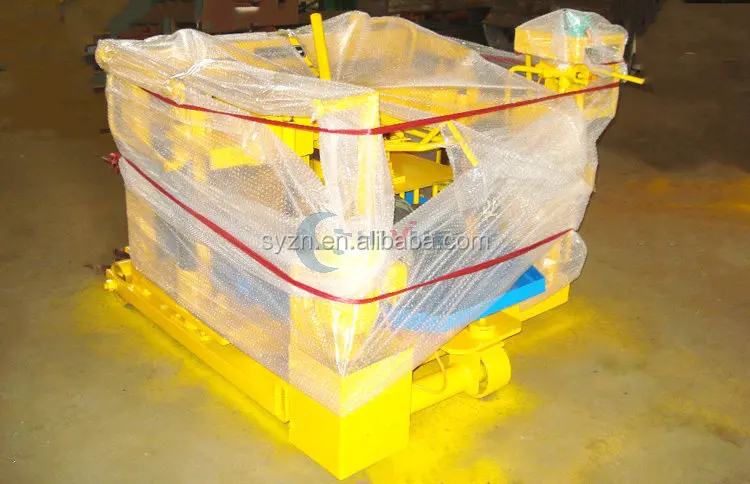
The QMY4-30 mobile block machine in stock fast delivery is built around one promise: the unit and its standard moulds leave our facility without waiting for a new production slot. Because the machine weighs under 1000 kg and measures 1300 × 1500 × 1000 mm, it fits into a standard LCL crate or shares a 20-foot container with spare moulds, pallets of wear parts, and a second unit if the project demands parallel production. Dismantling is limited to the handle assembly and hydraulic lines, which reconnect on site with standard fittings.
What "Arrival Estimate" Actually Means for Your Project Schedule
Once the QMY4-30 mobile block machine in stock fast delivery clears customs at Qingdao, transit time depends entirely on the destination port and current vessel rotation. We quote the arrival estimate at the point of order confirmation, not after production finishes — because there is no production wait. For buyers running a housing development in Nairobi or a road-side block yard in Dhaka, knowing the container is on the water within days of payment changes how you schedule the masonry crew and the cement delivery. [NEED_CITE: container shipping schedule reliability on Asia-Africa trade lanes]
How Vibration Force and Molding Cycle Shape Block Density on Site
The 28.6 kN vibration force at 4500 r/min is transmitted directly through the mould, not through a separate table, because the QMY4-30 is an egg-laying design that deposits blocks on the ground. This means the ground surface itself becomes part of the compaction equation — a soft clay floor absorbs vibration energy that would otherwise densify the block, while a compacted gravel strip gives you noticeably harder output. The 30-second molding cycle is a mechanical timer, not a PLC-driven variable, so the operator controls consistency through disciplined rhythm rather than software. Total installed power of 5.95 kW keeps the machine within reach of a standard site generator, which matters when grid power is unreliable or absent entirely.
The Hidden Cost of Ignoring Local Aggregate Before You Ship
I once spent three days on a Tanzanian site adjusting vibration force and moisture ratios because the local sand carried a clay content our test mix never accounted for, and the blocks were crumbling before they reached the curing area. When a buyer orders a mobile block machine in stock fast delivery without sending a raw material sample, the machine arrives configured for a generic mix that may not match what is actually available within hauling distance of the site. The QMY4-30 manual handle operation gives the operator some ability to compensate by adjusting feed volume and cycle rhythm, but vibration force is fixed at 28.6 kN — if the aggregate demands more compaction energy, no amount of operator skill bridges that gap. [NEED_CITE: effect of clay content in sand on concrete block compressive strength]
Why Stock Availability Is Only Half the Purchase Decision
Our single-focus approach to block machinery means the QMY4-30 ships with moulds, hydraulic spares, and handle assemblies matched to the machine as a system, not sourced from separate vendors after the fact. Standard mould formats are confirmed before dispatch so the first block produced on your site is the format your market actually buys. We provide a factory test record run on the specific mould set included in your shipment, not a generic certificate from a different model. Container loading plans are documented with photographs so you can verify securing and bracing before the container is sealed. Arrival estimates are quoted at order, not after production, because the machine is already built.
Documentation & Verification
- Factory test record run on the mould formats included in your shipment
- Packing photographs showing container securing and bracing before seal
- Hydraulic and electrical schematic matching the shipped unit serial number
- Operation manual with handle operation and maintenance intervals for the QMY4-30
- Voltage and frequency confirmation sheet signed before dispatch
Installation, Commissioning & Support
- Level a compacted gravel strip at least 2 m wide for the 1300 × 1500 mm footprint before arrival
- Provide a dedicated 5.95 kW circuit at the confirmed voltage and frequency for reliable motor start
- Reconnect dismantled handle assembly and hydraulic hoses using included fittings on day one
- Run first cycle with operator present to verify mold vibration timing against the 30-second setting
- Stock seal kits and handle pivot pins from the included wear parts list for the first 90 days
What to Share Before You Request a Dispatch Quote
Tell us the block format your local market sells most — hollow, solid, or paving — so we confirm which standard mould is loaded before the QMY4-30 leaves the warehouse. Share your destination port for an accurate arrival estimate, and confirm the voltage and frequency available on your site so the motor is wired correctly before it ships. If your local sand or aggregate has unusual clay or moisture content, send a sample so we can advise on mix adjustment before the first production day.
Frequently Asked Questions
Q: What is the current stock status and dispatch lead time for the QMY4-30?
A: The QMY4-30 is held in our Linyi warehouse with standard mould sets, so dispatch lead time covers only export documentation, container booking, and customs clearance rather than a production build cycle. Exact timing depends on vessel availability at Qingdao for your destination port.
Q: How is the machine packed and loaded into a container for shipment?
A: The QMY4-30 is dismantled at the handle and hydraulic connections to fit within standard container dimensions, then secured with bracing and photographed before the container is sealed. A second unit or spare moulds can share the same 20-foot container.
Q: What standard mould formats are available from stock versus custom order?
A: Standard hollow and solid block moulds for common market sizes ship from stock alongside the QMY4-30. Custom formats based on buyer drawings require a separate mould production run, which adds lead time beyond the machine dispatch window.
Q: What arrival estimate can I expect for my destination port?
A: Arrival estimates are quoted at order confirmation based on current vessel rotations from Qingdao to your specific port. Because the machine ships from stock, the transit clock starts from container loading rather than from the end of a production queue.
Q: What basic utilities do I need ready on site before the machine arrives?
A: You need a stable power supply matching the confirmed voltage and frequency with capacity for the 5.95 kW total draw, plus a compacted and level gravel strip for the egg-laying operation. No fixed plant, pallet system, or curing rack infrastructure is required.