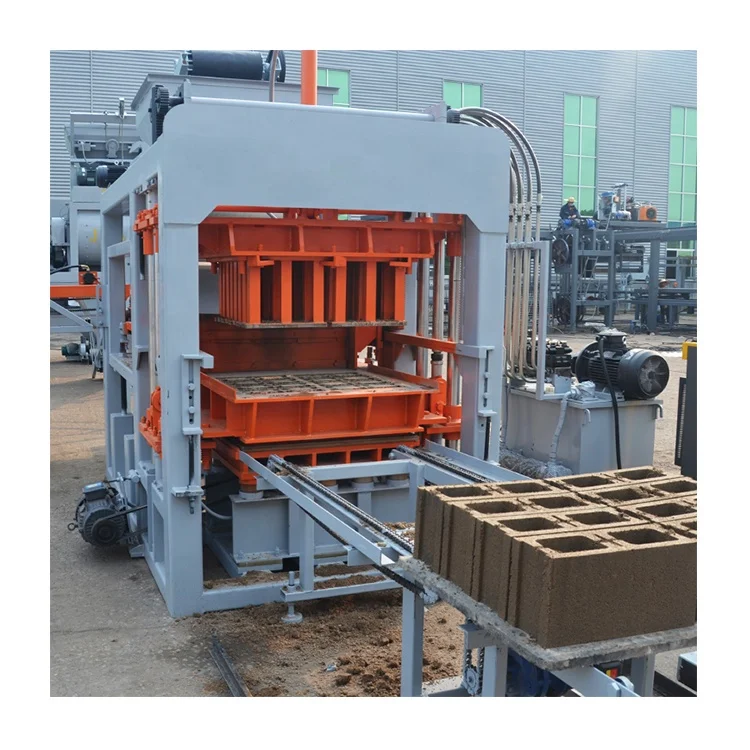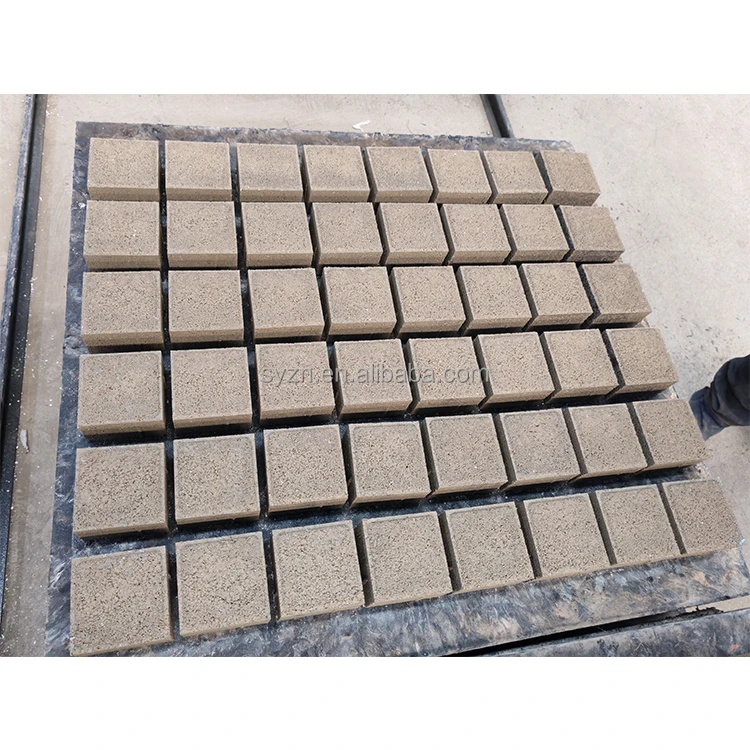


Description
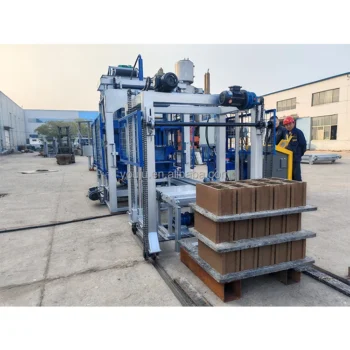
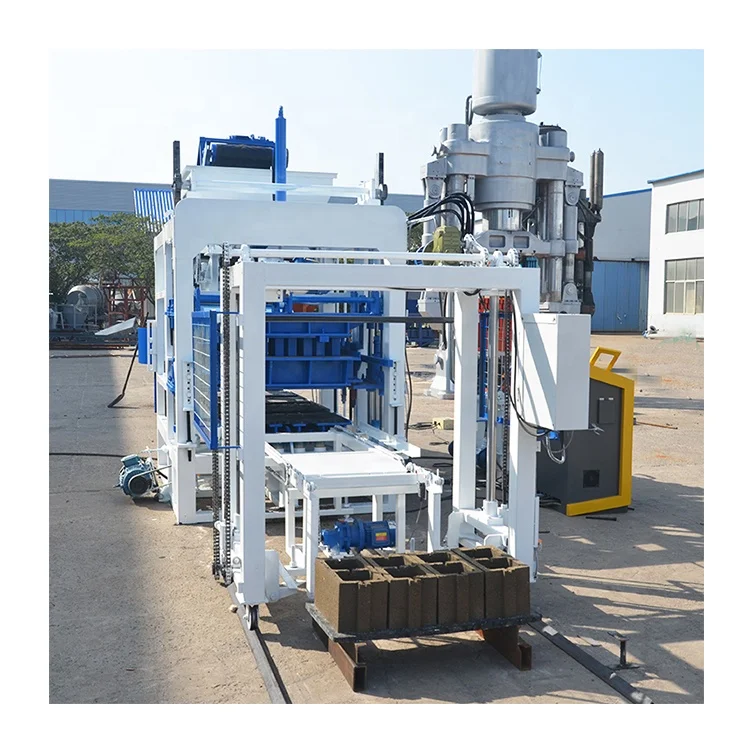
Stocked configuration — QTF3-20 units are dispatched from inventory with matched pallet feeders, block conveyors and hydraulic stations already staged for container loading, reducing typical multi-week production waits to a matter of days.
Technical Specifications
| Parameter | Value |
|---|---|
| Model | QTF3-20 |
| Product Type | Stationary Block Machine |
| Overall Dimensions (L×W×H) | 4000×3500×2300 mm |
| Total Mass | 2870 kg |
| Vibration Form | Platform Vibration |
| Total Power | 17.5 kW |
| Control Style | Semi-Automatic |
| Host Machine Structure | #12 U-bar welded overall frame |
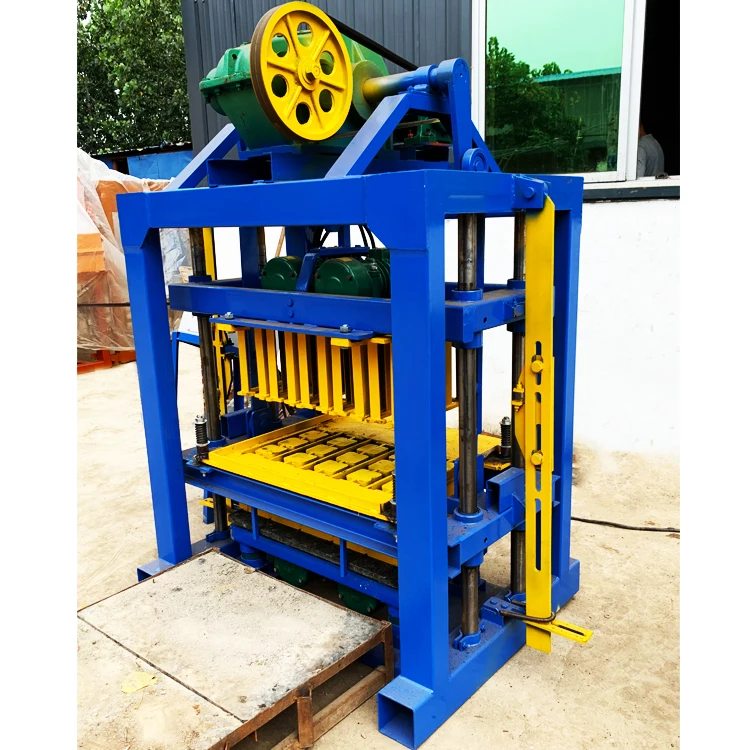
| Vibration System | Vibration motor, table, box, rubber block and spring |
| Proximity Switch | No-contact proximity switch |
| Material Feeding | Double layer (raw material and color surface) |
| Line Configuration | Host machine, material feeding machine, color material machine, pallet feeder, block conveyor, hydraulic station, electricity box |
| Recommended Mixer | JQ350 mixer with 8 m conveyor belt |
| Mould Format Options | Environmental, interlock, color paver, park grass, hollow, porous, standard brick |
| Output Capacity | 4320 pcs/day (basis not stated in source — confirm block format, material and thickness) |
| Raw Materials | Cement, sand, fly ash, coarse aggregate, slag |
Application Suitability
| Application | Material or Output |
|---|---|
| Hollow block production for residential housing | Cement, sand and coarse aggregate blends |
| Interlocking brick for retaining walls and landscaping | Cement and fly ash with local aggregate |
| Color paving brick for walkways and plazas | Double-layer feed with pigmented surface course |
| Park grass brick for permeable parking areas | Coarse aggregate with controlled cement ratio |
| Porous brick for sponge-city drainage | Open-graded aggregate and cement matrix |
| Standard solid brick for masonry infill | Sand, slag and cement |
Why "4320 Pieces per Day" Means Nothing Until the Block Format Is Named
A capacity number without the block format behind it is a guess, not a guarantee.
When I first started commissioning block presses in West Africa, buyers would quote me a daily figure they saw on a brochure and expect the same output on-site. The reality was always different. A QTF3-20 stationary block machine in stock fast delivery scenario does not change that math — the cycle time for a 400×200×200 mm hollow block is nothing like the cycle time for a 60 mm thick interlocking paver. Vibration dwell, hydraulic pressure hold and feeding passes all shift between formats, and the daily total shifts with them. Any supplier quoting you a single number for all formats is skipping the step that matters most [NEED_CITE: block format impact on cycle time and daily output].
Dispatch Timing Is the Real Conversation
Buyers who come to this page are usually working against a project start date or a dry-season window. The conversation should begin with which machine configurations are physically staged and how quickly a QTF3-20 stationary block machine in stock fast delivery order can be dismantled, crated and moved to port. Everything else — mould selection, pallet spec, control language — still needs confirmation, but the lead time discussion should not be held hostage by a production slot that may never open.
How Dismantling Affects Your Arrival Date
A fully assembled press does not fit inside a standard container. The host frame, hydraulic station, pallet feeder and block conveyor are broken down into modules, each secured against transit vibration. The way those modules are loaded — whether flat-racked or container-stacked with pallets and moulds filling the void space — determines both the shipping cost and the arrival estimate at destination port. Buyers who confirm dismantling method up front avoid a two-week surprise when the container is rolled onto the vessel [NEED_CITE: container loading practices for heavy industrial machinery].
Reading the Specs That Actually Shape Your Line
The #12 U-bar welded frame carries the vibration load through every cycle; a lighter section would fatigue at the weld points within months of continuous production. Platform vibration, rather than mould-directed vibration, means the entire pallet receives uniform compaction — critical when you are running a color paver with a thin pigmented surface layer and cannot afford density variation across the face. The no-contact proximity switch eliminates the mechanical wear that causes misread limit positions on older cam-based systems. Double-layer feeding allows a base course of standard aggregate and a surface course of colored material in a single pass, so color paver production does not require a separate facing machine on the line.
The Cost of Skipping the Pallet Conversation
Pallets are the item most often left out of the quotation, and the consequence shows up the day the machine arrives. If the pallet size does not match the curing racks already welded in your yard, you are either building new racks or cutting pallets down by hand. If the pallet material cannot survive the vibration cycle, you are replacing them before the first month is out. Either outcome wipes the time advantage you gained by ordering a stocked unit [NEED_CITE: pallet specification and curing area compatibility in block production].
What Stocked Really Means on This Platform
Machines listed here are physically present, not scheduled for a future production run. The line package ships as the matched set described — host, feeder, pallet system, conveyor, hydraulic station, and control box — so you are not assembling components from three different suppliers on arrival. Voltage and PLC display language are confirmed against your destination before the container is sealed, because a machine wired for the wrong frequency does not start on-site, it sits. Moulds for the formats your market actually buys are selected and crated with the press, not quoted as an afterthought. Factory test records are captured on your specific block format before dispatch, not on a generic sample.
Documentation & Verification
- Machine specification sheet listing QTF3-20 dimensions, mass and power draw
- Mould drawing and format list for every cavity shipped with the press
- Voltage and frequency confirmation matched to destination grid standard
- Factory test record captured on your specified block format before dispatch
- Packing photographs showing dismantling method and container loading plan
Installation, Commissioning & Support
- Foundation pad must accommodate 4000×3500 mm footprint with anchor bolt layout
- 17.5 kW total power requires dedicated breaker sized to starting current
- Dismantled modules reassembled on-site with frame alignment check before first cycle
- Vibration dwell and hydraulic hold tuned to your local aggregate and target block
- Operator training covers mould change sequence and no-contact proximity switch calibration
- Wear parts list supplied for vibration rubber blocks, springs and hydraulic seals
What to Send with Your Inquiry
Tell us the block formats your market sells and the daily volume you need per format, not a single total. Share the voltage and frequency at your site, the PLC display language your operators read, and the pallet dimensions your curing area already accommodates. If you can send a sample of your local sand or aggregate, we run it through a trial before the machine is crated — that single step is what kept me from a fourth day in a laterite pit, and it will do the same for you.
Frequently Asked Questions
Q: Is the QTF3-20 currently in stock, and what is the realistic dispatch lead time?
A: Units designated as stocked are physically staged and can enter dismantling and container loading once configuration details — voltage, mould format, pallet spec — are confirmed. Realistic dispatch lead time depends on how many modules require reconfiguration before crating, so confirm current stock status at the time of inquiry rather than relying on a generic estimate.
Q: How is the machine dismantled and loaded for container shipment?
A: The host frame, hydraulic station, pallet feeder, block conveyor and control box are separated into container-sized modules. Each module is secured against transit movement, and void space is filled with pallets and mould crates. The dismantling plan and packing photographs are shared before the container is sealed.
Q: What arrival estimate can I expect from dispatch to port of destination?
A: Transit time depends entirely on the destination port and the shipping line chosen at booking. Once the container is gated in at origin port, the vessel schedule determines arrival. Request the estimated sailing date and transit duration at the time of booking so your site preparation aligns with the actual arrival window.
Q: Which block formats and moulds are stocked and ship with the machine?
A: Standard stocked mould options include hollow block, interlock, color paver, park grass brick, porous brick and standard solid brick. Confirm which formats you need before dispatch so the correct cavities are crated with the press and the factory test record reflects your actual production target.
Q: What voltage and frequency configurations are available from stock?
A: Stocked machines are reconfigured to match destination voltage and frequency before dispatch. Confirm your site supply — both voltage and phase — at inquiry stage so the correct motor and transformer settings are fitted and the PLC display language is set to your operator’s preference before the container is loaded.