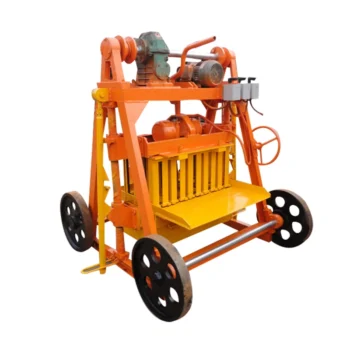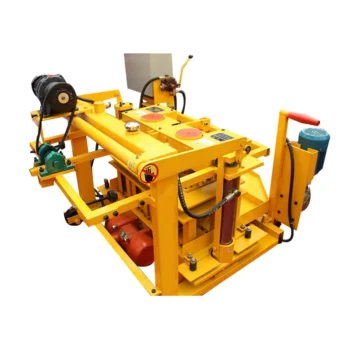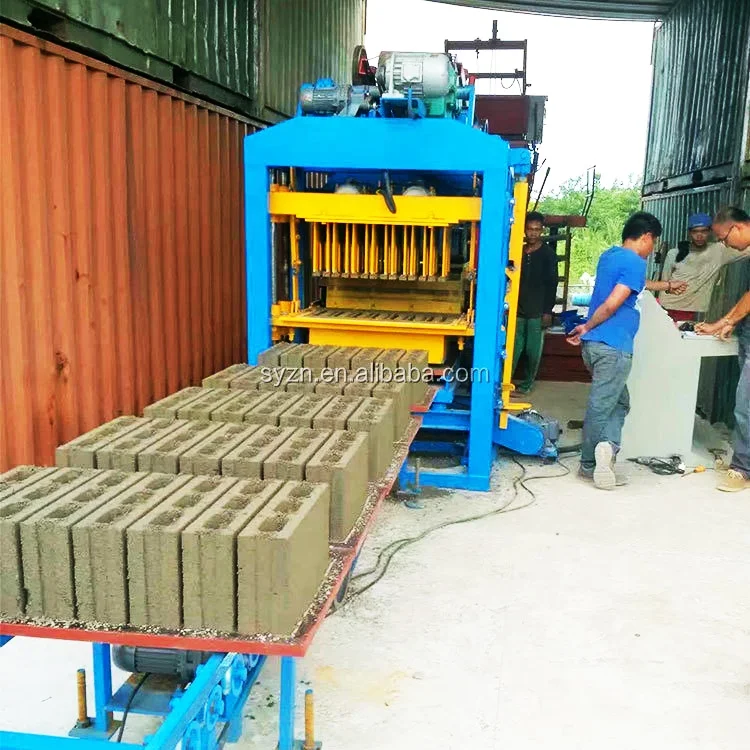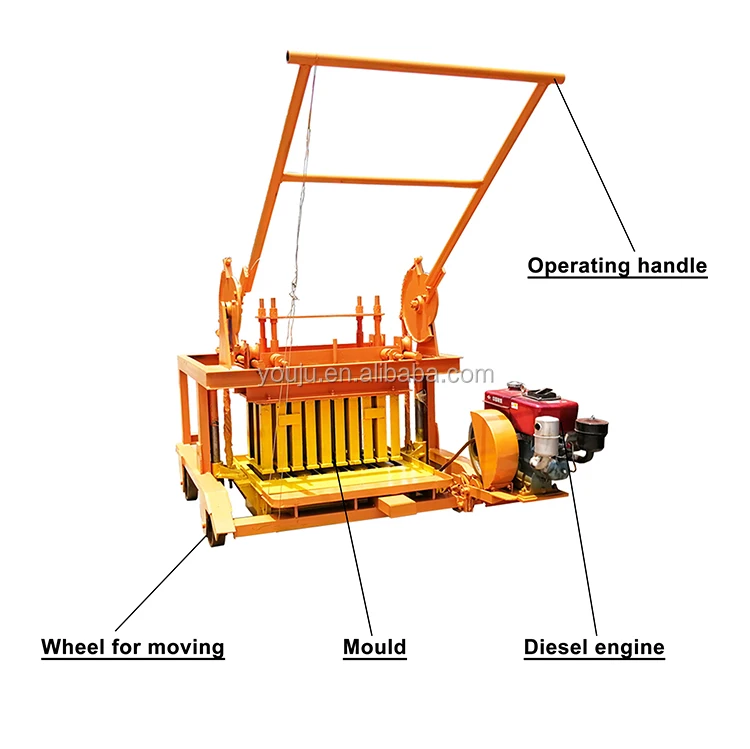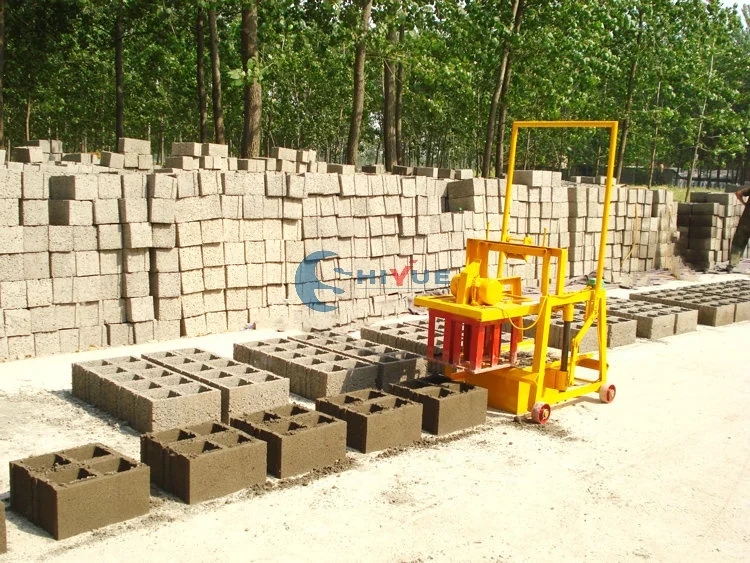
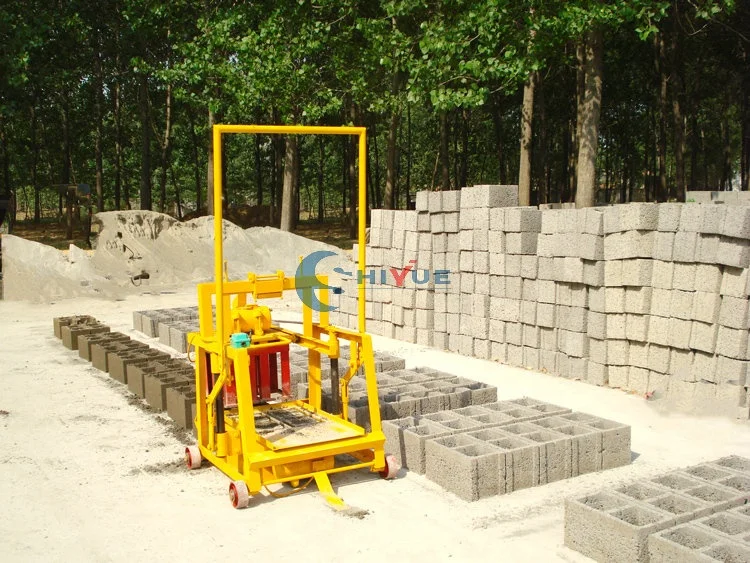
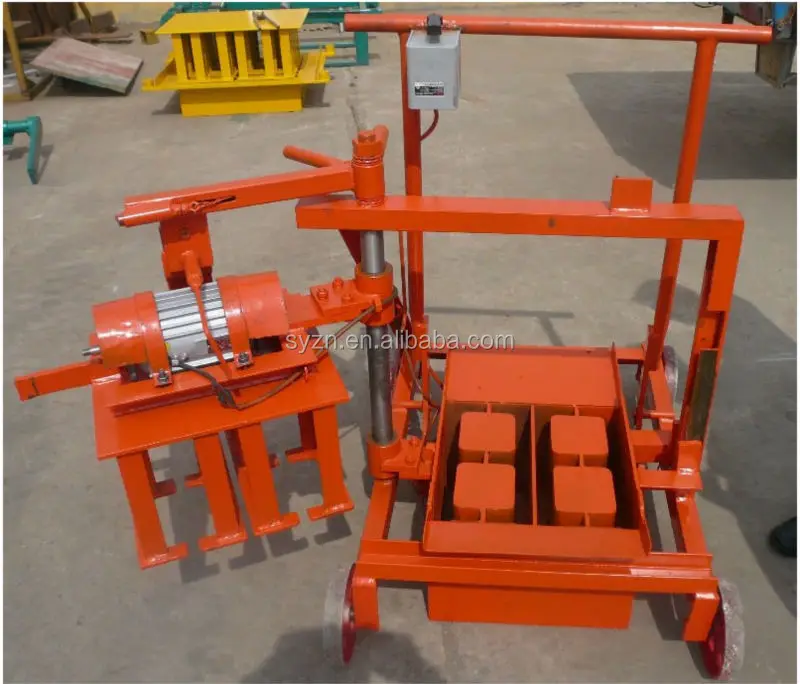
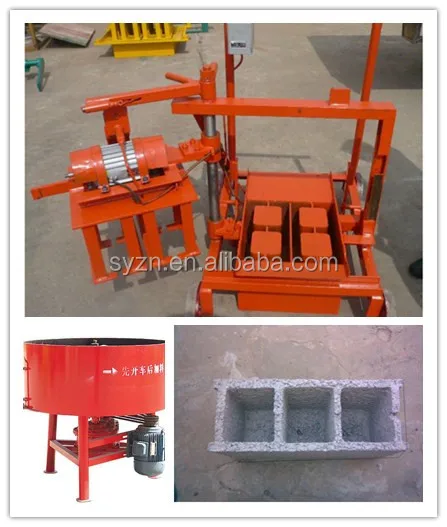
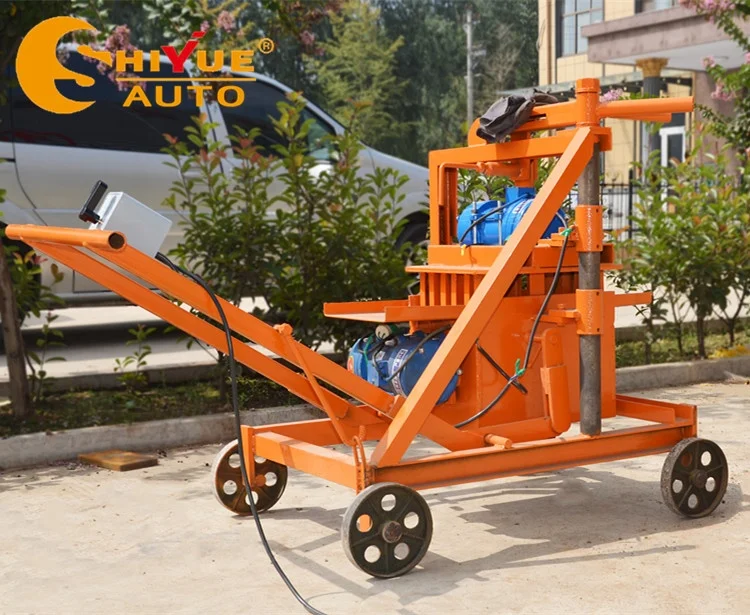
Description
In-Stock Availability — QMJ2-45 mobile block machines staged for immediate container loading, with arrival windows confirmed before you commit to a purchase order.
Technical Specifications
| Parameter | Value |
|---|---|
| Model | QMJ2-45 |
| Product Type | Mobile Concrete Block Making Machine |
| Machine Type | Manual mobile egg-laying block machine |
| Automation Level | Manual operation |
| Pallet Requirement | No pallets required (egg-laying type) |
| Power Source | Electric |
| Labour Requirement | 1 to 3 workers |
| Mould Change | Supported for multiple hollow brick formats |
| Cycle Time (400×200×200 mm hollow brick) | 25–30 s |
| Output (400×200×200 mm hollow brick) | 160 pcs/h, 1280 pcs per 8-hour shift |
| Cycle Time (400×150×200 mm hollow brick) | 25–30 s |
| Output (400×150×200 mm hollow brick) | 240 pcs/h, 1920 pcs per 8-hour shift |
| Cycle Time (400×100×200 mm hollow brick) | 25–30 s |
| Output (400×100×200 mm hollow brick) | 320 pcs/h, 2560 pcs per 8-hour shift |
| Qty per Mould (400×200×200 mm) | 2 pcs |
| Qty per Mould (400×150×200 mm) | 3 pcs |
| Qty per Mould (400×100×200 mm) | 4 pcs |
| Control System | Manual (no PLC) |
| Rated Power | (basis not stated in source) |
| Voltage & Frequency | (configurable, to be confirmed per destination) |
Application Suitability
| Application | Material or Output |
|---|---|
| On-site hollow block production for building contractors | Crushed stone, sand, cement blends laid directly on prepared ground |
| Small-scale block yard start-up with limited space | Hollow bricks in 200 mm, 150 mm, and 100 mm widths from locally available aggregate |
| Mobile production for remote housing projects | Egg-laying concrete blocks without pallet infrastructure or fixed plant |
| Distributor demo or resale inventory | Compact machine that ships in a single container and runs on arrival |
Why the Voltage Question Should Come Before the Price on a QMJ2-45 Mobile Block Machine Fast Delivery Order
A machine that cannot start on arrival is not fast delivery — it is a three-week delay dressed in a packing list.
I once watched a QMJ2-45 mobile block machine fast delivery order land in West Africa wired for 380 V while the site ran 220 V. The crew could not even jog the motor. By the time replacement motors cleared customs, the contractor had lost nearly an entire project milestone [NEED_CITE: voltage and frequency standards by export market]. That kind of mismatch never shows up in a catalogue specification row, yet it accounts for a disproportionate share of commissioning failures on small mobile equipment shipped overseas. The lesson is simple: confirming the destination voltage and frequency before the container is sealed is as important as confirming the mould size.
Dispatch Timing That Matches Your Project Deadline
Stock availability is the entire reason a buyer selects the QMJ2-45 mobile block machine fast delivery route over a made-to-order line. When machines sit on the warehouse floor rather than on a production schedule, the gap between purchase order and container loading shrinks to days rather than weeks. For contractors working against a pour schedule or housing developers answering to a handover date, that difference decides whether blocks are produced on time or purchased from a third-party supplier at a premium.
What "In Stock" Actually Means at Dispatch
A machine labelled in stock still requires pre-shipment checks: motor winding verification against the destination grid, panel language confirmation, mould bolt torque inspection, and a no-load run to confirm vibration assembly alignment [NEED_CITE: CE machinery directive requirements for industrial equipment]. Skipping these steps to chase a same-day loading date is how you end up with a machine that technically shipped on time but cannot produce a single usable block when the container door opens.
Reading the Specification Sheet Against Your Local Aggregate
The QMJ2-45 is a manual egg-laying machine, which means the operator controls feed consistency and the mix design does far more work than any hydraulic system would on a larger press. Cycle times of 25–30 seconds per mould assume a workable concrete mix with aggregate graded to suit the block cavity depth. If your local sand runs fine and your crushed stone tops out at 10 mm, the mould fill may require a slightly wetter mix, which in turn affects demoulding stability. The output figures — 160 pieces per hour for 400×200×200 mm hollow bricks, 240 per hour for the 150 mm width, and 320 per hour for the 100 mm width — all assume that the mix holds shape when the machine lifts away.
Choosing the Wrong Electrical Configuration and Living With It
When a mobile block machine arrives with an incorrect motor winding, the options are limited. You can source a step-up transformer locally — adding cost, adding a failure point, and consuming floor space the QMJ2-45 was chosen to avoid — or you can wait for a replacement motor to ship. Either path erases the delivery speed advantage and puts your project timeline into a holding pattern that no amount of operator effort can recover [NEED_CITE: typical lead times for replacement industrial motors shipped internationally].
Why Buyers Source This Machine From a Stock-Oriented Supplier
Single-focus machinery suppliers keep QMJ2-45 units and matching moulds on the floor together, so a spare 400×150×200 mm mould can load into the same container without a separate production run. Pre-dispatch voltage and frequency verification happens as a standard gate, not an optional line item, because the cost of a wrong motor outweighs any savings from skipping the check. Dispatch documentation includes packing photographs taken after the container is sealed, giving the buyer a customs-ready record before the vessel sails. Moulds and wear parts travel in the same shipment, so the first replacement cycle never forces an emergency air-freight order.
Documentation & Verification
- Factory test record confirming no-load motor run at buyer-specified voltage before dispatch
- Mould dimensional drawing for each hollow brick format included in the shipment
- Packing photograph set taken at container loading for customs clearance support
- Voltage, frequency, and motor nameplate confirmation sheet signed before crating
- Operation manual covering mix ratios, mould change steps, and daily maintenance intervals
Installation, Commissioning & Support
- Level compacted ground required; the egg-laying design eliminates fixed foundation work
- Electrical supply must match confirmed voltage and frequency with a dedicated circuit breaker
- Machine arrives assembled; operator begins production after mould bolt check and no-load test
- First-run mix adjustment guidance provided to match local sand and aggregate gradation
- Spare mould bolts and vibration rubbers included to cover early replacement needs
What We Need to Move Your Order Forward
To quote a realistic arrival window, confirm the destination port, the required voltage and frequency, and which hollow brick formats you need moulds for. If your site has existing pallet racks or curing space, let us know so the no-pallet egg-laying workflow is aligned with your handling equipment. Providing your target daily output per format lets us verify that the QMJ2-45 output bracket matches your project volume before the order is placed.
Frequently Asked Questions
Q: Is the QMJ2-45 currently in stock, and what is the dispatch lead time?
A: QMJ2-45 units and standard hollow brick moulds are held in stock for immediate allocation. Once the destination voltage and frequency are confirmed and the purchase order is received, container loading is typically scheduled within days rather than weeks. Your specific dispatch date is quoted at order so you can plan vessel booking and site preparation around a known timeline.
Q: How is the machine dismantled and loaded into a container for shipment?
A: The QMJ2-45 is a compact mobile unit that generally ships fully assembled in a standard container, with the hopper and handle components secured to prevent transit movement. Moulds and spare parts are packed alongside. Packing photographs are taken at the loading stage and shared with you before the container leaves the yard for customs documentation purposes.
Q: What arrival estimate can I expect once the machine is dispatched?
A: Ocean transit time depends on the destination port and the vessel schedule available at the time of booking. Once your port is confirmed, an arrival estimate is provided alongside the dispatch date so you can coordinate site readiness, electrical connection, and raw material staging to match the machine landing date.
Q: Can I order additional moulds or wear parts in the same shipment?
A: Yes. Additional hollow brick moulds in any of the three standard formats — 400×200×200 mm, 400×150×200 mm, or 400×100×200 mm — load into the same container. Including wear parts at this stage avoids a separate shipment later and ensures you have replacements on hand before the first mould or vibration component reaches its service interval.
Q: What voltage and frequency configurations are available from stock?
A: Motors on stocked QMJ2-45 machines can be verified or swapped to match your site electrical supply before dispatch. Confirming your voltage, frequency, and any local wiring standard requirement at the inquiry stage ensures the machine is electrically ready to run the day the container is opened, rather than waiting weeks for a replacement motor.