Description
Stocked and Ready — QMY4-30 mobile block machine ships from inventory with confirmed dispatch dates, so your project timeline depends on transit, not production delays.
Technical Specifications
| Parameter | Value |
|---|---|
| Model | QMY4-30 |
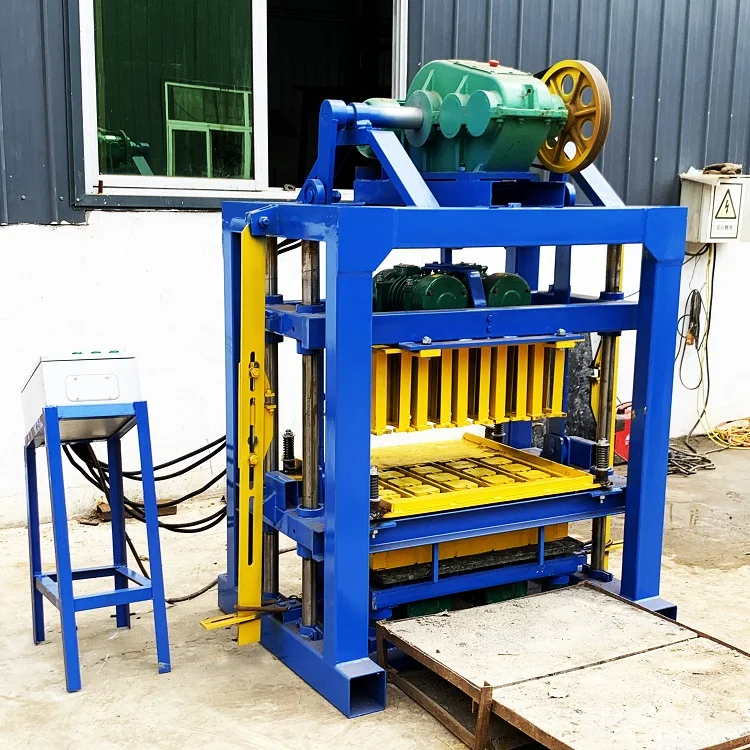
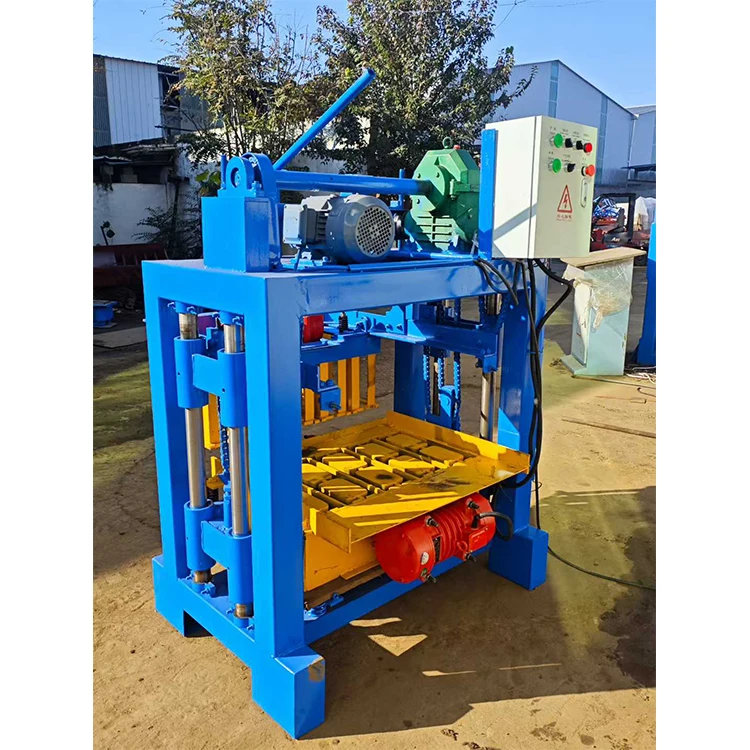
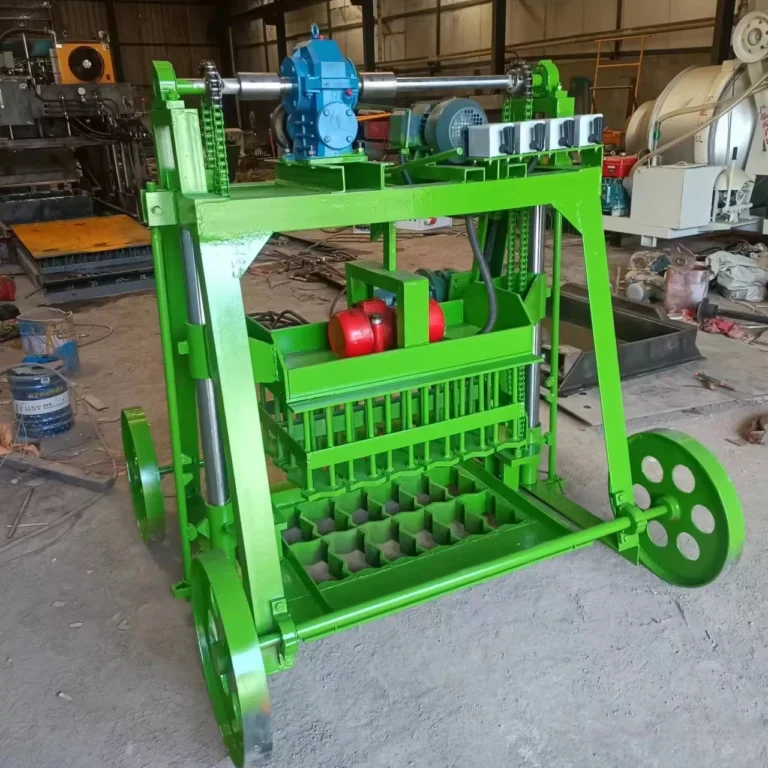
| Product Type | Mobile Concrete Block Making Machine |
| Rated Power | 5 kW |
| Overall Dimensions (L×W×H) | 1200 × 1200 × 1100 mm |
| Net Weight | 950 kg |
| Cycle Time | 30 seconds per mold cycle |
| Mould Format | Hollow block and solid brick (interchangeable) |
| Automation Level | Manual / Mobile (egg-laying type) |
| Output Capacity | 480 pcs/hour based on 400×200×200 mm hollow block, 4 pcs/mold |
| Output Capacity | 600 pcs/hour based on 400×150×200 mm hollow block, 5 pcs/mold |
| Output Capacity | 840 pcs/hour based on 400×100×200 mm hollow block, 7 pcs/mold |
| Daily Output | 3,840 pcs/8 hours based on 400×200×200 mm hollow block |
| Daily Output | 4,800 pcs/8 hours based on 400×150×200 mm hollow block |
| Daily Output | 6,720 pcs/8 hours based on 400×100×200 mm hollow block |
| Raw Materials | Cement, sand, crushed stones, slag |
| Warranty | One year guarantee |
Application Suitability
| Application | Material or Output |
|---|---|
| On-site construction block production | Hollow blocks from cement, sand, and crushed stone at housing project locations |
| First block plant for entrepreneurs | Solid bricks and hollow blocks in standard sizes with minimal fixed infrastructure |
| Contractor self-supply at remote sites | Egg-laying production directly on prepared ground without pallets or curing racks |
| Small-scale distributor fulfilling urgent orders | Rapid-deployment unit producing 400×200×200 mm or 400×150×200 mm hollow blocks |
Why "Output per Hour" Means Nothing Without Block Format Attached
Capacity figures only hold weight when the block size, mold cavity count, and cycle time are all named together.
Too many quotations list a single hourly number without saying which block format produced it. A buyer sees "840 pieces per hour" and assumes that applies across the board, only to discover the actual target product — typically the 400×200×200 mm hollow block that dominates most building codes — runs at nearly half that rate. I have watched contractors in Lagos and Mombasa plan labor and curing space around the wrong number, then scramble to adjust once the machine is running on-site [NEED_CITE: block format assumptions in capacity quotations]. With the QMY4-30, every capacity claim ties directly to a specific mold and cavity count, which is the only honest way to plan a production schedule.
Stocked Inventory and What It Means for Your Timeline
When a project deadline is tight, waiting for a machine to be built is not an option. The QMY4-30 mobile block machine in stock configuration is held in the warehouse, not scheduled for a production slot. This means dispatch happens within days of order confirmation rather than weeks. For contractors who need to start producing hollow blocks before the rainy season or before a handover inspection, that difference determines whether the project stays on track. Container loading plans and packing photographs are prepared before the machine leaves the yard, so there are no surprises at the port.
Egg-Laying Operation Without Fixed Infrastructure
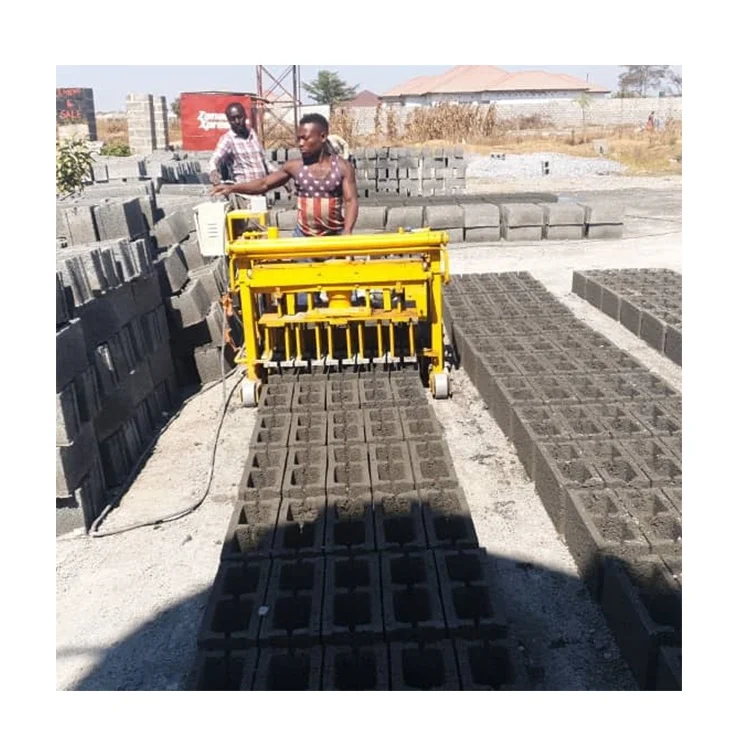
The egg-laying design eliminates the need for pallets, curing racks, or a dedicated factory floor. The QMY4-30 moves across a prepared concrete surface, laying blocks directly on the ground and advancing forward after each 30-second cycle. This suits contractors who produce blocks at the build site itself, moving the machine along a block line as the wall goes up [NEED_CITE: mobile egg-laying block machine operational practices in East Africa]. At 950 kg, the unit is light enough to reposition with basic site equipment yet heavy enough to maintain stability during the vibration cycle. The tradeoff is that block handling, turning, and curing remain manual tasks — a deliberate choice for buyers who want minimal capital outlay.
Reading the Specs That Actually Matter on Site
The 5 kW rated power tells you what generator or dedicated circuit the machine needs — undersizing the power supply is a common reason for motor burnout, especially on sites with shared distribution boards. The 30-second cycle time is consistent across all listed block formats, which simplifies operator training; the crew learns one rhythm regardless of which mold is installed. Mold interchangeability between hollow block and solid brick formats means one machine covers two product lines, but the swap itself is manual and takes time that must be factored into the day’s output plan. The raw material range — cement, sand, crushed stones, slag — covers most locally available aggregates in sub-Saharan markets, reducing the risk of sourcing a material the machine cannot process.
The Cost of Skipping Voltage Confirmation Before Shipment
I once saw a QMY-class mobile unit shipped to a site in Nairobi where the local grid ran at 415V three-phase, but the motor was wound for 380V. The machine ran for roughly twenty minutes before the windings overheated and failed. The project stood idle while a replacement motor was sourced and shipped, burning through weeks of the construction schedule. Voltage, frequency, and plug configuration vary across export markets, and confirming these details before the machine leaves the factory costs nothing compared to the downtime a mismatch causes [NEED_CITE: voltage and frequency standards by export market]. Every dispatch from stock should include a verified electrical specification matched to the destination site.
Why Buyers Source This Mobile Block Machine Here
The QMY4-30 is treated as a single system — machine, mold, and operating parameters are matched before quotation rather than assembled from mismatched components. Stock availability means the dispatch date quoted at inquiry is the date the machine actually leaves, not an estimate that shifts as production queues lengthen. Capacity figures are stated per block format with mold cavity counts attached, removing the guesswork that leads to undersized production plans. Documentation arrives with the machine, not weeks after, so customs clearance and commissioning proceed without administrative delays. The one-year warranty covers the unit from arrival, and wear parts lists are provided upfront so the buyer knows what to reorder before the first replacement falls due.
Documentation & Verification
- Factory test record showing cycle time and block output on standard mold before dispatch
- Packing photographs and container loading plan sent prior to shipment
- Voltage and frequency confirmation sheet matched to destination grid
- Hydraulic and electrical schematic included with the machine
- Operation and maintenance manual with wear parts list
- Customs documentation support for smooth port clearance
Installation, Commissioning & Support
- 5 kW motor requires a dedicated circuit or correctly rated generator on site
- 1200 × 1200 mm footprint fits standard flatbed transport without special permits
- 950 kg net weight allows site crane or forklift unloading at destination
- Egg-laying operation requires a level, compacted concrete surface for consistent block quality
- Mold change is manual — operators trained on swap procedure during commissioning
- Wear parts list provided so spares can be ordered before first replacement cycle
What We Need to Move Your Order Forward
To confirm stock availability and match the machine to your site, provide the block formats your market requires, the daily volume you need to sustain, and the voltage and frequency at your location. If you have an existing generator or distribution board, a photo of the nameplate removes all doubt about electrical compatibility. Let us know the shipping destination port so transit time can be quoted alongside the dispatch date.
Frequently Asked Questions
Q: Which models and standard molds are currently stocked and ready to ship?
A: The QMY4-30 mobile block machine in stock is available with interchangeable molds for standard hollow block formats including 400×200×200 mm, 400×150×200 mm, and 400×100×200 mm, as well as solid brick. Specific stock quantities and available mold sets at the time of your inquiry are confirmed upon request with dispatch dates quoted against current inventory.
Q: What is the dispatch lead time and estimated arrival for a stocked QMY4-30?
A: Because the unit ships from existing inventory, dispatch occurs within days of order confirmation rather than after a production run. Total arrival time depends on the destination port, shipping line schedules, and customs clearance speed at your end. A transit estimate is provided at the quotation stage based on your named port of discharge.
Q: How is the machine packed and loaded for container shipment?
A: The QMY4-30 at 950 kg and 1200 × 1200 × 1100 mm overall dimensions is secured within a standard shipping container with bracing to prevent movement during ocean transit. Packing photographs and a container loading plan are shared with the buyer before the container is sealed, and any accompanying molds or spare parts are loaded in the same shipment.
Q: What block formats can the QMY4-30 produce, and what is the realistic daily output per format?
A: The machine produces hollow blocks and solid bricks using interchangeable molds. Daily output over an 8-hour shift is 3,840 pieces based on 400×200×200 mm hollow blocks at 4 per mold, 4,800 pieces based on 400×150×200 mm at 5 per mold, and 6,720 pieces based on 400×100×200 mm at 7 per mold, all at a 30-second cycle time.
Q: What voltage and frequency configurations are available from stock?
A: Stocked units are configured to common industrial voltage and frequency standards. Buyers must confirm their site supply — including voltage, phase, and frequency — before dispatch so the motor and control components match the local grid. A photo of the existing distribution board or generator nameplate is the fastest way to verify compatibility.