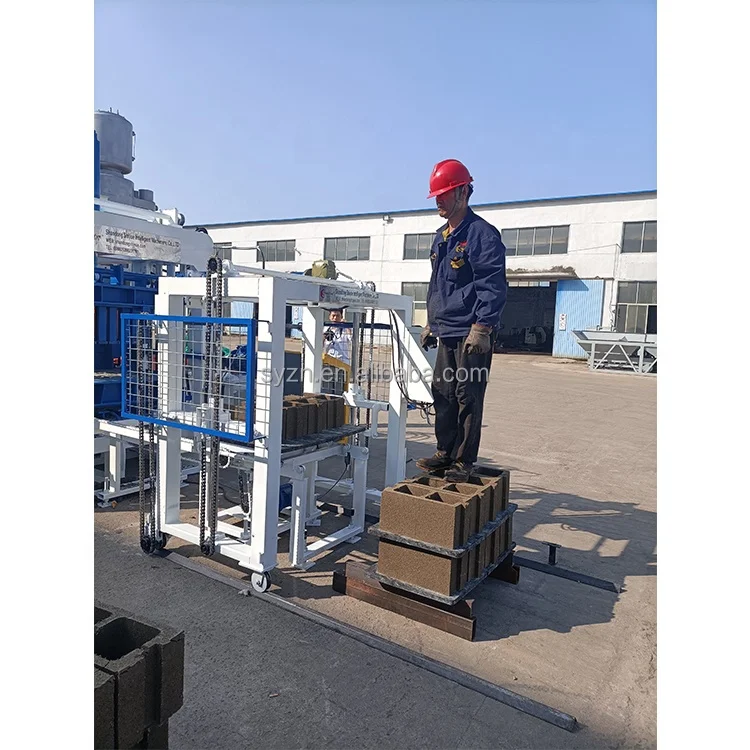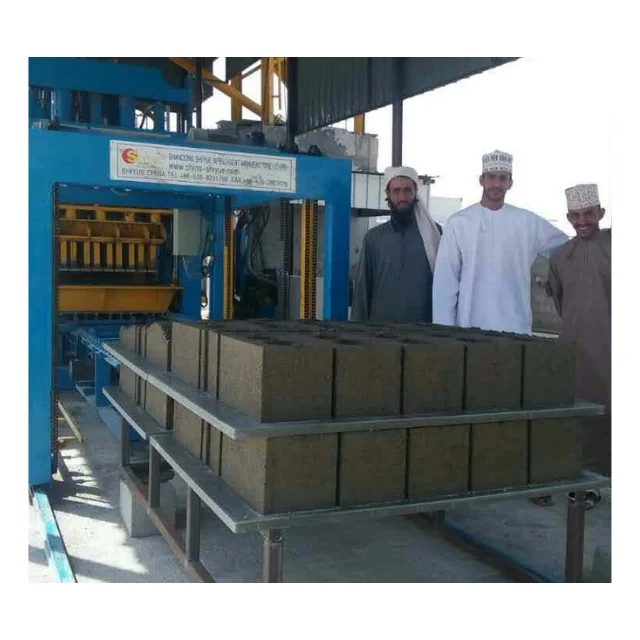
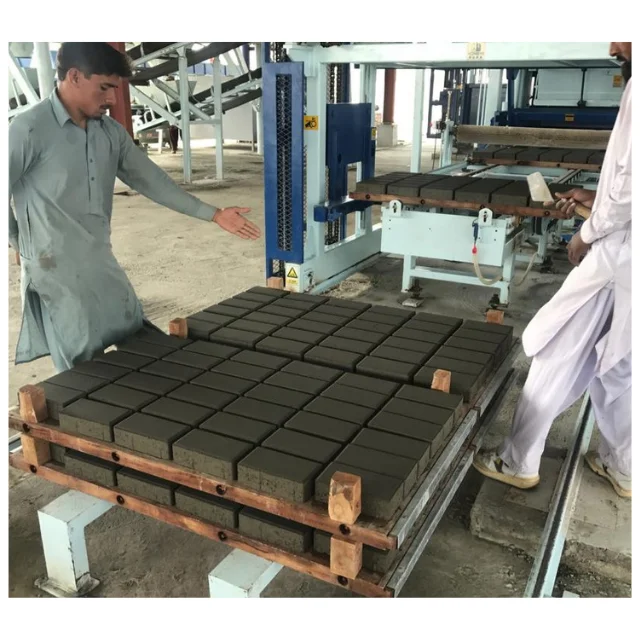
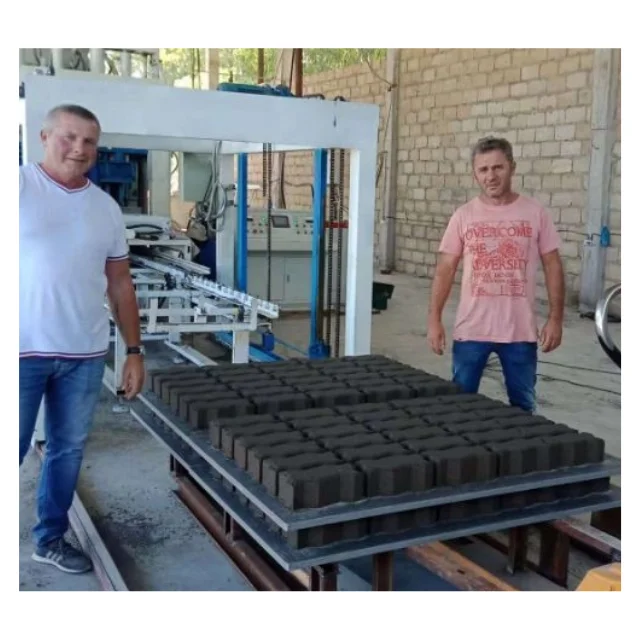
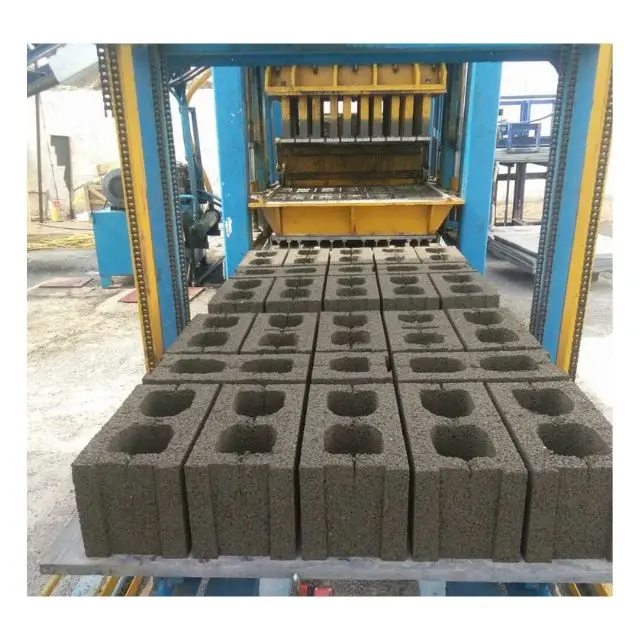
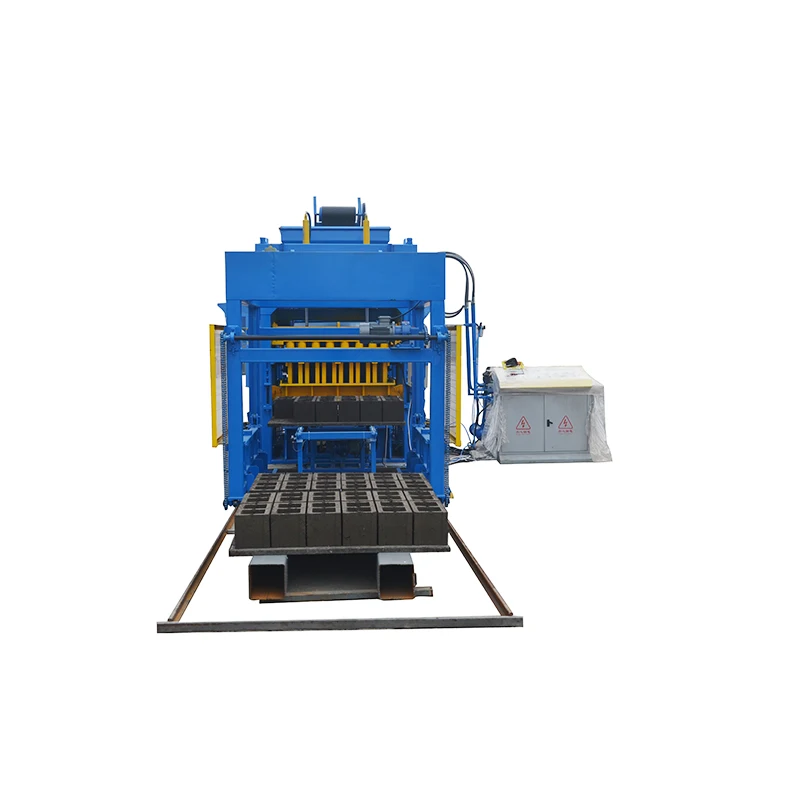
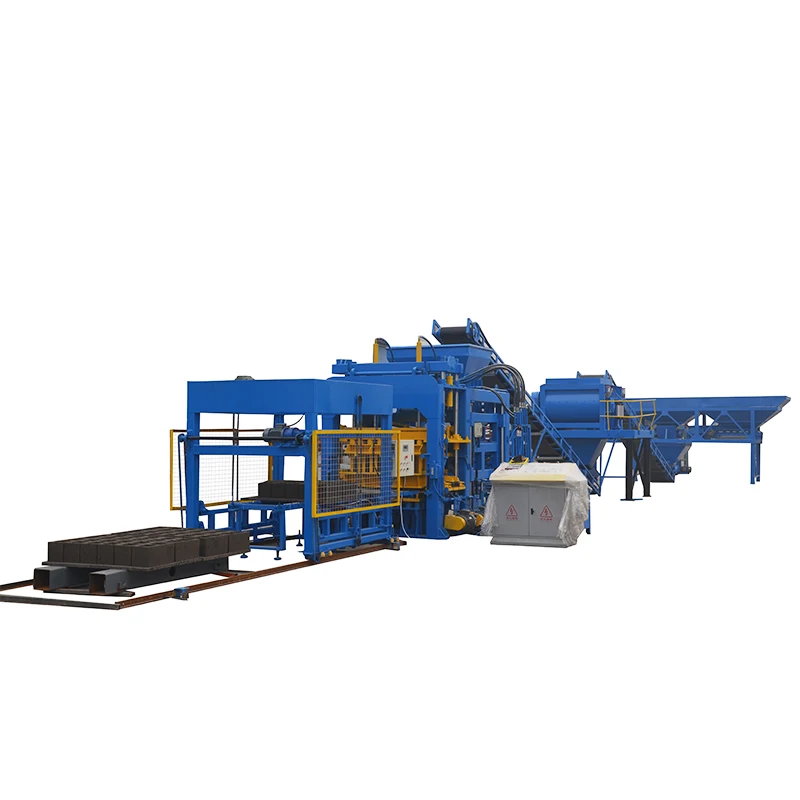
Description
Rapid Dispatch Capability — QT12-15 automatic block making machines held in stock with standard mould sets, eliminating typical multi-week production waits for contractors working to tight project schedules.
Technical Specifications
| Parameter | Value |
|---|---|
| Model | QT12-15 |
| Product Type | Automatic Concrete Block Making Machine |
| Overall Dimensions (L×W×H) | 9350 x 2520 x 2950 mm |
| Total Mass | 12000 kg |
| Overall Power | 52 kW |
| Pallet Size | 1300 x 900 mm |
| Molding Cycle | 15–25 s |
| Vibration Form | Platform Vibration |
| Control System | Electrical PLC Cabinet |
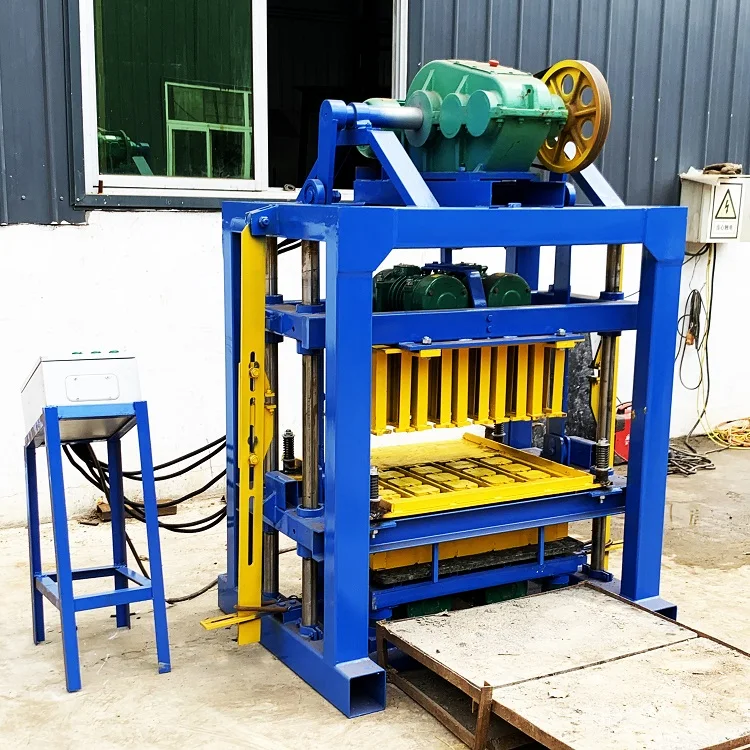
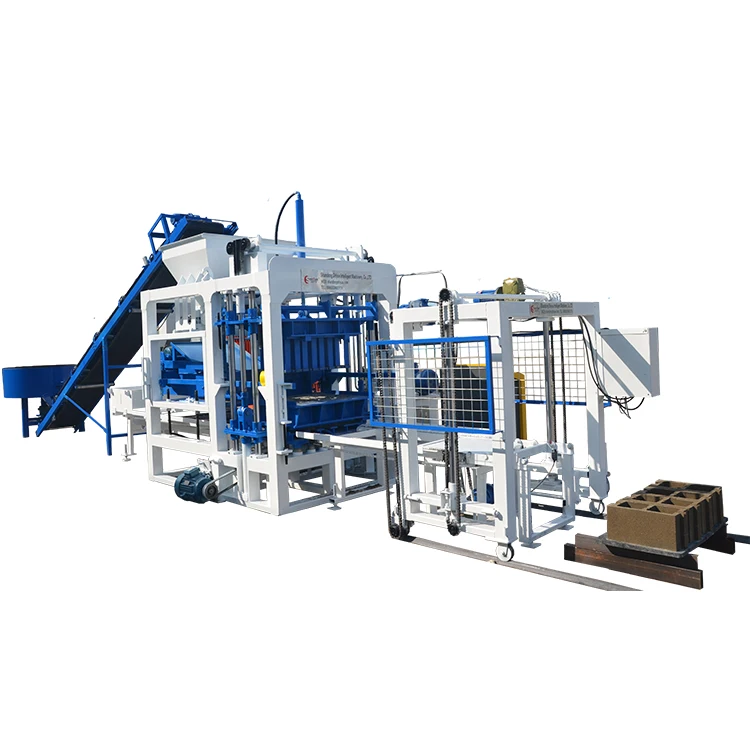
| Major Components | Pallet feeder, molding machine, storage hopper, block conveyor, hydraulic station, electrical PLC cabinet |
| Compatible Materials | Fly ash, slag, gangue, river sand, gravel, cement, industrial wastes |
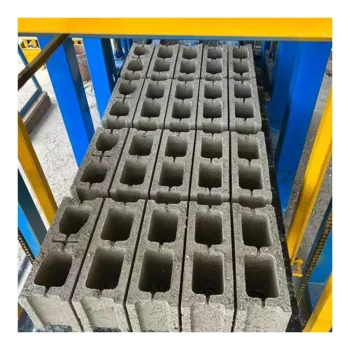
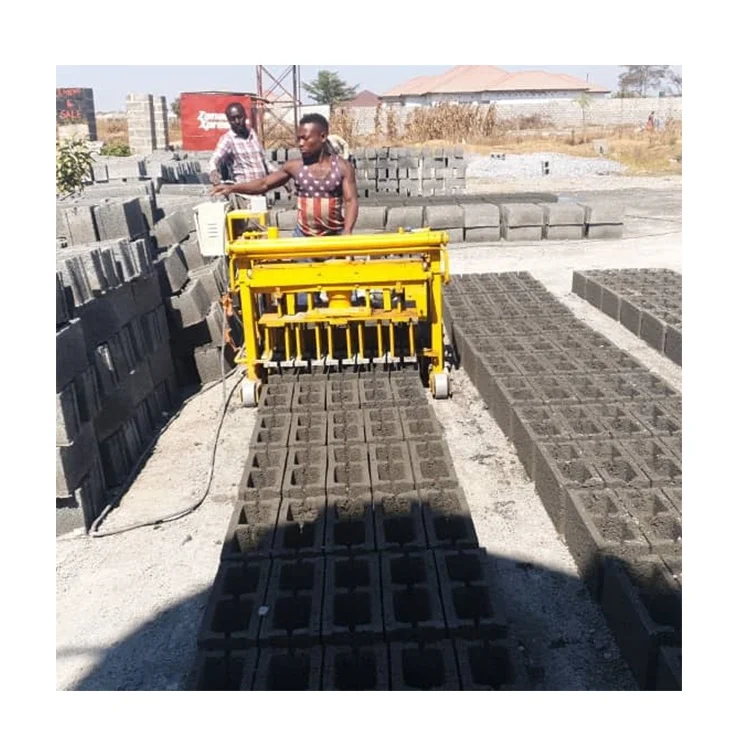
| Mould Formats | Hollow block, standard brick, pavement brick, road kerb, slope protection brick, planting grass brick, porous block, curbstone |
| Production Line Configuration | PL1200 batching machine, JS500 or JS750 mixer, 8 m conveyor belt, stacker |
| Automation Level | Automatic |
| Color Machine Option | Available |
| Voltage & Frequency | Basis not stated in source — confirm with buyer’s local standard |
| Output Capacity | Basis not stated in source — confirm block format and material |
Application Suitability
| Application | Material or Output |
|---|---|
| Hollow block production for building walls | Cement, fly ash, crushed gravel |
| Interlocking paving block for parking and walkways | River sand, cement, slag |
| Curbstone and kerbstone for road edges | Cement, coarse aggregate, gangue |
| Slope protection brick for embankments | Cement, sand, industrial waste |
| Grass planting brick for landscaping | Fly ash, river sand, cement |
| Porous block for drainage systems | Cement, gravel, lightweight aggregate |
Dispatch Speed vs. Production Lead Time: What Changes When You Buy Stock
Buying a QT12-15 stationary block machine in stock instead of waiting for a built-to-order unit shifts the timeline from weeks of factory production to a matter of days before container loading.
Most stationary block machines in this output class carry lead times that stretch well beyond what project schedules can absorb. When a contractor is already on-site with labour hired and materials ordered, every week of delay becomes a compounding cost [NEED_CITE: typical lead times for custom-configured block machines]. The difference is not marginal — it determines whether a project mobilises in the current month or slips into the next. For a buyer holding a QT12-15 stationary block machine in stock order, the machine has already been assembled, wired, and tested at the factory before the purchase conversation even started.
Stock Availability and What It Means for Your Schedule
When we talk about a QT12-15 stationary block machine in stock, the availability covers the main press unit, the hydraulic station, the PLC cabinet, and the standard mould sets — hollow block, paver, and kerbstone formats. These are the formats that most building projects require immediately upon commissioning, and having them on the factory floor means the entire production line can be crated and dispatched without waiting for custom fabrication.
Container Loading and Shipment Preparation
A 12-tonne, 9.35-metre-long press does not ship in one piece. The QT12-15 is dismantled into its major assemblies — the main frame, the hydraulic station, the pallet feeder, and the PLC cabinet — each secured with timber bracing and steel strapping inside a 40-foot open-top or flat-rack container. The pallet size of 1300 x 900 mm is standard enough that curing racks and forklifts at most project sites can handle the loaded pallets without modification. Buyers receive packing photographs and a container loading plan before the container is sealed [NEED_CITE: standard container loading procedures for heavy block machinery].
Reading the Specs That Actually Affect Your Output
The molding cycle of 15–25 seconds is the single figure that most directly governs daily throughput, but that range is not arbitrary — it shifts depending on block format and material density. A thin-walled hollow block with a fly ash mix will sit closer to 15 seconds per cycle, while a dense kerbstone with high gravel content pushes toward 25 seconds. The platform vibration system drives compaction from below the mould box, and this configuration suits materials that are stiff enough to hold their shape immediately after the mould lifts.
The overall power draw of 52 kW covers the entire press station — vibration motors, hydraulic pump, conveyor drive, and control cabinet. This figure does not include the batching machine or the mixer, which must be calculated separately when sizing the site transformer and dedicated circuit. The JS500 or JS750 mixer option allows buyers to match mixing capacity to their daily volume without over-sizing the electrical supply.
What Happens When Voltage and Language Are Overlooked
A machine built for 380 V / 50 Hz arriving at a site running 440 V / 60 Hz will not simply run slower or faster — the vibration motor frequency changes, the hydraulic pump flow rate shifts, and the PLC may fail to boot. This is not a rare occurrence on export shipments [NEED_CITE: voltage and frequency standards by export market]. Confirming the local electrical standard and the operator’s preferred PLC display language before the machine leaves the factory avoids commissioning delays that can idle an entire crew for days while replacement transformers or control boards are sourced locally.
Why Stock Purchases Reduce Commissioning Risk
Machines held in inventory have already completed a factory test cycle — the hydraulic system has been pressurised, the vibration platform has run under load, and the PLC programme has cycled through every mould format in the standard set. When a buyer purchases a built-to-order unit, these tests happen under time pressure right before shipment. With stock units, the test record is already on file and can be shared with the buyer before the order is confirmed. This is the kind of verification that separates a smooth arrival from a machine that needs troubleshooting on the first day.
What You Actually Receive When the Container Arrives
The purchase covers more than the press itself. The PL1200 batching machine, the JS500 or JS750 mixer, the 8-metre conveyor belt, and the stacker form the complete production line configuration that arrives alongside the main unit. The colour machine option for paving block surface layers is available for buyers who need dual-layer pavers. Every component is specified as a matched set, which means cycle times between the mixer output, the conveyor feed, and the press hopper have been balanced at the factory rather than left for the buyer to calibrate on-site.
Documentation & Verification
- Factory test record covering all standard mould formats before dispatch
- Container loading plan with dismantling sequence and securing details
- Packing photographs of each major assembly prior to crating
- Electrical schematic matching confirmed voltage and frequency
- PLC programme documentation with operator language setting confirmed
- Customs documentation package for import clearance support
Installation, Commissioning & Support
- Site foundation must support 12000 kg static load across the 9350 mm press footprint
- 52 kW total power draw requires a dedicated circuit separate from the mixer and batching plant
- Major assemblies arrive dismantled and require re-alignment of the vibration platform on the main frame
- PLC cabinet language and voltage confirmed before dispatch to avoid on-site reprogramming
- Operator training covers mould change procedure for all stocked formats including hollow block and paver
- Hydraulic wear parts list provided with recommended first-replacement intervals
What to Prepare Before You Enquire
To get an accurate dispatch timeline and the correct machine configuration, share your target block format and daily volume requirement, your local voltage and frequency standard, and the preferred PLC display language for your operators. If you have existing curing racks or forklifts on-site, note the pallet dimensions they accept so the 1300 x 900 mm standard can be confirmed or adjusted before shipment.
Frequently Asked Questions
Q: Which QT12-15 configurations and mould formats are currently in stock?
A: Standard stock units ship with the hollow block, standard brick, pavement brick, and kerbstone mould sets installed or crated alongside the press. The colour machine option for dual-layer pavers can be added if available at the time of order. Custom mould formats require separate lead time confirmation before dispatch.
Q: What is the dispatch lead time and estimated arrival date for my port?
A: Stock units can be crated and moved to port within days of order confirmation, unlike built-to-order machines that require multi-week production schedules. Total transit time depends on your destination port and current shipping lane conditions, which are confirmed at the quotation stage.
Q: How is the machine dismantled and loaded into containers for shipment?
A: The 9350 mm main frame is separated from the hydraulic station, pallet feeder, and PLC cabinet. Each assembly is secured with timber bracing and steel strapping inside a 40-foot container. A detailed loading plan and packing photographs are provided before the container is sealed.
Q: Are voltage, frequency, and PLC language confirmed before the machine leaves the factory?
A: Yes — the buyer’s local electrical standard and preferred operator language must be confirmed before dispatch. The factory test record is run against these confirmed settings so that the machine arrives ready for commissioning without transformer swaps or control board replacements.
Q: What customs and import documentation is provided with the shipment?
A: The documentation package includes the commercial invoice, packing list, bill of lading, and CE declaration where applicable. A customs documentation support service is available to assist with clearance requirements specific to your destination country’s import regulations.