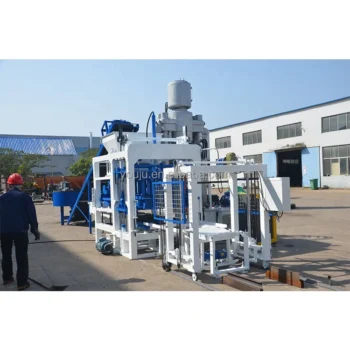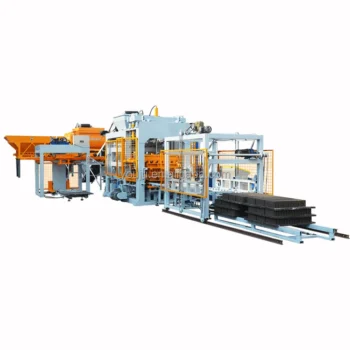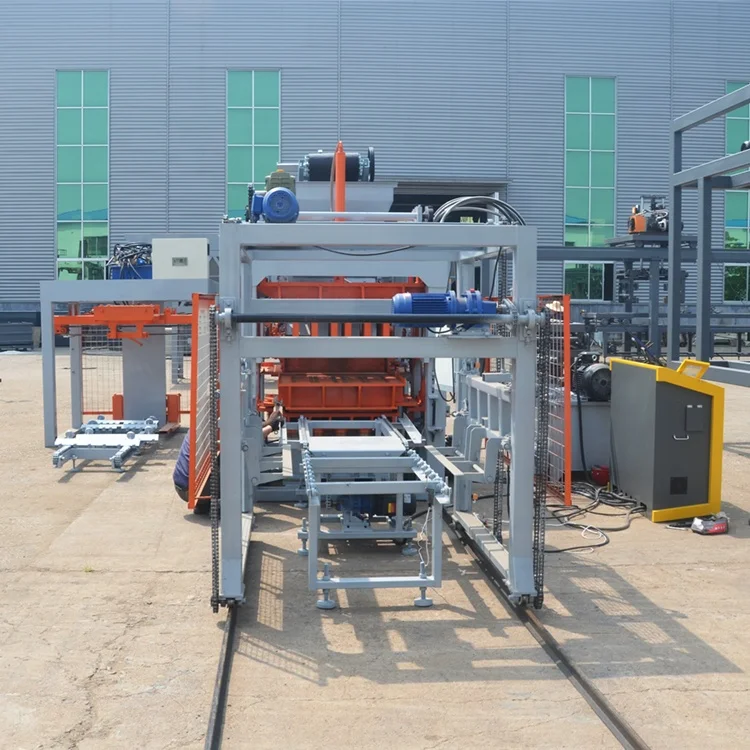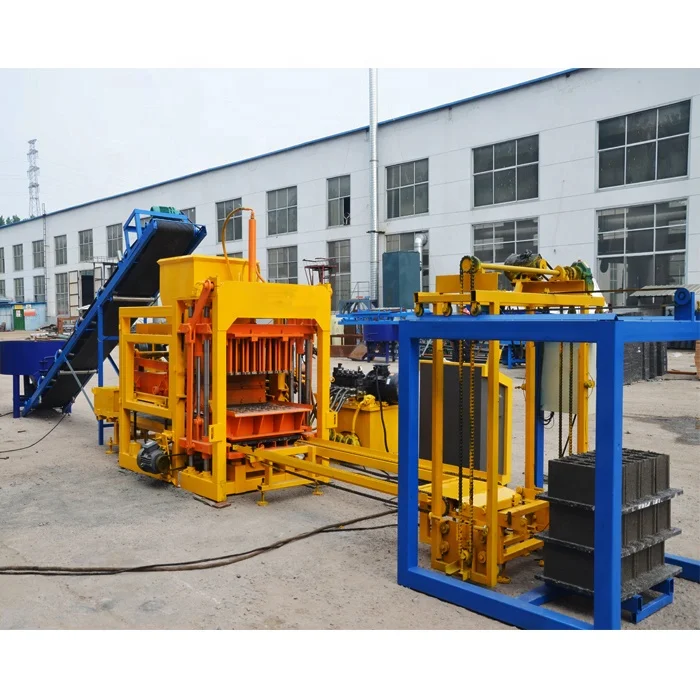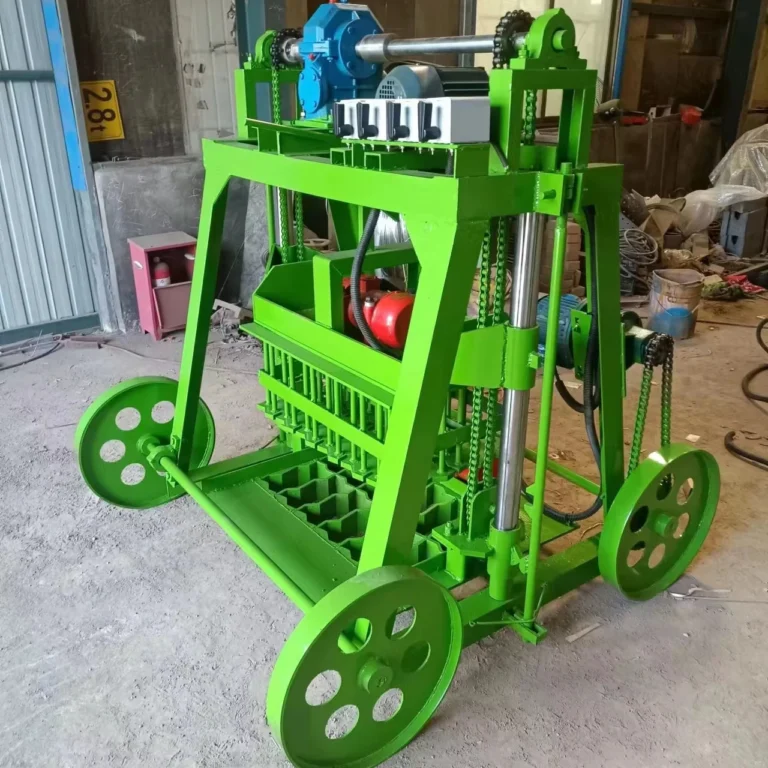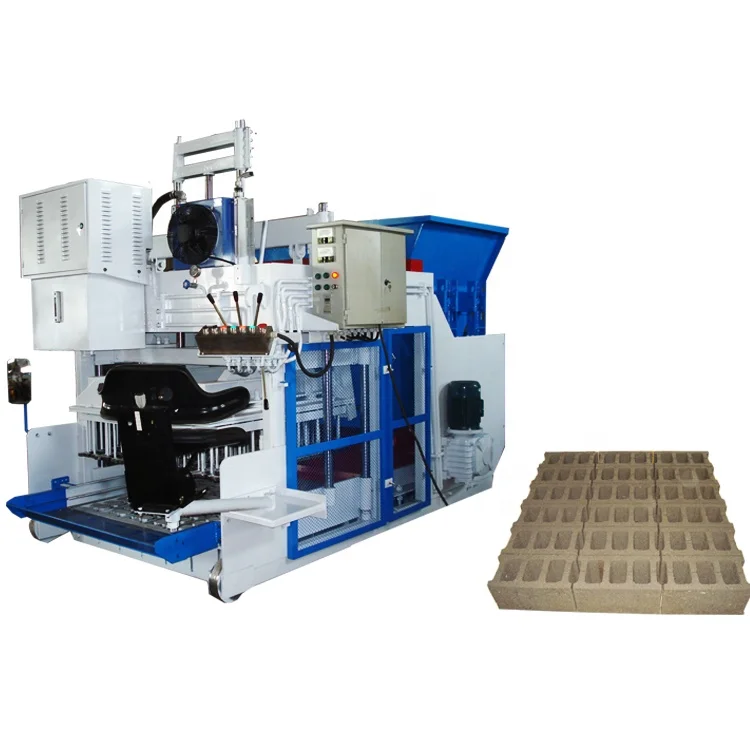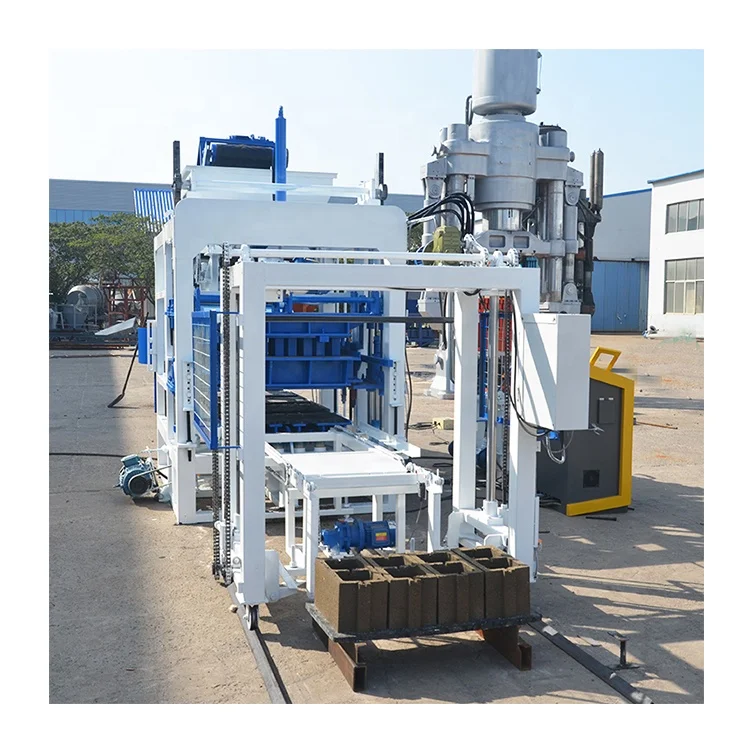
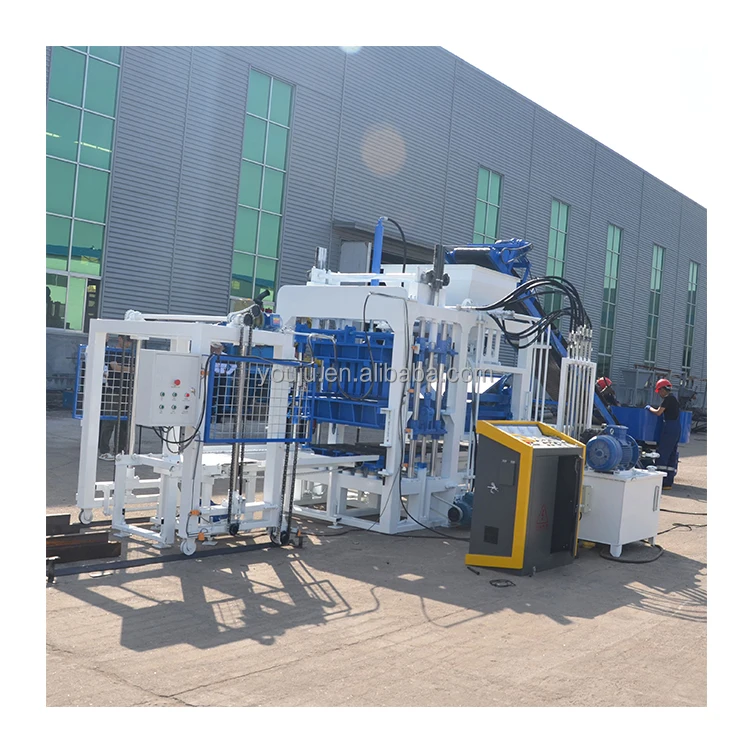

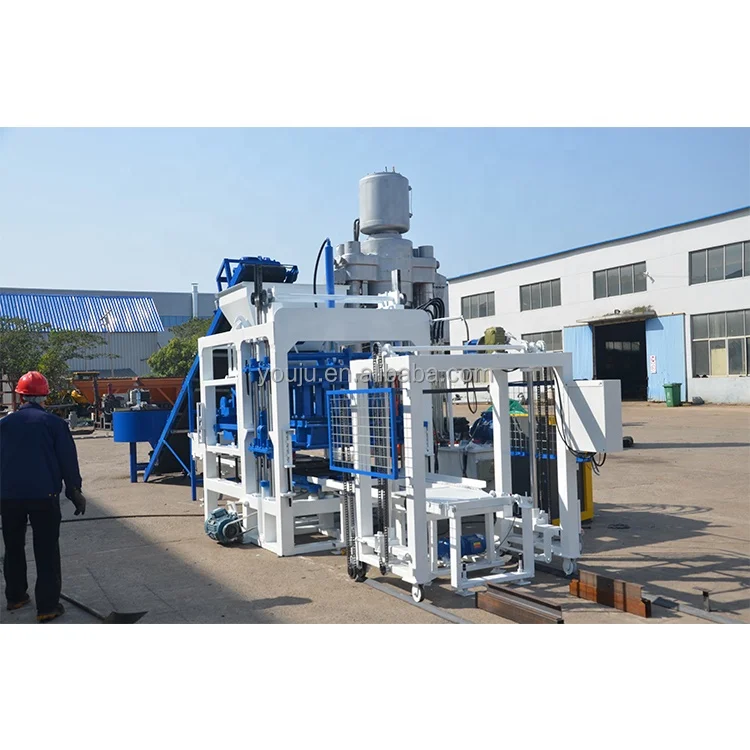


Description
Stock Dispatch Readiness — QT4-18 machines and their matching mixer-conveyor packages are assembled, factory-tested, and cleared for container loading rather than built from scratch after the order.
Technical Specifications
| Parameter | Value |
|---|---|
| Model | QT4-18 |
| Product Type | Automatic Concrete Block Making Machine |
| Overall Dimension | 2500 × 1750 × 2200 mm |
| Rated Pressure | 16 MPa |
| Vibration Form | Platform Vibration |
| Pallet Size | 950 × 550 mm |
| Molding Cycle | 18–25 s (basis to be confirmed per block format) |
| Overall Power | 27.5 kW |
| Control System | PLC with frequency converter |
| Electrical Components | Schneider (source value — verify against manufacturer catalog) |
| Mold Lifting Mechanism | Double-sided synchronous gears |
| Automation Level | Automatic pallet feeding, demolding, and block conveying |
| Mould Change Method | Manual bolt removal with pallet assistance |
| Supporting Equipment Options | JQ500 pan mixer, 8 m or 6 m belt conveyor, stacker, block clamper, extra molds, trolley, cement silo, batching plant |
Application Suitability
| Application | Material or Output |
|---|---|
| Hollow block production | Crushed stone, sand, cement, and fly ash blends |
| Solid block manufacturing | Dense aggregate mixes for load-bearing walls |
| Cement brick production | Fine sand and cement for masonry units |
| On-site construction blocks | Local aggregate sourced near housing project locations |
| Small to medium block plants | Daily output aligned with regional building material demand |
Why the Voltage Question Must Be Settled Before the QT4-18 Block Machine in Stock Ships
Confirming the destination voltage and frequency before loading prevents weeks of idle equipment on arrival.
I have watched a QT4-18 block machine in stock sit silent on a job site for three weeks because the local supply was 60 Hz while the motor and PLC were wired for 50 Hz. The contractor had a crew ready, raw material stockpiled, and a project deadline ticking — yet the press could not run until a frequency converter was sourced locally at a premium. That single unchecked field on the dispatch checklist cost more in delay penalties than the entire shipping expense. [NEED_CITE: voltage and frequency standards by export market]
Dispatch Speed Only Matters When the Machine Can Actually Run
Stock availability shortens the gap between order and arrival, but arrival is only useful if the QT4-18 concrete block making machine connects to the site supply without modification. Voltage, frequency, and PLC display language are configurable parameters that must be locked before the machine leaves the factory floor. Changing any of them after arrival requires rewiring, component swaps, or control board reprogramming — work that stalls production and pulls electricians away from other site tasks. [NEED_CITE: CE machinery directive requirements for industrial equipment]
Container Loading and Dismantling Method
The QT4-18 block machine in stock is dismantled into main frame, hydraulic station, feeder assembly, and pallet return system for container loading. Each sub-assembly is secured to prevent transit damage, and the loading sequence is planned so that the heaviest component exits the container first at destination. This sequence avoids the common situation where the press frame blocks access to the mixer and conveyor, forcing a double handling of cargo on the dock.
Lead Time Quoted Against Real Stock Position
When we confirm a QT4-18 block machine in stock, the lead time reflects factory test completion, electrical configuration to the buyer’s specification, and container booking — not a production queue. The dispatch timeline is quoted against the actual stock position at the time of order, so the buyer can align shipping dates with site readiness. This eliminates the common gap between a promised departure date and a machine that is still waiting for components.
Molding Cycle, Vibration, and Pressure Working Together
The 18–25 second molding cycle range works in conjunction with the 16 MPa rated hydraulic pressure and platform vibration to compact the mix into the mould cavity. Platform vibration distributes the force across the pallet surface, which helps achieve consistent block density when the local aggregate includes a mix of fine and coarse fractions. The cycle time will vary depending on the block format — a hollow block with deep cores fills and compacts differently than a thin paver — and this variation is why capacity figures must always state which block format they assume. [NEED_CITE: block molding cycle variation by format and aggregate type]
What Happens When Pallet and Curing Yard Do Not Match
A pallet size chosen without considering the curing yard layout and the forklift already on site creates a daily bottleneck that no amount of press speed can solve. The 950 × 550 mm pallet is a common format, but if the buyer’s curing racks were built for a different dimension, every pallet must be re-stacked by hand before curing — turning an automatic line back into manual labor at the most physically demanding point in the process. This mismatch is one of the most frequent reasons buyers report that their actual daily output falls far below the quoted figure. [NEED_CITE: pallet size compatibility with curing yard infrastructure]
Why the Supporting Equipment Package Matters for Fast Startup
Ordering the QT4-18 block machine in stock without its supporting equipment means the mixer, conveyor, and pallet handling components arrive on a different schedule from a different supplier, leaving the press idle while the line is assembled piecemeal. The JQ500 pan mixer and belt conveyor are matched to the material feed rate the press expects, so the cycle is not interrupted by waiting for the next batch. Including the stacker and block clamper in the same shipment means the line can produce saleable, stacked, and strapped blocks from the first day of commissioning.
Documentation and Verification
- Line layout drawing showing pallet flow from feeder through press to stacker
- Electrical schematic confirming voltage, frequency, and PLC language before dispatch
- Factory test record on the buyer’s specified block format
- Packing photographs of each sub-assembly before container loading
- Customs documentation support for destination port clearance
- Wear parts and mould list with reorder part numbers
Installation, Commissioning & Support
- Foundation plan aligned to the 2500 × 1750 × 2200 mm footprint and 27.5 kW load
- Dedicated circuit specification for the 16 MPa hydraulic pump motor
- On-site assembly sequence from main frame through pallet return system
- First-run parameter setup for molding cycle and vibration intensity
- Operator training covering mould change procedure and daily maintenance checkpoints
- Spare hydraulic seals and vibration motor brushes included with initial shipment
What We Need From You to Quote an Arrival Date
To give you a dispatch date and an arrival estimate you can build a project schedule around, we need your destination port, your site voltage and frequency, the block format you will produce first, and whether the supporting equipment package should be included in the same shipment. Once those details are confirmed, the QT4-18 block machine in stock can be electrically configured, factory-tested on your format, and booked into the next available container slot.
Frequently Asked Questions
Q: What is the current stock status and fastest possible delivery to my port?
A: Stock status for the QT4-18 is confirmed at inquiry and reflects machines that have passed factory testing. Delivery time includes electrical configuration to your voltage and frequency, container booking, and sea transit to your destination port. We quote a specific departure date and an estimated arrival window so you can plan site preparation and crew scheduling around a known timeline.
Q: How is the machine packed and dismantled for container loading?
A: The QT4-18 is dismantled into main frame, hydraulic station, feeder, and pallet return assemblies. Each component is secured inside the container to prevent movement during transit. The loading sequence is planned so that the heaviest and largest assembly is positioned for first removal at destination, avoiding double handling and reducing on-site assembly time.
Q: Can voltage and PLC language be confirmed before the machine ships?
A: Yes, voltage, frequency, and PLC display language are confirmed on the electrical confirmation sheet before the machine is wired and tested. This step is mandatory before container loading to avoid the situation where the machine arrives but cannot be commissioned due to a mismatch with the local power supply or operator language requirements.
Q: What supporting equipment is included versus ordered separately?
A: The supporting equipment package can include the JQ500 pan mixer, belt conveyor, stacker, block clamper, extra moulds, trolley, cement silo, and batching plant. Items included in your shipment are listed on the quotation, and anything ordered separately is identified so there are no gaps or surprises when the container is unpacked on site.
Q: Is on-site installation support available given a tight project schedule?
A: Installation and commissioning support is available and scheduled against your container arrival date. The scope includes assembly, electrical connection verification, first-run parameter setting on your chosen block format, and operator training. This support is planned so that the line produces saleable blocks within the commissioning window rather than leaving your crew to troubleshoot alone.