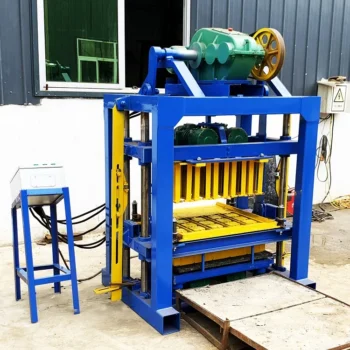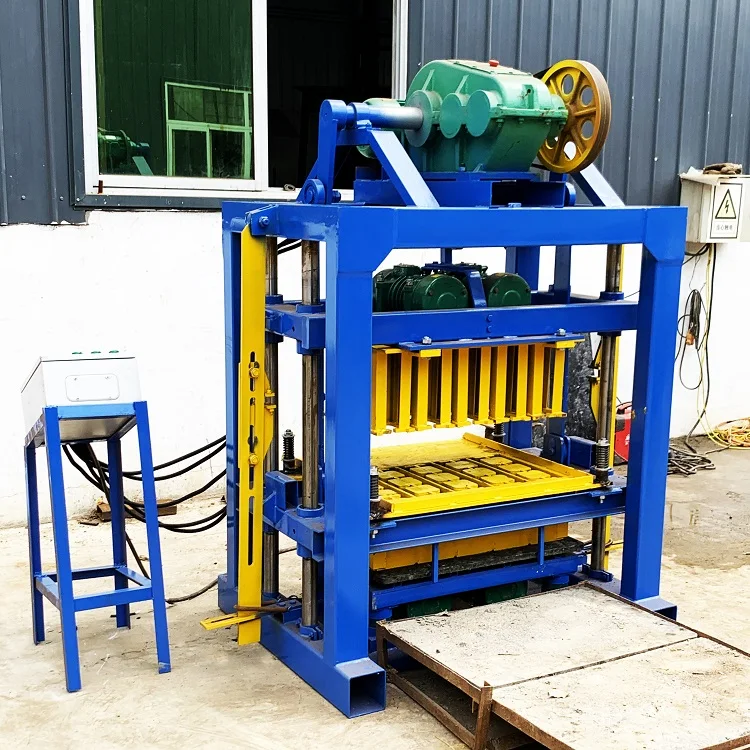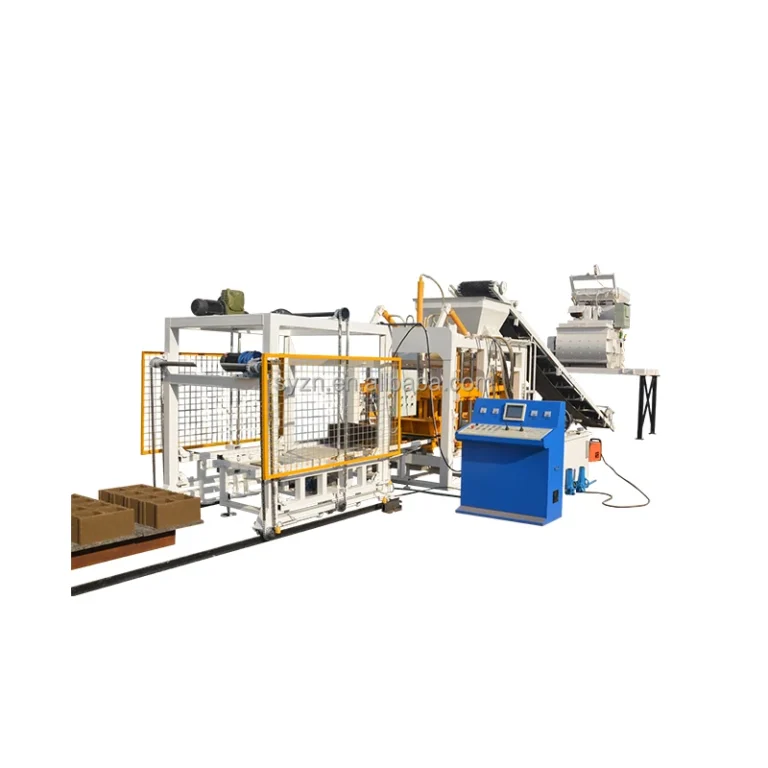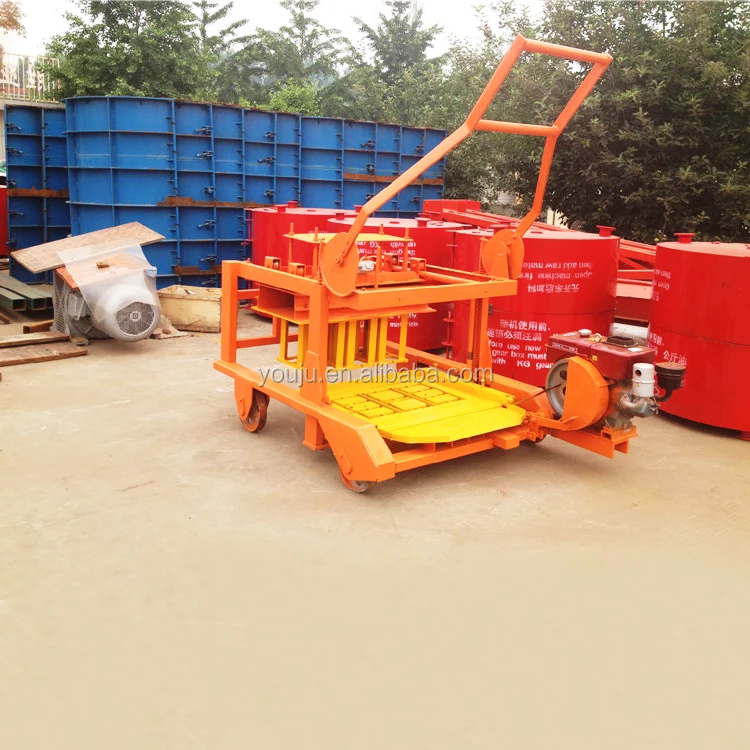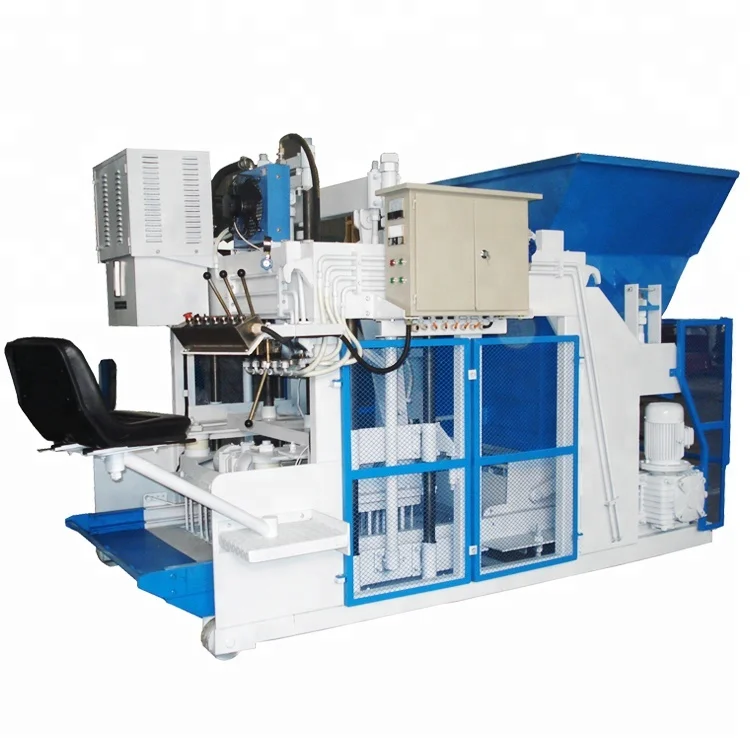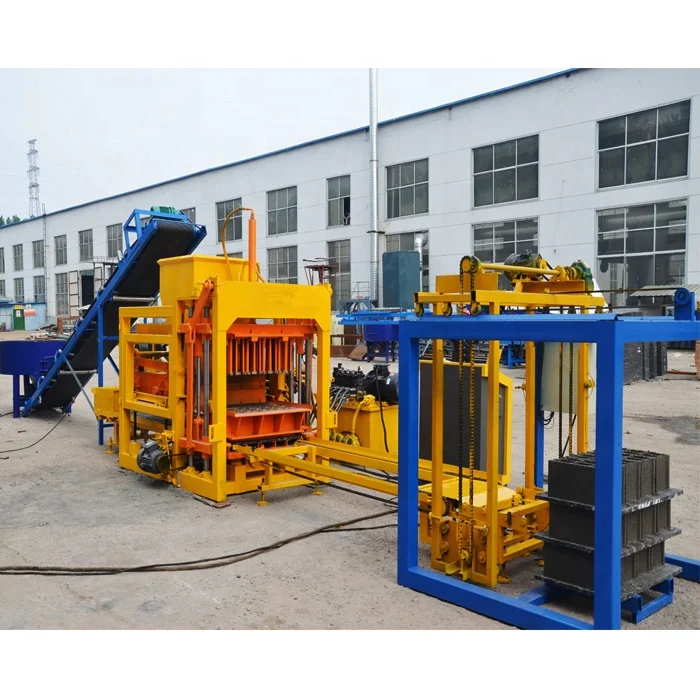
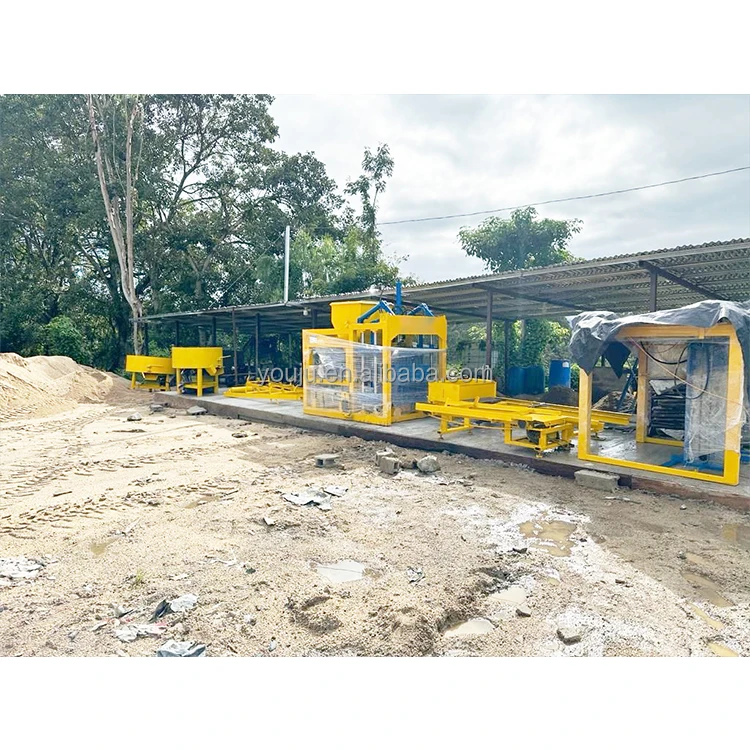
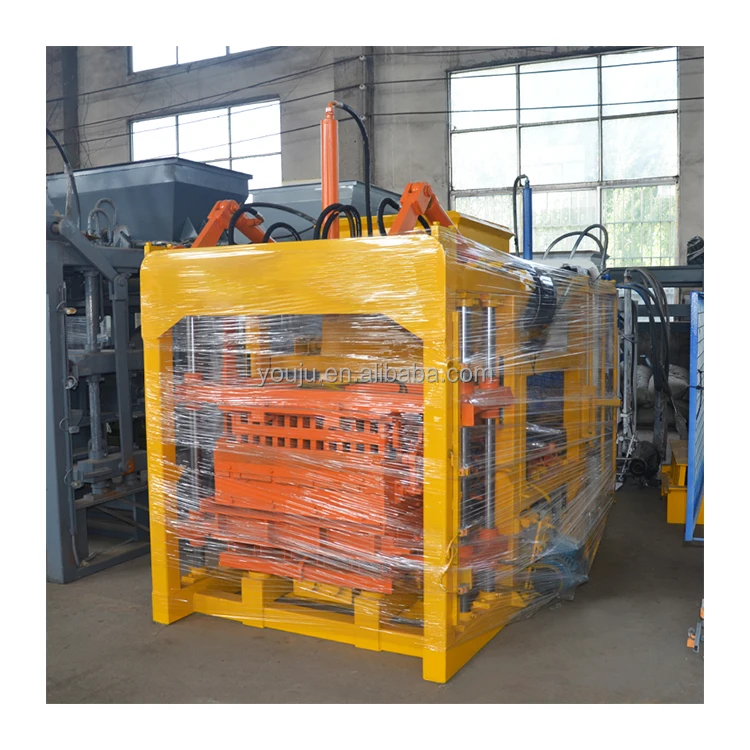
Description
Stocked readiness — QT4-15 units held in inventory with standard mould sets, allowing container loading plans and dispatch timelines to be confirmed the same week an order is placed.
Technical Specifications
| Parameter | Value |
|---|---|
| Product Type | Stationary Hydraulic Block Making Machine |
| Model | QT4-15 |
| Rated Power | 27.5 kW (Host Machine) |
| Voltage | 380V (frequency configurable to target market standard) |
| Control System | Computer controlled directional vibration; photoelectric material control |
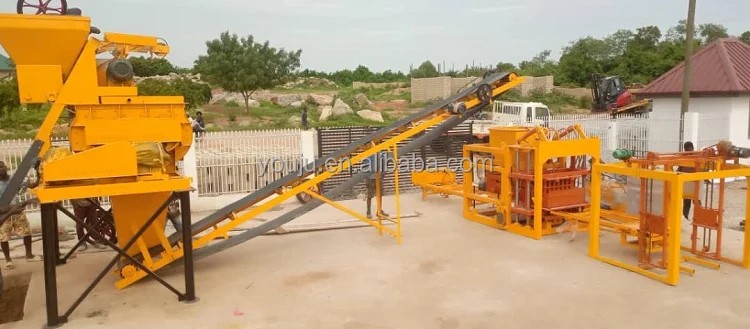
| Overall Dimensions (L×W×H) | 7100 × 1600 × 2610 mm |
| Net Weight | 5 T (host machine) |
| Pallet Size | 1020 × 570 mm |
| Vibration Force | 40 kN |
| Moulding Cycle | 15 s (basis to be confirmed per block format) |
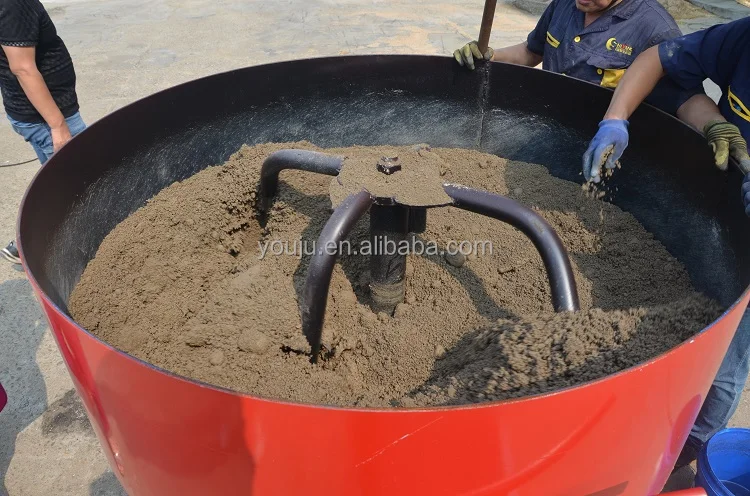
| Mixer Model | JS500 |
| General Water Consumption | 4 T per day |
| Workers Required | 3–4 per shift |
| Workshop Area | 150 m² minimum |
| Mould Formats | Hollow block, solid block, paving block |
| Motor Brand | Siemens Motor |
| Feeding System | Hopper with swing-type cutting device |
| Vibration Method | Table and mould combined; low-frequency feed, high-frequency vibration |
| Key Features | Semi-automatic operation, photoelectric hopper control, computerized directional vibration |
Application Suitability
| Application | Material or Output |
|---|---|
| Hollow block production for building construction | Crushed stone, cement, sand, water |
| Solid block manufacturing | Local aggregate blends with cement binder |
| Paving block production | High-density concrete mixes for exterior surfaces |
| On-site contractor block production | Project-specific formats within 150 m² workshop footprint |
| Regional distributor inventory stocking | Mid-tier stationary machine for resale to small and medium plants |
What "Available Now" Actually Means for Your Project Timeline
Stocked QT4-15 block machine units ship with confirmed container loading plans, not estimated build dates.
A project start date does not shift because a machine is still on the production floor. When buyers are told a machine is "in stock" without a documented container plan and a dispatch lead time quoted in calendar days, the gap between promise and arrival often widens by weeks [NEED_CITE: typical ocean freight transit times by region]. For the QT4-15 block machine in stock, the emphasis is on having the host machine, standard moulds, and pallet sets physically ready so the loading schedule is set before payment clears.
Container Loading and Dismantling Layout
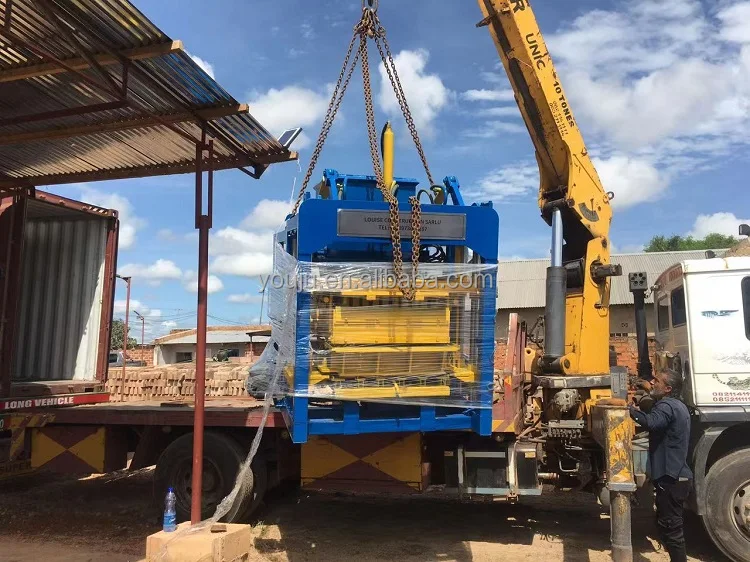
Every QT4-15 block machine in stock ships dismantled to fit a 20GP container. The host frame, vibration table, hydraulic station, and control cabinet are secured separately, while moulds and pallets are packed in reinforced crating with anti-corrosion wrapping. The dismantling layout is documented so the receiving team can sequence reassembly without guessing which bolts belong to which subframe. Arriving at the port with all fasteners accounted for is the difference between commissioning in days and waiting for replacement parts.
Arrival Estimate at Quotation Stage
Buyers working to a project deadline need more than a dispatch date. The arrival estimate accounts for port transit time, customs clearance windows, and inland transport from the destination port [NEED_CITE: port-to-site logistics planning for heavy machinery]. Quoting this estimate upfront — rather than leaving it for the buyer to calculate after shipment — closes the planning gap between factory gate and workshop floor.
Vibration Table and Hydraulic Pressure Coordination
The 40 kN vibration force and hydraulic pressure work as a matched pair. Table-and-mould combined vibration at high frequency compacts the concrete mix from the bottom up, while hydraulic pressure holds the mould cavity closed against upward force. If vibration force is set without regard to the buyer’s local aggregate gradation, the resulting block density varies across the pallet. The QT4-15 allows vibration parameters to be confirmed against the buyer’s actual mix before the machine leaves the factory.
Pallet Size and Curing Area Alignment
The 1020 × 570 mm pallet size determines how many blocks cure per rack and how pallets stack in the yard. If the curing area was planned around a different pallet dimension, forklifts may not fit between racks and manual restacking becomes necessary [NEED_CITE: pallet handling ergonomics in block curing yards]. Confirming pallet size against the buyer’s existing curing layout before dispatch prevents this bottleneck.
Moulding Cycle and Realistic Daily Output
The 15 s moulding cycle is measured on a specific block format under controlled conditions. Daily output depends on which mould is installed, how quickly the operator changes moulds, and whether pallet feeding keeps pace with the press. A buyer targeting hollow blocks will see different throughput than one producing thin paving blocks, and the capacity calculation must state which format the number assumes.
The Hidden Cost of Skipping Pre-Shipment Verification
When voltage, frequency, and PLC display language are not confirmed before the machine is crated, the buyer discovers the mismatch after arrival. A 380V/50Hz machine shipped to a 60Hz market will run motors outside their rated speed, shortening bearing life and voiding motor warranties. Rectifying this on-site requires transformer installation or motor replacement, both of which add weeks and cost [NEED_CITE: voltage and frequency standards by export market].
Why Source This Machine Here
Configuration is set against the buyer’s local aggregate and target block format, not a catalogue default — the QT4-15 ships with moulds chosen for the formats the buyer’s market actually sells. Mould design and supply extend to custom drawings when standard formats do not cover the buyer’s product range. Machine, mould, pallet, and handling equipment are specified as one matched system, eliminating the finger-pointing that happens when these components come from separate suppliers. Automation level is selectable so a buyer can start with semi-automatic pallet handling and add automatic stacking later. Factory test records with packing photographs are provided before dispatch so the buyer sees the machine running their target format before it enters the container.
Documentation & Verification
- Factory test record on buyer’s specified block format before dispatch
- Machine specification sheet with voltage, frequency, and PLC language confirmed
- Mould drawing and format list matching the quotation
- Pallet specification with dimensions and material grade documented
- Container loading plan and dismantling layout for 20GP shipment
- Operation and maintenance manual in buyer’s preferred language
Installation, Commissioning & Support
- Workshop floor must support 5 T host machine load across the 7100 × 1600 mm footprint
- Dedicated 380V circuit required; confirm frequency and phase before energizing Siemens motors
- Host machine reassembled from dismantled 20GP load following documented bolt sequence
- Vibration table and hydraulic station calibrated against buyer’s mix design on first run
- Operator training covers mould change procedure and photoelectric hopper adjustment
- Wear parts list provided with mould and hydraulic seal replacement intervals
What to Include in Your Inquiry
To match a QT4-15 to your project, provide the block formats your market sells, the daily output you need per format, and your workshop dimensions. Confirm your local voltage and frequency standard, the language you need for the control display, and whether your curing area is already set up for 1020 × 570 mm pallets. If you have existing mixing or pallet handling equipment, note the models so integration points can be checked before quotation.
Frequently Asked Questions
Q: Is the QT4-15 in stock, and what is the dispatch lead time?
A: QT4-15 units are held in stock with standard hollow, solid, and paving block moulds. Dispatch lead time is quoted in calendar days at the inquiry stage, based on current inventory and container availability. The loading plan and dismantling layout are confirmed before payment so the buyer knows exactly when the machine enters transit.
Q: How is the machine packed, and what arrival estimate can I expect?
A: The host machine, vibration table, hydraulic station, and control cabinet are dismantled and secured in a 20GP container with reinforced crating for moulds and pallets. An arrival estimate — covering ocean transit, destination port clearance, and inland transport — is provided at quotation so the buyer can plan workshop preparation against a known date.
Q: Which moulds ship from stock, and how fast are additional moulds supplied?
A: Standard hollow block, solid block, and paving block moulds ship with stocked units. Additional or custom mould formats are quoted separately with their own lead time, typically manufactured after the host machine dispatch so the buyer can begin production with standard formats while custom tooling is prepared.
Q: Can the 380V voltage be adjusted for my country’s standard?
A: Voltage and frequency are confirmed with the buyer before the machine is released for crating. If the destination market requires a different voltage or 60Hz frequency, the motor specification and transformer requirements are adjusted and documented in the quotation. No machine ships without this confirmation.
Q: What do I need ready in my workshop before the machine arrives?
A: A level concrete floor supporting 5 T across the machine footprint, a dedicated power circuit matching the confirmed voltage and frequency, and a curing area planned for 1020 × 570 mm pallets. Water supply for approximately 4 T daily consumption and space for the JS500 mixer adjacent to the host machine should also be prepared.