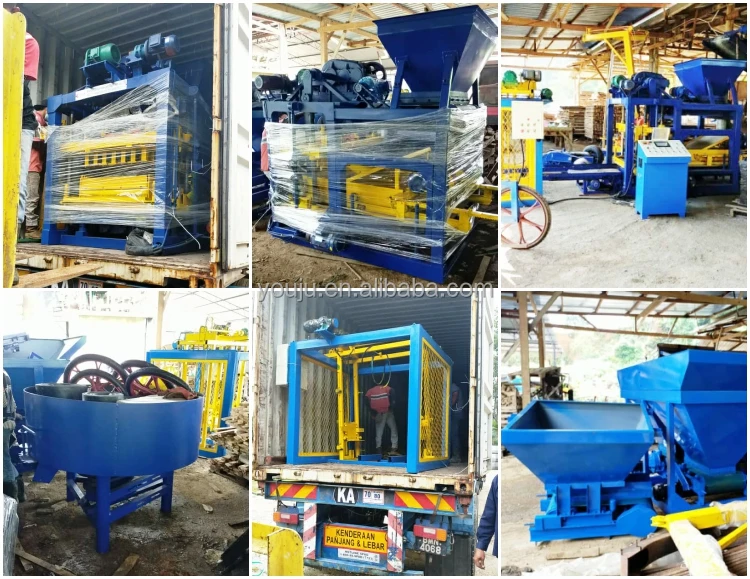
Description
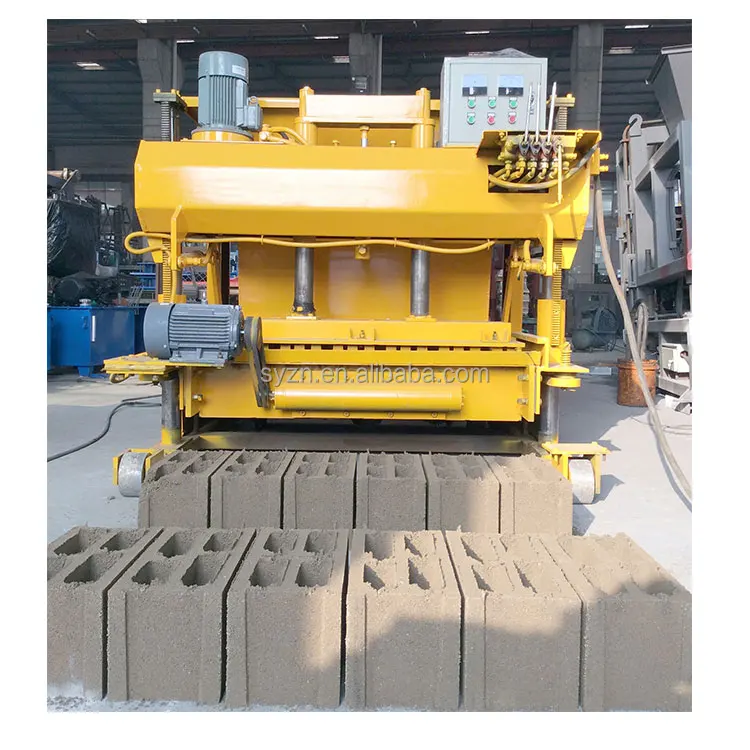
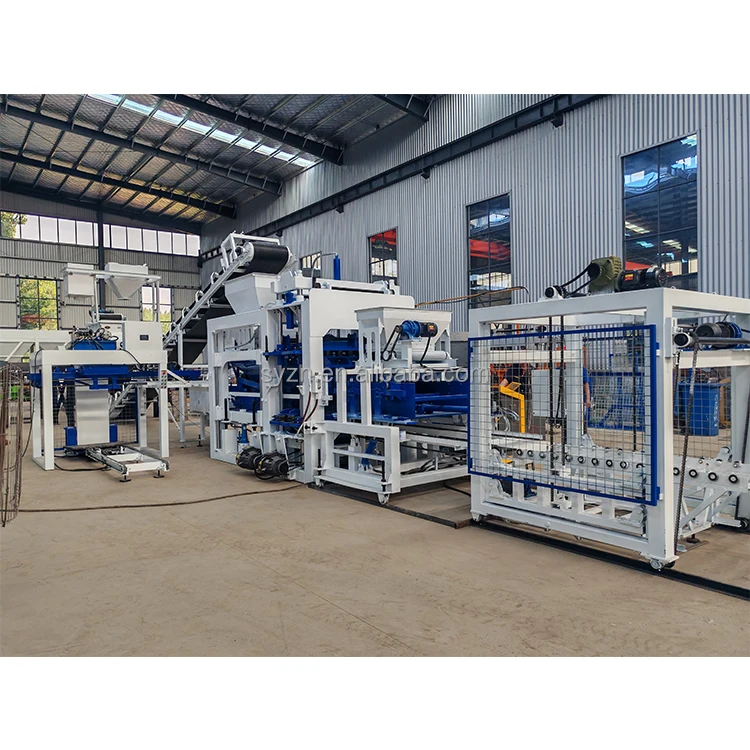
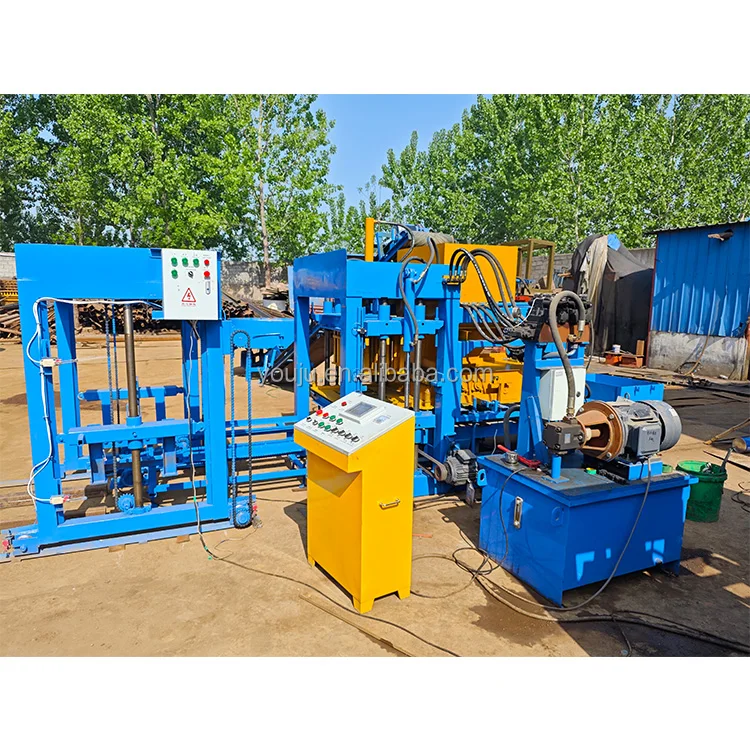
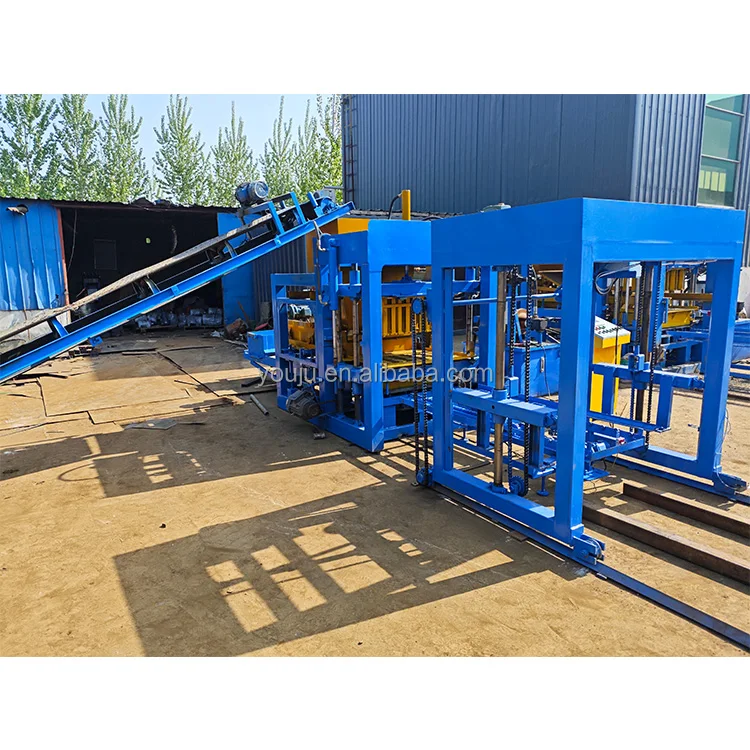
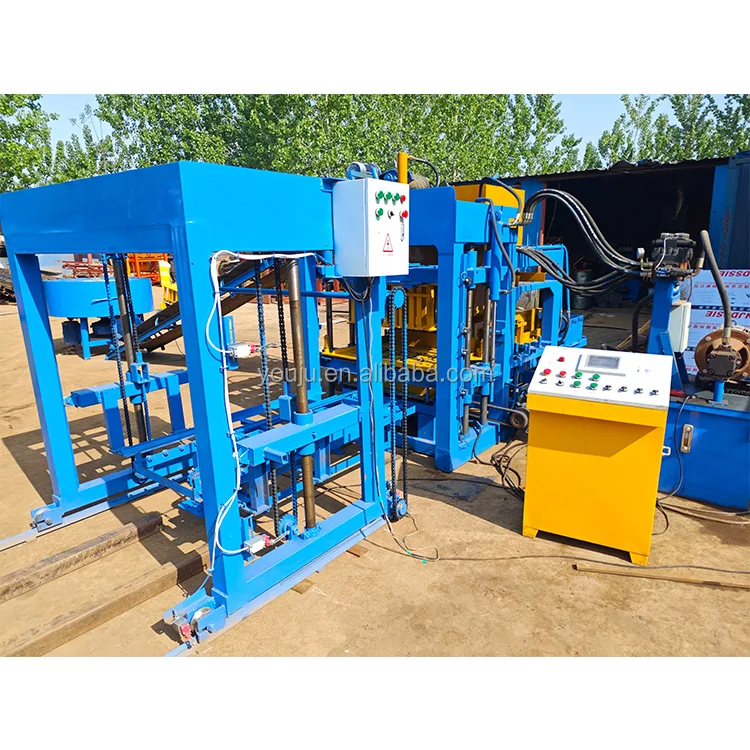
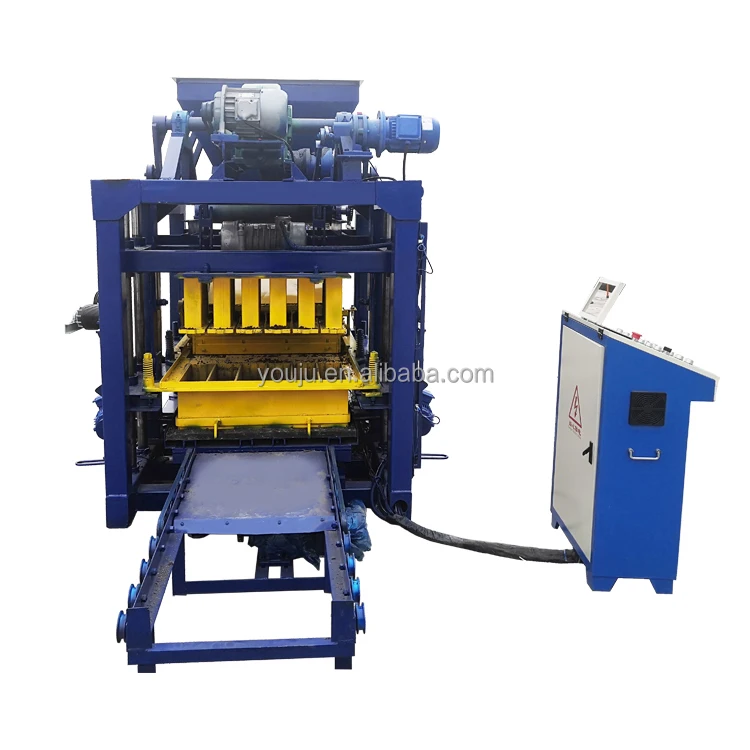
Configuration Set Against the Buyer’s Actual Mix Design, Not a Catalogue Default — the QTJ4-25 block making machine in stock is prepared for dispatch, yet voltage, pallet material, and mould format are confirmed against your site conditions before the container is sealed.
Technical Specifications
| Parameter | Value |
|---|---|
| Product Type | Semi-Automatic Hydraulic Block Making Machine |
| Model | QTJ4-25 |
| Rated Power | 17.9 kW |
| Overall Dimensions (L×W×H) | 6400 × 1500 × 2700 mm |
| Total Mass | 2500 kg |
| Molding Cycle | 25 s |
| Pallet Size | 850 × 550 × 20 mm |
| Vibration Frequency | 2800 r/min |
| Vibration Force (Exciting Power) | 60 kN |
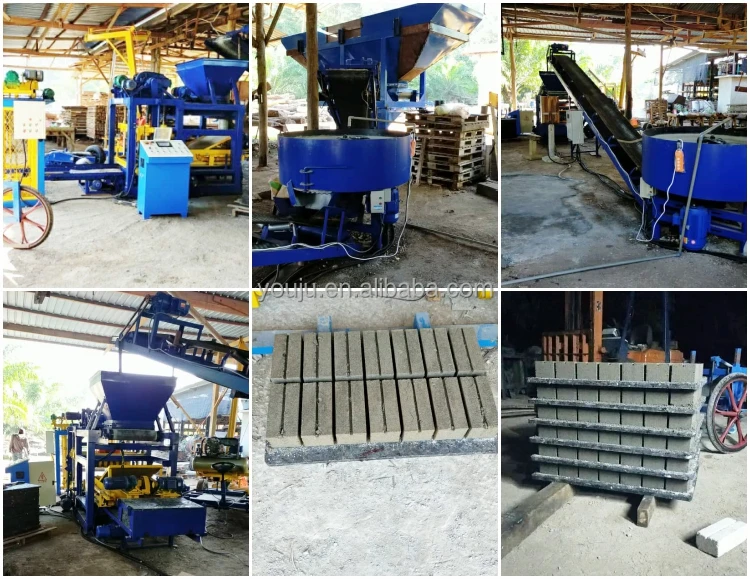
| Output Capacity | 960 pcs/h, 7680 pcs/day (basis: 400×200×200 mm hollow block, 4 pcs/mould) |
| Mould Format Capability | Hollow, solid, paver, curbstone (multiple sizes including 8", 6", 5", 4") |
| Control System | Motor-driven with hydraulic station (PLC presence to be confirmed) |
| Automation Level | Semi-automatic |
| Hydraulic Pressure | To be confirmed (MPa rating not stated in source) |
| Mould Change Time | To be confirmed |
| Voltage & Frequency | To be confirmed |
| Configuration Included | Host machine (1 set), block mould (1 set), JQ350 mixer |
| Assembly State | To be confirmed |
Application Suitability
| Application | Material or Output |
|---|---|
| Small to medium block production plants | Hollow, solid, and paving blocks from local aggregates |
| On-site block production | Concrete blocks for construction and housing project deadlines |
| First-time plant setups | Lower investment entry into block manufacturing |
| Building material producers | Multiple block formats via mould change on a single press |
Why the Voltage Question Must Come Before the QTJ4-25 Block Making Machine in Stock Leaves the Factory
A stocked machine arriving with the wrong motor frequency is not a bargain; it is a three-week setback.
I once watched a hydraulic block press ship to a region running 60 Hz power while the motor was wound for 50 Hz at the factory. The machine burned out on its first shift, and the buyer’s curing racks sat empty while replacement parts crossed the ocean. [NEED_CITE: voltage and frequency standards by export market]. When a buyer focuses on dispatch speed but skips the electrical confirmation, the QTJ4-25 block making machine in stock becomes a liability instead of a schedule-saver. Confirming voltage, frequency, and control language before the container is booked prevents this preventable failure.
Container-Ready Dispatch Without the Usual Waiting Period
Typical production runs force buyers into multi-week lead times while the factory builds to order. The QTJ4-25 block making machine in stock bypasses that delay — the host machine, one matched mould set, and the JQ350 mixer are assembled and held for fast container loading. This matters when a housing project deadline is fixed and a late equipment arrival means idle crews on site. Buyers who have already sourced their raw materials and secured a curing area can move from purchase order to production in a compressed window.
How the Machine Is Dismantled and Loaded for Transit
The 6400 × 1500 × 2700 mm frame and 2500 kg mass require careful disassembly so the press, hydraulic station, and mixer fit within a standard container without damage. Every bolt connection is marked so that on-site reassembly follows a clear sequence rather than guesswork. Pallets and spare mould inserts are stacked and secured separately to prevent vibration damage during ocean freight. [NEED_CITE: container loading practices for heavy industrial machinery]. The goal is a machine that arrives in the same condition it left the factory floor — no bent frames, no cracked hydraulic lines.
Vibration Force, Hydraulic Pressure, and Pallet Sizing Explained
The 60 kN vibration force at 2800 r/min is what compacts the concrete mix into a dense, consistent block. On its own, vibration is not enough — the hydraulic station applies downward pressure during the moulding cycle, and the combination of the two determines final block strength. A 25-second moulding cycle is achievable when the mix design matches the machine’s compaction capability; if the local aggregate is too coarse or too fine, the cycle stretches or the block edges crumble. The 850 × 550 × 20 mm pallet size must match the buyer’s existing curing racks and forklift capacity — ordering pallets without checking the curing area first means either the pallets do not fit the racks or the forklift cannot handle a loaded stack. Mould format capability spans hollow, solid, paver, and curbstone sizes including 8", 6", 5", and 4", but each format change requires a confirmed time window so the operator can plan the production shift. [NEED_CITE: concrete block density standards and testing methods]. The 960 pcs/h output figure is valid only when the machine is producing 400×200×200 mm hollow blocks at four pieces per mould — requesting a per-format capacity sheet for the formats your market actually sells prevents unpleasant surprises after commissioning.
The Hidden Cost of Skipping the Configuration Confirmation
A buyer who takes a stocked machine without confirming the pallet material and quantity often discovers that 300 to 500 pallets are needed to keep the curing cycle rotating — and that those pallets were never included in the quotation. Blocks end up stacked by hand on the ground, losing shape before they cure. [NEED_CITE: concrete block curing requirements for structural integrity]. Similarly, a machine configured for a cement-to-aggregate ratio that local suppliers cannot provide forces the buyer into a costly material substitution or a production halt. The mould included in the stock configuration may not be the format the buyer’s market demands most, turning a fast dispatch into a slow restart once the correct mould is ordered and shipped separately.
Why Buyers Source This Machine Here
Block machinery is the single focus of the production facility, which means the QTJ4-25 press, mould, pallet, and mixer are specified as one matched system rather than assembled from unrelated suppliers. The configuration is set against the buyer’s actual mix design and target block format — not pulled from a catalogue default. Mould design and supply cover the formats the buyer’s market sells, including custom drawings when standard sizes do not match local demand. Installation and commissioning support includes operator training so the crew can run the machine independently from day one. Automation level is selectable, so a buyer starting with semi-automatic operation retains the option to upgrade as production volume grows. [NEED_CITE: CE machinery directive requirements for industrial equipment].
Documentation & Verification
- Factory test record run on your specified block format before dispatch
- Mould drawing and format list confirming included and optional sizes
- Voltage and control language confirmation sheet signed before loading
- Packing photographs showing dismantling and container stowage method
- Hydraulic and electrical schematic for on-site troubleshooting
- Wear parts and mould list with replacement part identifiers
Installation, Commissioning & Support
- Foundation pad must support 2500 kg mass with level tolerance for the 6400 mm frame length
- Dedicated electrical circuit required for 17.9 kW rated power with confirmed voltage and frequency
- Machine ships dismantled; on-site reassembly follows marked bolt connections
- Hydraulic station pressure calibrated during commissioning to match mould format and mix design
- Operator training covers mould change procedure and 25-second cycle management
- JQ350 mixer setup includes raw material feed ratio calibration for local aggregate
Before You Request a Quotation
Provide the block format your market sells most — hollow, solid, paver, or curbstone — along with the exact dimensions. Share your site’s voltage, frequency, and the control panel language your operators require. Confirm your curing area dimensions and existing forklift capacity so the pallet size and quantity can be matched before the QTJ4-25 leaves the factory.
Frequently Asked Questions
Q: What is the dispatch lead time and is the QTJ4-25 currently in stock?
A: The QTJ4-25 is held in stocked configuration with the host machine, one mould set, and the JQ350 mixer ready for container loading. Dispatch lead time depends on the destination port and any pre-shipment confirmations required — voltage, frequency, pallet quantity, and mould format must all be verified before the container is sealed. Buyers working to a fixed project deadline should submit these details early to compress the overall timeline.
Q: How is the machine dismantled and loaded for container shipment?
A: The 6400 × 1500 × 2700 mm frame is broken down into its main sub-assemblies — press body, hydraulic station, and mixer — each marked for on-site reassembly. Pallets and spare mould components are secured separately to prevent transit damage. Packing photographs are provided before the container door closes so the buyer can verify stowage and prepare the receiving site accordingly.
Q: What voltage and frequency options are available, and is the control language configurable?
A: Voltage and frequency are configured to the buyer’s local power grid before the machine leaves the factory — this is a mandatory confirmation step, not an assumption. The control panel display language is also specified at this stage. Skipping this confirmation risks motor failure on arrival, which is why every unit undergoes a final electrical checklist review before dispatch.
Q: Which moulds are included and how quickly can additional formats ship?
A: One block mould set is included in the stock configuration, sized to the format agreed during the inquiry stage. Additional moulds for other formats — hollow, solid, paver, or curbstone in sizes including 8", 6", 5", and 4" — can be ordered and shipped separately. Lead time for additional moulds depends on whether the format is a standard size or requires a custom drawing from the buyer.
Q: Are pallets included in the shipment, and what material and quantity should I order?
A: Pallet inclusion and quantity are confirmed during the order stage based on the buyer’s curing area capacity and production volume. A typical recommendation is 300 to 500 pallets to maintain a continuous curing rotation with the 850 × 550 × 20 mm pallet size. Pallet material is selected to match the local climate and handling equipment — this decision affects block quality during the curing phase and must be made before shipment.