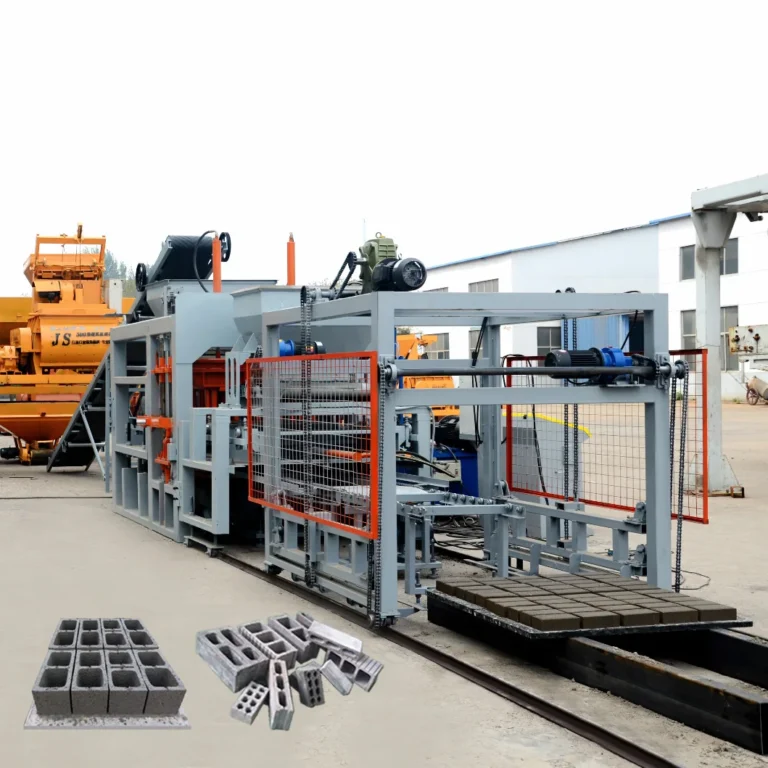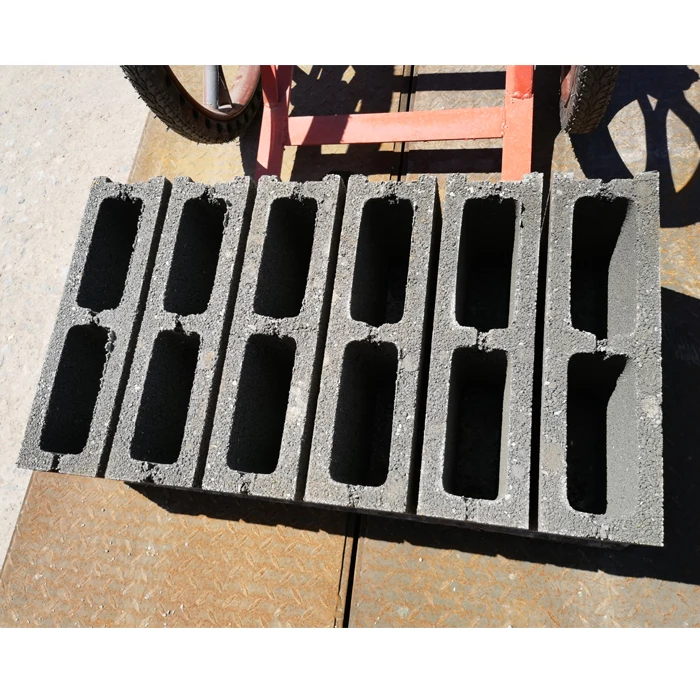
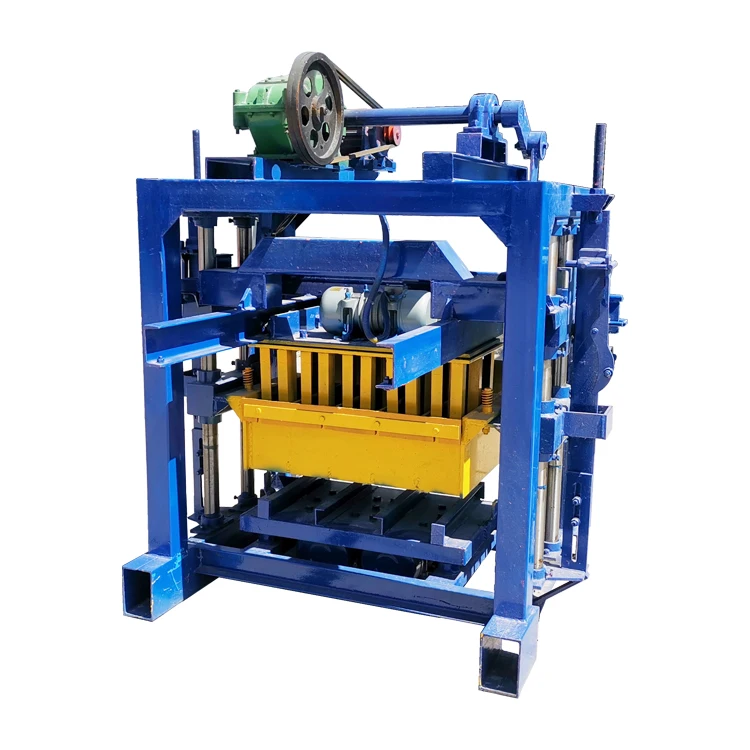
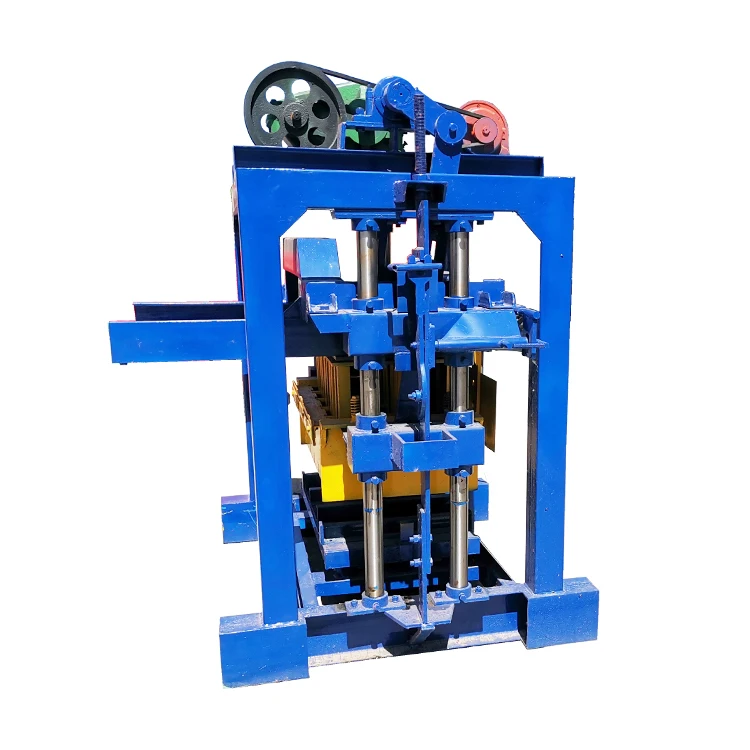
Description
Stocked and ready to load — QTJ4-40 units sit in our yard with standard moulds matched, voltage locked to your grid, and container loading photographed before the doors close.
Technical Specifications
| Parameter | Value |
|---|---|
| Model | QTJ4-40 |
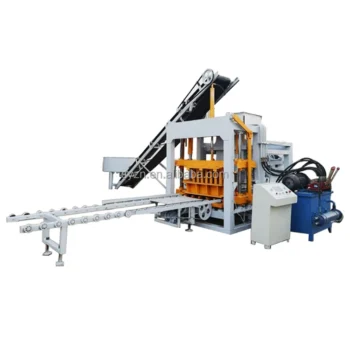
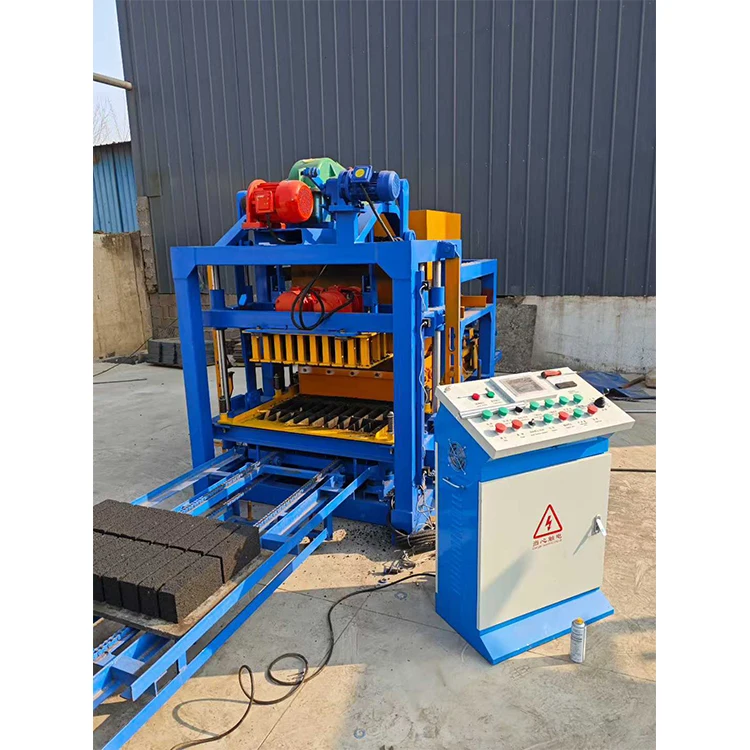
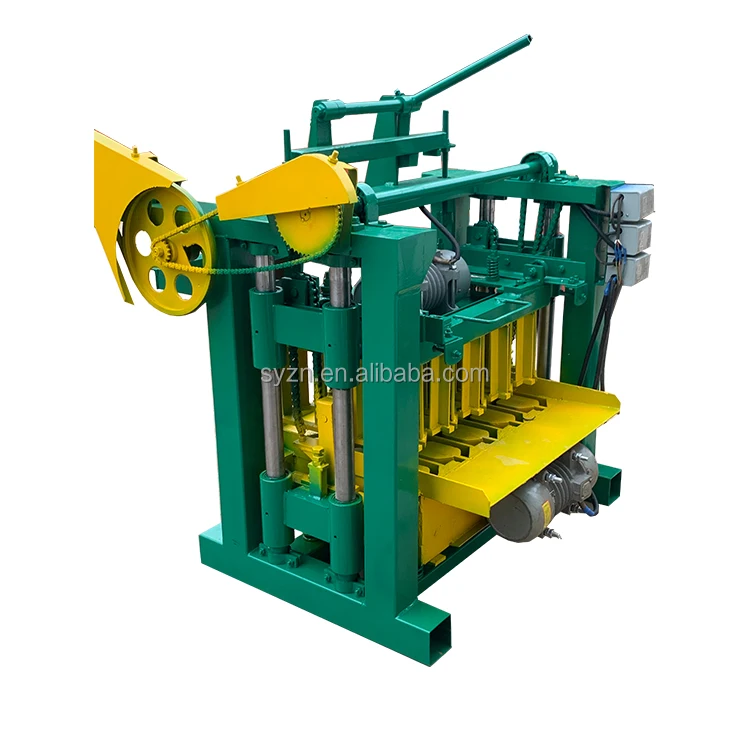
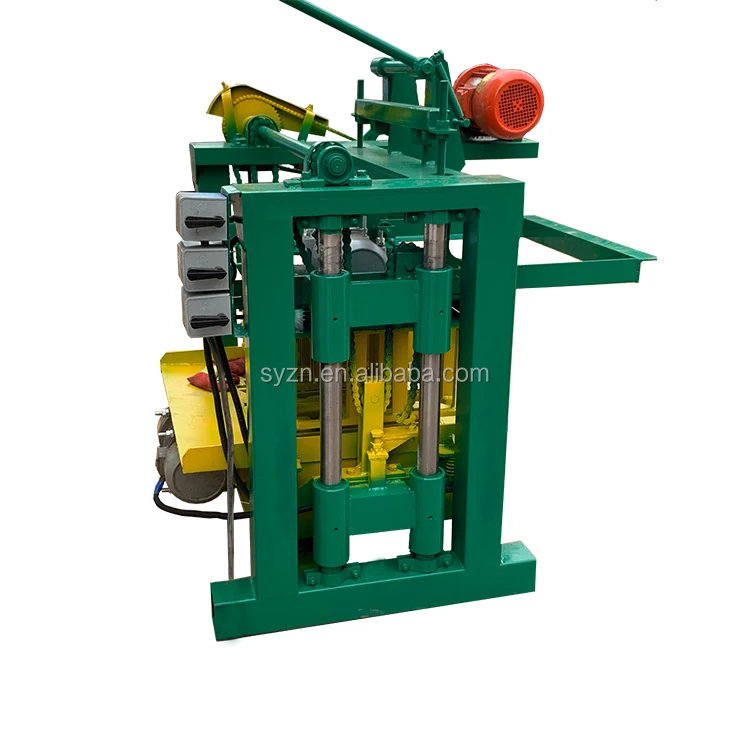
| Product Type | Semi-Automatic Concrete Hollow Block Making Machine |
| Rated Power | 10.4 kW |
| Molding Cycle | 40 s |
| Theoretical Productivity (400×200×200 mm hollow block, 4 pcs/mould) | 360 pcs/h, 2800 pcs/day |
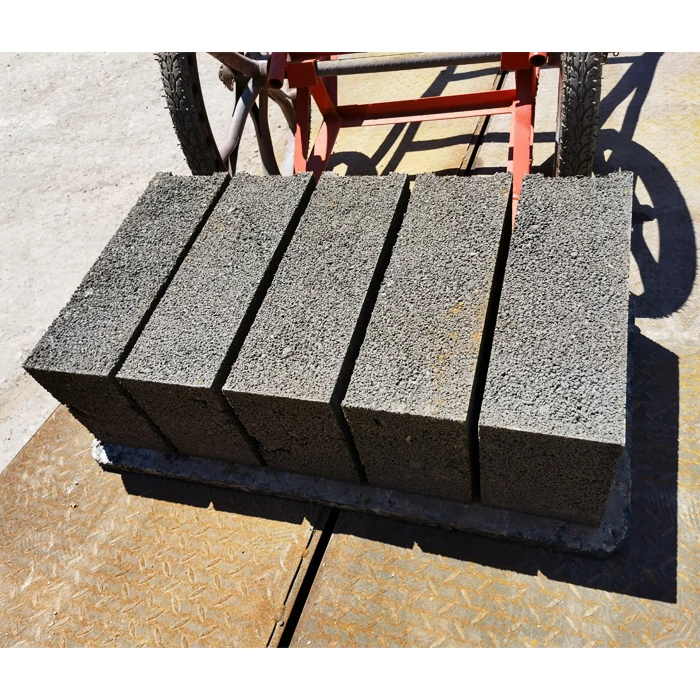
| Theoretical Productivity (400×150×200 mm hollow block, 5 pcs/mould) | 450 pcs/h, 3600 pcs/day |
| Theoretical Productivity (225×112.5×60 mm solid brick, 9 pcs/mould) | 800 pcs/h, 6400 pcs/day |
| Raw Materials | Concrete, sand, cement, fly ash, lime, gypsum |
| Machine Weight | 1 T |
| Overall Dimensions (L×W×H) | 1350 × 1460 × 1800 mm |
| Pallet Size | 850 × 450 mm |
| Vibration System | Bed mould vertical vibration + upper mould compression vibration |
| Mould Actuation | Top die push and pull with automatic scraper |
| Automation Level | Semi-automatic |
| Voltage | Configurable to local supply (confirmed before dispatch) |
Application Suitability
| Application | Material or Output |
|---|---|
| On-site hollow block production for housing projects | Concrete, sand, cement mixed locally at the construction site |
| Small workshop solid brick runs | Fly ash, lime, and gypsum blends for masonry units |
| First block plant for entrepreneurs entering the market | Standard concrete mixes producing 400×200×200 mm hollow blocks |
| Distributor inventory replenishment | Proven semi-automatic model with widely available wear parts |
Why the Voltage Question Must Come Before the Crate Is Nailed Shut
A machine built for the wrong frequency will trip its thermal overload the moment the site powers up, leaving your crew idle while a replacement motor or variable-frequency drive crosses an ocean.
I once watched a QTJ4-40 block machine in stock ship to a Middle East site running on 60 Hz. The motor was wound for 50 Hz at the factory. Within minutes of first energization, the overload relay dropped out and the whole line sat dead. The contractor lost two full weeks waiting for an air-freighted inverter, and the block yard missed its first delivery window to the main structure. That single oversight cost more in idle labour than the drive itself [NEED_CITE: voltage and frequency standards by export market]. Every unit we dispatch now goes through a voltage-and-frequency sign-off sheet before it leaves the bay.
What "In Stock" Actually Means for Your Schedule
When a project deadline is already slipping, a thirty-day build cycle is not an option. The QTJ4-40 block machine in stock sits assembled, hydraulics filled, and vibration motor wired. We pull a unit from the yard, run a no-load cycle to confirm the bed vibration and upper mould compression are balanced, then photograph the packing sequence. Buyers working to a pouring schedule can have a confirmed departure date inside days rather than weeks.
Container Loading Without Surprises
The 1350 × 1460 × 1800 mm footprint and 1 T weight mean the press travels upright in a standard 20-foot container alongside its pallets, moulds, and spare wear kit. We dismantle only what the door opening demands — typically the hopper and the top die frame — and label every bolt bag to the assembly drawing. The container loading photographs go to the buyer before the seal is crimped, so the receiving team knows exactly what to expect when the doors swing open at destination [NEED_CITE: container loading practices for heavy industrial machinery].
Reading the Numbers That Matter
The 40-second moulding cycle is the heartbeat of this machine. Dual vibration — vertical shake from the bed mould plus compression vibration from the upper die — forces the concrete mix into the mould cavity and holds it dense until the scraper levels the top. That combination is what keeps block walls uniform from the first pallet to the last. The 850 × 450 mm pallet is sized so two pallets side by side fit a standard curing rack without overhang, which matters when you are planning your steam or water-curing area. Rated power at 10.4 kW keeps the machine inside the capacity of a typical site generator, avoiding the need for a dedicated transformer on smaller projects.
The Hidden Cost of Skipping Dispatch Checks
Shipping a block press without confirming local voltage, pallet compatibility, or mould format sounds minor until the machine is bolted to your floor. A pallet that does not match the curing racks already on site means either new racks or hand-stacking every output pallet. A mould that does not produce the hollow block the local market actually buys means a second mould order and a second shipping bill. These are the delays that push a contractor past the penalty clause in the building contract [NEED_CITE: common causes of commissioning delays in block production plants].
Why Buyers Pull This Model From Our Yard
We keep the QTJ4-40 block machine in stock because it is the unit that contractors ask for when a housing tender lands and the pour date is fixed. Our dispatch checklist covers voltage, frequency, PLC display language, and mould format before the machine is crated. Moulds ship matched to the block dimension the buyer’s market sells, not a catalogue default. Container loading is photographed step by step, and dismantling instructions travel with the hardware.
Documentation & Verification
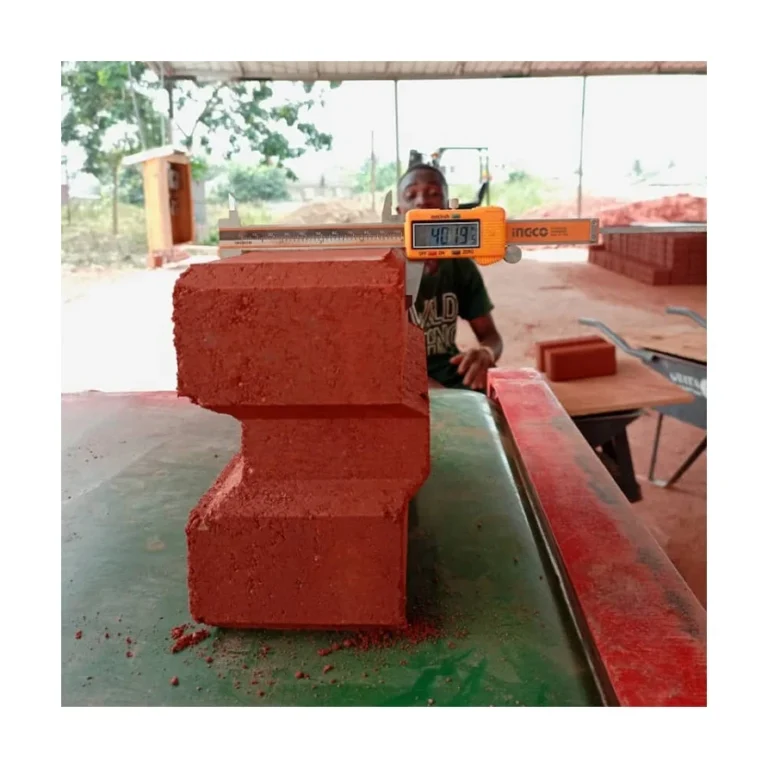
- Factory test record on your specified hollow block dimension before dispatch
- Voltage and frequency confirmation sheet signed against your local grid data
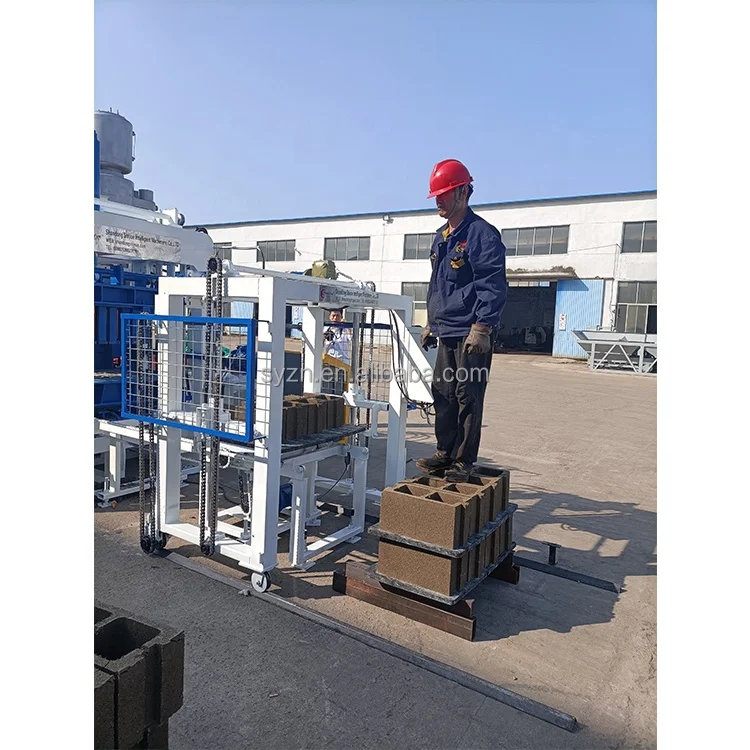
- Container loading photographs showing pallet, mould, and spare parts placement
- Mould drawing and format list for the block size shipping with the machine
- Operation and maintenance manual in your chosen control language
Installation, Commissioning & Support
- 10.4 kW rated power requires a dedicated 3-phase circuit with overload protection at the panel
- 1350 × 1460 mm footprint needs a level concrete pad with anchor bolt inserts cast in place
- Hopper and top die frame reassemble with labelled bolt bags following the shipped drawing
- First-run cycle confirms 40-second moulding time and dual vibration balance on your local mix
- 850 × 450 mm pallets checked against your existing curing rack spacing before power-on
Before You Request a Dispatch Date
Tell us the hollow block or solid brick dimension your market moves, the daily volume your site must hit, and the voltage and frequency at the main panel. Share your curing rack dimensions so we can confirm pallet compatibility. If you already have a mixer or conveyor feeding the press, send the discharge height so we match the hopper inlet.
Frequently Asked Questions
Q: Which QTJ4-40 units are currently in stock and what is the dispatch lead time?
A: We hold assembled QTJ4-40 presses with standard hollow block and solid brick moulds in the yard. Once voltage, frequency, and mould format are confirmed against your site data, the machine can move to the container loading bay within days. We share the packing photographs and departure estimate before the seal is applied.
Q: How is the machine dismantled and loaded into a container for shipment?
A: The hopper and top die frame come off to clear the container door opening. Every fastener is bagged and tagged to the reassembly drawing. The press body travels upright, secured to the container floor, with pallets and spare wear parts stacked alongside. Full loading photographs are sent before dispatch.
Q: Can voltage and frequency be confirmed before dispatch to match my local grid?
A: Yes. We require your site voltage and frequency in writing before the machine leaves the factory. The motor winding, control panel transformer, and overload settings are verified against those values. A signed confirmation sheet travels with the documentation pack so your electrician can cross-check on arrival.
Q: Which mould formats are stocked and ship with the machine versus made to order?
A: Standard 400×200×200 mm and 400×150×200 mm hollow block moulds plus 225×112.5×60 mm solid brick moulds are typically on the shelf and can ship with the press. Custom block dimensions or interlocking profiles are made to order. Tell us your market format early so we confirm availability against your deadline.
Q: What is the estimated arrival time from dispatch to my port?
A: Transit time depends entirely on the destination port and the shipping line’s sailing schedule from our loading port. We quote the arrival estimate alongside the dispatch date so you can plan your customs clearance and site preparation around a single timeline rather than guessing.