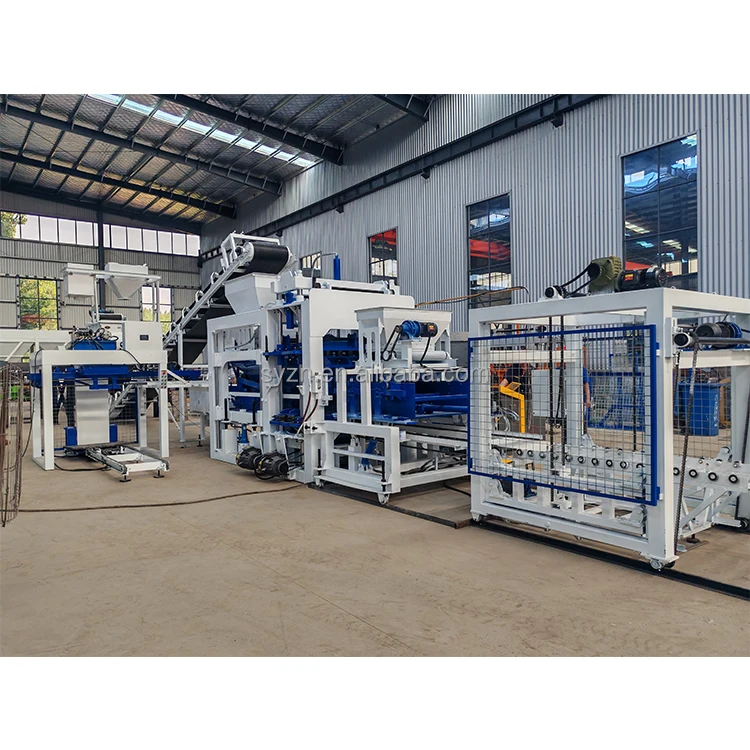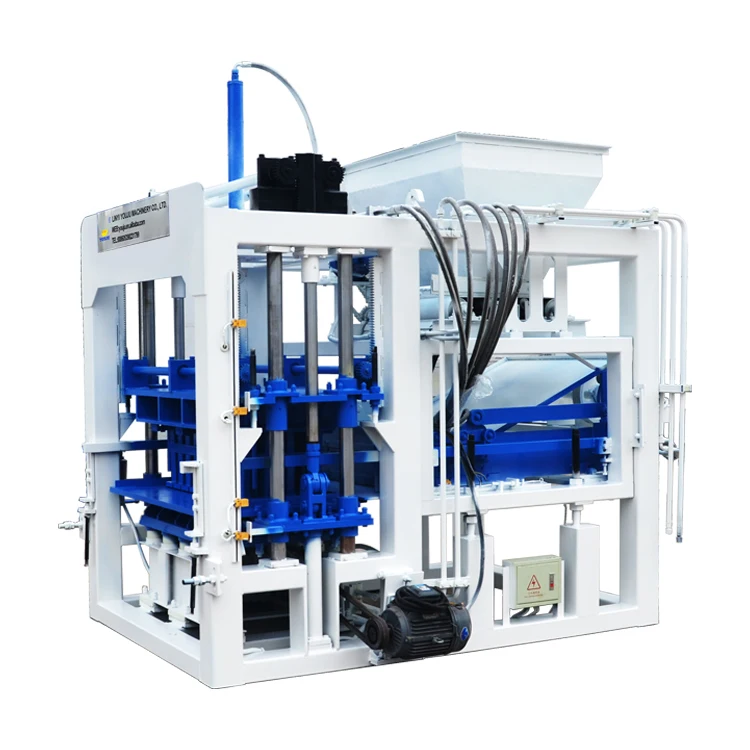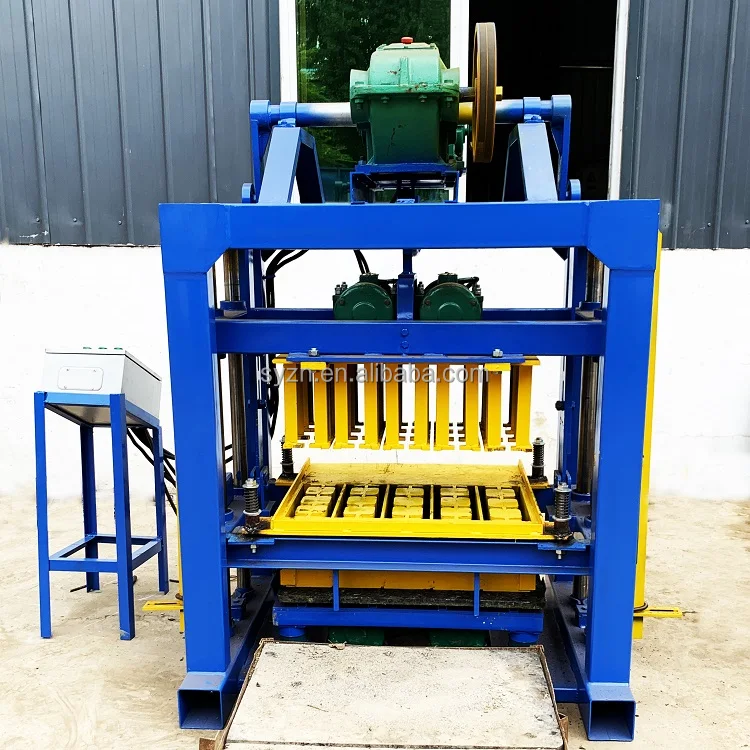
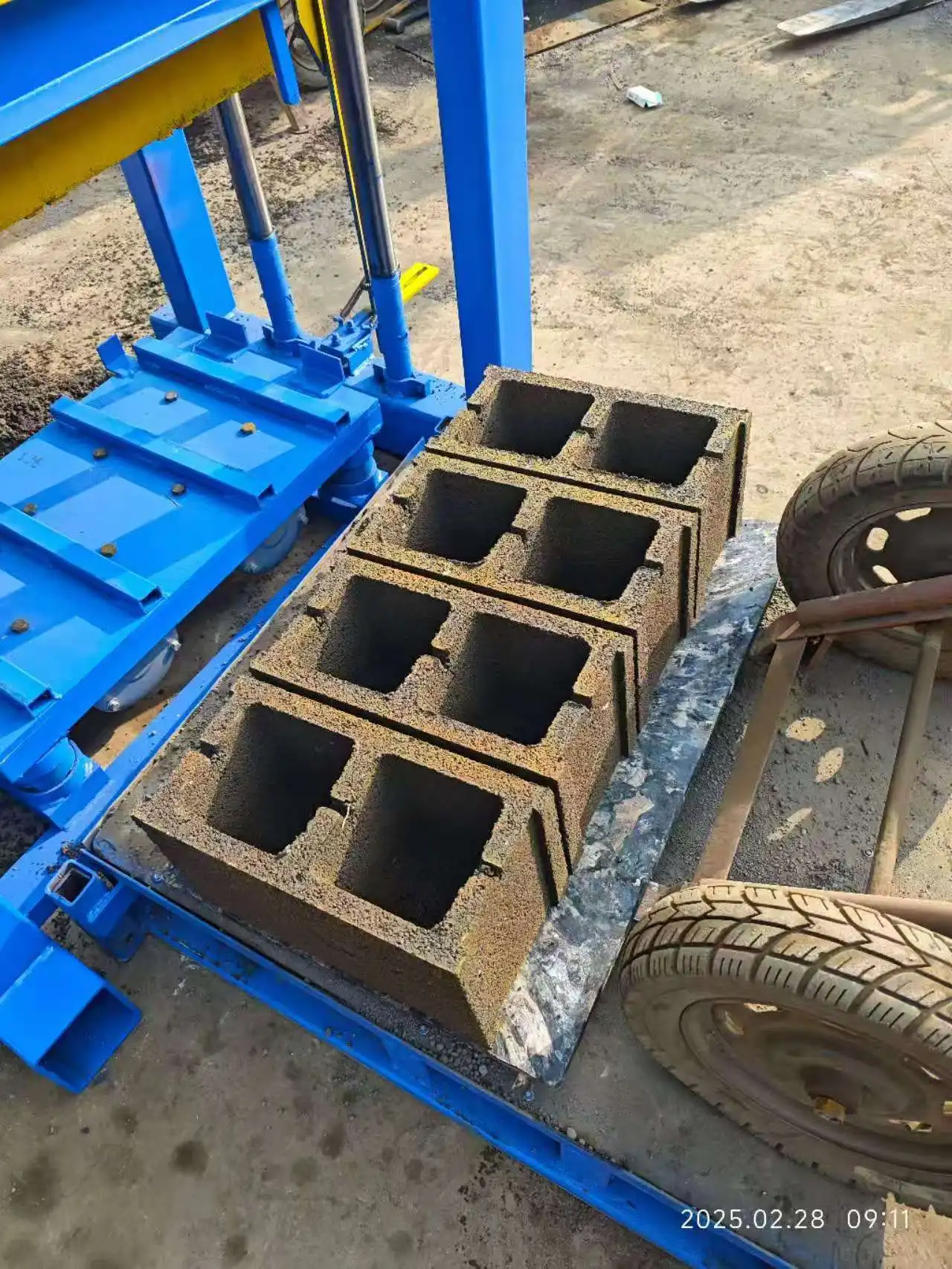
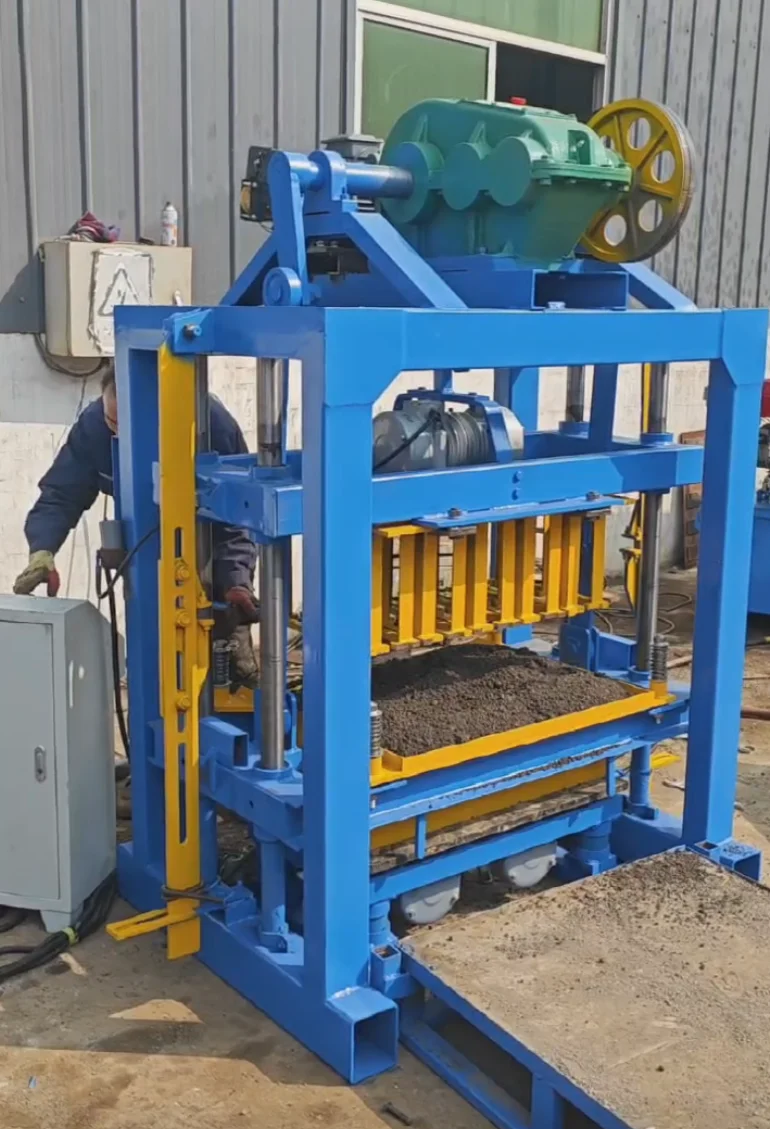
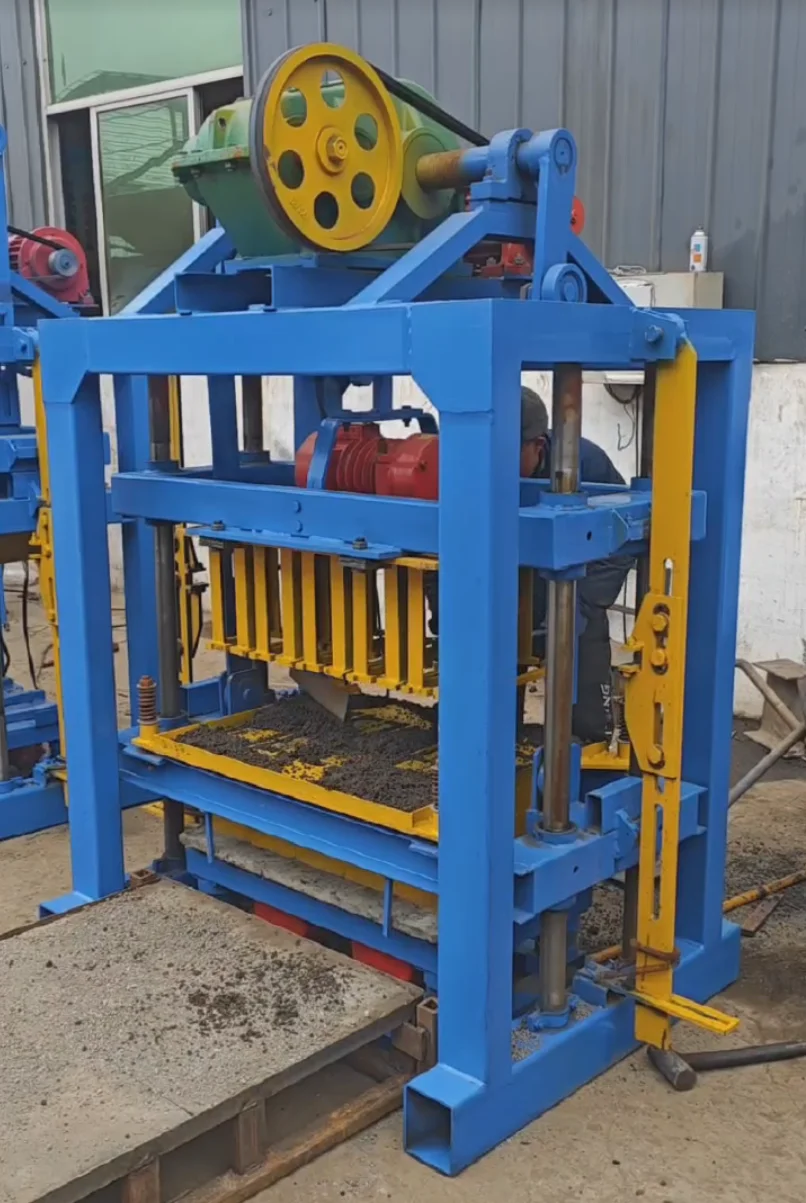
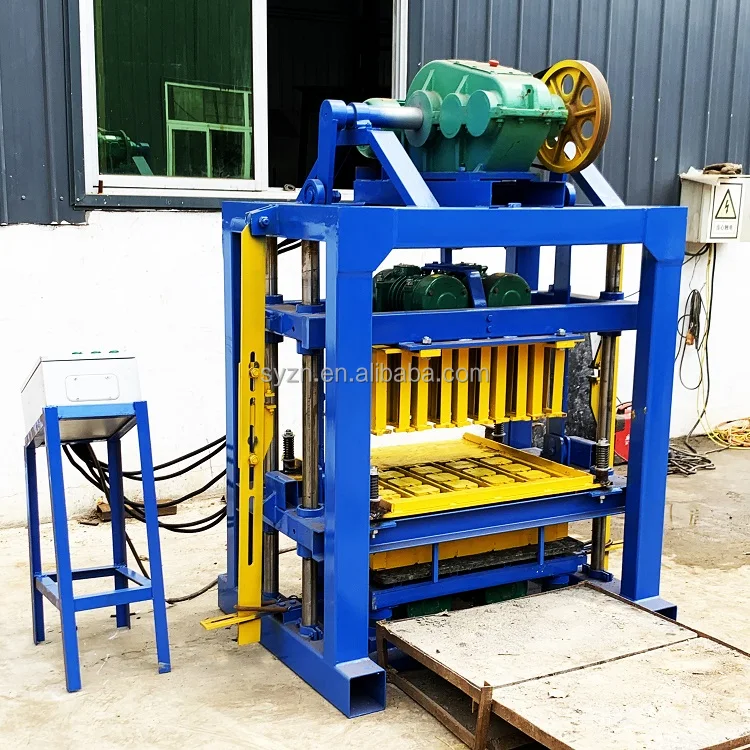
Description
Fast Dispatch Readiness — QTJ4-40 host machines and standard block moulds are held in stock, so your order moves from workshop to container within days rather than waiting through a full production cycle.
Technical Specifications
| Parameter | Value |
|---|---|
| Model | QTJ4-40 |
| Product Type | Hydraulic Semi-Automatic Block Making Machine |
| Overall Dimensions (L×W×H) | 1350×1460×1800 mm |
| Net Weight | 1.2 T |
| Machine Power | 10.4 kW |
| Molding Cycle | 40 s |
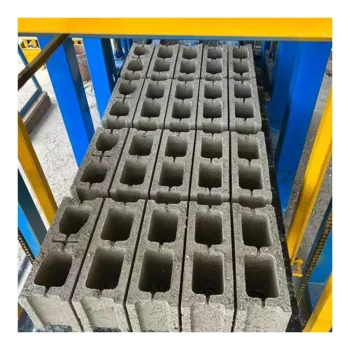
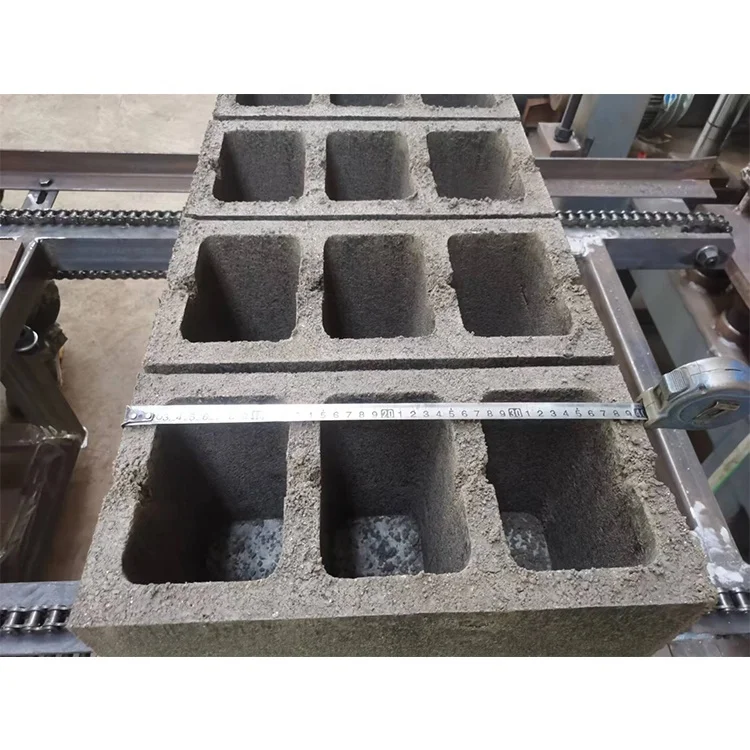
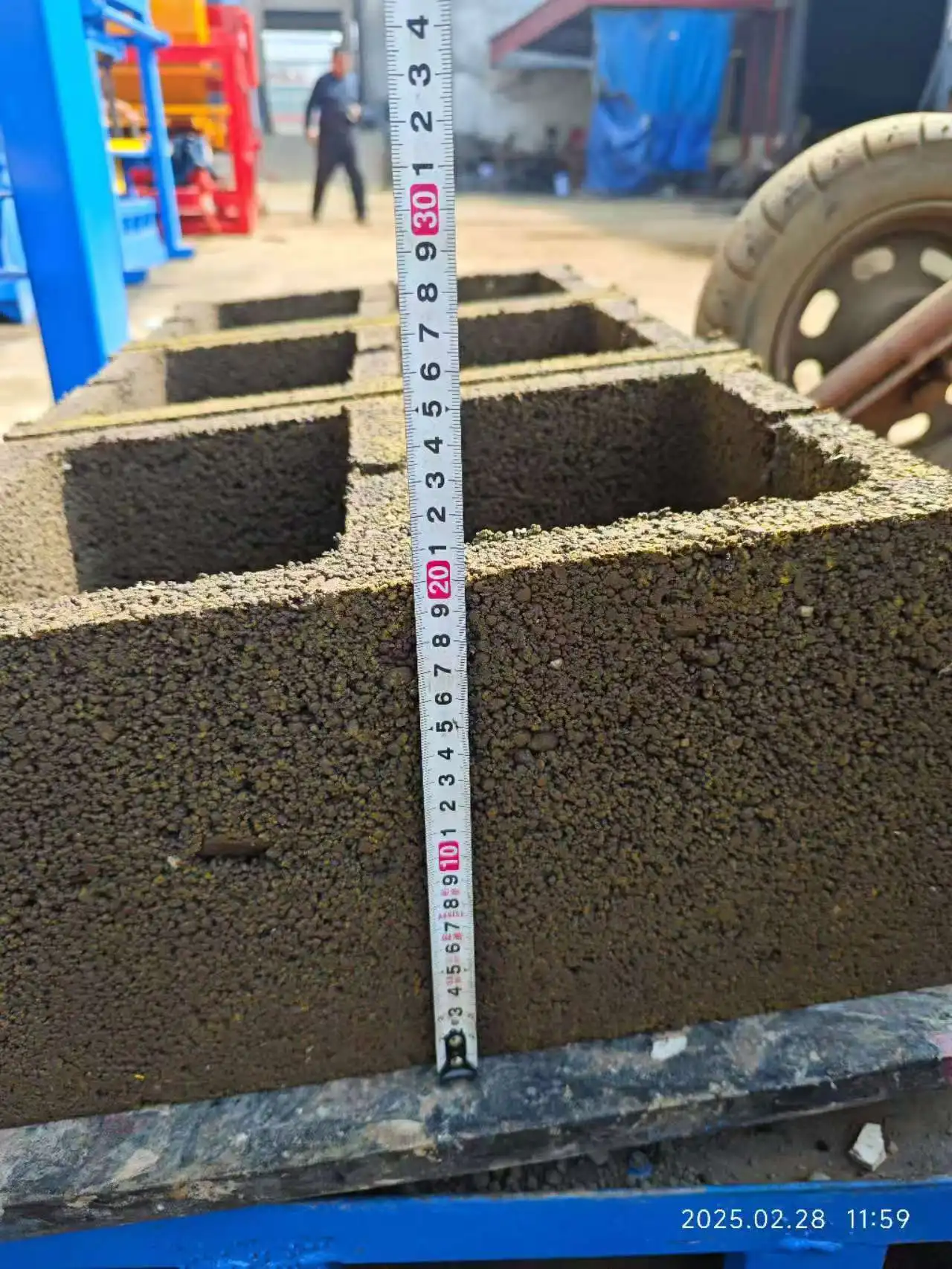
| Theoretical Capacity (Hollow 400×200×200 mm) | 4 pcs/mould, 360 pcs/hour, 2800 pcs/day |
| Theoretical Capacity (Hollow 400×150×200 mm) | 5 pcs/mould, 450 pcs/hour, 3600 pcs/day |
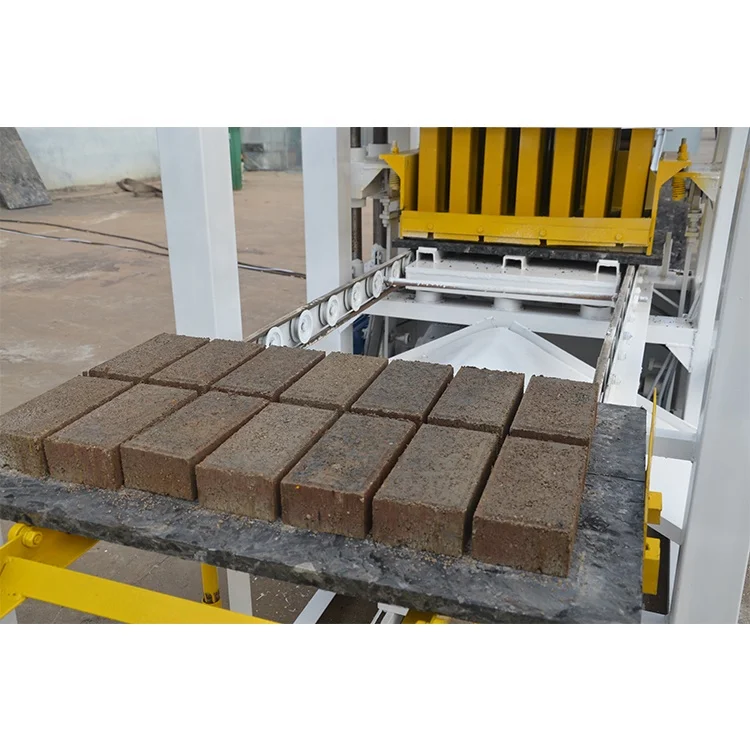
| Theoretical Capacity (Solid 225×112.5×60 mm) | 9 pcs/mould, 800 pcs/hour, 6400 pcs/day |
| Pallet Size | 850×450×20 mm |
| Vibration System | Bed mould vertical vibration + upper mould compression vibration |
| Control System | Semi-automatic (PLC model/language to be confirmed) |
| Voltage | Configurable to local supply (voltage/frequency to be confirmed before order) |
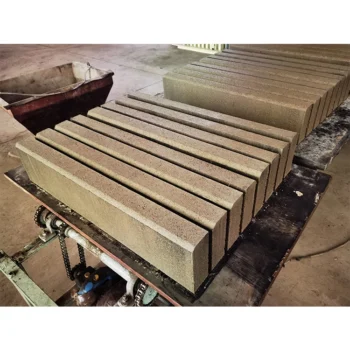
| Mould Compatibility | Hollow, solid, paver blocks (standard 8/6/5/4 inch; custom sizes available) |
| Assembly State | Host machine + mixer + mould + pallets (mixer and pallets optional) |
| Raw Materials | Concrete, sand, cement, fly ash, lime, gypsum, etc. |
| Standards | CE (verify applicability for this model before order) |
Application Suitability
| Application | Material or Output |
|---|---|
| Small-scale hollow block production | Crushed stone, sand, and cement mixes for 400×200×200 mm and 400×150×200 mm formats |
| Solid brick manufacturing for local masonry | Sand-cement or fly ash-lime blends producing 225×112.5×60 mm bricks |
| On-site paver and interlocking block runs | Concrete with fine aggregate for standard inch-size paving formats |
| Startup block plant for entrepreneurs | Entry-level output across hollow, solid, and paver formats from a single host machine |
| Contractor-run site production | Mobile or temporary yard setups feeding blocks directly to adjacent construction |
What "In Stock" Really Means for Your Project Timeline
A stocked QTJ4-40 block machine in stock leaves the workshop in days, not weeks — the difference between meeting your pour schedule and watching it slip.
When a contractor commits to a building phase, every delay at the block yard cascades into idle masons, rescheduled crane time, and penalty clauses. I have watched project managers in coastal Ecuador lose an entire dry season because their ordered machine was still on a production queue eight weeks later. The QTJ4-40 fast delivery semi-automatic block machine exists precisely for that gap: the window between "I need blocks now" and "the factory says wait." Standard host machines and common mould formats sit ready, so once voltage and pallet details are confirmed, container loading follows quickly [NEED_CITE: typical dispatch and container loading timelines for stocked block machinery].
Dispatch Speed Without Cutting Verification Steps
Stock availability does not mean skipping checks. Before any QTJ4-40 block machine in stock is crated, the voltage and frequency must match the buyer’s local grid — a 220 V / 60 Hz motor shipped to a 380 V / 50 Hz site will not start on arrival, and rewinding takes longer than confirming the spec upfront. The factory test record is run against the target mould so the buyer sees cycle performance before the machine is dismantled for shipment. This is where a fast delivery semi-automatic block machine earns its label: speed comes from preparation, not from skipping steps.
How Container Loading Is Planned Around the Machine Footprint
The QTJ4-40 measures 1350×1460×1800 mm and weighs 1.2 tonnes, which means it fits within a standard 20-foot container alongside the mixer, pallets, and mould set. Dismantling the hopper and vibration table reduces the loaded profile, and packing photographs document every tie-down point before the container doors close. Buyers working to a project deadline need this visibility — not a tracking number three weeks later with no idea how their machine was secured [NEED_CITE: container loading practices for compact block making equipment].
Reading the Capacity Table Honestly
The theoretical output figures — 2,800 hollow blocks per day at 400×200×200 mm, or 6,400 solid bricks at 225×112.5×60 mm — assume a 40-second molding cycle and uninterrupted operation across an eight-hour shift. Real daily throughput depends on how quickly pallets cycle back, whether the mixer keeps pace, and whether the local aggregate allows clean demoulding at that cycle speed. Volcanic ash or high-clay sand can extend the cycle or increase rejection, which is why the raw material question always comes before the capacity conversation.
What Mismatched Pallets Do to Your Curing Yard
The QTJ4-40 runs on 850×450×20 mm pallets. If the buyer’s existing curing racks were built for a different pallet dimension, every loaded pallet becomes a manual re-stacking problem. I have seen yards where the forklift tine spacing did not match the pallet width, forcing workers to hand-carry wet blocks across the yard — exactly the labour bottleneck the machine was supposed to remove. Confirming pallet size against the buyer’s curing area and handling equipment before dispatch avoids this entirely [NEED_CITE: pallet and curing rack compatibility in small block plants].
Why We Hold Stock on This Model and Not Others
The QTJ4-40 block machine in stock strategy focuses on the configuration that serves the widest buyer range: semi-automatic control, standard hollow and solid moulds, and a pallet size compatible with common small-yard equipment. Holding inventory on a machine that fits entry-level plants, contractor site yards, and distributor restocking orders means the stock actually moves. Niche configurations — unusual pallet sizes, custom mould formats, non-standard voltage — are built to order with a stated lead time so expectations stay honest.
Documentation & Verification
- Line layout sketch showing QTJ4-40 footprint against your available yard space
- Machine specification sheet with confirmed voltage and control language
- Factory test record run on your selected mould format before dispatch
- Packing photographs documenting container loading and tie-down points
- Mould drawing and format list for every mould included in the shipment
- Hydraulic and electrical schematic matching the as-built configuration
Installation, Commissioning & Support
- Foundation pad sized to 1350×1460 mm footprint with level tolerance for vibration stability
- Dedicated power circuit matching confirmed voltage and the 10.4 kW total draw
- Host machine reassembled on-site with hopper and vibration bed re-bolted to frame
- First production run supervised to confirm 40-second cycle on your aggregate mix
- Operator training covering mould change procedure and daily vibration bed inspection
- Wear parts and replacement mould list provided for local procurement planning
Before You Request a Quote
To match the right QTJ4-40 fast delivery semi-automatic block machine to your situation, we need to know your target block format and daily volume, the raw materials available at your site, and your local voltage and frequency. If you have existing curing racks, forklifts, or pallets already on the yard, share those dimensions so the pallet specification aligns. The sooner these details are confirmed, the sooner a stocked unit can be reserved and a container loading plan prepared.
Frequently Asked Questions
Q: What is the current dispatch lead time for QTJ4-40 and standard moulds?
A: Standard QTJ4-40 host machines and common hollow or solid mould formats are held in stock and can be prepared for container loading once voltage, frequency, and control language are confirmed. Custom mould sizes or non-standard electrical configurations require a production run with a quoted lead time at inquiry stage.
Q: How is the machine packed and loaded for container shipment?
A: The QTJ4-40 is partially dismantled — hopper and vibration bed separated — to fit within a standard 20-foot container alongside the mixer, pallets, and mould set. Packing photographs are taken before the container doors close so the buyer has a full visual record of tie-down and bracing.
Q: Can voltage and frequency be matched to my country before the machine ships?
A: Yes. The QTJ4-40 motor and control panel are configured to the buyer’s confirmed local supply before dispatch. This confirmation is a mandatory step in the order process because arriving with the wrong voltage causes commissioning delays that no amount of on-site rewiring can quickly fix.
Q: What is the arrival estimate once the machine is dispatched?
A: Ocean transit time depends on the destination port and shipping line schedule. Once the container is loaded and the bill of lading is issued, the buyer receives a vessel departure date and estimated arrival window so site preparation and customs clearance can be scheduled accordingly.
Q: Are replacement moulds and wear parts shipped together with the machine or ordered separately?
A: Initial moulds are included in the shipment based on the buyer’s format selection. Wear parts lists and mould drawings are provided so future replacements can be ordered as needed or sourced locally against the supplied specifications.