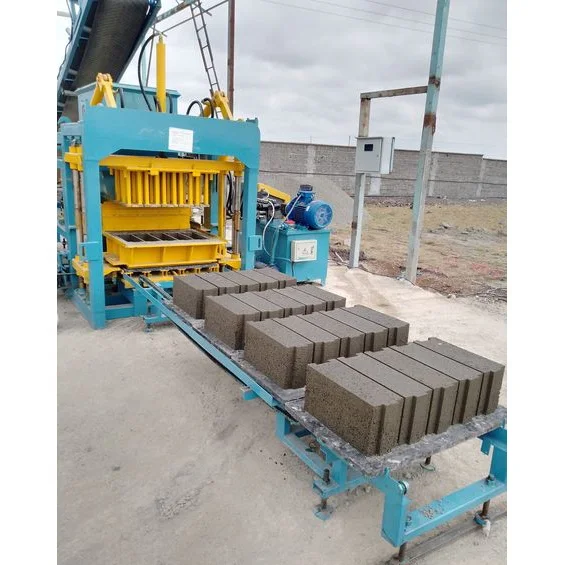
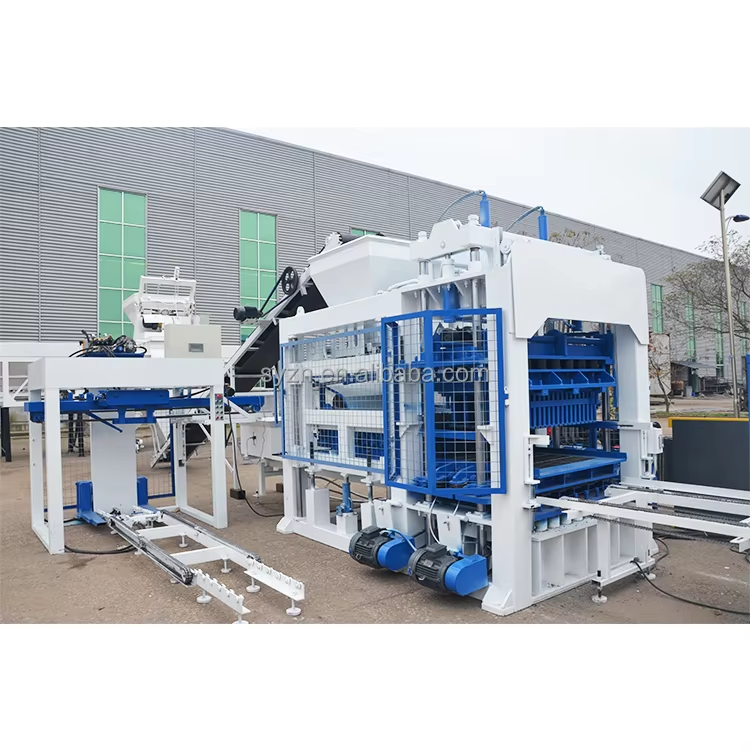
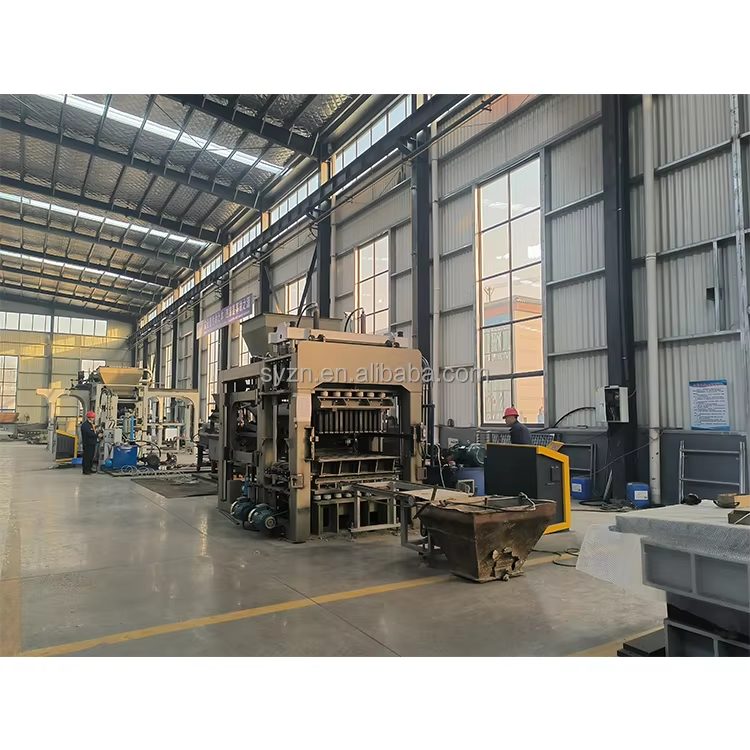


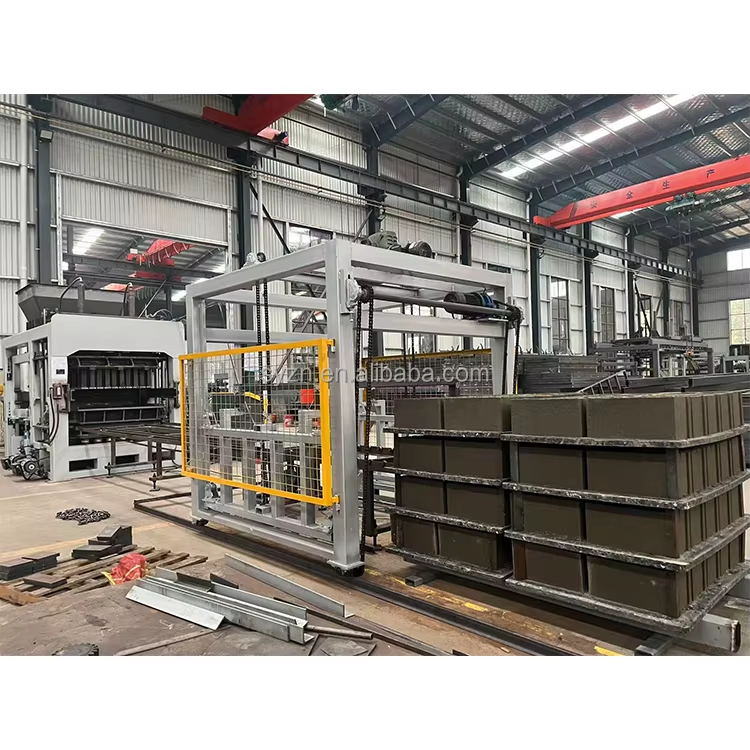
Description
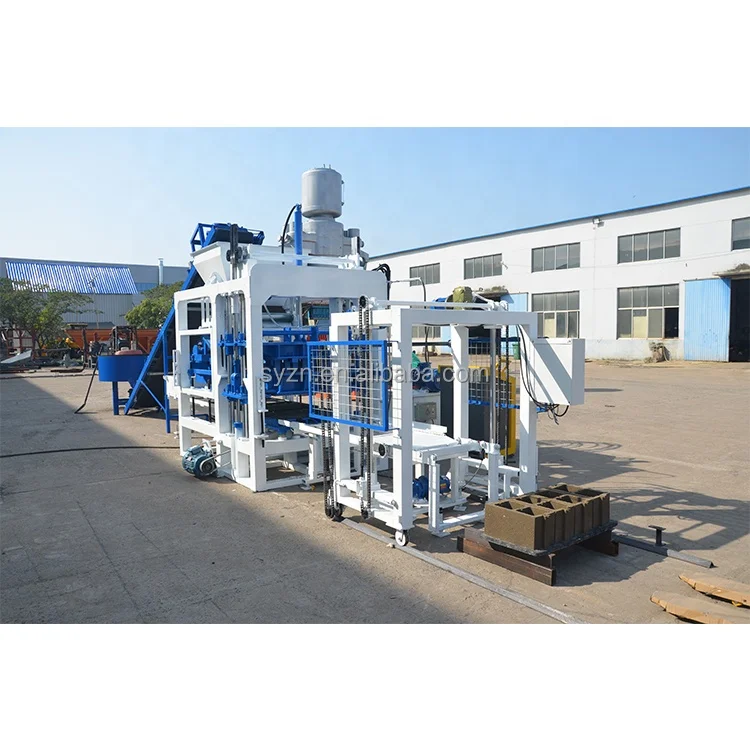
Rapid dispatch readiness — The QT10-15 is pre-assembled and tested to ensure container loading begins immediately upon order confirmation.
Technical Specifications
| Parameter | Value |
|---|---|
| Model | QT10-15 |
| Product Type | Fully Automatic Block Production Line |
| Method | Hydraulic Pressure |
| Automation Level | Automatic |
| Voltage Options | 380 V, 220 V |
| Overall Dimensions (L×W×H) | 7100 x 1600 x 2610 mm |
| Total Mass | 7.2 T |
| Rated Pressure | 21 MPa |
| Pallet Size | 1100 x 900 mm (verify against site forklift) |
| Worker Requirement | 3-5 |
| Molding Cycle | 15 s (basis to be confirmed by block format) |
| Core Components | PLC, Pressure Vessel, Motor, Pump, Gearbox |
| Standards | Machinery Test Report, Video Outgoing-Inspection |
Application Suitability
| Application | Material or Output |
|---|---|
| Housing project contracting | Hollow blocks from crushed stone and cement |
| Regional material distribution | Solid bricks from fly ash and concrete |
| On-site construction production | Pavers from standard concrete aggregates |
Why "Fast Delivery" Must Include Dismantling Logistics
Securing a QT10-15 block machine in stock only solves half the deadline problem if the dismantling and loading plan is not ready. A machine sitting in a warehouse still misses the vessel if it cannot fit the container.
When contractors face strict project milestones, waiting for manufacturing is impossible. Yet, I have seen equipment delayed at the loading bay because the host frame was not engineered for standard container dimensions. The physical breakdown of the press, hydraulic station, and control cabinet must be mapped to the loading sequence before the dispatch lead time is even quoted [NEED_CITE: standard container loading procedures for heavy industrial presses].
Confirming Dispatch Lead Times Before Order Sign-off
Availability means nothing without a binding departure date. When evaluating a fast delivery block production line, the exact dispatch lead time must be documented alongside the current stock status of the host and the requested standard moulds. This upfront arrival estimate dictates your site preparation schedule and prevents idle labor waiting for equipment that is still undergoing final factory checks.
Verifying Readiness Through Outgoing Inspections
Physical stock must be proven operational before it leaves the facility. Reviewing the provided machinery test records and video outgoing-inspections ensures the specific unit allocated to your order is fully functional. This verification step confirms that the hydraulic pressure and PLC systems are calibrated, eliminating the risk of receiving a dormant machine that requires extensive troubleshooting upon arrival [NEED_CITE: factory acceptance testing protocols for block machinery].
Matching Pallet and Voltage Specifications to Site Reality
A rapid dispatch is useless if the machine cannot run on day one. The 1100 x 900 mm pallet size must align with your existing curing area and forklift capacities to prevent manual handling bottlenecks. Furthermore, validating the 380 V or 220 V configuration and the PLC display language against your local grid and operator requirements prevents immediate commissioning delays once the QT10-15 block machine in stock is unloaded.
The Hidden Cost of Ignoring Upstream and Downstream Pacing
Focusing solely on the press while neglecting the material feeding and output handling creates severe site congestion. If the raw material batcher cannot keep pace with the host, or if the wet blocks are not moved to the curing zone efficiently, the entire operation halts. I have witnessed projects stall because the output end relied entirely on manual labor, causing cured products to pile up and block the pallet return loop [NEED_CITE: material flow bottlenecks in concrete product manufacturing].
Why Source This Equipment Here
Our single focus on block machinery ensures the host, pallets, and handling equipment are specified as one matched system rather than assembled from disconnected suppliers. We provide configuration checks against your local site conditions to prevent material mismatches. Standard moulds for common formats are kept ready to ship alongside the main press. The automation level is selectable, allowing you to start with standard handling and add automatic stacking later. Installation support includes operator training to ensure your crew understands the specific hydraulic and electrical layouts of your delivered unit.
Documentation & Verification
- Factory test record confirming hydraulic pressure and cycle performance before dispatch.
- Video outgoing-inspection showing the specific allocated unit running under load.
- Machine specification sheet detailing the 7.2 T mass and 7100 mm footprint for rigging.
- Electrical schematic matching the confirmed 380 V or 220 V site configuration.
- Packing photographs documenting the dismantling state for container loading.
- Customs documentation support to accelerate port clearance upon arrival.
Installation, Commissioning & Support
- Foundation planning based on the 7100 x 1600 mm footprint and 7.2 T dynamic load.
- Dedicated power circuit setup matching the confirmed 380 V or 220 V requirement.
- Reassembly of the dismantled host frame and hydraulic station upon container unloading.
- Initial PLC parameter setting to match local aggregate characteristics and block formats.
- Operator training focused on the specific hydraulic valves and gearbox maintenance.
- Provision of a wear parts list for the pressure vessel and core pump components.
Preparing Your Site for Immediate Integration
To ensure the equipment integrates smoothly upon arrival, provide your exact daily output targets and the specific block formats your market demands. Confirm your local voltage frequency and the required PLC control language for your operators. Finally, detail your existing site conditions, including curing space dimensions and available forklift capacities, so the pallet handling flow can be finalized before shipment.
Frequently Asked Questions
Q: What is the exact dispatch lead time and current stock availability for the QT10-15?
A: The dispatch lead time and stock status are confirmed during the initial inquiry. We verify the physical availability of the host machine and your requested standard moulds, providing an upfront arrival estimate before you finalize the order to ensure it meets your project deadlines.
Q: How is the machine dismantled for container loading, and what are the upfront arrival estimates?
A: The host frame, hydraulic station, and control cabinets are dismantled according to a pre-planned loading sequence to fit standard shipping containers. We provide upfront arrival estimates based on the confirmed dispatch date and vessel schedules, allowing you to prepare your site foundation and rigging equipment in advance.
Q: Are standard moulds for my required block formats currently in stock for immediate shipment?
A: Standard moulds for common hollow, solid, and paver formats are typically kept in inventory alongside the main presses. We verify the exact stock status of the specific dimensions you require during the quotation phase to ensure they are loaded into the same container as the host machine.
Q: What customs documentation support is provided to ensure smooth and fast clearance upon arrival?
A: We provide comprehensive customs documentation support, including detailed packing lists, commercial invoices, and machinery test reports. This paperwork is prepared in advance to align with your local import regulations, minimizing delays at the port and ensuring the equipment reaches your site without administrative hold-ups.
Q: Can voltage and PLC language be confirmed and adjusted quickly before the machine leaves the factory?
A: Yes, the voltage configuration and PLC display language must be confirmed prior to dispatch. We adjust the electrical components and control interface to match your local grid and operator requirements during the final factory testing phase, preventing commissioning delays once the machine arrives at your facility.