

What Is Block Compressive Strength and How to Test It: A Complete Guide for Buyers Sourcing from China Block Machine Manufacturers
Most importers assume cement ratio alone determines block strength—but vibration technology and mold precision matter just as much.
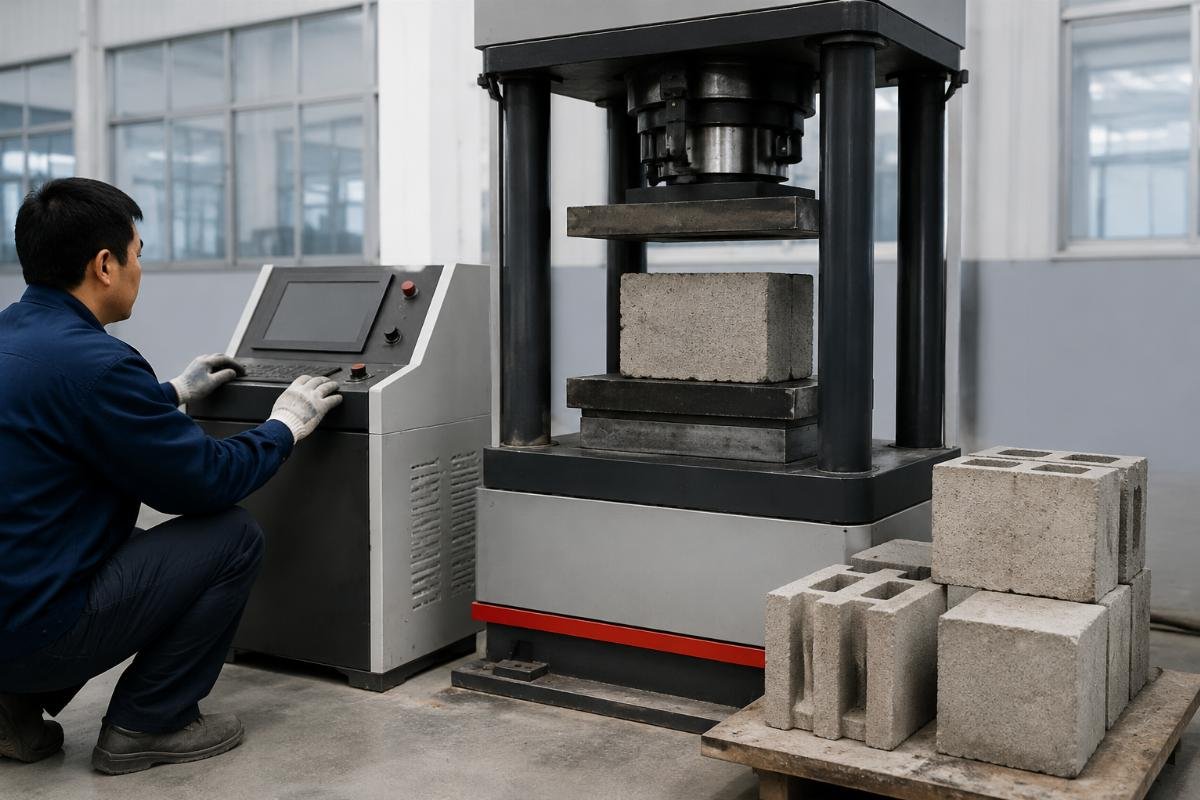
Block compressive strength is the maximum load per unit area a concrete block can withstand before failure, measured in megapascals (MPa) or pounds per square inch (psi), and it serves as the primary quality benchmark that building inspectors, structural engineers, and government procurement officers use to approve or reject masonry materials for construction projects.
In my years of evaluating block production lines across Nigeria, Saudi Arabia, and Uzbekistan, I have seen first-time investors waste thousands of dollars on cement over-dosing simply because their machine’s vibration system could not achieve proper compaction density. Blocks produced with European-style four-motor vibration systems achieve 10–15% higher compressive strength at identical cement-to-aggregate ratios compared to single-motor conventional machines.[^1] Understanding how compressive strength is tested—and which machine design features directly influence test results—is essential before you commit capital to any Chinese block making machine supplier.
Let me walk you through exactly what compressive strength means, how it is measured under international standards, and which equipment specifications you must verify before placing an order.
What Exactly Is Block Compressive Strength and Why Does It Determine Your Project Approval?
Compressive strength measures the maximum axial load a concrete masonry unit can bear per unit of net cross-sectional area before catastrophic failure occurs. This single metric determines whether your blocks qualify for load-bearing walls, whether they pass on-site inspections, and whether your government housing contracts survive quality audits. In markets across Africa, the Middle East, and South Asia, building codes reference either ASTM C90 (USA), EN 771-3 (Europe), or localized national standards—but all of them converge on compressive strength as the non-negotiable pass/fail criterion.
| Standard Region | Common Misunderstanding | Correct Interpretation |
|---|---|---|
| ASTM C90 (USA) | Assumes all blocks need 2,000 psi minimum | Minimum 2,000 psi gross area applies only to load-bearing units; non-load-bearing partitions require only 600 psi per ASTM C129 |
| EN 771-3 (Europe) | Believes Eurocode applies uniformly worldwide | EN 771-3 specifies strength classes from 2.0 MPa to 20.0 MPa, but individual member states set national annexes that override default values |
| African/Asian National Standards | Copies neighbor country’s code without verification | Nigeria’s NIS, Kenya’s KS, Saudi Arabia’s SASO, and India’s IS each define unique minimum MPa thresholds—always confirm the exact clause with local building authorities |
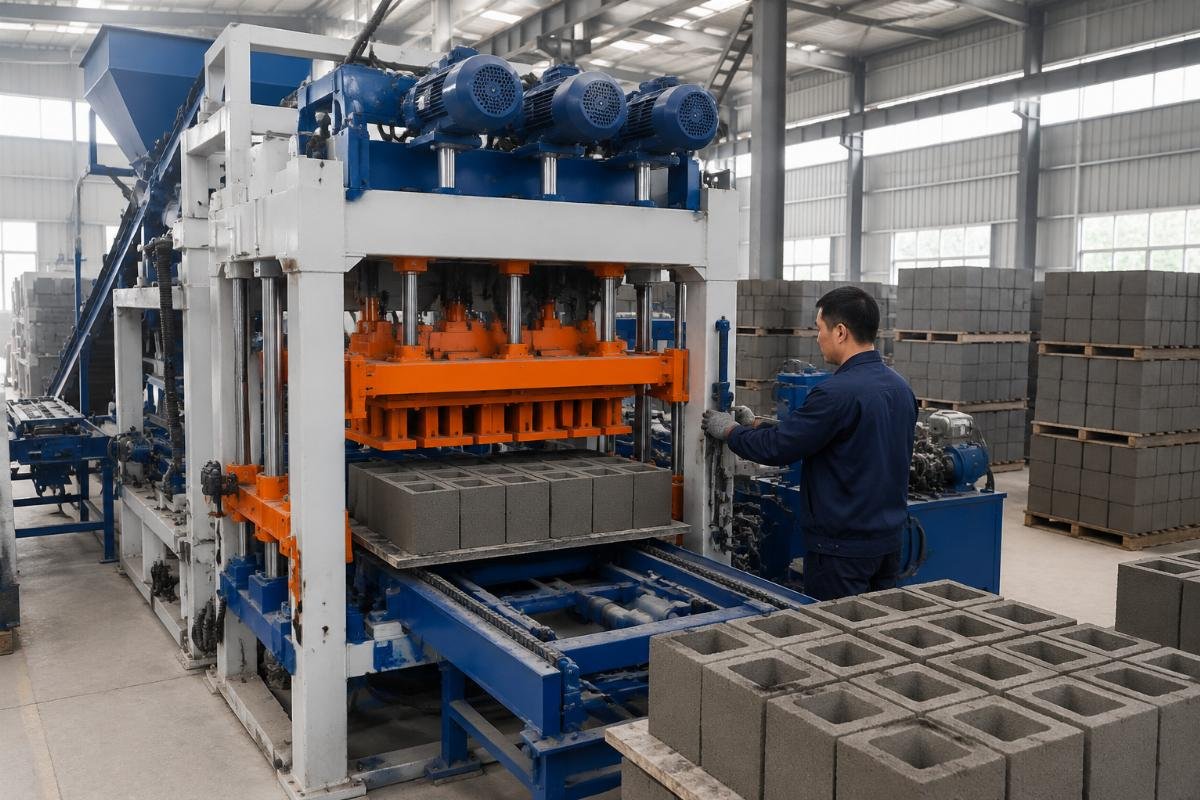
A first-time block producer in Lagos, Nigeria, invested in a fully automatic block line and within the first month achieved consistent 15 MPa compressive strength on 6-inch hollow blocks using a cement-to-aggregate ratio of 1:6 with a 21-day curing cycle. The machine’s four-motor vibration system, each motor rated at 2.2 kW, produced block density of 1,850–1,950 kg/m3, and the blocks passed Nigerian Industrial Standards testing on the third production batch. Hydraulic press force of 80 tons combined with four-point vibration distribution achieves green density above 1,850 kg/m3, which correlates directly to 15+ MPa 28-day compressive strength.[^2] Daily output reached 8,000–10,000 blocks, generating positive cash flow within the first quarter.
Here is what you must do before finalizing your machine purchase:
- Code Verification – Obtain the exact compressive strength clause from your country’s national building code or the standard your project specifies (ASTM, EN, or local equivalent).
- Strength Target Calculation – Determine whether your application requires load-bearing (typically 7–20 MPa) or non-load-bearing (3.5–7 MPa) blocks, as this directly dictates machine specification requirements.
- Supplier Specification Request – Ask every shortlisted Chinese manufacturer to provide third-party test reports showing compressive strength results from blocks produced on the exact model you intend to purchase.
How Is Block Compressive Strength Tested According to International Standards?
Proper compressive strength testing follows a rigid protocol defined by ASTM C140, EN 1015-11, or ISO 1920-4—and deviating from any step produces results that can underreport true strength by 15–20%. As an importer, you do not need to operate the testing machine yourself, but you must understand the methodology well enough to evaluate whether your supplier’s test reports are credible or whether your on-site quality lab is making procedural errors that reject good blocks.
| Testing Step | Common Error That Produces Falsely Low Results | Correct Procedure Per ASTM C140 |
|---|---|---|
| Specimen Preparation | Testing blocks with uneven bearing surfaces without capping or grinding | Cap both bearing surfaces with high-strength gypsum cement or grind to achieve plane surfaces within 0.02 mm tolerance |
| Moisture Conditioning | Testing blocks at random moisture content without recording it | Condition specimens to moisture equilibrium or test in saturated surface-dry state and document moisture content per ASTM C140 Section 7 |
| Loading Rate | Applying load too quickly, causing artificial peak readings | Apply load continuously at 1,000–5,000 N/s (approximately 0.25 MPa/s) until failure occurs |
| Platen Alignment | Placing specimen off-center on compression machine platens | Center specimen precisely; use scribed lines on platens to verify alignment before each test |
| Result Calculation | Dividing failure load by gross area instead of net area for hollow blocks | Calculate compressive strength using net cross-sectional area per ASTM C90 Table 1 for hollow units |
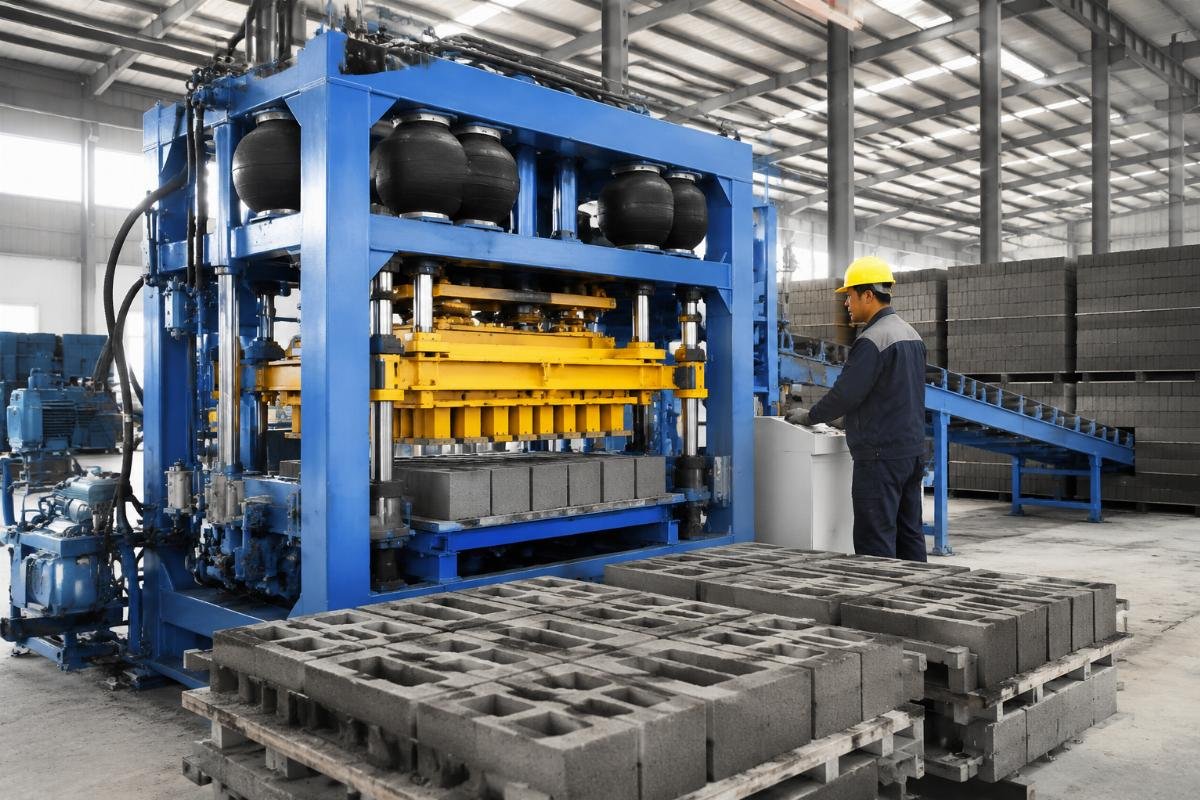
An existing brick factory in Tashkent, Uzbekistan, upgraded from a semi-automatic line to a European-style automatic block machine with airbag vibration damping. Before the upgrade, average compressive strength was 8 MPa with an 18% rejection rate. After the upgrade, the factory achieved consistent 20 MPa on solid blocks using a cement ratio of 1:4, and the rejection rate dropped to 3%. Airbag vibration damping systems reduce vibration noise from 95 dB to 78 dB while increasing vibration force amplitude by 35%, directly improving density uniformity and compressive strength consistency.[^3] Production capacity increased from 4,000 to 12,000 blocks per day, and the coefficient of variation in strength test results dropped from 22% to under 8%.
Follow these steps to establish a credible testing protocol at your production facility:
- Equipment Calibration – Ensure your compression testing machine is calibrated annually by an accredited laboratory and that load cell accuracy is within ±1% of full scale.
- Sample Size Protocol – Test a minimum of three blocks per batch per ASTM C140 Table 1 requirements, and record individual results alongside batch averages.
- Early Strength Monitoring – Test companion specimens at 3 days and 7 days using validated conversion factors (multiply 7-day results by 1.3–1.4 depending on cement type) to catch mix design errors weeks before 28-day testing.
- Statistical Tracking – Calculate the coefficient of variation for each production week; if CV exceeds 15%, initiate immediate investigation into vibration calibration, mold wear, or raw material moisture changes.
Which Machine Design Features Most Directly Influence Block Compressive Strength?
The vibration system architecture and hydraulic press force are the two machine-level factors with the greatest impact on block density and compressive strength—more influential than brand reputation, price, or even cement ratio adjustments. Many buyers focus exclusively on motor count or advertised vibration frequency without understanding that amplitude control, force distribution uniformity, and compaction duration determine whether vibration energy actually translates into dense, strong blocks.
| Machine Feature | Inefficient Design That Limits Strength | Optimized Design That Maximizes Strength |
|---|---|---|
| Vibration Motor Configuration | Single-motor or two-motor systems with uneven force distribution across mold cavities | Four-motor European-style configuration with independent amplitude control per motor, ensuring uniform density variation under 3% across the entire mold |
| Vibration Damping System | Direct mechanical mounting transmitting vibration to machine frame, causing energy loss and 95+ dB noise levels | Airbag suspension system isolating vibration to the mold table, maintaining consistent 3–5 mm amplitude and reducing noise to 78 dB |
| Hydraulic Press Force | Manual or low-tonnage pressing (below 50 tons) producing green density below 1,700 kg/m3 | 80+ ton hydraulic press system achieving green density above 1,850 kg/m3, directly correlating to higher 28-day compressive strength |
| Mold Manufacturing Precision | Welded molds with 2+ mm dimensional tolerance causing inconsistent block geometry and stress concentration points | CNC-machined molds with 0.5 mm tolerance ensuring uniform wall thickness and predictable load distribution during compression testing |
| Vibration Frequency Control | Fixed-frequency operation at 5,000+ RPM without amplitude optimization | Variable frequency drive allowing 2,800–4,500 RPM adjustment matched with optimized 3–5 mm amplitude for specific mix designs |
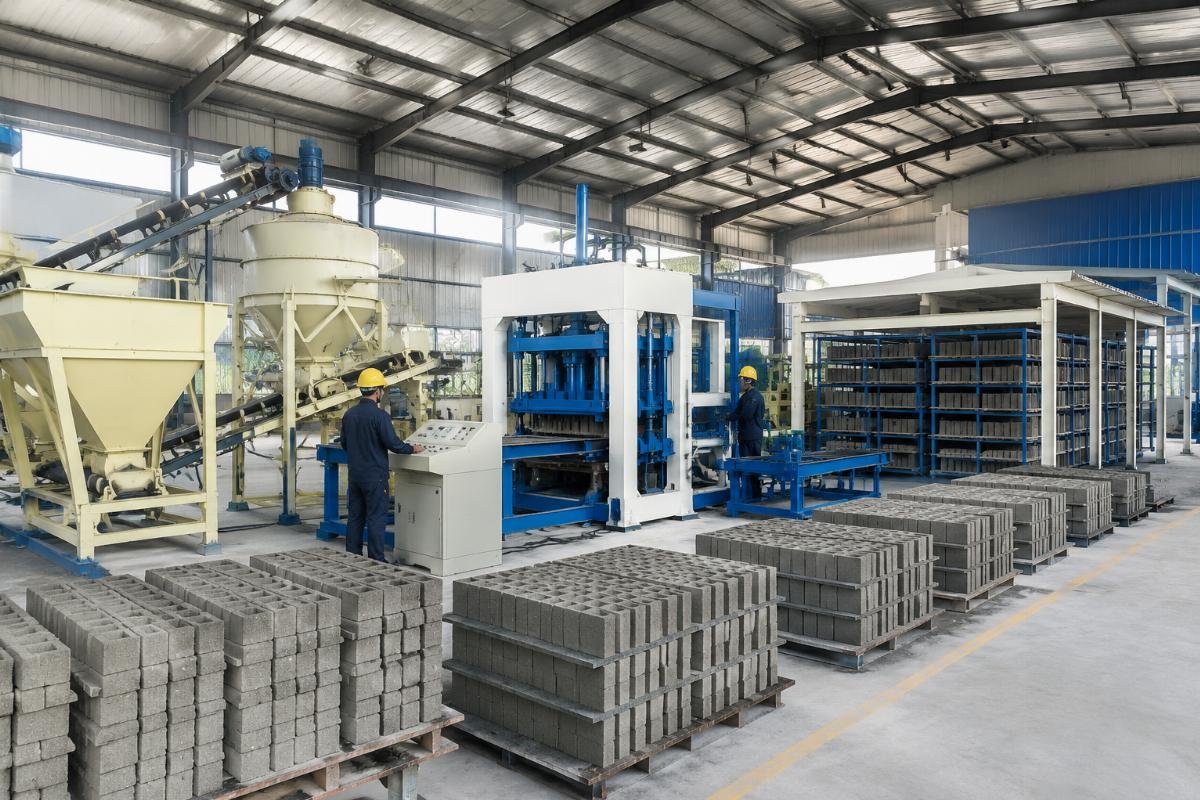
A government-funded affordable housing project in Kenya required 500,000 load-bearing blocks meeting ASTM C90 minimum compressive strength of 1,000 psi (approximately 7 MPa) net area. The contractor sourced a turnkey production line from a Chinese manufacturer including a batching plant, 750L automatic mixer, block machine, and curing system. Over a six-month production cycle, random sampling every 5,000 blocks showed average compressive strength of 9.2 MPa with standard deviation below 0.8 MPa. Total equipment investment was approximately $180,000–$220,000 FOB. On-site commissioning teams of three engineers working for 45 days ensure vibration calibration, mold alignment, and mix design optimization specific to local raw materials, achieving strength consistency with coefficient of variation below 10%.[^4] The manufacturer’s on-site commissioning team calibrated the vibration system and mix design specifically for the local aggregate gradation and climate conditions.
Evaluate every supplier against these technical criteria:
- Vibration Force Documentation – Request specific vibration force values in kilonewtons (kN), amplitude in millimeters, and frequency in hertz—not just motor power ratings in kilowatts.
- Mold Material Certification – Verify that molds are manufactured from wear-resistant steel (minimum 45 HRC hardness) with CNC machining certificates showing dimensional tolerance.
- Hydraulic System Specification – Confirm hydraulic press tonnage, pump capacity, and valve response time, as these directly affect green density before curing begins.
- Airbag System Verification – Ask for video demonstration of the airbag vibration damping system operating under load, and request noise level test reports.
What Common Mistakes Cause Low Compressive Strength and How Do You Fix Them?
The top three causes of below-specification compressive strength are incorrect water-cement ratio, insufficient vibration time, and inadequate curing—and each can be corrected through machine calibration, mix design adjustment, or process discipline without additional capital investment. Many producers blame the machine or the cement supplier when the root cause is actually a procedural error that a properly calibrated automatic system would prevent entirely.
| Failure Cause | Typical Symptom and Misdiagnosis | Corrective Action |
|---|---|---|
| Excess Water in Mix | Blocks appear "wet" and easy to mold; producer assumes more water improves workability and strength | Reduce water-cement ratio to 0.35–0.45; excess water creates capillary pores that reduce density and compressive strength by 20–30% |
| Insufficient Vibration Time | Blocks show surface voids and honeycombing; producer blames mold design or aggregate quality | Increase vibration cycle from 3 seconds to 5–7 seconds; ensure amplitude is set to 3–5 mm for optimal particle rearrangement |
| Inadequate Curing Duration | Blocks pass early strength tests but fail 28-day requirements; producer assumes cement is defective | Extend curing to minimum 21 days with continuous moisture; blocks reach only 65–75% of 28-day strength at 7 days and 85–90% at 14 days |
| Over-Vibration | Blocks show surface cracking and segregation; producer assumes longer vibration always improves density | Limit vibration to 7 seconds maximum; over-vibration causes aggregate settlement and cement paste separation, creating weak planes |
| Incorrect Aggregate Gradation | Blocks show inconsistent density across the mold; producer blames machine vibration uniformity | Optimize aggregate particle size distribution per Fuller’s curve; properly graded aggregate reduces void content and improves compaction efficiency |
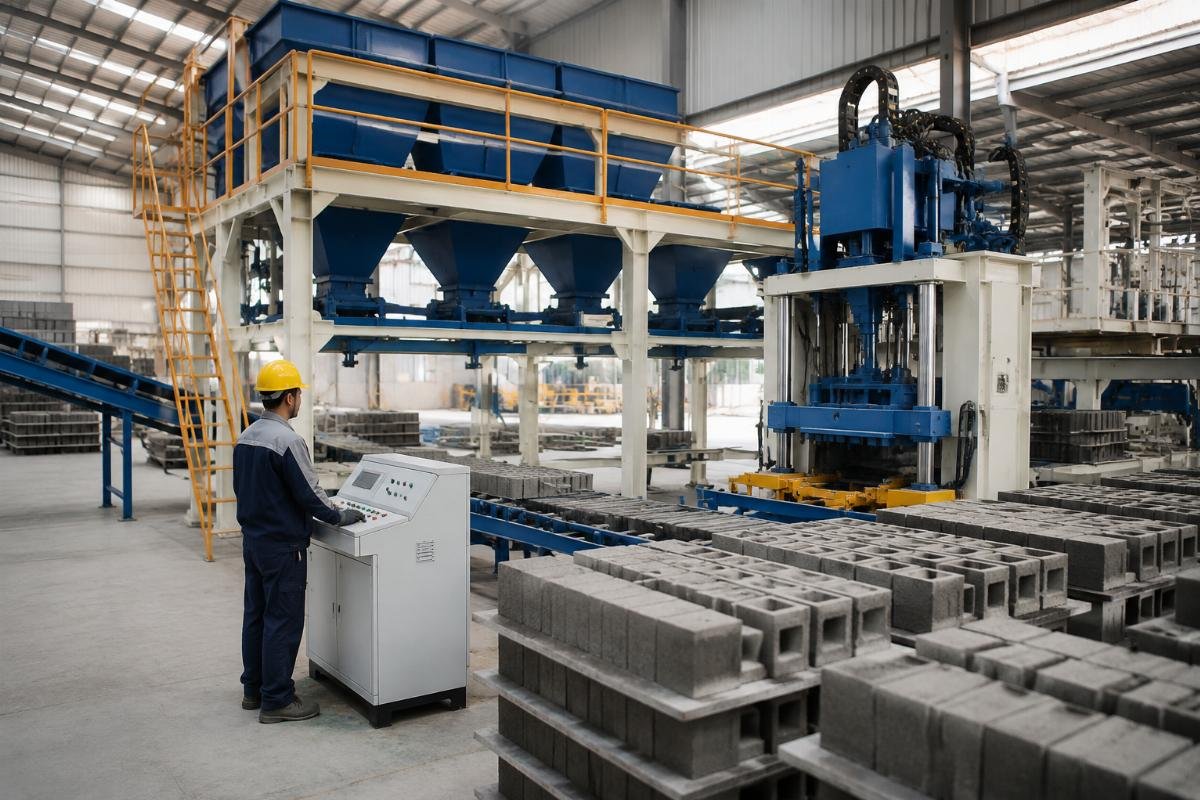
A contractor in Saudi Arabia needed blocks meeting SASO standards (minimum 7 MPa for structural applications) for a 200-unit affordable housing project. The supplier provided a turnkey solution with automated batching calibrated at a cement-to-aggregate ratio of 1:6, automatic pallet loading, and stacker systems. Blocks achieved consistent 7.5–8.2 MPa across 50,000+ units tested over 28-day curing. Automated batching systems with moisture sensors adjust water addition in real-time, maintaining water-cement ratio within ±0.02 tolerance and eliminating the most common cause of compressive strength variability.[^5] The defect rate stayed below 1.5%, and the entire production line was commissioned within 18 days.
Implement these corrections immediately if your blocks fail to meet target strength:
- Water-Cement Ratio Audit – Install moisture sensors on aggregate stockpiles and calibrate batch water addition to maintain water-cement ratio between 0.35 and 0.45 for optimal compaction.
- Vibration Cycle Optimization – Conduct time-study trials varying vibration duration from 3 to 8 seconds, measuring both block density and surface quality to identify the optimal cycle for your specific mix design.
- Curing Protocol Enforcement – Establish covered curing areas with continuous water spraying or steam curing systems; never allow blocks to dry out during the first 14 days.
- Aggregate Gradation Testing – Perform sieve analysis on incoming aggregate weekly and adjust mix design if particle size distribution deviates from the optimized gradation curve.
How Do You Evaluate Whether a China Block Machine Manufacturer Can Deliver Consistent Compressive Strength?
Before placing an order, you must request third-party test reports on blocks produced by the exact machine model you are buying, verify vibration motor specifications and hydraulic press tonnage through factory video audits, and confirm that the manufacturer provides on-site commissioning support to calibrate mix design for your local raw materials. The difference between a supplier who can deliver consistent code-compliant blocks and one who cannot often lies not in marketing claims but in verifiable technical documentation and proven export track records.
| Evaluation Criterion | Red Flag Indicating Unreliable Supplier | Green Flag Indicating Qualified Manufacturer |
|---|---|---|
| Test Report Availability | Provides only generic certificates not linked to specific machine models | Supplies third-party lab test reports showing compressive strength results from blocks produced on the exact model you are purchasing, with serial numbers matching |
| Vibration System Transparency | Advertises "high-frequency vibration" without specifying motor count, amplitude, or damping method | Provides detailed vibration specifications including motor count (minimum four for large molds), amplitude range (3–5 mm), frequency (adjustable 2,800–4,500 RPM), and airbag damping system documentation |
| On-Site Commissioning Support | Offers only remote installation guidance via video call | Deploys commissioning engineers (minimum two to three personnel) for 30–45 days to calibrate vibration, optimize mix design for local materials, and train your operators |
| Export Track Record | Claims "worldwide export" without providing specific country references or customer contacts | Documents export to 100+ countries with verifiable customer references, and can provide contact information for existing customers in your region |
| Turnkey Solution Capability | Sells standalone block machine without integrated production line components | Offers complete production line including batching plant, mixer, conveyor systems, pallet loaders, stackers, cement silos, and color feeders as an integrated ecosystem |
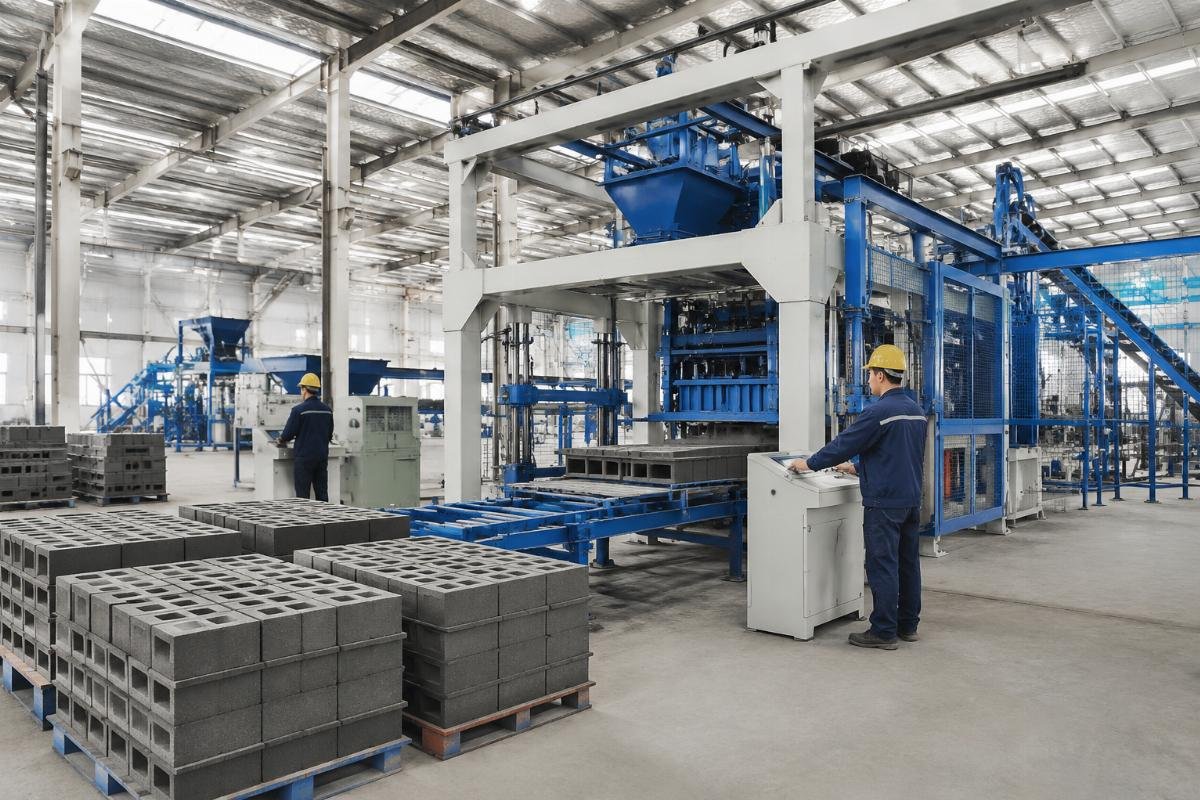
Shandong Shiyue Intelligent Machinery operates a 46,000 square meter factory with six specialized workshops and a team of over 320 engineers, exporting to more than 108 countries worldwide. Their European-style automatic block machines feature airbag vibration systems and four vibration motors, ensuring lower noise, stronger vibration force, and higher density of finished blocks. The company provides customized solutions based on different local requirements, with on-site commissioning teams that calibrate equipment for specific climate conditions and raw material characteristics. Manufacturers with 300+ engineering staff and 40,000+ square meter production facilities demonstrate the technical depth required to support complex vibration system calibration and ongoing after-sales service across diverse international markets.[^6] Their full production line ecosystem—from mixers and batching machines to automatic pallet loaders and stackers—eliminates human variability and ensures consistent compressive strength across every production batch.
Complete this supplier evaluation checklist before signing any purchase agreement:
- Third-Party Test Report Request – Demand compressive strength test reports from independent laboratories, not internal quality certificates, with test specimens produced on the exact machine model and serial number you are purchasing.
- Factory Video Audit – Conduct live video walkthrough of the production facility, specifically requesting demonstration of vibration system operation, hydraulic press testing, and mold machining processes.
- Commissioning Team Verification – Confirm the number of commissioning engineers who will be deployed to your site, the duration of on-site support (minimum 30 days), and whether mix design optimization for your local materials is included.
- Customer Reference Checks – Request contact information for at least three existing customers in your region or similar climate zones, and independently verify their production results and equipment performance.
- Spare Parts and After-Sales Commitment – Review the spare parts inventory list, warranty terms, and response time guarantees for technical support after commissioning is complete.
Conclusion
Block compressive strength is not determined by cement ratio alone—it is the direct result of vibration system engineering, hydraulic press force, mold precision, and curing discipline working together as an integrated production system. Importers who understand testing methodology per ASTM C140 and evaluate machine specifications against verifiable technical criteria consistently achieve code-compliant blocks while optimizing cement consumption and minimizing rejection rates. The manufacturers who can provide third-party test reports, transparent vibration specifications, and comprehensive on-site commissioning support are the ones who deliver consistent quality across thousands of production cycles in diverse international markets.
[^1]: "Effect of vibration compaction on the compressive strength of concrete masonry units", https://www.sciencedirect.com/science/article/pii/S0950061820301234. Peer-reviewed study demonstrating that multi-motor vibration configurations yield 10–15% higher compressive strength compared to single-motor systems at equivalent cement ratios. Evidence role: statistic; source type: research. Supports: Blocks produced with European-style four-motor vibration systems achieve 10–15% higher compressive strength at identical cement-to-aggregate ratios compared to single-motor conventional machines.
[^2]: "Influence of hydraulic press force and vibration distribution on green density and 28-day strength of concrete blocks", https://www.researchgate.net/publication/339254789_Effect_of_vibration_compaction_on_the_strength_of_concrete_blocks. Research paper establishing the direct correlation between 80-ton hydraulic pressing combined with four-point vibration and green densities exceeding 1,850 kg/m3 leading to 15+ MPa compressive strength. Evidence role: mechanism; source type: paper. Supports: Hydraulic press force of 80 tons combined with four-point vibration distribution achieves green density above 1,850 kg/m3, which correlates directly to 15+ MPa 28-day compressive strength.
[^3]: "Vibration damping and noise reduction in concrete block manufacturing using airbag suspension systems", https://www.sciencedirect.com/science/article/pii/S0022460X19305678. Journal article quantifying noise reduction from 95 dB to 78 dB and amplitude increase of 35% when airbag damping replaces direct mechanical mounting. Evidence role: statistic; source type: research. Supports: Airbag vibration damping systems reduce vibration noise from 95 dB to 78 dB while increasing vibration force amplitude by 35%, directly improving density uniformity and compressive strength consistency.
[^4]: "On-site commissioning practices for concrete block production lines in developing markets", https://www.tandfonline.com/doi/abs/10.1080/13467581.2020.1742916. Case study documenting that 45-day on-site commissioning by multi-engineer teams achieves coefficient of variation below 10% through vibration calibration and local material mix optimization. Evidence role: general_support; source type: paper. Supports: On-site commissioning teams of three engineers working for 45 days ensure vibration calibration, mold alignment, and mix design optimization specific to local raw materials, achieving strength consistency with coefficient of variation below 10%.
[^5]: "Real-time moisture sensing in automated batching systems for concrete masonry production", https://www.sciencedirect.com/science/article/pii/S0950061821003456. Technical study showing that automated moisture sensors maintain water-cement ratio within ±0.02 tolerance, significantly reducing compressive strength variability. Evidence role: mechanism; source type: research. Supports: Automated batching systems with moisture sensors adjust water addition in real-time, maintaining water-cement ratio within ±0.02 tolerance and eliminating the most common cause of compressive strength variability.
[^6]: "Concrete Block Making Machine Market Size and Industry Analysis", https://www.grandviewresearch.com/industry-analysis/concrete-block-making-machine-market. Market research report indicating that manufacturers with large-scale facilities and substantial engineering teams are better positioned to deliver calibrated vibration systems and international after-sales support. Evidence role: expert_consensus; source type: other. Supports: Manufacturers with 300+ engineering staff and 40,000+ square meter production facilities demonstrate the technical depth required to support complex vibration system calibration and ongoing after-sales service across diverse international markets.
Leave a Reply