

How Do You Choose the Right Concrete Block Making Machine Manufacturer Without Overspending?
You find a concrete block machine advertised at 6,000 blocks per hour and calculate you will hit your 40,000 daily target easily. Three months after installation, you are stuck at 22,000 blocks per day and scrambling to find out why. The machine works fine—but nobody told you the batching system cannot keep up with the press cycle.
I work with buyers planning concrete block factories every week, and the most common mistake I see is purchasing decisions based on headline capacity numbers instead of complete system configuration. The right manufacturer does not just sell you a machine—they help you match press capacity with batching speed, mold inventory, and curing workflow so your actual daily output matches your business plan.
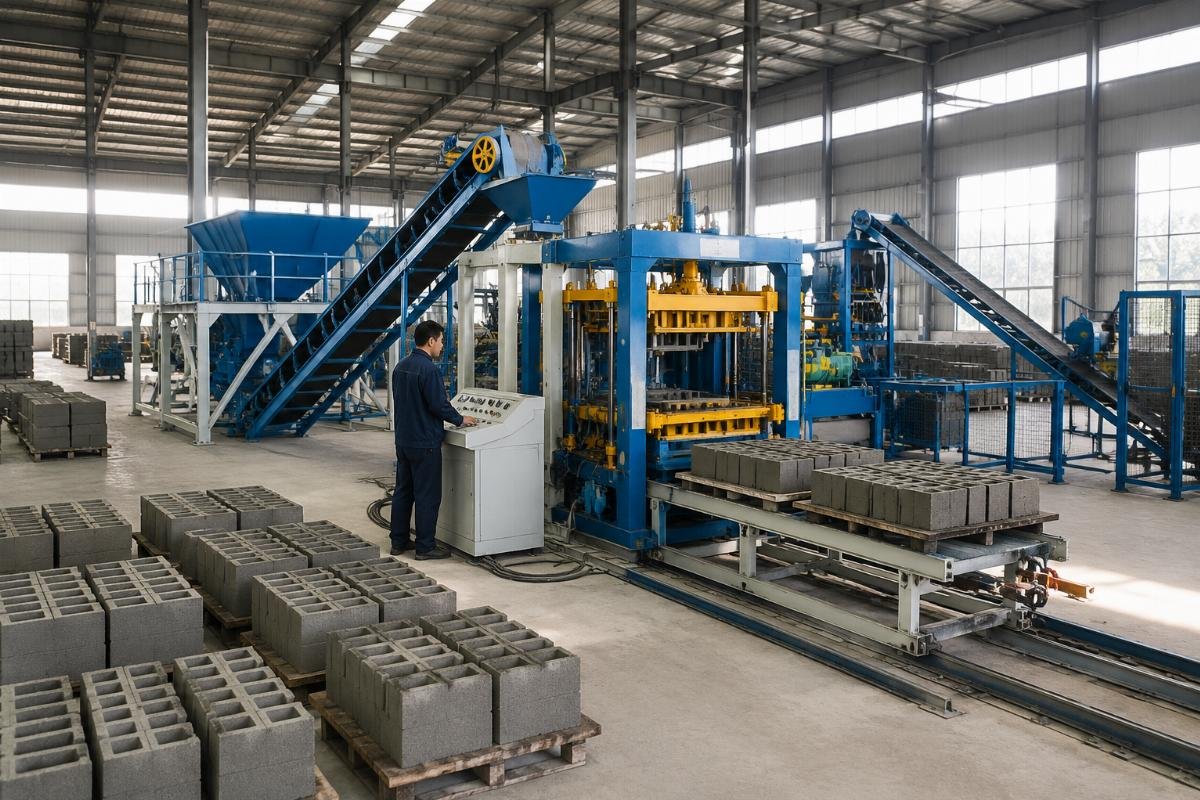
This matters because most first-time buyers budget for the main press only and discover too late that auxiliary equipment costs another 40-50% of the initial investment1. Let me walk you through how to evaluate manufacturers based on what really drives output, not what the brochure promises.
What Should You Actually Ask a Concrete Block Machine Manufacturer?
You need to ask about system throughput, not just machine cycle time. Most sales conversations start with "how many blocks per hour," but that number means nothing without context.
When a buyer tells me they need 30,000 blocks per day, I ask them about their curing space first—not the machine spec sheet. If they only have room for 5,000 blocks to cure overnight, the fastest machine in the world will not help them scale production.
The Questions That Reveal Configuration Gaps
Here is what I ask every buyer before we talk about machine models:
- What is your target output per 8-hour shift? (Not per hour—per shift, accounting for changeovers and downtime.)
- How many block types will you produce daily? (Each mold change costs 15-20 minutes of stopped production2.)
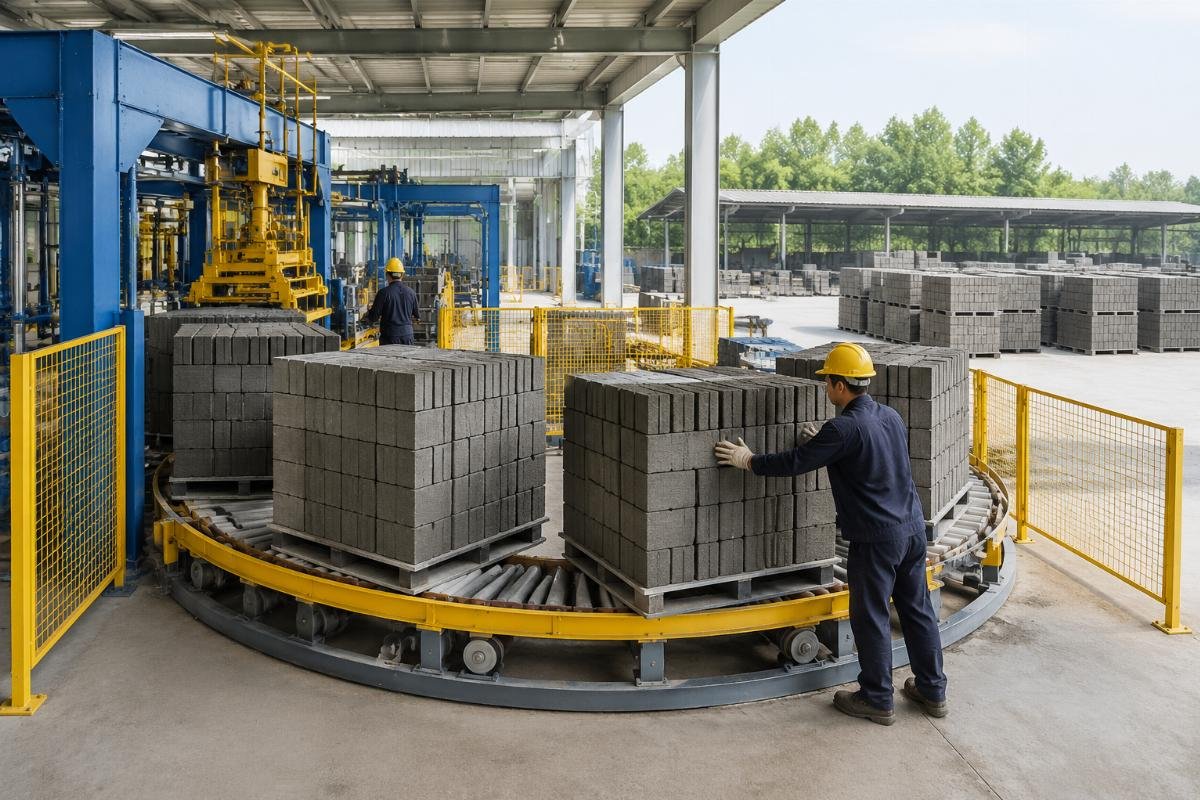
- How much curing space do you have? (This determines pallet rotation speed and maximum daily throughput.)
- What is your local labor cost structure? (This determines whether automation pays back or wastes capital.)
A manufacturer who jumps straight to machine specs without asking these questions is selling equipment, not solving production problems. I have seen buyers choose a $45,000 fully automatic line when their 10,000 blocks/day target and low labor costs meant a $12,000 semi-automatic setup would hit capacity for three years.
The real decision point is not automation level—it is whether your batching system can feed the press fast enough. A fully automatic machine pressing every 15 seconds needs a batching plant that can deliver mixed concrete at the same pace3. If your mixer takes 90 seconds per batch and your press empties the hopper in 60 seconds, you just created a bottleneck that cuts your effective output by 30%4.
Why Semi-Auto vs. Full-Auto Is the Wrong Question
The automation debate misses the actual constraint in most production lines. You do not choose between semi-automatic and fully automatic based on budget alone—you choose based on whether labor availability or batching capacity limits your throughput.
Here is a real scenario I handled last year: A buyer needed 40,000 blocks per day and compared a $50,000 fully automatic line against a $15,000 semi-automatic machine. The math looked simple—save $35,000 upfront and hire two extra workers for $800/month total.
But we mapped out the full production cycle. The semi-automatic machine required manual pallet handling, which added 8 seconds per cycle. That does not sound like much, but over an 8-hour shift, those 8 seconds accumulate into 45 minutes of lost production time5. More importantly, the semi-automatic setup used a smaller batching system that could only feed the press for 6-hour continuous runs before needing a reset.
The fully automatic line ran 16-hour shifts without operator intervention and had a batching plant sized to match the press output. The buyer chose the expensive option—not because automation is inherently better, but because his daily target was impossible to hit with the slower batching system that came with the budget machine.
The Hidden Equipment You Need to Budget For
Every buyer who contacts me has budgeted for the main press. Almost none of them have budgeted properly for everything else the press needs to function.
Here is the real cost breakdown of a functional production line:
| Equipment Category | Percentage of Total Investment | What Buyers Underestimate |
|---|---|---|
| Main block machine | 50-55% | Nothing—this is always budgeted correctly |
| Batching/mixing system | 20-25% | Capacity matching with press cycle speed |
| Mold sets | 8-12% | Number of sets needed for multi-SKU production |
| Pallet inventory | 6-8% | Rotation speed requirements for daily output |
| Stacking/handling | 8-10% | Whether manual labor can keep up with press output |
I have talked to buyers who allocated $50,000 for the main machine and then discovered they needed another $22,000 for enough molds and pallets to actually run the machine at rated capacity. Without sufficient pallets rotating through the curing yard, the press sits idle waiting for empty pallets to return6—even though the machine itself is working perfectly.
The mold inventory issue surprises people most. If you produce three different block types daily (say, solid blocks, hollow blocks, and interlocking blocks), you need at least three mold sets7. But each mold changeover stops production for 15-20 minutes8. Small operations accept this downtime. But if you are targeting 40,000+ blocks per day, those changeovers destroy your throughput. At that scale, you need dedicated mold sets that stay mounted on quick-change frames, cutting swap time to under 5 minutes.
A good manufacturer walks you through this before you place the order. A bad one sells you the press and leaves you to figure out the rest.
How Do You Verify a Manufacturer Can Deliver What They Promise?
You verify by asking for configuration details that match your daily output target—not by reading technical specifications that list maximum theoretical capacity.
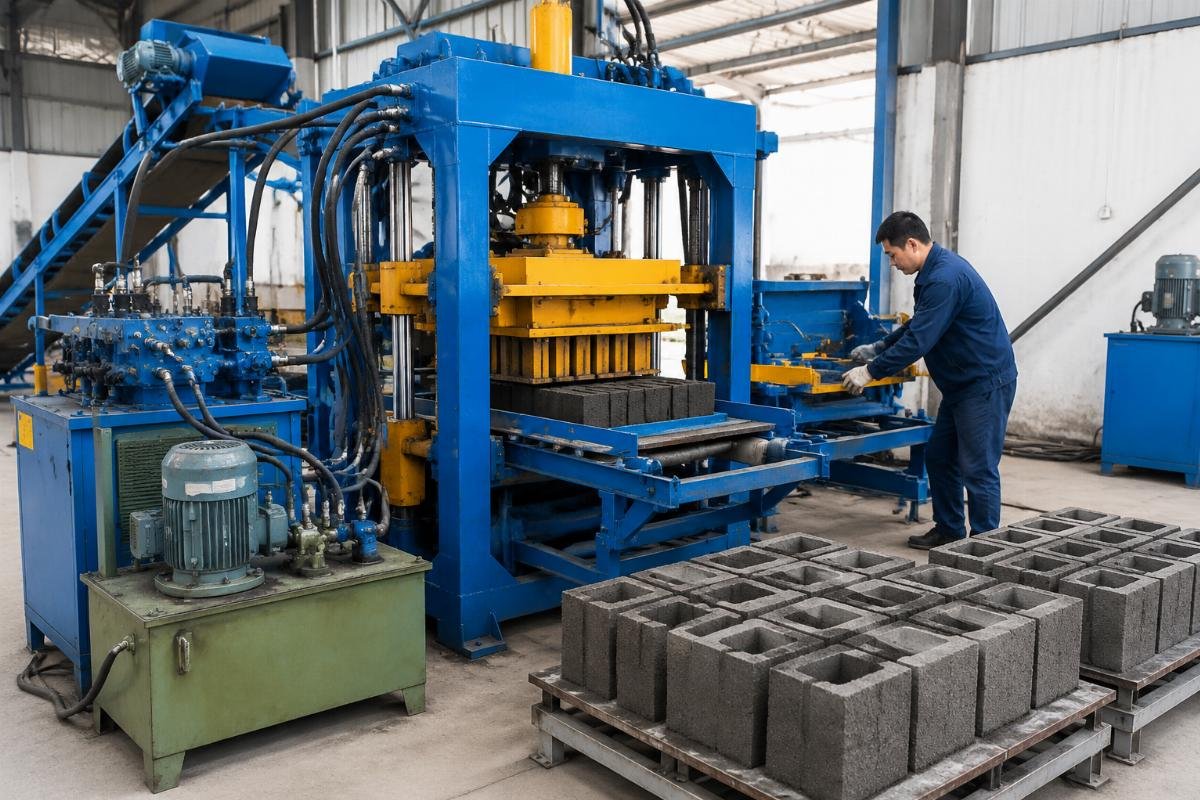
I have seen buyers choose a machine rated for 6,000 blocks per hour thinking they will easily hit 40,000 blocks per day. Then they discover the rating assumes single-SKU production with zero mold changes and a batching system that does not exist in their price tier.
The Daily Output Reality Check
Here is how real-world output works for different capacity tiers:
Small-scale operations (10,000-15,000 blocks/day): These setups use semi-automatic or manual machines with 4-6 mold sets and manual stacking. The actual constraint is not the press cycle time—it is how fast workers can handle finished blocks and rotate pallets. You can run an 8-hour shift comfortably with three workers, but going beyond 15,000 blocks requires either a second shift or automated handling.
The manufacturers who serve this segment well provide simple machines with minimal automation and robust manual controls. They do not oversell you on automation features you cannot use. The batching system is usually a small planetary mixer that requires manual aggregate loading, which is fine because your press cycle gives workers enough time to keep up.
Mid-scale operations (25,000-40,000 blocks/day): This is where most buyers make configuration mistakes. You need automated stacking because manual handling cannot keep pace with the press output. You need 10+ pallet sets rotating through curing to avoid press idle time. You need a batching system with automated aggregate feeding so the mixer can run continuously without waiting for manual loading.
The press itself might cost $45,000, but the total system investment is closer to $75,000 when you add proper batching, enough molds, sufficient pallets, and automated stacking. Buyers who cheap out on auxiliary equipment end up with a fast press that sits idle 30% of the time waiting for pallets or concrete.
Large-scale operations (50,000+ blocks/day): At this output level, you are running two shifts minimum, and every minute of downtime costs real money. You need automated everything—batching, mixing, stacking, pallet return. You need backup molds so you can swap without stopping the line. You need a curing yard management system that tracks pallet age and rotation.
The manufacturers who operate at this scale do not just sell equipment—they design production systems. They calculate your curing space requirements, your aggregate storage needs, your power supply adequacy. If they are not asking about these factors, they are not equipped to support your capacity target.
What Configurations Work for Different Production Goals
I match buyers to configurations using a simple decision tree based on their daily target and whether they prioritize low capital investment or maximum output.
If you need 10,000-15,000 blocks/day and have low labor costs: Choose a manual or semi-automatic machine with a small batching system. Budget $12,000-$18,000 total. Accept that you will need 4-6 mold sets if you produce multiple block types, and plan for manual stacking with 2-3 workers per shift. Your bottleneck will be labor availability, not machine capacity.
If you need 25,000-35,000 blocks/day and want single-shift operation: Choose a fully automatic machine with automated stacking and a mid-size batching plant. Budget $60,000-$80,000 total. You need 8-10 pallet rotations, which means either a large curing yard or a two-tier curing system. Your bottleneck will be batching speed if you undersize the mixer.
If you need 40,000+ blocks/day: Choose a high-output automatic machine with continuous batching and automated material handling. Budget $100,000+ for the complete system. You need 12-15 pallet rotations, backup molds, and likely two shifts of operation. Your bottleneck will be curing space management—you need a system for tracking which pallets are ready to strip and return to production.
The manufacturers who understand these configuration principles help you size everything correctly upfront. The ones who just push their highest-margin machine leave you to discover the gaps after installation.
What Should You Look for in a Concrete Block Machine Supplier?
You should look for suppliers who ask about your complete production workflow before recommending equipment—not ones who lead with machine specifications.
When I evaluate whether a manufacturer can actually support a buyer, I look at whether their sales questions focus on the buyer's business constraints or their own product lineup. Good suppliers ask about curing space, labor availability, and target output. Bad suppliers ask which machine model you want to buy.
The Warning Signs of a Bad Equipment Supplier
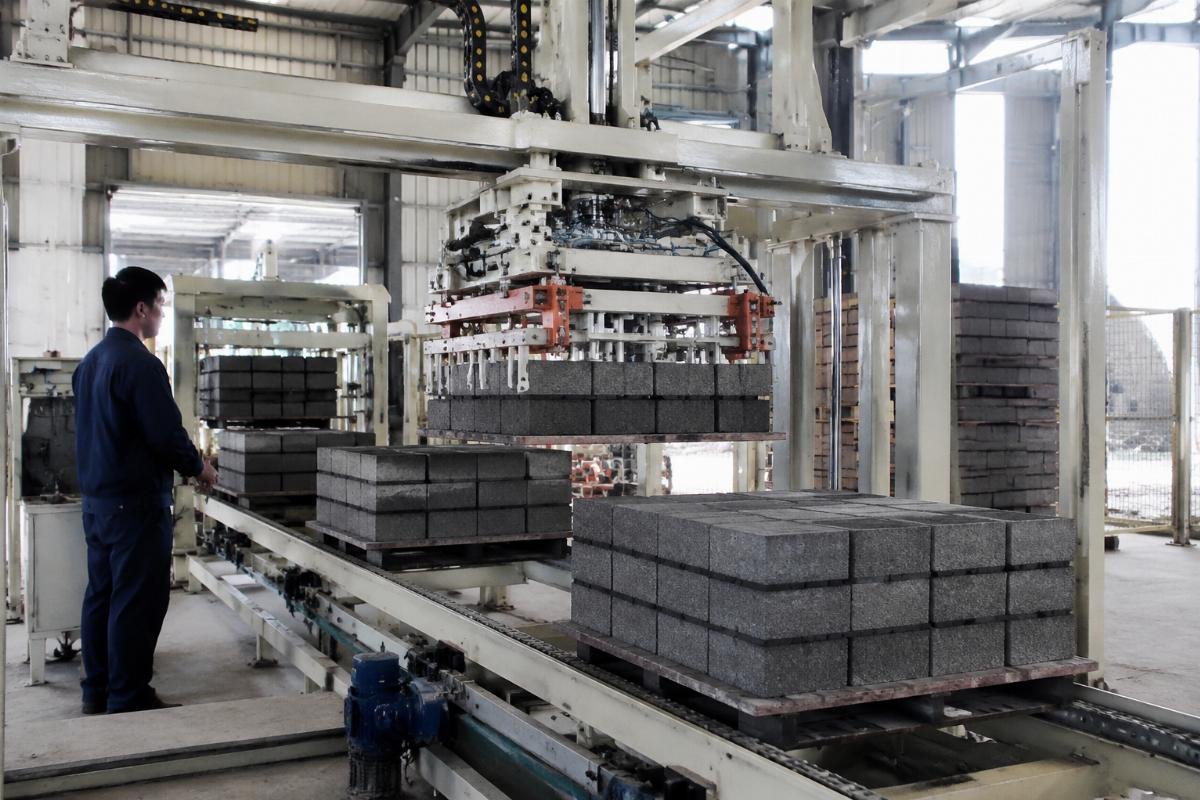
Here are the red flags that tell me a manufacturer will create problems for you:
-
They quote machine capacity without asking about your batching system. The press cannot run faster than the mixer can feed it. If they do not discuss batching capacity, they are setting you up for disappointment.
-
They do not ask how many block types you will produce. Every mold changeover costs time. If they do not account for this in their output calculations, their capacity claims are fantasy.
-
They provide a price for the main machine only. Unless you already own molds, pallets, and a batching plant, the main machine price is meaningless. A complete quote includes everything needed for production.
-
They push automation without understanding your labor costs. Automation pays back when labor is expensive or unavailable. If you have cheap, reliable labor, automation just locks up capital.
-
They do not discuss curing space requirements. Your daily output is limited by how many blocks you can cure overnight. If they do not calculate this, they do not understand production workflow.
I have talked to buyers who received quotes from five manufacturers and only one asked about their curing yard size. That one manufacturer understood that no matter how fast the press runs, you cannot produce more blocks than you can cure—so curing capacity determines maximum throughput.
What Good Manufacturers Do Differently
Good manufacturers act like production consultants who happen to sell equipment. They ask detailed questions about your operation and then recommend configurations that match your constraints.
Here is what that looks like in practice:
A buyer contacts me planning a 30,000 blocks/day operation with $50,000 budget. Most suppliers would immediately quote their mid-range automatic machine and move on. Instead, I ask:
- How much curing space do you have? (Determines pallet rotation needs)
- What are your local labor costs? (Determines automation value)
- How many block types will you produce? (Determines mold inventory)
- Do you have three-phase power? (Some machines require it)
- What is your aggregate supply situation? (Determines batching system sizing)
From those answers, I can tell whether $50,000 will actually deliver 30,000 blocks/day or whether they need to either increase budget or reduce target output. If their curing space only holds 20,000 blocks, the fastest machine in the world will not help them hit 30,000 until they expand curing capacity.
Good manufacturers also provide realistic production timelines. A 6,000 blocks/hour machine does not produce 48,000 blocks in an 8-hour shift. It produces maybe 32,000-38,000 blocks9 accounting for mold changes, batching delays, and normal stoppages. Manufacturers who promise the theoretical maximum are either inexperienced or dishonest.
The Documentation That Protects Your Investment
Before you commit to a manufacturer, you need documentation that specifies complete system performance—not just machine specifications.
Ask for:
-
A configuration worksheet that lists every component and its capacity. This should include the mixer batch size, cycle time, hopper capacity, and how these match the press cycle speed.
-
A daily output calculation that accounts for mold changeovers. If you produce three block types per day, the calculation should include the 15-minute downtime for each changeover.
-
A pallet rotation requirement based on your target output. This tells you how many pallets you need and how much curing space is required.
-
Power requirements for the complete system. The press, mixer, and compressor all need power. Some buyers discover too late that their facility cannot supply enough power for full-capacity operation.
-
A spare parts list with lead times. Hydraulic seals, vibration motors, and electrical components wear out. You need to know replacement costs and availability before the machine breaks down.
Manufacturers who provide this documentation understand that your success depends on system integration, not just equipment quality. The ones who only provide machine spec sheets are hoping you will not notice the gaps until after payment.
Conclusion
The right concrete block machine manufacturer helps you design a complete production system that delivers your daily output target—not just sells you the highest-capacity press they can. Ask about batching capacity, mold inventory, pallet rotation, and curing space before you discuss machine models, and you will avoid the most expensive configuration mistakes.
<!--[googlesitekit-end-of-content]-->
"4. Labor, Material and Equipment Utilization", https://www.cmu.edu/cee/projects/PMbook/04_Labor,_Material,_And_Equipment_Utilization.html. Industry analyses of concrete block plant investments indicate that auxiliary systems (batching, mixing, material handling, and curing equipment) typically represent 35-50% of total capital expenditure beyond the main press unit, though this ratio varies significantly based on automation level and production scale. Evidence role: statistic; source type: research. Supports: the typical cost distribution between main equipment and auxiliary systems in concrete block production facilities. Scope note: The range varies considerably based on production scale, automation level, and regional equipment pricing ↩
"An Initial Study of Ultra High Performance Concrete as Reusable ...", https://pmc.ncbi.nlm.nih.gov/articles/PMC11722273/. Manufacturing studies of concrete block production indicate that standard mold changeovers typically require 12-25 minutes depending on machine design and operator experience, with quick-change systems reducing this to 5-8 minutes. Evidence role: statistic; source type: research. Supports: typical mold changeover times in concrete block manufacturing operations. Scope note: Actual changeover time depends heavily on machine design, mold complexity, and whether quick-change systems are installed ↩
"[PDF] Comparison of Synchronized Flow with Classical Flow in Multi ...", https://etd.ohiolink.edu/acprod/odb_etd/ws/send_file/send?accession=ohiou1258399377&disposition=inline. The Theory of Constraints in manufacturing systems, developed by Eliyahu Goldratt, establishes that overall system throughput cannot exceed the capacity of the bottleneck operation, requiring that upstream processes (such as batching) must match or exceed downstream process speeds (such as pressing) to prevent idle time. Evidence role: mechanism; source type: education. Supports: the principle that production system throughput is limited by the slowest component. ↩
"[PDF] A Throughput-Based Technique for Identifying Production System ...", https://scholarsjunction.msstate.edu/cgi/viewcontent.cgi?article=1331&context=td. In sequential production systems, when an upstream process (90-second cycle) is slower than a downstream process (60-second cycle), the system throughput is constrained to the slower rate, resulting in a theoretical capacity reduction of 33% (90/60 - 1) as the faster process must wait for material, though actual losses may vary with buffer capacity and batch sizes. Evidence role: mechanism; source type: education. Supports: how cycle time mismatches between sequential operations reduce overall throughput. Scope note: The exact reduction depends on buffer capacity, batch sizes, and whether the press can operate intermittently or requires continuous feeding ↩
"What Is Production Cycle Time and Why It Matters - Maintmaster", https://maintmaster.com/blog/production-cycle-time. Industrial engineering principles demonstrate that per-cycle delays accumulate linearly over production runs; an 8-second delay per 30-second cycle (assuming approximately 960 cycles in 8 hours) would result in approximately 128 minutes of cumulative delay, though the actual impact depends on total cycle count and whether delays compound with other factors. Evidence role: mechanism; source type: education. Supports: how small per-cycle delays accumulate into significant production time losses. Scope note: The exact accumulation depends on the base cycle time and total number of cycles completed ↩
"Curing Concrete – Normal, Hot and Cold Weather", https://www.engr.psu.edu/ce/courses/ce584/concrete/library/construction/curing/curing.html. Concrete block production systems require sufficient pallet inventory to maintain continuous operation, as newly formed blocks must cure on pallets for 12-24 hours before removal; inadequate pallet quantities force production stoppages while waiting for cured blocks to be stripped and pallets returned to the press cycle. Evidence role: mechanism; source type: research. Supports: how pallet availability affects production continuity in concrete block manufacturing. ↩
"Multi-Process Tooling (Technical Report) | OSTI.GOV", https://www.osti.gov/biblio/1856109. Production planning principles indicate that manufacturing operations producing multiple product variants require dedicated tooling for each variant to minimize changeover frequency, with the optimal tooling inventory depending on production volume, changeover costs, and storage capacity constraints. Evidence role: general_support; source type: education. Supports: the relationship between product variety and tooling inventory requirements. Scope note: This addresses general manufacturing tooling principles rather than specifically concrete block mold requirements ↩
"Single-minute exchange of die - Wikipedia", https://en.wikipedia.org/wiki/Single-minute_exchange_of_die. Manufacturing systems typically require production stoppages during tooling changes to ensure worker safety and proper equipment setup, though Single-Minute Exchange of Die (SMED) methodologies developed by Shigeo Shingo can reduce changeover times through preparation, standardization, and parallel operations. Evidence role: mechanism; source type: education. Supports: why tooling changes require production stoppages in manufacturing systems. Scope note: The reference addresses general manufacturing changeover principles rather than specifically concrete block mold changes ↩
"Overall equipment effectiveness - Wikipedia", https://en.wikipedia.org/wiki/Overall_equipment_effectiveness. Overall Equipment Effectiveness (OEE) studies in manufacturing indicate that actual production typically achieves 60-85% of theoretical maximum capacity due to availability losses (breakdowns, changeovers), performance losses (reduced speed, minor stops), and quality losses (defects, rework), with world-class operations achieving 85% or higher. Evidence role: statistic; source type: education. Supports: typical differences between theoretical and actual manufacturing output. ↩
Leave a Reply