

Interlocking Paver Belt Conveyor for Aggregates Manufacturer
Higher belt speed does not equal higher efficiency when handling abrasive rock; it often equals exponentially faster wear.
Selecting the right Belt Conveyor for Aggregates requires matching belt specifications to raw material characteristics such as hardness and abrasiveness rather than focusing solely on capacity. This approach prevents costly downtime and frequent replacements in interlocking paver production lines.
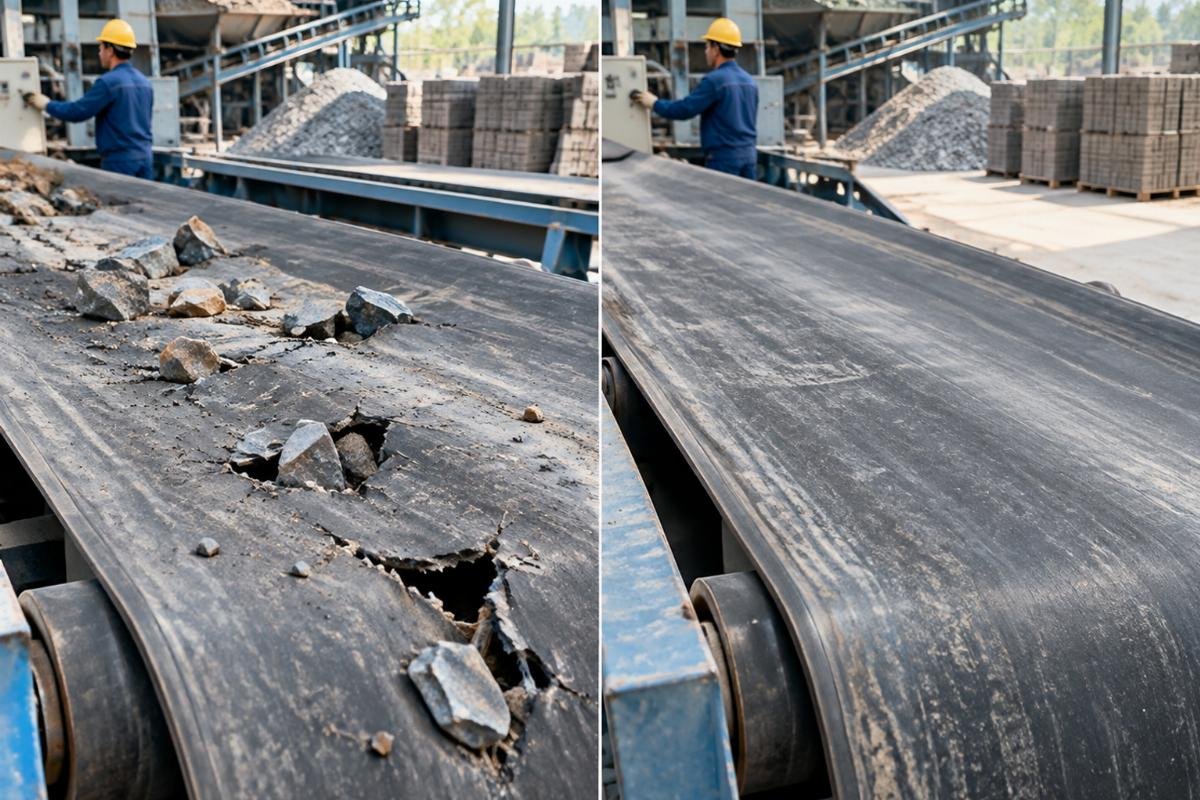
I still remember the video call from a client in West Africa. It was late at night, and the screen showed a torn conveyor belt lying idle next to a stack of unfinished interlocking pavers. The plant had been running for less than three months. We had shipped a standard configuration based on general capacity requirements, assuming the local stone was similar to the limestone samples we usually see. It was not. The aggregate was basalt, significantly harder and sharper. The standard rubber cover could not withstand the puncture force of the angular rocks. The downtime lasted nearly two weeks while waiting for a replacement belt, and the frequency of belt changes tripled compared to our initial projections. That incident changed how I approach every Belt Conveyor for Aggregates inquiry. I no longer look at throughput numbers first. I ask about the rock.
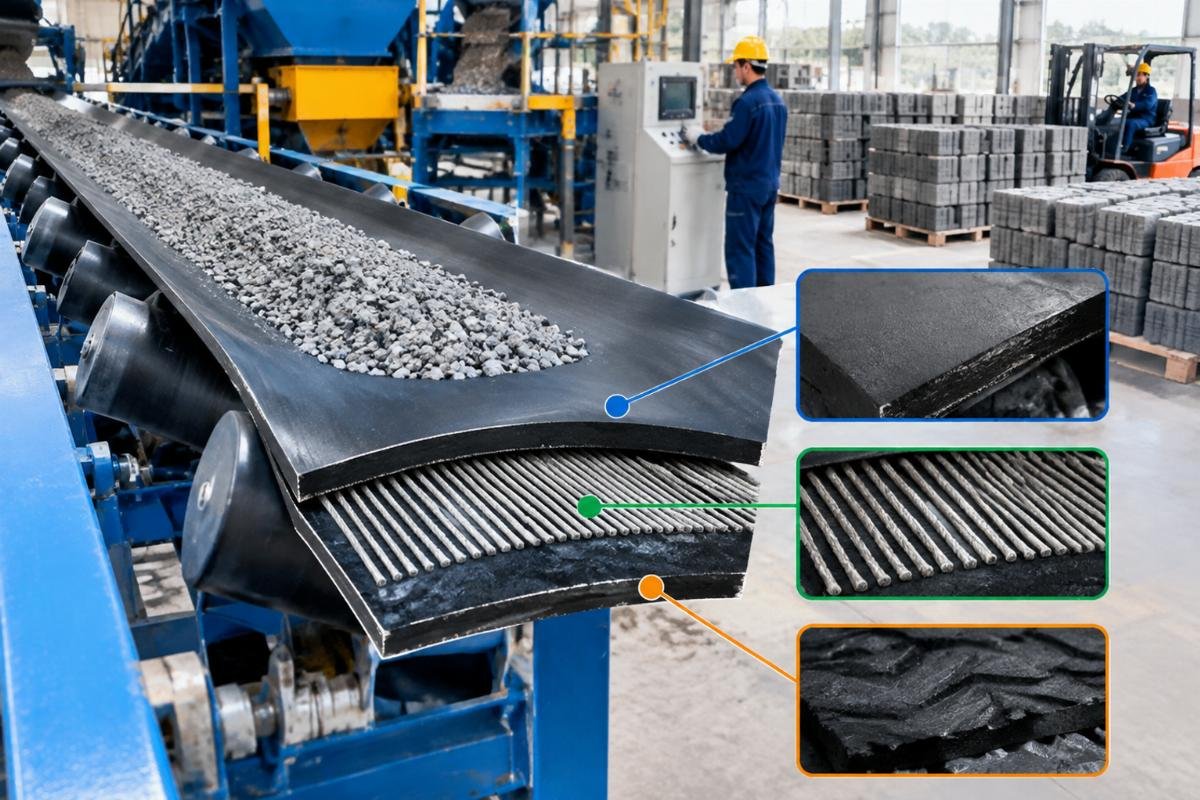
This shift in perspective is critical for anyone investing in an interlocking paver production line. The conveyor is not just a transport link; it is the lifeline that feeds the mixer and the molding machine. If it fails, the entire plant stops. Understanding the technical parameters that dictate belt longevity is essential for maintaining operational continuity and protecting your return on investment.
Why Did the Conveyor Fail in the First 90 Days?
The failure in West Africa was not a manufacturing defect. It was a mismatch between the belt construction and the aggregate type. Many plant owners assume that a standard rubber belt is sufficient for all types of stone. This is a dangerous misconception. The Mohs hardness scale of the aggregate dictates the necessary cover thickness and reinforcement type [NEED_CITE: correlation between aggregate hardness and belt wear rates].
Basalt, which is common in many volcanic regions, has a high silica content and sharp fracture points. When these rocks drop onto a moving belt from a crusher or screening unit, they act like tiny chisels. A standard belt designed for softer limestone or gravel will suffer from deep gouging and eventual puncture. In contrast, a belt designed for hard rock features a thicker top cover and often includes a fabric or steel-cord carcass to resist impact.
In another case, a project in Southeast Asia faced a different issue. The aggregate here was not hard, but it had high moisture content due to clay contamination. The fine, wet clay stuck to the belt and built up on the return idlers. This buildup caused the belt to slip and mistrack, leading to edge damage. The maintenance team had to clean the system every few weeks instead of every few months. The solution was not a harder belt, but a chevron-patterned surface to improve grip and reduce material carryback, along with improved cleaning systems.
These examples highlight that the "right" Belt Conveyor for Aggregates is defined by the specific behavior of the material it carries. Hardness causes puncture. Moisture causes slippage and buildup. Abrasiveness causes thinning. Identifying the primary threat allows for precise specification.
What Are the Critical Parameters for Aggregate Handling?
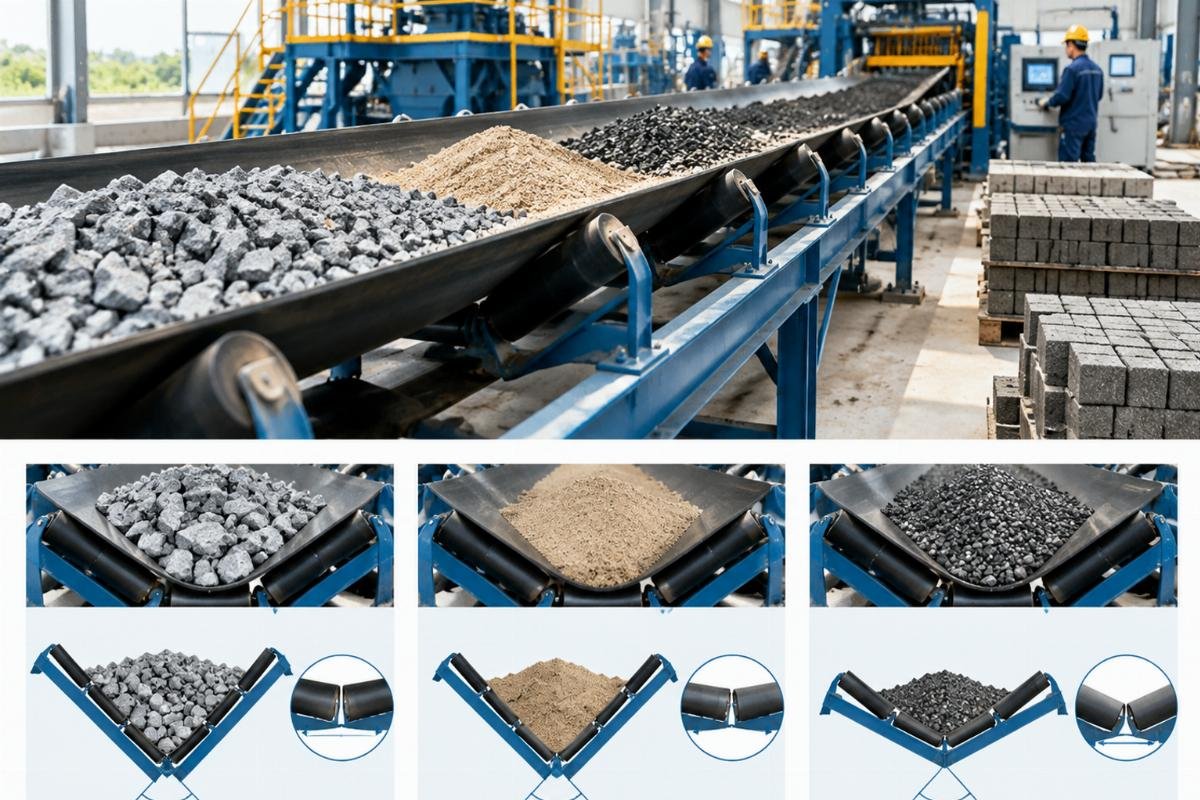
When evaluating options for a Belt Conveyor for Aggregates, three physical properties of the stone must be analyzed: hardness, particle size distribution, and moisture content. These factors directly influence the selection of belt cover grade, carcass type, and troughing angle.
Rock hardness is typically measured on the Mohs scale. For aggregates with a hardness above 6, such as granite or basalt, a standard rubber cover will wear out rapidly. In these cases, a specialized abrasion-resistant compound is required. Some applications even demand steel-cord belts to prevent longitudinal ripping from sharp, heavy stones. The impact resistance of the belt must also match the drop height from the feeder or crusher. A higher drop requires a thicker bottom cover or impact bars beneath the belt to absorb the energy.
Particle size distribution affects the idler spacing and belt width. Large, irregular stones require wider idler spacing to prevent them from getting stuck between rollers, which can cause severe belt damage. Conversely, fine sand or small gravel can leak through wide gaps, requiring tighter idler spacing or sealed skirts. The troughing angle, which determines the shape of the belt as it carries material, must be selected based on the flowability of the aggregate. Steeper angles allow for narrower belts but may cause spillage if the material is too coarse or dry.
| Parameter | Soft Aggregate (Limestone/Gravel) | Hard/Abrasive Aggregate (Basalt/Granite) | Wet/Sticky Aggregate (Clay-rich) |
|---|---|---|---|
| Belt Cover Grade | Standard Rubber | Heavy-Duty Abrasion Resistant | Anti-stick/Chevron Pattern |
| Carcass Type | Fabric Ply | Steel Cord or High-Tensile Fabric | Fabric Ply with Low Friction Bottom |
| Idler Spacing | Standard | Wider to prevent jamming | Standard with Self-Cleaning Idlers |
| Trough Angle | Standard (35-45 degrees) | Standard | Shallower to reduce pressure |
This table illustrates how the same conveyor frame can require completely different belt specifications depending on the material. Ignoring these differences leads to the kind of premature failure seen in the West Africa case. At Shiyue, our turnkey solution includes a customized conveyor design based on local aggregate analysis. We do not just ship a standard belt; we engineer the handling system to match the stone. This ensures durability and minimizes downtime from day one.
How to Calculate the Right Belt Width and Speed?
Balancing throughput with wear resistance is key to optimizing the ROI of your Belt Conveyor for Aggregates. A common mistake is to maximize belt speed to increase capacity. However, higher speeds increase the kinetic energy of the particles hitting the belt, accelerating wear. It also increases the risk of material spillage and dust generation.
The correct approach is to calculate the required belt width based on the maximum lump size and the desired tonnage per hour. The belt should be wide enough to carry the largest stones without them touching the side skirts, which causes friction and tearing. Once the width is determined, the speed can be adjusted to meet the capacity requirement. For abrasive materials, a slower speed with a wider belt is often more economical in the long run than a fast, narrow belt.
The calculation also involves the troughing angle. A steeper trough allows more material to be carried on a narrower belt, but it increases the stress on the belt edges. For interlocking paver production, where consistency is crucial, a moderate trough angle ensures stable material flow into the mixer. This prevents segregation of fine and coarse particles, which can affect the quality of the final paver product.
Proper calculation extends beyond just the belt itself. It includes the drive pulley diameter and the take-up system. The drive pulley must be large enough to prevent excessive bending stress on the belt carcass, especially for steel-cord belts. The take-up system must accommodate the elongation of the belt under load and temperature changes. Failure to account for these factors can lead to slippage or premature fatigue of the belt joints.
Which Maintenance Practices Extend Belt Life?
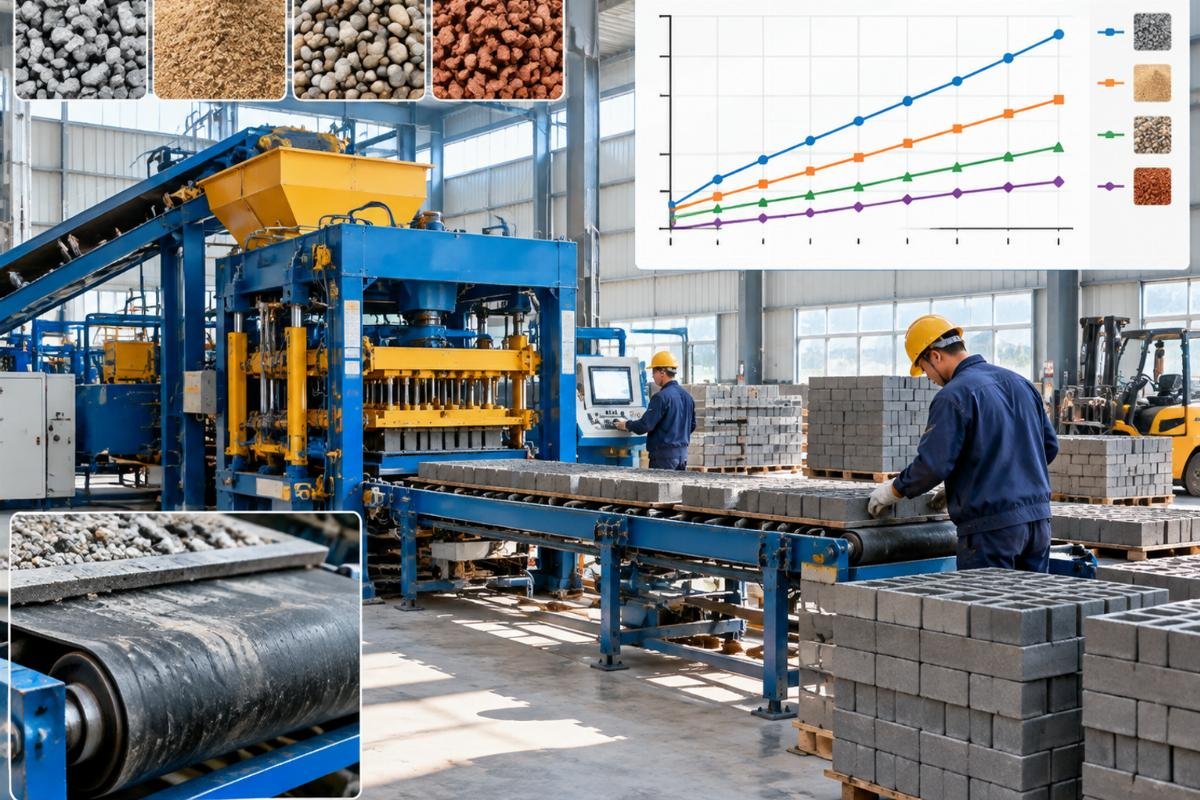
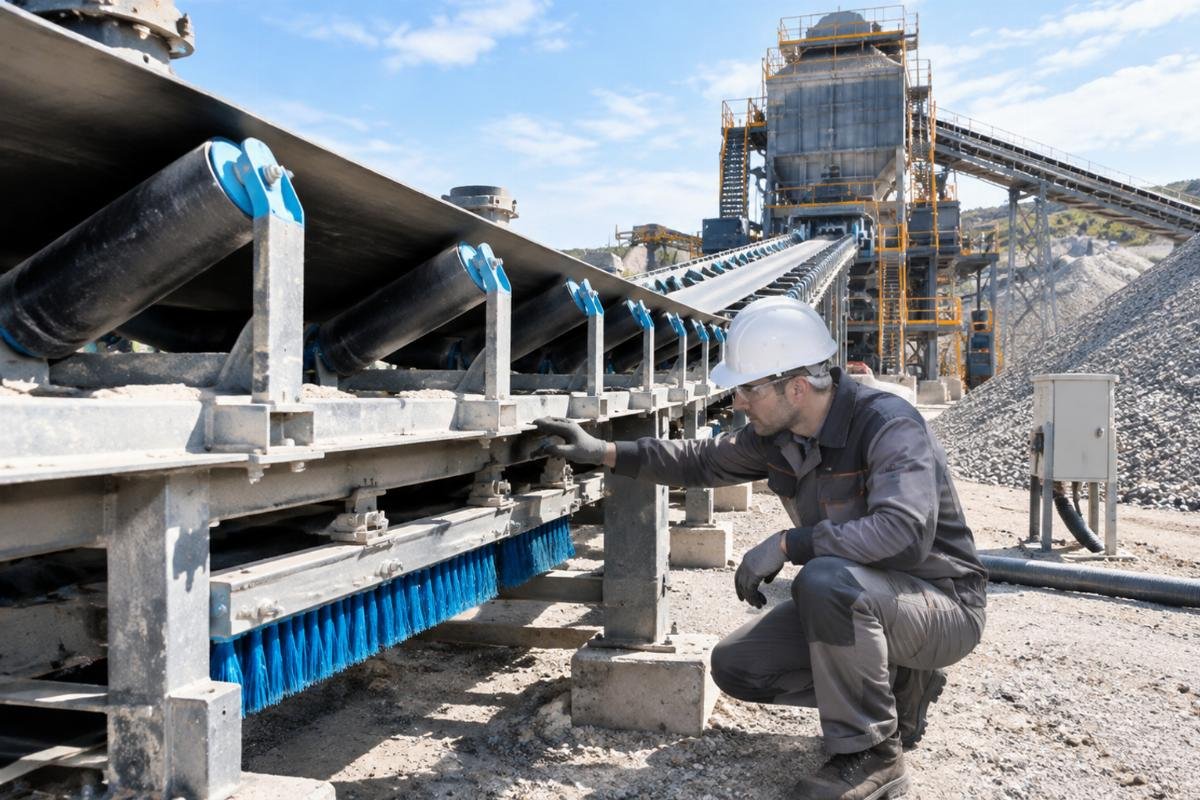
Even the best-designed Belt Conveyor for Aggregates requires regular maintenance to achieve its full lifespan. The most critical component to monitor is the idler set. Misaligned or seized idlers create friction points that can quickly wear through the belt bottom. Regular inspection and lubrication of idlers are essential. In dusty environments, sealed bearings are recommended to prevent contamination.
Cleaning systems are equally important. Buildup of material on the return side of the belt can cause mistracking and imbalance. Scrapers and brush cleaners should be adjusted regularly to ensure they make proper contact with the belt without causing excessive wear. For sticky materials, secondary cleaning systems such as water sprays or rotary brushes may be necessary.
Another key practice is monitoring belt tension. Over-tensioning puts unnecessary stress on the belt carcass and bearings, while under-tensioning leads to slippage and poor tracking. Automatic take-up systems can help maintain optimal tension, but manual checks are still required during routine maintenance stops. Inspecting the belt edges for signs of rubbing against the frame or skirts can prevent minor issues from becoming major tears.
In the MENA region, a precast plant switched from a standard rubber belt to a reinforced steel-cord belt for handling sharp angular granite. The initial cost was higher, but the lifespan extended from less than a month to over a year. The maintenance team also implemented a strict weekly inspection schedule for idlers and cleaners. This combination of proper material selection and disciplined maintenance transformed their operational reliability.
Conclusion
Selecting a conveyor is not about buying a standard part; it is about engineering a solution for your specific stone.
The right Belt Conveyor for Aggregates matches the belt structure to the hardness, size, and moisture of your raw material. This prevents the costly failures that plague poorly specified plants. By focusing on these technical details, you ensure that your interlocking paver production line runs smoothly and profitably.
Leave a Reply