

QT15 Block Machine Belt Conveyor Preventive Maintenance Schedule for Sale
Most belt failures are not material defects but maintenance oversights.
A structured Belt Conveyor Preventive Maintenance Schedule is the single most effective tool to extend component life and prevent unexpected production halts in aggregate handling. By implementing daily visual inspections, weekly tension adjustments, and monthly roller lubrication, plant managers can significantly reduce unplanned downtime and spare part costs. This approach shifts the operational model from reactive repair to proactive care, ensuring consistent output for QT15 block production lines.
I started my career in logistics, managing shipping documents and customs clearance for block machine components. My days were filled with tracking containers and worrying about damaged parts arriving at ports in Lagos or Addis Ababa. It was only after moving into sales and spending time on installation sites that I understood why so many spare parts orders were urgent replacements rather than routine stock-ups. The root cause was rarely the quality of the steel or rubber; it was the absence of a consistent Belt Conveyor Preventive Maintenance Schedule.
Why Do Belt Conveyors Fail Prematurely in Block Plants?
Dust and misalignment are silent killers of conveyor systems.
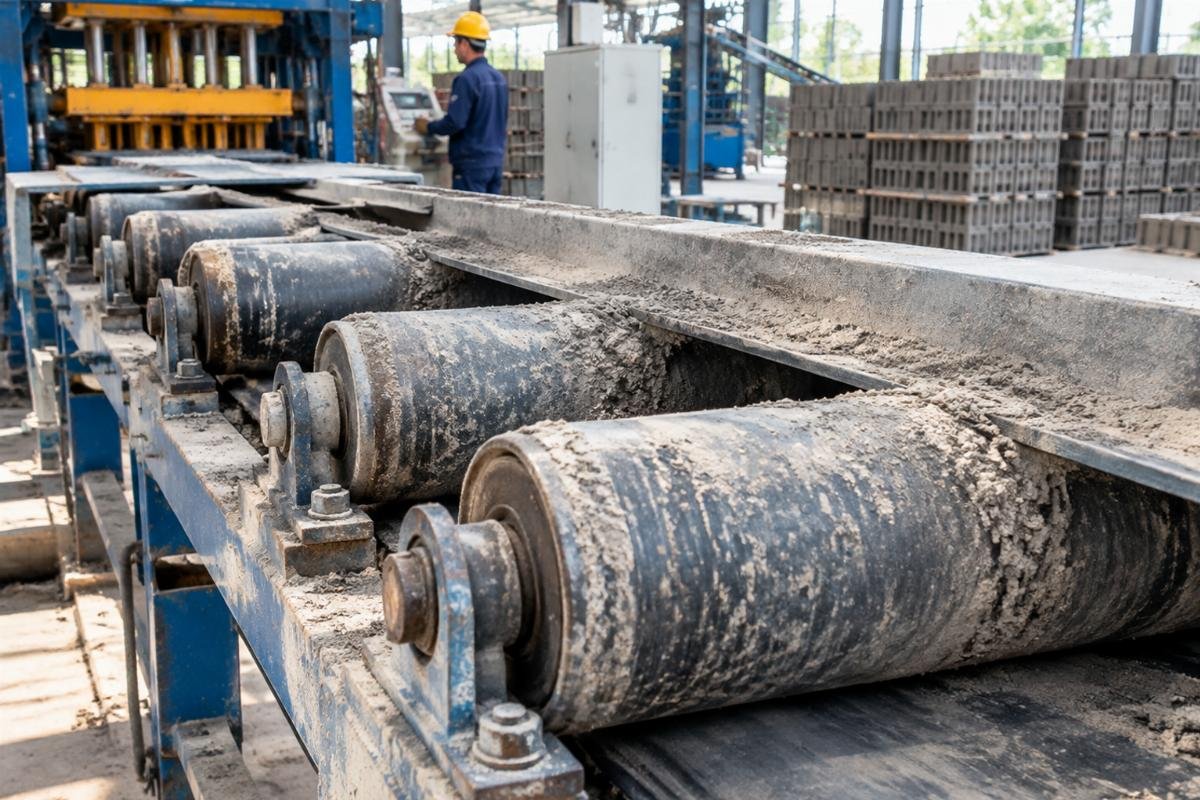
In the harsh environment of a concrete block plant, dust accumulation and minor misalignments create a cascade of mechanical failures. Many operators assume that if the belt is moving, the system is healthy. However, fine aggregate dust acts as an abrasive paste when mixed with lubricant, accelerating wear on bearings and pulley surfaces. [NEED_CITE: impact of particulate contamination on bearing life]
I recall a project in Nigeria where a housing development contractor faced a critical halt. Their QT15 line had been running smoothly for eight months until the main conveyor belt snapped during a peak production shift. The downtime lasted several days, costing them far more than the price of a new belt. When we inspected the site, we found that the idlers were severely misaligned, causing the belt to rub against the frame. The tension had never been checked since installation. The belt did not fail because it was weak; it failed because it was subjected to uneven stress and friction that a simple Belt Conveyor Preventive Maintenance Schedule would have caught.
Another case in Ethiopia highlighted the cost of ignoring roller health. A precast plant operator noticed unusual noise from the conveyor but continued production to meet a deadline. Eventually, a roller bearing seized completely, tearing the edge of the belt. Instead of replacing just the damaged rollers, they had to replace a significant section of the belt due to edge fraying. The cost of replacing twelve rollers was a fraction of the belt replacement cost, yet the lack of early intervention led to a much larger expense. These experiences underscore that premature failure is often a symptom of neglected minor issues.
What Should Be Included in a Daily Inspection Checklist?
Visual checks take minutes but save hours of downtime.
Daily inspections are the first line of defense against catastrophic failure. They do not require specialized tools, only a keen eye and a few minutes of dedicated time before the shift begins. The goal is to identify visible signs of wear, debris, or tracking issues before they escalate.
A comprehensive daily checklist should include:
- Belt Surface Inspection: Look for cracks, fraying edges, or unusual wear patterns. Any sign of material separation indicates immediate attention is needed.
- Tracking Alignment: Observe the belt as it runs. It should remain centered on the rollers. If it drifts to one side, check the idler alignment.
- Debris Removal: Clear any accumulated concrete mix or aggregate from under the belt and around the pulleys. Buildup can cause imbalance and increased friction.
- Noise and Vibration: Listen for unusual squeaking or grinding sounds from the rollers and motors. These are early warnings of bearing failure.
[NEED_CITE: standard daily inspection protocols for industrial conveyors]
Implementing this routine creates a baseline for equipment health. When operators are trained to spot these early signs, they become active participants in maintaining the Belt Conveyor Preventive Maintenance Schedule. This cultural shift from passive operation to active monitoring is crucial for long-term reliability.
How Often Should You Adjust Belt Tension and Lubricate Rollers?
Consistent tension and lubrication prevent premature wear.
Weekly and monthly tasks form the core of mechanical preservation. Unlike daily visual checks, these activities require basic tools and a bit more time, but they address the internal mechanics that keep the system running smoothly.
Weekly Tension Checks:
Belt tension is critical for proper tracking and power transmission. Over-tensioning puts excessive stress on bearings and the belt itself, while under-tensioning causes slippage and poor tracking. Use a tension gauge or the manufacturer’s recommended deflection method to check tension weekly. Adjust the tensioning bolts evenly on both sides to maintain alignment. [NEED_CITE: proper belt tensioning methods for aggregate conveyors]
Monthly Roller Lubrication:
Roller bearings are susceptible to dust ingress and lubricant degradation. Monthly lubrication with the correct grade of grease helps flush out contaminants and ensures smooth rotation. Check each roller for free movement; any resistance indicates a failing bearing that should be replaced immediately. This proactive replacement of individual rollers is far cheaper than waiting for a complete seizure that damages the belt.
In a South African road project, we introduced a strict weekly cleaning and tensioning routine. The plant manager initially resisted, citing lost production time. However, within a few months, the reduction in unexpected stops and the extended life of the conveyor components proved the value of the investment. The time spent on maintenance was negligible compared to the gains in production uptime. This real-world application of a Belt Conveyor Preventive Maintenance Schedule demonstrated that consistency pays off.
When Is It Time to Replace Rollers vs. the Entire Belt?
Decision criteria based on wear depth and bearing noise.
Knowing when to repair and when to replace is a key skill for maintenance teams. Replacing components too early wastes money, while waiting too long risks major damage. The decision should be based on observable conditions rather than arbitrary timelines.
Replace Rollers When:
- There is audible grinding or squeaking from the bearing.
- The roller does not spin freely when manually rotated.
- There is visible flat spotting or severe wear on the roller surface.
- The bearing housing shows signs of overheating or grease leakage.
Replace the Belt When:
- There are deep cuts or tears that compromise structural integrity.
- The belt edges are severely frayed and cannot be trimmed without affecting width.
- The belt has stretched beyond the adjustment range of the tensioners.
- There is significant delamination of the rubber layers.
For quick replacements, having access to durable roller assemblies and OEM belts is essential. Shiyue offers high-quality spare parts that can be shipped via DHL to minimize downtime. Keeping a small stock of critical components like rollers and a backup belt section allows for immediate response to wear issues identified through the Belt Conveyor Preventive Maintenance Schedule.
How Does Preventive Maintenance Impact Production ROI?
Unplanned downtime costs significantly more than scheduled maintenance.
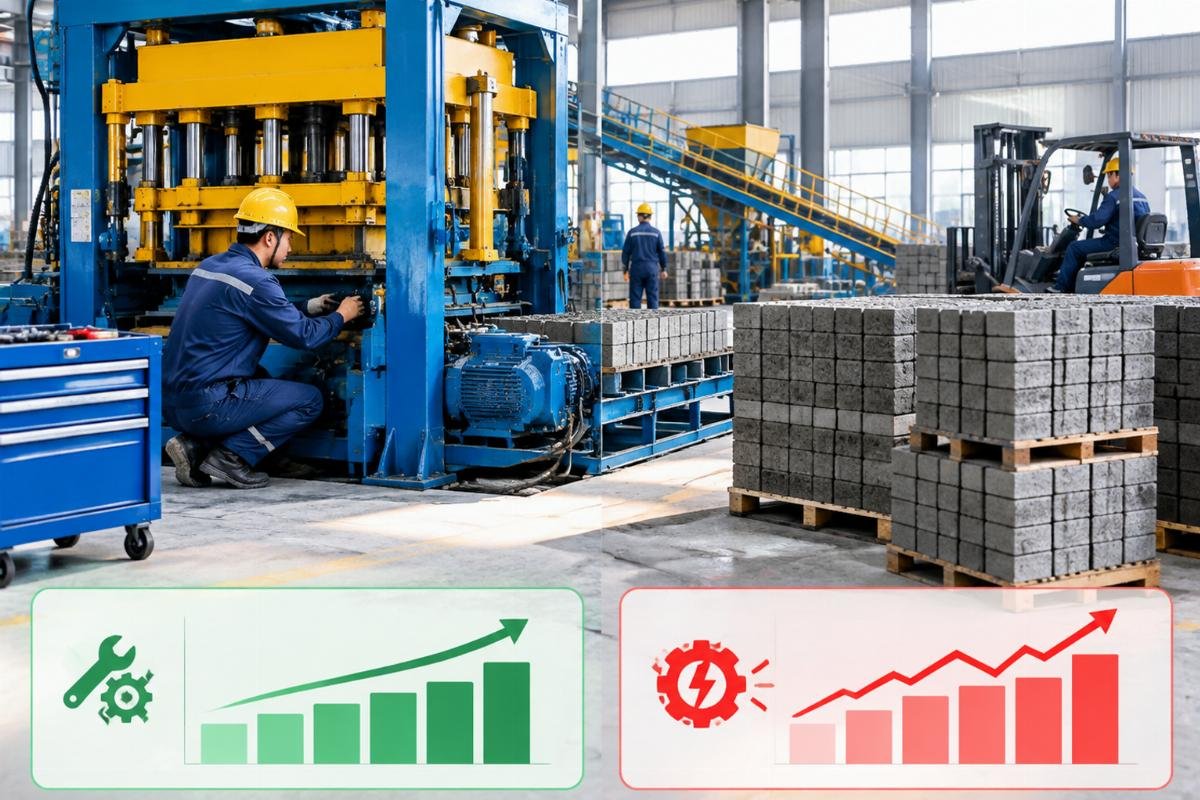
The financial argument for preventive maintenance is straightforward. Unplanned downtime halts production, delays project deadlines, and incurs emergency repair costs. In contrast, scheduled maintenance is predictable, controlled, and far less expensive.
Consider the cost of a single day of halted production for a busy block plant. The lost revenue, idle labor, and potential penalty clauses for delayed deliveries can quickly exceed the annual cost of spare parts and maintenance labor. By extending the life of components by a significant margin, a well-executed Belt Conveyor Preventive Maintenance Schedule directly improves the return on investment for the entire production line.
Moreover, consistent maintenance ensures product quality. A poorly tracked belt can lead to uneven feeding of raw materials, resulting in inconsistent block density and dimensions. Maintaining the conveyor system ensures that the QT15 machine operates within its designed parameters, producing high-quality blocks consistently. This reliability builds trust with customers and strengthens the plant’s reputation in the market.
Conclusion
Preventive maintenance is an investment, not an expense.
Adopting a structured Belt Conveyor Preventive Maintenance Schedule transforms how a block plant operates. It moves the focus from reacting to failures to preventing them, ensuring smoother production and lower long-term costs. By integrating daily checks, weekly adjustments, and monthly lubrication into your routine, you protect your equipment and your profitability.
Leave a Reply