

Description
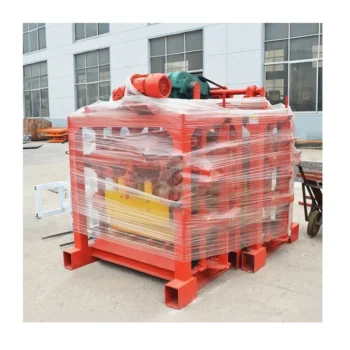
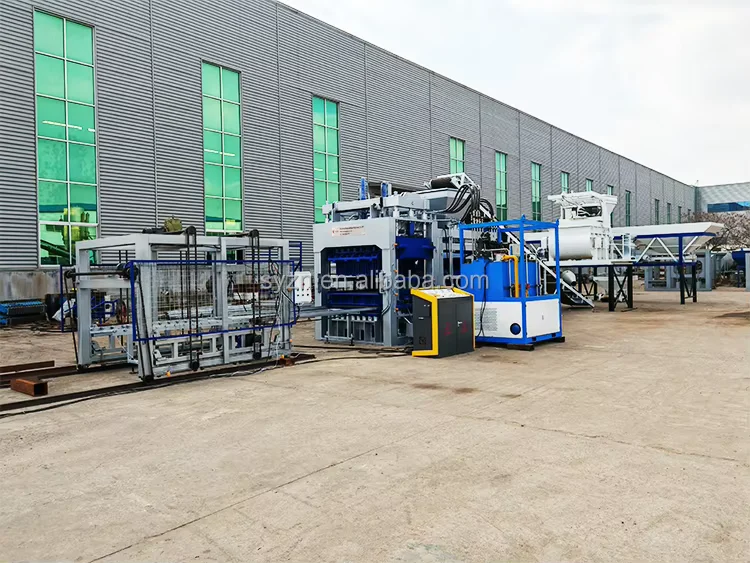
Stocked Line Configurations — Standard QT18-15 automated setups are pre-assembled and staged for rapid container loading, eliminating typical manufacturing delays.
Technical Specifications
| Parameter | Value |
|---|---|
| Model | QT18-15 |
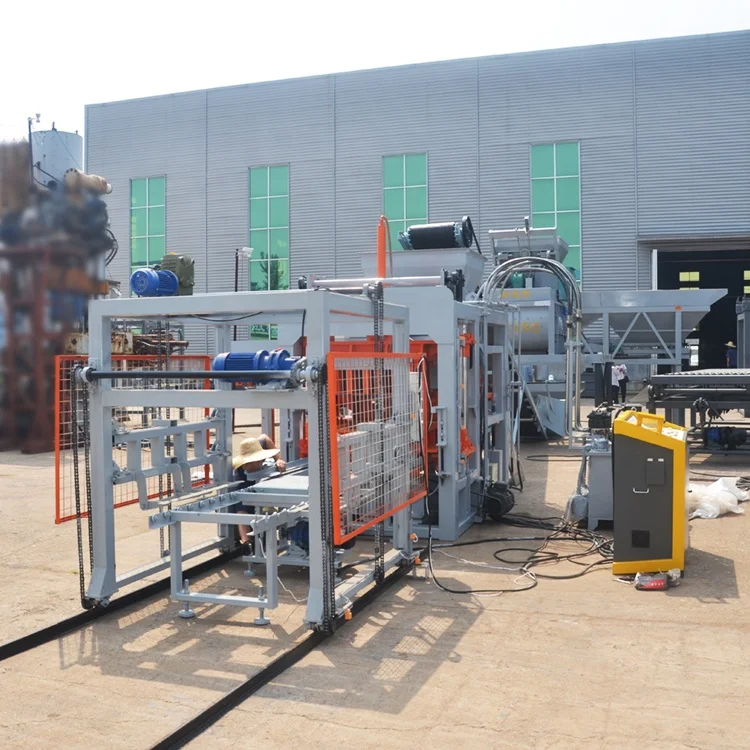
| Product Type | Fully Automatic Block Production Line |
| Automation Level | Yes, PLC control |
| Forming Method | Hydraulic pressure |
| Hydraulic Pressure | 15-36 MPa |
| Vibrating Force | 140 kN |
| Molding Cycle | 15~20 Sec |
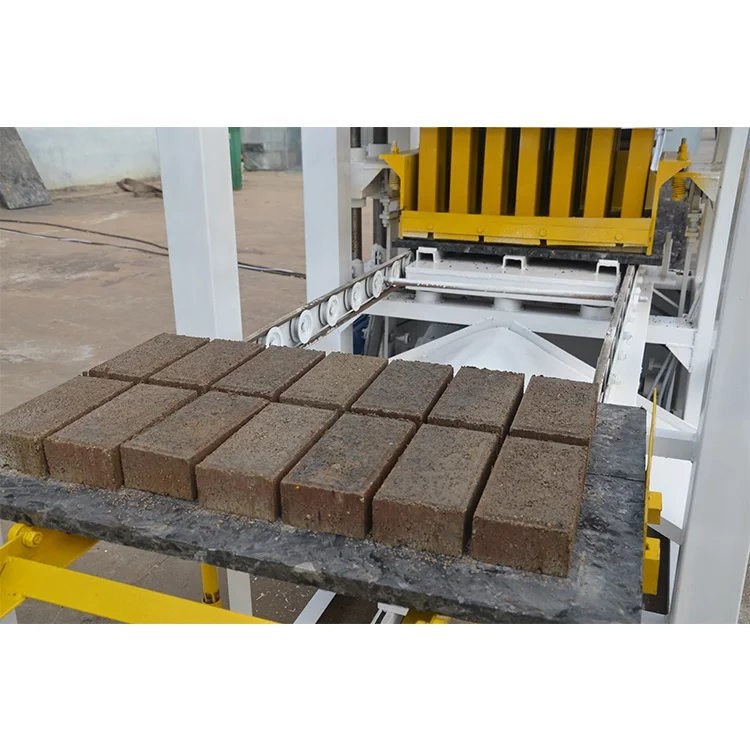
| Pallet Size | 1350x1350x40mm |
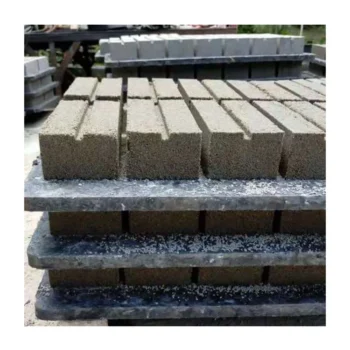
| Brick Size Formats | 400100200 mm, 400120200 mm, 20010060 mm, 400150200 mm, 24011590 mm, 20020060 mm, 400200200 mm, 230220115 mm |
| Overall Dimensions (L×W×H) | 935025202950mm |
| Net Weight | 35000 kg |
| Voltage | Configurable to local site requirements |
| Core Components | PLC, Pressure Vessel, Engine, Gear, Motor, Pump, Bearing, Gearbox |
| Warranty | 1 Year (1.5 years for core components) |
| Standards | Machinery Test Report Provided, Video outgoing-inspection Provided |
Application Suitability
| Application | Material or Output |
|---|---|
| Hollow Block Production | Concrete raw materials for structural walls |
| Paving Block Production | Concrete mixes for heavy-duty outdoor surfaces |
| Curbstone Block Production | Dense concrete for road and pathway edging |
Why Arrival Timing Matters More Than Quoted Cycle Times
A fully automatic block production line sitting at the port due to missing paperwork or improper loading is just delayed revenue. Securing a QT18-15 automatic block making machine in stock ensures your equipment actually arrives when your project schedule demands it. Many buyers focus entirely on the molding cycle and forget that a delayed shipment or a machine that cannot fit through the workshop doors will halt construction completely. I have seen entire housing projects stall because the main press arrived weeks late or required dismantling the facility roof for installation [NEED_CITE: typical construction delays caused by equipment logistics]. When working against strict development deadlines, the physical availability and straightforward dispatch of the machinery dictate your actual start date.
Dispatch Readiness and Container Loading Plans
Securing a QT18-15 automatic block making machine in stock means the primary press and supporting stations are already staged for immediate loading. We map out the exact dismantling sequence so that the 9350mm length and 2950mm height fit cleanly into standard shipping containers without requiring specialized breakbulk freight. Every component, from the hydraulic pump station to the PLC cabinet, is photographed and crated according to a strict loading plan. This prevents the frustrating scenario where a critical pallet feeding module is left behind on the warehouse floor because it did not fit the initial loading layout.
Navigating Customs and Port Clearance Delays
Having the equipment ready is only half the battle; clearing the destination port is where many shipments stall. We prepare all customs documentation, including the detailed packing list and commercial invoices, to match the exact container seal numbers and machinery descriptions required by your local port authority [NEED_CITE: standard customs documentation requirements for heavy industrial machinery]. By aligning the paperwork with the physical load before the vessel departs, we prevent the machinery from sitting in a bonded warehouse while you scramble to find missing certificates or correct misdeclared weights.
Matching Physical Dimensions to Your Facility Constraints
A common oversight is ordering a high-capacity line without verifying the physical envelope against the existing building. The QT18-15 requires a significant footprint, and the 2950mm overall height means your workshop ceiling and entry doors must accommodate it. Before we finalize the loading schedule, we verify these clearances. I once tracked a shipment where the buyer forgot to measure their main bay doors, forcing them to rent heavy cranes and dismantle the roof just to move the main press inside. We verify the physical dimensions against your site layout to ensure the machine can be unloaded and positioned smoothly upon arrival.
Decoding the Molding Cycle and Physical Footprint
The 15~20 second molding cycle is supported by a 15-36 MPa hydraulic pressure system and 140 kN vibrating force, which physically compacts the concrete into the mould cavity. This high-pressure vibration requires a solid foundation to prevent the kinetic energy from dissipating into soft soil, which would otherwise result in poorly formed blocks. The 1350x1350x40mm pallet size dictates the spacing of your curing racks and the turning radius required for your forklifts. If your existing curing area is designed for smaller pallets, you will need to reconfigure the racking before the machine arrives to maintain a smooth material flow.
The Hidden Costs of Overlooking Transit and Site Logistics
Failing to verify the dispatch lead time and physical dimensions before ordering often leads to expensive on-site modifications. If the voltage and PLC display language are not confirmed prior to the factory test, you will face weeks of waiting for replacement electrical components or translation updates while the machine sits idle in your plant [NEED_CITE: industrial equipment commissioning delays due to voltage mismatch]. Furthermore, ignoring the container loading plan can result in damaged hydraulic lines or crushed pallets upon arrival, forcing you to source emergency replacements locally at a premium before production can even begin.
Why Procure Your Line Through Our Logistics Network
Our single focus on block machinery means the main press, moulds, and handling equipment are staged together as one matched system, preventing partial shipments. We configure the dispatch schedule around your actual project deadlines rather than generic factory quotas. Every standard mould format is included and packed securely to prevent transit damage. We provide clear upfront arrival estimates based on real vessel schedules, not optimistic guesses. Finally, our installation support begins with the unloading sequence, ensuring your team knows exactly how to extract the 35000 kg net weight equipment safely from the containers.
Documentation & Verification
- Factory test video confirming the 15~20 Sec molding cycle before the container is sealed.
- Detailed packing photographs showing the exact placement of the PLC and hydraulic pump.
- Complete machinery test report verifying the 15-36 MPa hydraulic pressure output.
- Customs documentation package aligned with your specific port clearance requirements.
- Voltage and control language confirmation sheet signed off prior to dispatch.
Installation, Commissioning & Support
- Foundation plans specifying the load-bearing requirements for the 35000 kg net weight main press.
- Electrical schematics detailing the dedicated circuit requirements for the configured local voltage.
- Step-by-step dismantling and reassembly guides for the 9350mm long main frame structure.
- Initial parameter setup for the PLC control system to match your specific curing rack layout.
- Operator training focused on the 1350x1350x40mm pallet feeding and handling sequence.
- Wear parts list identifying the specific hydraulic and vibrating components to keep on hand.
Preparing Your Site for Immediate Integration
To ensure the QT18-15 automatic block making machine in stock integrates smoothly into your operation upon arrival, please provide your workshop ceiling height, main door dimensions, and existing forklift specifications. We also need to confirm your local voltage, frequency, and the preferred language for the PLC display to finalize the pre-dispatch factory test. Finally, share your target block formats from the standard list so we can verify the correct moulds are loaded into the container alongside the main press.
Frequently Asked Questions
Q: What is the dispatch lead time and estimated arrival for the stocked QT18-15 machine?
A: Because this fully automatic block production line is pre-assembled and staged, the dispatch lead time is limited to the container booking and loading schedule. We provide an upfront arrival estimate based on current vessel routes to your destination port, ensuring the timeline aligns with your project deadlines rather than relying on generic manufacturing estimates.
Q: How is the machine dismantled and loaded into containers for shipment?
A: The 9350x2520x2950mm main structure and supporting stations are systematically dismantled to fit standard shipping containers. We follow a strict loading plan, securing the 35000 kg net weight components and photographing the placement to ensure safe transit and straightforward unloading at your facility without requiring specialized breakbulk freight.
Q: Are standard moulds and pallets included in the ready-to-ship configuration?
A: Yes, the ready-to-ship configuration includes the standard moulds for formats like the 400200200 mm hollow block and the 1350x1350x40mm pallets. These are packed securely within the same shipment to ensure you have the necessary tooling to begin production immediately after the main press is installed and commissioned.
Q: Can voltage and control language be adjusted before the machine leaves the factory?
A: Yes, we configure the electrical system to your local voltage and set the PLC display language before the machine leaves our facility. This is verified during the outgoing video inspection to prevent commissioning delays and ensure your operators can interact with the control system immediately upon arrival.
Q: What customs documentation support is provided to speed up port clearance?
A: We provide a comprehensive customs documentation package, including detailed packing lists, commercial invoices, and the machinery test report. These documents are carefully matched to the container seal numbers and physical load to prevent hold-ups at your destination port and ensure a smooth release process.